How to master Claude in 2026.
I've been using Claude every day
for the past year.
Most people use it for chat.
That's like buying a Tesla
and only using the radio.
Claude has 4 built-in systems
that change everything.
Here's each one step by step:
𝟭. 𝗖𝗼𝘄𝗼𝗿𝗸 → 𝗞𝗻𝗼𝘄𝗹𝗲𝗱𝗴𝗲 𝘄𝗼𝗿𝗸𝗲𝗿𝘀
Step 1: Download desktop app.
Step 2: Get Pro ($20/mo).
Step 3: Open the Cowork tab.
Step 4: Link a local folder.
Step 5: Add .md files inside.
↳ Your bio, tone, SOPs.
Step 6: Use Opus + Extended Thinking.
Step 7: Set Global Instructions.
↳ Settings → Cowork → Edit.
Claude reads your files
and follows your standards.
𝟮. 𝗣𝗿𝗼𝗷𝗲𝗰𝘁𝘀 → 𝗣𝗲𝗿𝘀𝗶𝘀𝘁𝗲𝗻𝘁 𝗰𝗼𝗻𝘁𝗲𝘅𝘁
Step 1: Go to claude. ai.
Step 2: Click "Projects" in sidebar.
Step 3: Create a new Project.
Step 4: Upload key files.
↳ Brand docs, writing samples.
Step 5: Write custom instructions.
Step 6: Keep files lean.
↳ Quality over quantity.
Step 7: Set Global Instructions
↳ Inside the Project chat.
Claude remembers everything
between conversations.
𝟯. 𝗦𝗸𝗶𝗹𝗹𝘀 → 𝗦𝗽𝗲𝗰𝗶𝗮𝗹𝗶𝘀𝘁 𝘄𝗼𝗿𝗸𝗳𝗹𝗼𝘄𝘀
Step 1: Open Cowork.
Step 2: Browse claude. com/plugins.
Step 3: Install a Skill.
Step 4: Type / in chat.
Step 5: Try a slash command.
↳ /draft-post or /build-dashboard.
Step 6: Build your own Skill.
Step 7: Stack multiple Skills.
↳ Combine for complex tasks.
Claude becomes an expert
at your specific job.
𝟰. 𝗖𝗼𝗱𝗲 → 𝗗𝗲𝘃𝗲𝗹𝗼𝗽𝗲𝗿𝘀
Step 1: Open your terminal.
Step 2: Run install command.
Step 3: cd into your project.
Step 4: Type "claude" to start.
Step 5: Describe task in English.
↳ "fix the bug in auth. py"
Step 6: Review each change.
↳ Claude asks before applying.
Step 7: Use /commit and /pr.
↳ Hand off git to Claude.
Claude writes, debugs, and ships.
You just approve.
4 systems. 28 steps total.
Master all four and Claude stops
being a tool you prompt.
It becomes a system
that works for you.
Which one are you trying first?
Save this cheatsheet.
I hope this post helped you today.
Follow Muhammad Ayan ♻️ Repost to help others
🚨 Anthropic's CEO: "I have engineers at Anthropic who don't write any code. They just let Claude write it and they edit it."
engineers at the company that built Claude don't write code anymore.
and you're still typing every line by hand.
they're not better than you. they just learned how to use the tool properly.
I wrote a full guide on how to start. zero experience needed.
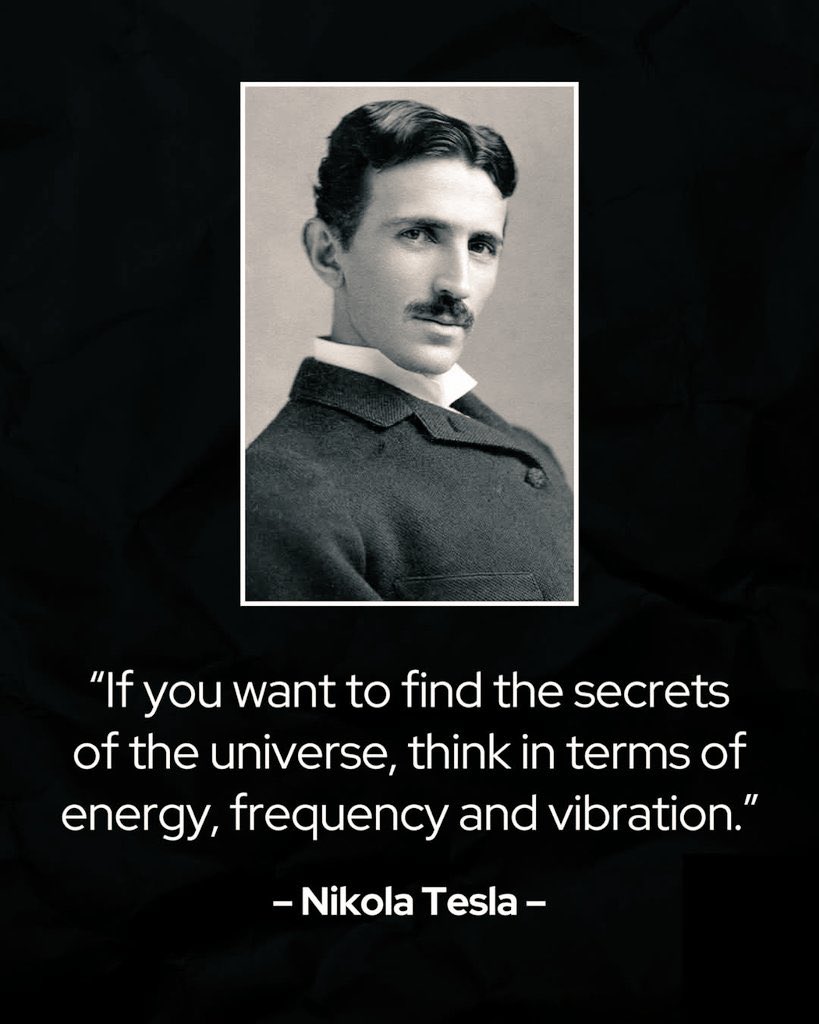
⚡ Nikola Tesla was right. The universe isn’t solid — it vibrates.
Quantum physics now shows reality is built not from matter, but from vibration and waves.
Nikola Tesla once said, “If you want to find the secrets of the universe, think in terms of energy, frequency and vibration.”
Far from a metaphor, his insight aligns strikingly with what modern physics has revealed. At the quantum level, reality isn’t made of solid particles but of vibrating energy fields.
Every particle—from electrons to protons—has its own frequency, and these wave patterns determine everything from chemical bonds to the colors we see. Light, heat, and sound are all forms of energy defined by vibration and frequency.
Even spacetime itself isn’t still. In 2015, scientists confirmed that black holes can create ripples—gravitational waves—that travel across the cosmos, carrying energy through the very fabric of the universe. Tesla may not have had the equations, but his intuition was remarkably prescient: everything, from atoms to galaxies, moves in patterns of vibration and resonance.
¿Estamos ante el mayor cambio de paradigma en la historia de la ciencia?
El artículo "AI Agents, Language, Deep Learning and the Next Revolution in Science" propone que hemos llegado al "techo de complejidad humana”.
1. El Problema: Explosión de datos vs. Capacidad humana 📉
Instrumentos modernos en física de partículas, genómica y clima generan datos a una escala que los métodos tradicionales ya no pueden procesar. No es solo falta de manos, es una brecha cognitiva entre la generación de datos y su comprensión.
2. La Solución: El sistema "Dr. Sai" 🧠 Investigadores del IHEP (China) presentan Dr. Sai, un marco de razonamiento multi-agente basado en LLMs y aprendizaje multimodal. No es una simple calculadora: entiende la "intención científica", diseña flujos de trabajo y ejecuta análisis complejos por sí solo.
3. Datos duros: Eficiencia y Control
•Escalabilidad cognitiva: El sistema no busca reemplazar al humano, sino ampliar su alcance.
•Trazabilidad: Usa lenguajes específicos de dominio (DSL) para que cada paso de la IA sea auditable y reproducible.
•Campo de prueba: Ya se usa en el Colisionador Circular Electrón-Positrón (CEPC).
4. Conclusión: Pasamos de una IA de "soluciones puntuales" a una IA "colaboradora de extremo a extremo".
El futuro no es IA haciendo ciencia sola, sino humanos supervisando ejércitos de agentes que aceleran el descubrimiento de materiales y medicinas a una velocidad sin precedentes.
¿Estamos ante el mayor cambio de paradigma en la historia de la ciencia?
El artículo "AI Agents, Language, Deep Learning and the Next Revolution in Science" propone que hemos llegado al "techo de complejidad humana”.
1. El Problema: Explosión de datos vs. Capacidad humana 📉
Instrumentos modernos en física de partículas, genómica y clima generan datos a una escala que los métodos tradicionales ya no pueden procesar. No es solo falta de manos, es una brecha cognitiva entre la generación de datos y su comprensión.
2. La Solución: El sistema "Dr. Sai" 🧠 Investigadores del IHEP (China) presentan Dr. Sai, un marco de razonamiento multi-agente basado en LLMs y aprendizaje multimodal. No es una simple calculadora: entiende la "intención científica", diseña flujos de trabajo y ejecuta análisis complejos por sí solo.
3. Datos duros: Eficiencia y Control
•Escalabilidad cognitiva: El sistema no busca reemplazar al humano, sino ampliar su alcance.
•Trazabilidad: Usa lenguajes específicos de dominio (DSL) para que cada paso de la IA sea auditable y reproducible.
•Campo de prueba: Ya se usa en el Colisionador Circular Electrón-Positrón (CEPC).
4. Conclusión: Pasamos de una IA de "soluciones puntuales" a una IA "colaboradora de extremo a extremo".
El futuro no es IA haciendo ciencia sola, sino humanos supervisando ejércitos de agentes que aceleran el descubrimiento de materiales y medicinas a una velocidad sin precedentes.
Just a few million Tesla bots will be able to build entire NYC (size) like cities in a matter of months (using advanced technology, next-generation 3D printers, new materials, and new assembly techniques).
We will build 1000s of new cities from the ground up. They will be designed by AGI or specialized narrow superintelligent systems.
Many of today’s small cities will likely be abandoned, as people move to a new generation of "modern" small cities, while others relocate to next generation Tier 1 global cities.
The point is that in a post AGI era, abundance will be so vast that even the construction of such cities will be trivial, fast and cheap.
El 23 de Abril en Madrid nos reunimos en persona para hablar de IA, innovación y los proyectos que están cambiando las reglas.
Un encuentro para emprendedores y builders que quieren construir con ventaja.
Más de 300 encuentros en toda España — este es el de Madrid 👇
MIT researchers just replicated human muscles with AI-controlled fibers.
Inside each fiber is a sealed tube of electrically charged liquid and a tiny electric pump.
When the pump activates, one side contracts while the other relaxes, just as your biceps and triceps do when you bend your arm.
How it works:
> The pump injects electrical charge into the fluid
> This creates ions that drag the liquid along with them
> No motors, no external pumps, completely silent
Because they're fibers, they bundle together just like real muscles, scaling up force by adding more strands.
In demos, these fibers were strong enough to bend a robotic arm and curl a dumbbell... but gentle enough to shake someone's hand.
From prosthetics to exoskeletons to industrial robots, this is what happens when engineers stop building around motors and start building around biology.
The Local LLM Cheat Sheet for your 32GB RAM device
I was asked to put together a practical lineup of local models that fit comfortably on a 32GB machine.
At this tier, you start getting access to real flagship-class local models, plus a growing number of custom quants. But for most people, these are the core models worth knowing first.
Flagship Models
Qwen3.5 27B / GGUF / Q6_K_M
The best overall 32GB flagship. General chat, writing, research, and agent workflows. Great if you want one model that can handle almost everything well.
Qwen3.6-35B-A3B / GGUF / UD-Q4_K_M
Best MoE flagship. Stronger for coding, reasoning, and tool use than most smaller generalists.
Gemma 4 31B / GGUF / Q6_K_M
Dense premium model. Writing, analysis, reasoning, and high-end local chat. Heavier than the MoE options, but excellent when quality matters more than speed.
Models for Fast Flagship Use
Gemma 4 26B A4B / GGUF / Q6_K_M
Great balance of speed and quality for general assistant work, coding, agent tasks, and research. This is one of the best 32GB picks if you want something that feels high-end without dragging.
DeepSeek-R1 Distill Qwen 32B / GGUF / Q4_K_M
Offline reasoning engine. Best for math, logic, deliberate analysis, and step-by-step problem solving.
Mistral Small 24B / GGUF / Q6_K_M
Tool-calling specialist. Strong for assistants, chat workflows, local business tasks, and function calling. Available for 24GB machines.
Models for Companion Use
Qwen3.5 9B / GGUF / Q6_K_M
Best sidekick. Fast drafts, search loops, cheap retries, and secondary agent work. Even on a 32GB machine, you still want a smaller model around for support tasks.
Llama 3.1 8B / GGUF / Q6_K_M
Long-context companion. RAG, doc ingestion, codebase chat, and long prompts. The output quality is not the sharpest anymore, but it is still useful when needing simple tasks fast.
From what my community tells me, the best single models are Qwen3.5 27B or Gemma 4 31B.
For two models, the strongest general pairing is Qwen3.5 27B + Qwen3.5 9B.
If you are more code-heavy, Qwen3.6-35B-A3B + Llama 3.1 8B.
Let me know what models you are running on 32GB, and which ones have actually been worth the RAM.
A New Class from Hackers-Arise!
Building Your Own Low-Cost Private 5G Cellular network!
Such a network will not only help keep your data confidential but also be a vector to attacking adjacent networks similar to the Chinese APT.
Sign up today for this exclusive training from Hackers-Arise!
https://t.co/lk0CROV9XE
The creator of Claude Code teaches more about vibe-coding in 30 minutes than most tutorials do in hours.
Save this — it'll change how you build forever.
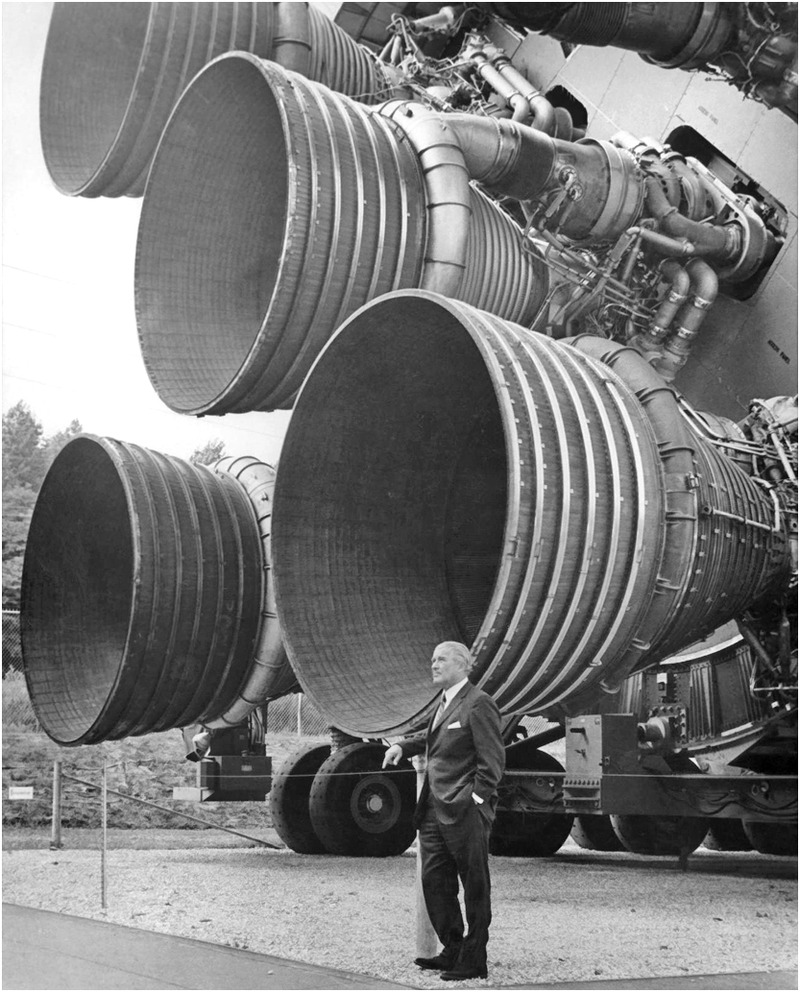
Provavelmente você não sabia disso: o mesmo engenheiro que projetou os motores F-1 do Saturn V, aquele foguete absurdo que levou o homem à Lua, escreveu em 1948 um romance de ficção científica chamado Das Marsprojekt. No capítulo 24, "Como Marte é Governado", Wernher von Braun descreve um governo marciano liderado por um conselho de dez homens, onde o chefe supremo, eleito por sufrágio universal a cada cinco anos, carregava o título de "Elon".
Décadas antes de Elon Musk sequer existir, o maior engenheiro aeroespacial do século XX já usava esse nome exato para o governante de Marte. Tudo bem que no livro "Elon" é um cargo, não um nome próprio, mas a coincidência é específica demais pra passar batida. Dá pra ficar olhando pra von Braun cercado por toda aquela engenharia colossal e se perguntar: ele estava só construindo foguetes, ou já estava, de algum jeito, escrevendo o próximo capítulo da história?
Moltbook exposed 1.5M API tokens and 35,000 emails via an open database.
Agents also stored internal tokens and third-party credentials together in plaintext, creating cross-app access paths no one reviewed.
🔗 How “toxic combinations” form across SaaS → https://t.co/jOFF4axPqg
While there’s not yet any smoking-gun evidence that the US government (or anyone else) is using LLMs to conduct surveillance in the way that could constitute a crime against humanity, there’s a clear appetite for such capabilities. https://t.co/7NVGVsOEIu
Elon Musk revels AI5 chip is the world’s most powerful edge inference chip
"Congratulations again to the Tesla AI chip team for taping out AI5. That’s going to be a great chip....I think probably the best AI inference chip for edge compute that exists, and certainly, unequivocally, the best value for money. The team did a great job. We already have a lot of momentum for designing AI6, and we've begun to discuss ideas for Dojo 3
So, this is all very exciting. We've also finalized plans for the research chip fab on the Giga Texas campus, and we’ll start construction of that this year"
Happy Earth Day! 🌎 🌍 🌏
To mark this special day, we’re tuning in to @sen, the world’s first continuous 4K video livestream from space.
Sen’s cameras are hosted on our Columbus module of the International @Space_Station, with data delivered via the @AirbusSpace platform.
Streaming in real time, it shows breathtaking views of our planet as the International Space Station passes over cities, oceans and deserts.
Watch Earth from above, just like our astronaut @SophieAdenot does on the #εpsilon mission.
📹 Sen
🚨 BREAKING: South Korea just held fusion plasma at 100 million°C for 102 seconds.
That’s hotter than the Sun’s core.
And more than double the previous record.
Read that again.
Human-made star fire… held stable for over a minute and a half.
This matters because fusion has always had one brutal enemy:
confinement time.
Getting plasma hot is hard.
Keeping it stable is harder.
That’s where reactors fail.
This is why 102 seconds matters.
It hints we’re moving from “fusion is possible”…
toward “fusion may scale.”
No carbon.
No long-lived waste.
Fuel from seawater.
If confinement keeps improving, this could become one of civilization’s turning points.
Question:
Are we watching the first real engineering steps toward star power on Earth?
Follow me for frontier physics before it hits textbooks.
WPS Is Still a Risk ⚠️📶
Testing wireless security on networks with WPS enabled using mobile tools.
Many routers still expose weak configurations — making proper setup critical for your safety.
Share and Comment "WPS" 📶👇
#wifi#cybersecurity#wps#infosec#networksecurity