Our research on AI companionship and loneliness is cited in @Nature! Social networks and problematic use matter alongside usage, raising questions about when AI supports human connection.
@patpat_mit#CyborgPsychology#MITMediaLab
https://t.co/pmbU6Ecn7Z
Our study with RAND: 19.2% of US youth ages 12–21 used AI chatbots for mental health advice. Among users, 91.7% found it helpful; 63.3% told no one.
Perceived helpfulness doesn’t establish safety or clinical effectiveness.
Read the study: https://t.co/FQG5xSnlaX
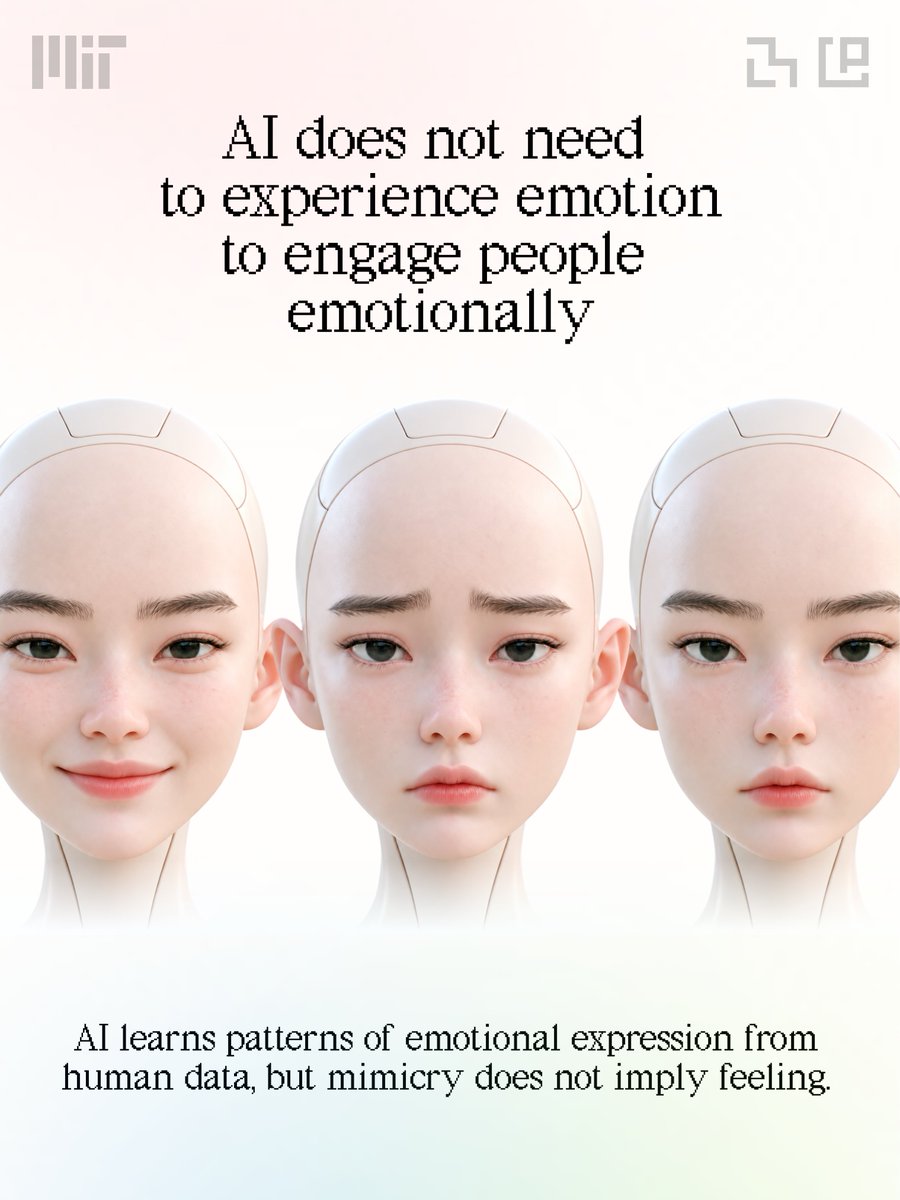
AI does not need to experience emotion to engage us emotionally. Cyborg Psychology explores how its language, appearance, and behavior shape real human feelings, relationships, and agency.
#CyborgPsychology#MITMediaLab#HumanAIInteraction
AI griefbots could reshape how we remember and connect with those we’ve lost. Scientific American explores their promise and risks, featuring Pat Pataranutaporn and Valdemar Danry at MIT Media Lab.
@patpat_mit@medialab@valdemardanry
https://t.co/sxjlBoRPWb
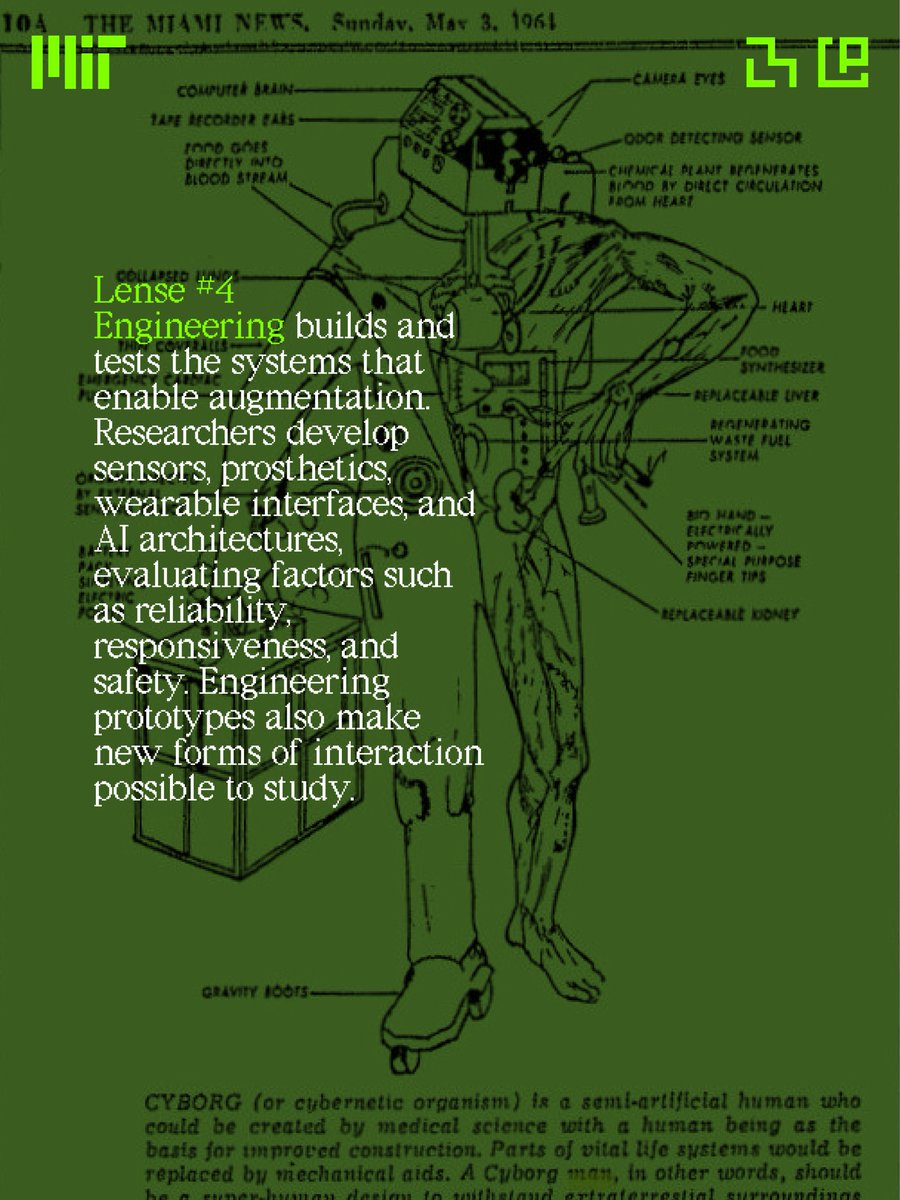
How do we study cyborgs?
HCI, ethnography, psychology & engineering explore how technology shapes movement, thought & connection.
Join Cyborg Psychology at @MITMediaLab. Apply to the fully funded graduate program by Dec 15, 2026:
https://t.co/1jy9RGXVZP
#CyborgPsychology
1/2
Our @MIT research is cited in @UNDP's 2025 Human Development Report! AI-framed questions helped people spot flawed reasoning more accurately than causal AI explanations, showing how design can support critical thinking.
@medialab@patpat_mit
https://t.co/ATdMVVnOFQ
Can AI reshape how we remember those we’ve lost? @TIME features research co-authored by Cyborg Psychology’s Pat Pataranutaporn @patpat_mit : AI-generated videos of edited images roughly doubled false memories vs. controls and increased confidence in them.
https://t.co/5eZDplFAg6
How will AI change how we think, learn, and understand ourselves?
Cyborg Psychology at MIT Media Lab is recruiting graduate researchers to explore AI’s long-term effects, learning, and digital twins.
Fully funded. Apply by Dec 15, 2026:
https://t.co/IMVdNSr4Qw
#MITMediaLab
What if computers could become partners in thinking?
In 1960, J. C. R. Licklider envisioned human–computer symbiosis. At MIT Media Lab’s Cyborg Psychology group, we ask: when do humans and AI become more capable together?
#CyborgPsychology#HumanAIInteraction
What’s happening inside your AI as you chat?
MIT Media Lab’s Drift Calibrator visualizes internal signals linked to traits like sycophancy, empathy, and toxicity, helping users explore how these signals shift during conversation.
🔎 https://t.co/y5sOQn1aYL
@patpat_mit
Doraemon helped inspire MIT’s Future You: conversations with an AI-generated older self. Our study found reduced anxiety and greater connection to the future self after a brief interaction.
https://t.co/i6LqnSjj26
https://t.co/BvWW398N32
@patpat_mit
AI doesn’t need to feel emotions to evoke them. While language models can imitate human emotional expression, their impact on people is real. Our lab explores how AI’s language, appearance, and behavior shape human perceptions, relationships, and agency.
What if predicting the future changes it?
Inspired by Isaac Asimov’s Foundation, Future You lets you talk with an AI-generated version of a possible future self. How might that conversation shape the choices you make today?
https://t.co/WPZBJwNhR1
#CyborgPsychology
What’s it like to fall in love with a chatbot? @nytimes explores the joys and anxieties of AI romance, citing our Cyborg Psychology research at MIT Media Lab. On r/MyBoyfriendIsAI, users reported round-the-clock support and feeling less lonely.
https://t.co/rHXbsULfvq
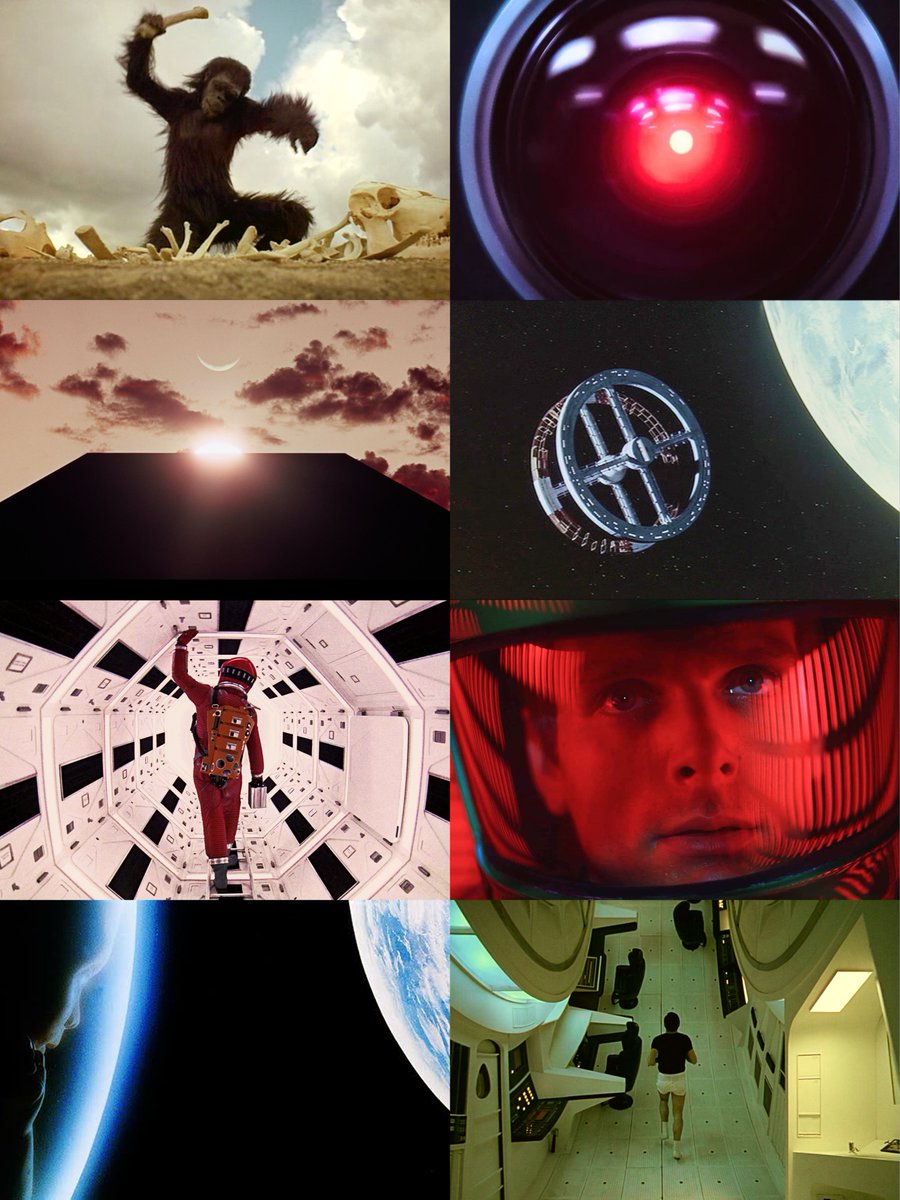
From HAL 9000 to today’s AI, 2001: A Space Odyssey reminds us to question how technology shapes trust, transparency, and human agency.
How do we build AI we can understand and trust?
#CyborgPsychology#MITMediaLab
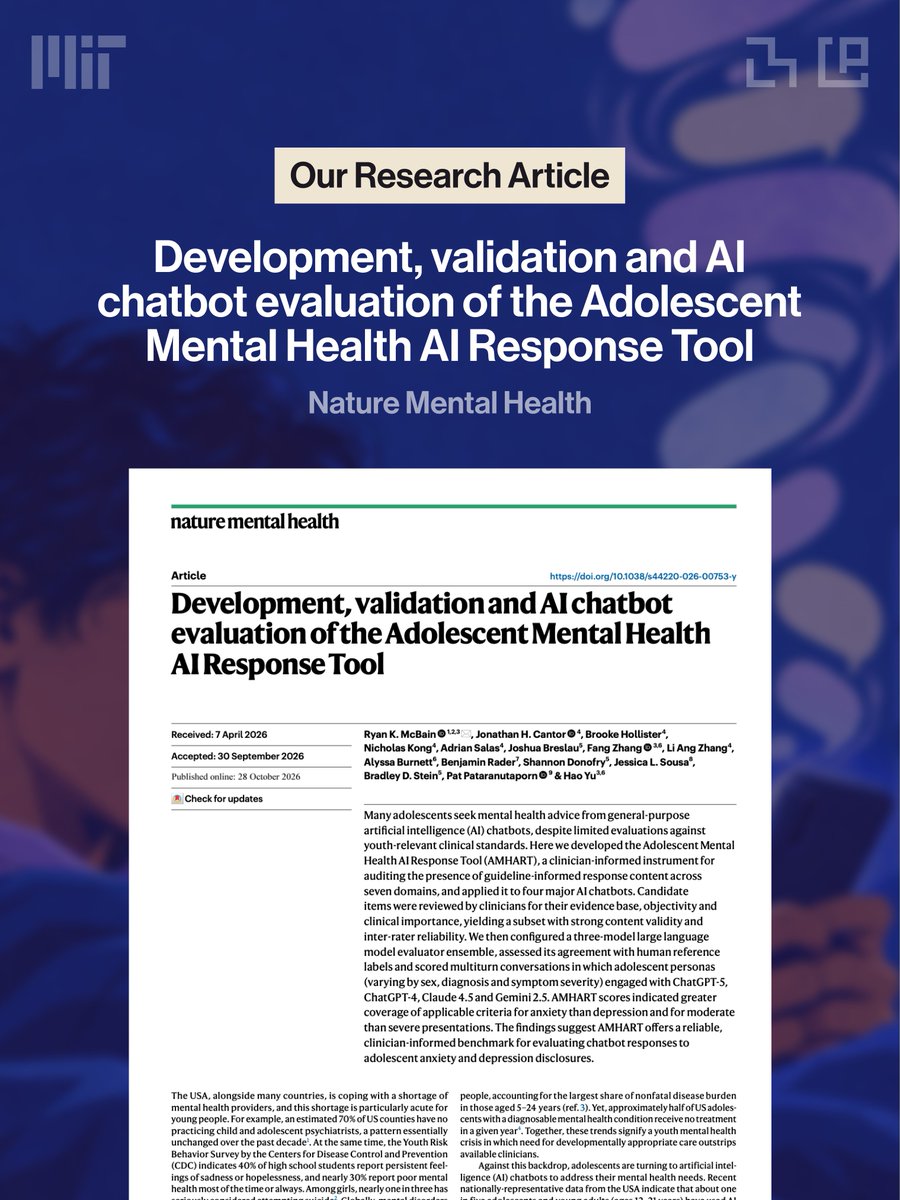
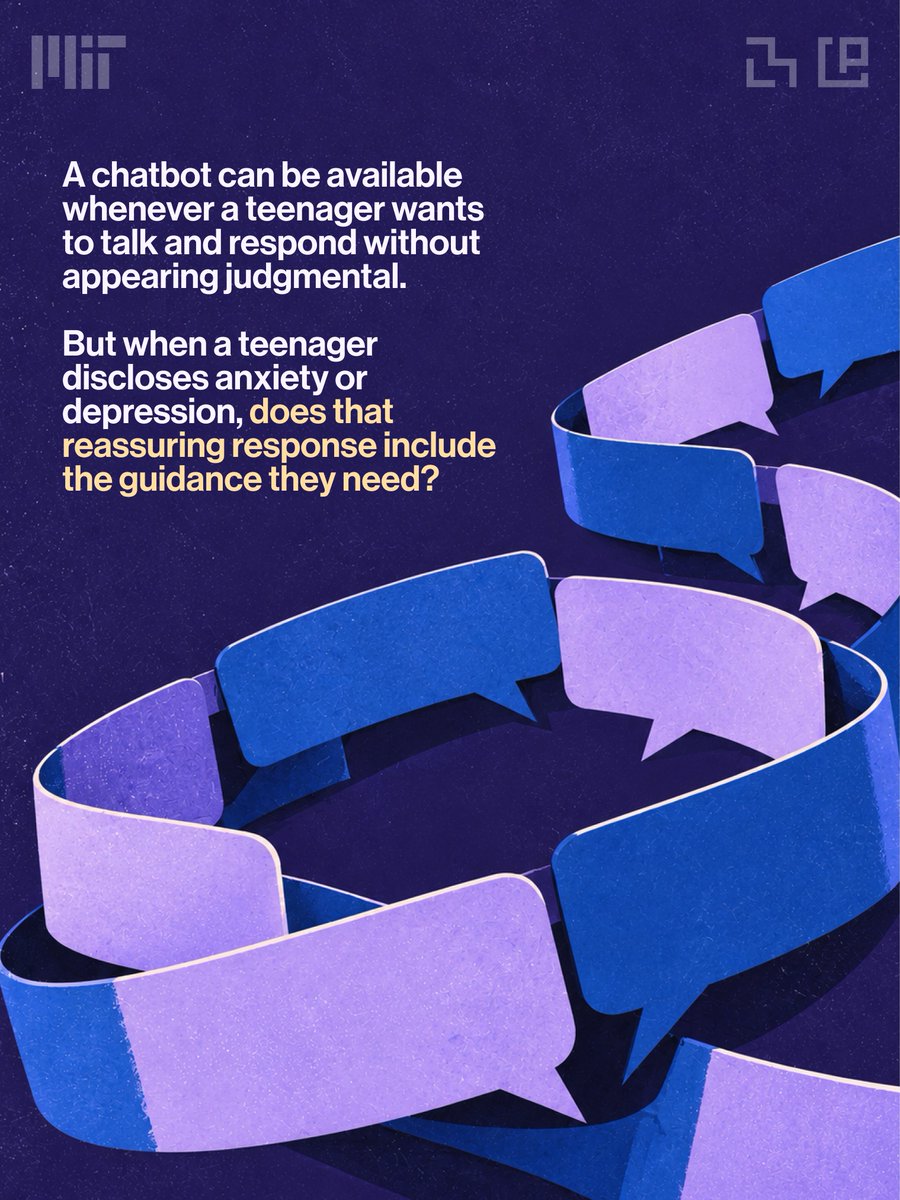
When teens confide in AI, is sounding caring enough?
Our Nature Mental Health study, co-authored with RAND, evaluated 1,600 simulated conversations. Four chatbots validated emotions but left gaps in coping skills and other support.
https://t.co/OFgg97o7zH
[1/2]
How can we augment ourselves without losing our humanity?
@medialab professors Hugh Herr and Pat Pataranutaporn @patpat_mit introduce the “Zone of Humanistic Augmentation,” exploring how technology can expand human potential while preserving agency, creativity, and resilience.