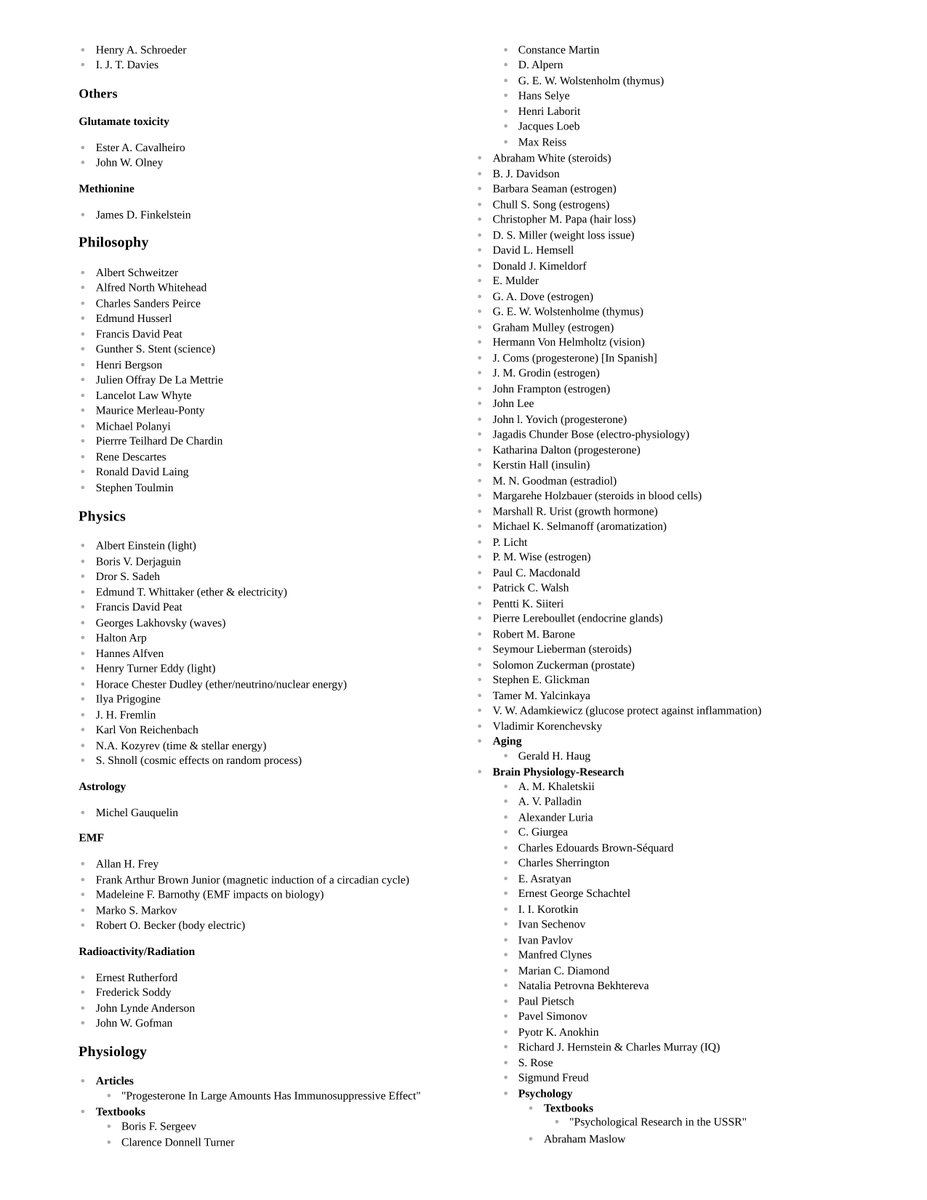
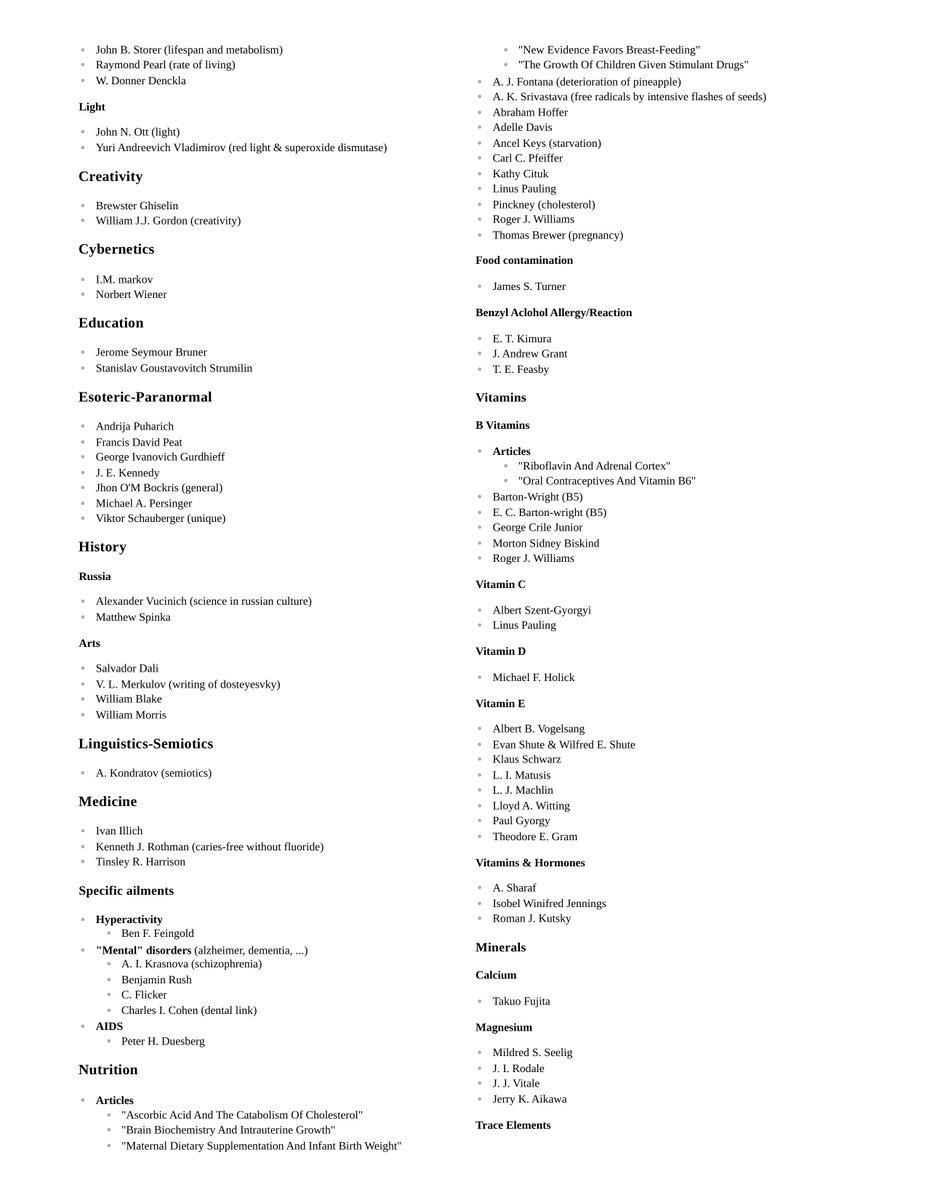
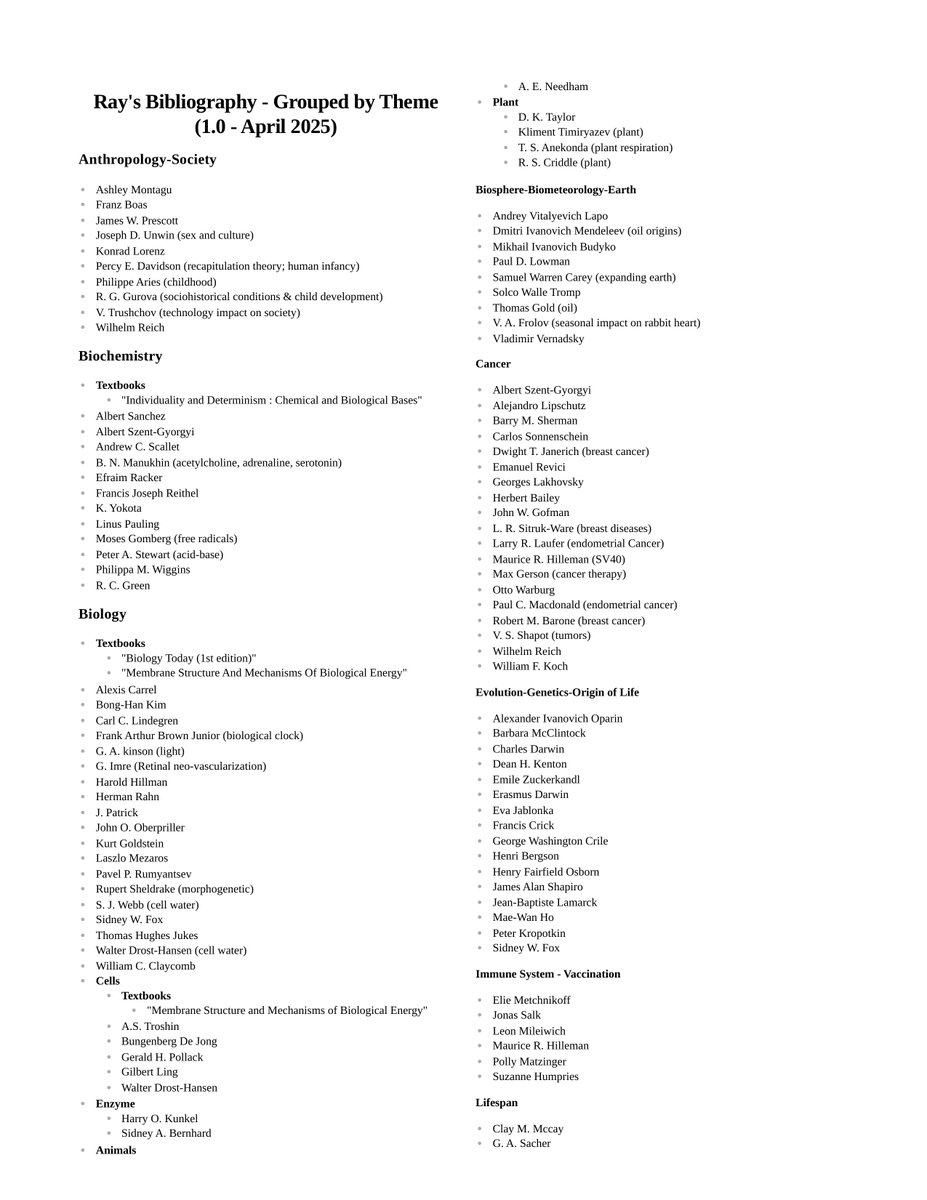
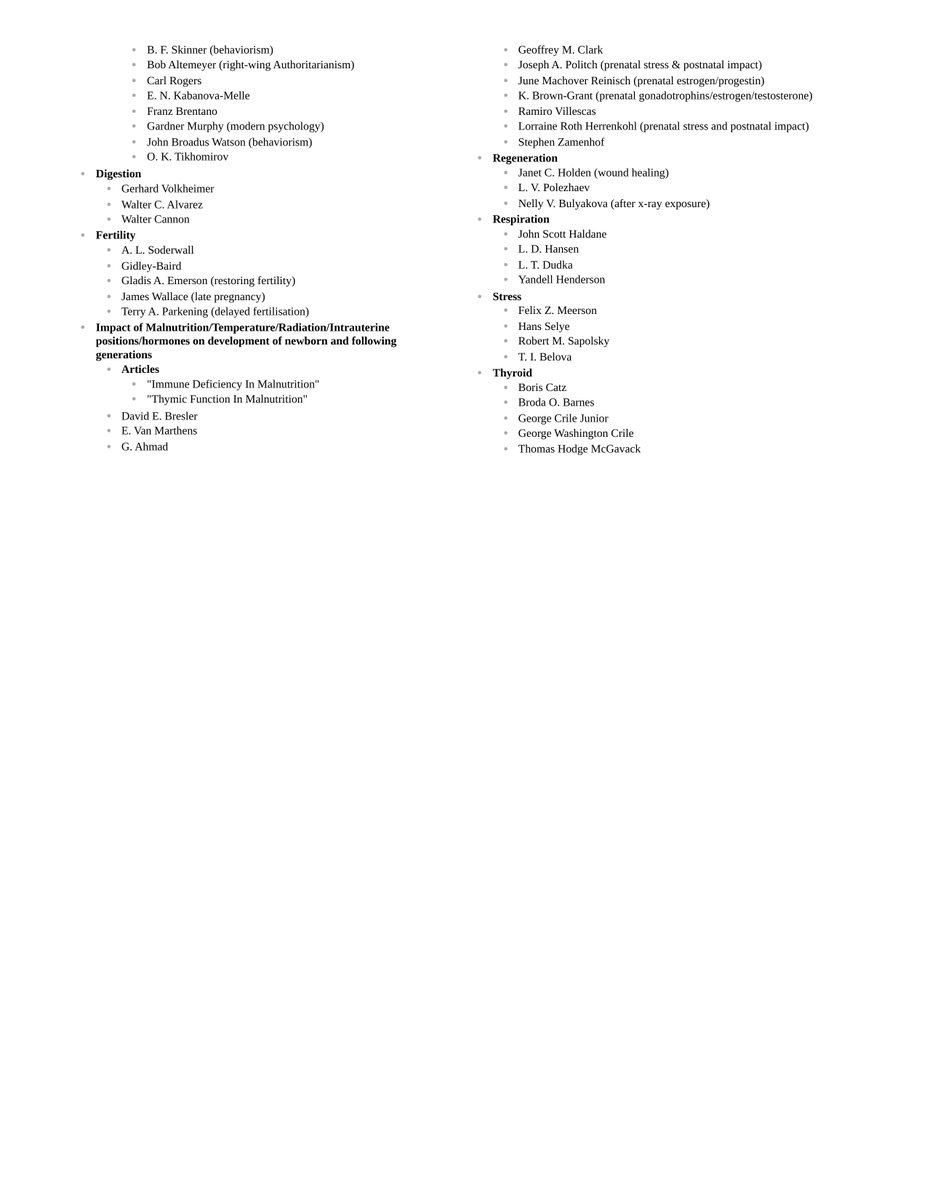
I've grouped the bibliography by theme (Nutrition, Physiology, Cancer, etc...) to help you select what to read. I'll probably update the list in the future.
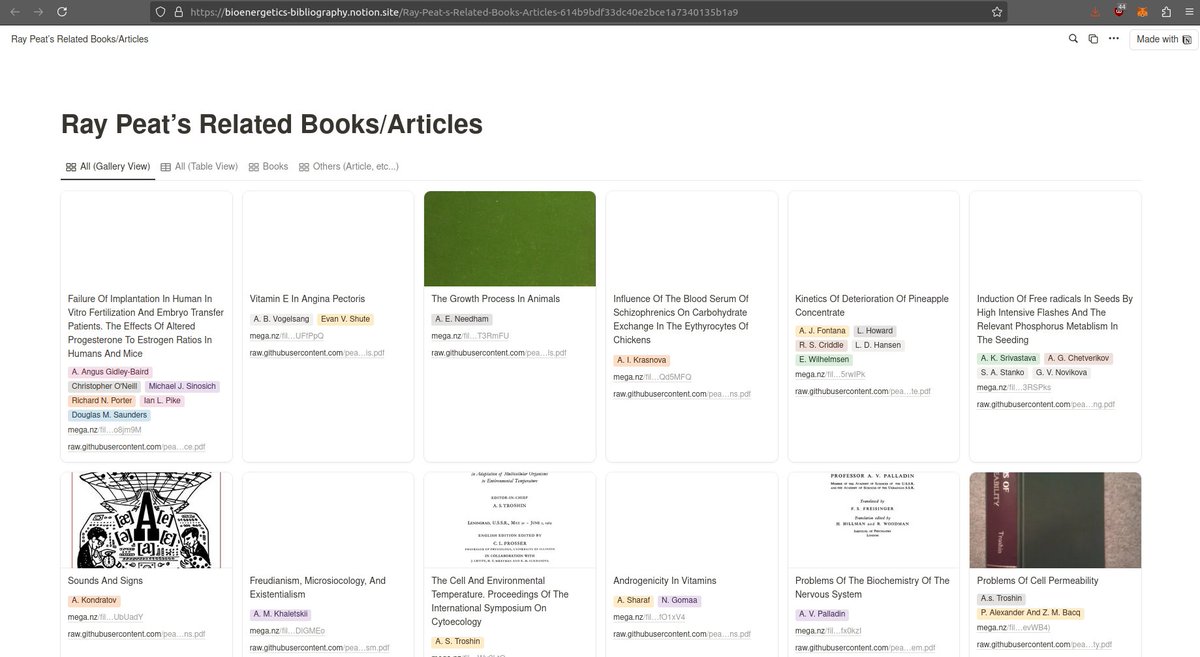
The new URL for notion is https://t.co/OJpKfEVLTi. Normally everyone can access the link without an account. mega and github links are available for all books and articles, but contact me if there is any issue.
New lows become new normals.
For years, people wake up with a sore throat, inflamed lymph nodes, severe fatigue, but write off their symptoms as psychological, psychiatric chemical imbalances, or perhaps failures of discipline.
Serotonin, then, allows them adapt to poor health.
"Physical examination includes a search for all the physical signs of over- or underfunction... and investigation of the state of nutrition... an estimate of what sort of individual the patient is, physically and mentally"
Diagnostic techniques of hypothyroidism (1963)
- Changes in appearance, voice or hearing, texture of skin or hair
- Marked alteration in mental activity and acuity, irritability or lethargy, or emotional lability
- Change in sleep requirements, weight, appetite, bowel habits
Full transcript from Danny’s telegram: Previously unreleased group conversation with Ray Peat that took place on January 30, 2022, about technocracy, growing food, hard money, and safe places to live:
Q: Short-term safety (1-3 years) – inside or outside the USA?
Ray Peat: It really depends on how you would live outside the US. The transition time creates confusion and can reduce your stability, which is very close to safety. Safety varies with pollution, random danger, and political possibilities. It depends on the specific city or region, whether you’re in the US or Mexico. You can find places with extreme safety in Mexico and risky places in the US. Americans are almost always the least likely to be directly harmed in Mexico, except indirectly through pollution.
Q: Does the answer change for the long term (rest of your life as a 30-year-old)?
Ray Peat: With the exception of invasion by the US, Mexico is on a generally good stabilizing course while the US is on a steady downward course. If they continue the present path, the US could become almost unrecognizable within 10 years. The rate of craziness we’ve seen in the last year and a half, if extrapolated, would make it a complete nightmare long before 10 years.
Q: Aren’t the strongest resistors to the global agenda concentrated in the USA with the best laws and resources to fight back, compared to Mexico?
Ray Peat: No. When you get away from the cities, Mexico has more of that spontaneous libertarian spirit. That conformist, militaristic conformism in the US was completely absent when I first went to Mexico 60 years ago. It has been creeping in, but I would guess a good half of the population is still pretty spontaneously libertarian — they secretly keep their guns and do what they want, ignoring the state.
Q: Thoughts on Bolivia, Costa Rica, Nicaragua, Ecuador, Peru as alternatives?
Ray Peat: Costa Rica has traditionally been the most like Scandinavia — unmilitarized and pretty free. Peru is probably the most inclined to fascism. Ecuador is being pressured so heavily by the US it’s hard to tell what will happen. Bolivia is second in the world (after Mexico) in communal land ownership at about 33%, which supports anti-neoliberal processes. The neoliberal pressures are what anger the population and create dangerous situations.
Q: Is Mexico more resistant to Green New Deal / climate change agendas than Bolivia?
Ray Peat: I imagine both are pretty resistant, but my feeling from both big-city and small-town people in Mexico is that they are extremely resistant to propaganda. Right after 9/11, the word “pretexto” was already in everyone’s mind in Mexico, while it took 10 years for that awareness to take hold in the US.
Q: Hedging bets for the next 10 years — Bolivia or Mexico?
Ray Peat: Mexico has a long history (about 150 years) of being a place of escape from repressive governments, similar to Holland centuries ago. Even conservative governments have honored that liberal tradition of accepting refugees from everywhere.
Q: Does growing cartel violence and power in Mexico factor into your decision?
Ray Peat: The cartels are starting to use their drug money to invest in agriculture, and they don’t always know what they’re doing, which contributes to some deforestation. But they can be shooting each other not very far away and no one pays attention because it’s only between the drug people.
Q: If we start a community with a large agriculture focus, would that raise eyebrows with the cartels?
Ray Peat: If you were a very rich operation, maybe — think of the Mennonites in Chihuahua. They seem to have done pretty well and I haven’t heard of them being menaced by the cartels. (One incident involved a family driving a vehicle similar to those used by drug people.)
@MDinCanada@dannyroddy He read a lot + most universities had access to publications that weren't biased in favor of the accepted scientific views across different fields.
"I used to spend every day in the library for decades and my favorite journals one by one in the last several years were canceled."
Updated again with around 60 to 80% of books/articles cited in Generative Energy, Mind And Tissue, From PMS To Menopause and Nutrition For Women.
Those missing will require more time to find, but for Mind And Tissue some sources were never translated. (I'll add them later)
New books were added and the archive is now available on:
- mega: https://t.co/2bbeclA50H
- and github: https://t.co/IKczDpt2Wv
The new books/publications aren't on notion yet.
@charmcgi MDs often talk about a month to have the full effects of T4 but two weeks should be enough:
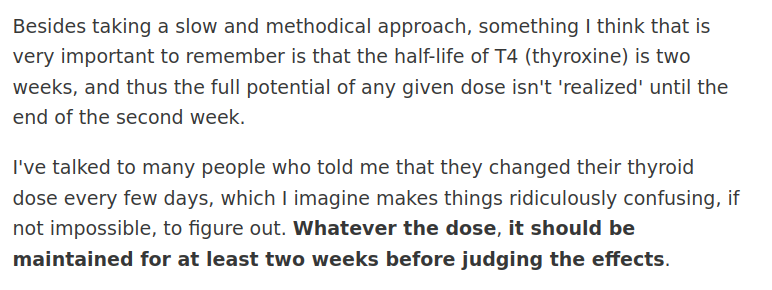
"... the half-life of T4 (thyroxine) is two weeks, and thus the full potential of any given dose isn't 'realized' until the end of the second week."
A hard-to-find 2014 article by Ray Peat on negation:
"When the organism is traumatized, it hardens, and stops developing, and wants to impose its moral hardness everywhere; assertiveness is the antithesis of perceptive life, and devises ways to negate it."
Negation by Raymond Peat
January 22, 2014
I think the concept is very simple in itself, but the problem is that it implies a cultural criticism that involves everything, biology, physics, politics, epistemology. Contraries, or different perspectives, can interact to eliminate error, in progressing. Negation is a human function that would stop the free advance of life and consciousness, opposing critical questioning and spontaneous understanding. The refusal to discuss a problem, and the many forms of censorship, and legal-economic systems that make whole courses of action impossible, are negations, that have their poisonous effects. Physiology reflects their poison, in all the ramifications of learned helplessness, restraint stress, the carcinogenic effects of work-school-media-religion-government.
Negation excludes or suppresses those complex processes of being,* and implants nothing but–at the most–obligation in their place. Undocumented aliens are negated simply, slaves and citizens are negated but with obligations. Religions tell people that their being is immaterial, a ghost that will be o.k. somewhere else forever, if they do their duty now. Having a false consciousness implanted by schools and television, labels and roles take the place of being. A sense of despair and impossibility is right behind the false consciousness.
Our surrounding context of language and culture is constantly distorting and misinterpreting anything which persists in moving toward a more expansive life. Knowledge, a physiological thing, is expansion, and as such is always clearing away errors; when people identify with error, they see knowledge as the deadly enemy, that must be destroyed.
Blake’s idea of the “intellectual fountain” was very different from the attitude of Schopenhauer and Nietzsche (where “Will” or assertion was the fundamental reality). Blake saw it as always flowing into new territory, discovering new things, enlivening the world that’s being discovered-created. When the organism is traumatized, it hardens, and stops developing, and wants to impose its moral hardness everywhere; assertiveness is the antithesis of perceptive life, and devises ways to negate it.
In an authoritarian culture, people want you to forget who you are, so they can implant themselves without resistance. Just recognizing your own presence, to attend to them fully, is something they don’t expect; it isn’t quite like Carl Rogers’ therapeutic presence, because it’s conditional–your conscious presence is the condition. Being present* and able to listen (and question and understand) is receptive and productive, and it can even be disruptive, but it’s very different from being assertive, because it’s always hoping to open up new possibilities, rather than imposing something carried along from the past. A priest is being assertive when he says you have to take it on faith, a physics professor is being assertive when he won’t justify his assumptions–where would physics be if your assumptions had to be plausible beyond a particular culture of physics? Much of their potential imagination has been invested in thinking of ways to keep you from questioning.
Physics, in the 20th century, has taken on the Nietzchean subjectivism, claiming to quantize/digitize everything. There is no digital nature, but assertive subjectivism has effectively written quantization into the constitution of science, and into the shadow of the humanities that remains in the corporate universities. Bits of “knowledge” are sold and hoarded, and people who would show that they are something other than knowledge are treated as vandals and worse–Aaron Swartz, for example.
A Little Boy Lost
Nought loves another as itself,
Nor venerates another so,
Nor is it possible to thought
A greater than itself to know.
And, father, how can I love you
Or any of my brothers more?
I love you like the little bird
That picks up crumbs around the door.’
The Priest sat by and heard the child;
In trembling zeal he seized his hair,
He led him by his little coat,
And all admired the priestly care.
And standing on the altar high,
‘Lo, what a fiend is here! said he:
‘One who sets reason up for judge
Of our most holy mystery.’
The weeping child could not be heard,
The weeping parents wept in vain:
They stripped him to his little shirt,
And bound him in an iron chain,
And burned him in a holy place
Where many had been burned before;
The weeping parents wept in vain.
Are such thing done on Albion’s shore?
A Poison Tree
I was angry with my friend:
I told my wrath, my wrath did end.
I was angry with my foe:
I told it not, my wrath did grow.
And I watered it in fears,
Night and morning with my tears;
And I sunned it with smiles,
And with soft deceitful wiles.
And it grew both day and night,
Till it bore an apple bright.
And my foe beheld it shine.
And he knew that it was mine,
And into my garden stole
When the night had veiled the pole;
In the morning glad I see
My foe outstretched beneath the tree.
Introduction.
Hear the voice of the Bard!
Who Present, Past, & Future sees
Whose ears have heard,
The Holy Word,
That walk’d among the ancient trees.
Calling the lapsed Soul
And weeping in the evening dew:
That might controll.
The starry pole;
And fallen fallen light renew!
O Earth O Earth return!
Arise from out the dewy grass;
Night is worn.
And the morn
Rises from the slumberous mass.
Turn away no more:
Why wilt thou turn away
The starry floor
The watry shore
Is giv’n thee till the break of day.
The Voice of the Ancient Bard.
Youth of delight come hither.
And see the opening morn,
Image of truth new born.
Doubt is fled & clouds of reason
Dark disputes & artful teazing.
Folly is an endless maze,
Tangled roots perplex her ways.
How many have fallen there!
They stumble all night over bones of the dead
And feel they know not what but care;
And wish to lead others when they should be led