👋We’re the Health Care Affordability Lab at @Yale — a new initiative that pairs rigorous academic scholarship with strategic policy engagement to curb rising health care spending at every level of government.
Read more: https://t.co/khKVwdkB6F
In @BostonGlobe, @CarmelShachar, @seanmmcbride@ShannonMacDonMD discuss options, including:
-each state establishing several exceptions to licensure reqs
-the federal govt setting standards for state-issued telemedicine licenses (think drivers’ licenses).
https://t.co/jxAOWjuJG6
The pandemic created a telehealth boom.
And it's increasingly common for a patient in one state to seek a telemedicine visit with their doctor in another.
But the end of pandemic-era waivers of in-state licensure requirements may jeopardize this care.
https://t.co/jxAOWjuJG6
It's a tremendous & costly burden for physicians to be licensed in all 50 states.
The authors argue that state-by-state licensing creates an anticompetitive regulatory thicket, driving up prices and decreasing access for patients.
How could physician licensure law be improved?
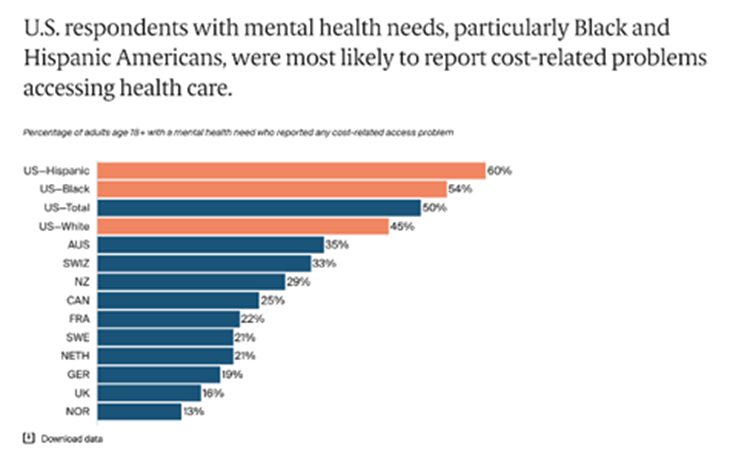
1/5 Cost-related problems are a barrier to accessing mental health care in the US and the needs are most acute for Black and Latino people #MentalHealthMonth https://t.co/wZHNRVMrV9
Mental health issues among youth have steadily risen in recent years, reaching what some consider to be crisis levels. While policymakers have developed a range of solutions to address this crisis, there is more we can do to support our youth. 🧵 #MentalHealthMonth
As the nation’s #behavioralhealth crisis grows, so too does bipartisan interest in building the effective & equitable infrastructure we need to meet it.
The time to take action is now.
Here are 4 policy areas where meaningful action is needed and achievable. #mentalHealthMonth
A new proposal from House Rs would add work requirements to #Medicaid. There’s lots of evidence from Arkansas, projections from other states & other programs on the efficacy of work reqs 🧵
Case Study: One Colorado managed care plan found a way to increase access to #mentalhealth & #substanceuse services by integrating behavioral health into #primarycare for Medicaid beneficiaries WITHOUT increasing overall health spending https://t.co/uLKVTD4Iez
This is a terrific explanation of what's at stake in today's Supreme Court case known as Talevski. Oral argument will be *super* wonky.
But the Court is considering a foundational issue of whether states can be held accountable for violating laws on Medicaid and other programs.
Great article on the politics of Medicaid expansion in TX.
"Anything related to Medicaid expansion is “DOA with Abbott and Patrick,” Dunkelberg said. “There’s a very strict set of marching orders and they have nothing to do with analysis of potential impacts and facts.”"
Many red states have expanded Medicaid coverage for poor residents. Why can’t Texas?
“There’s a very strict set of marching orders and they have nothing to do with analysis of potential impacts and facts.” New from @pubhealthwatch: https://t.co/c6J3sLBzyl
A recent @commonwealthfnd survey digs into the state of U.S. health insurance and offers recommendations for how Congress and the Administration can advance more affordable, comprehensive coverage:
https://t.co/KjX0jBuaod
Great piece by @DavidBlumenthal and @SaraCollins_ .
"In short, too many Americans are covered by health insurance with such huge cost barriers and exclusions that it’s coverage in name only."
What can Congress do about it?
--curtail *prices*, which are higher in the U.S. than anywhere else in the world
--reduce medical debt by shrinking the deductibles in marketplace plans and lowering their out-of-pocket limits
--add an out-of-pocket maximum to traditional Medicare
Join @AllHealthPolicy at noon this Friday for a briefing on behavioral health and primary care integration. Learn about what it is, why it helps patients, and federal policy opportunities to better enable it.
Moderated by @commonwealthfnd's own @RW_Intl!
https://t.co/uKZ4dTFRMY
Jamila Michener (@povertyscholar) is doing groundbreaking research on why marginalized people’s demands are often ignored.
What unifies her work is a desire to examine social programs like Medicaid or food stamps from the bottom up. #FuturePerfect50 https://t.co/PpaGZJsgQR
Medicare #OpenEnrollment time is here.
People on Medicare have 2 different coverage options - traditional Medicare and Medicare Advantage plans.
We asked beneficiaries 65+ which they chose, why & what resources helped them decide.
https://t.co/WqcmNdxrR7
Here's what they said:🧵
@povertyscholar and @TiffNFord offer specific recs and examples of how to center the voices of historically oppressed people in the policymaking process:
* share power
* build power
* differentiate voice
* institutionalize voice
* broaden voice
https://t.co/yBz8Btdzpp