Astrophysics, Mathematical Physics (thank you John C.Baez), the rest of Physics, Mathematics, programming, GPU, NTNU | nerding about science & technology
BREAKING NEWS
The Norwegian Nobel Committee has decided to award the 2024 #NobelPeacePrize to the Japanese organisation Nihon Hidankyo. This grassroots movement of atomic bomb survivors from Hiroshima and Nagasaki, also known as Hibakusha, is receiving the peace prize for its efforts to achieve a world free of nuclear weapons and for demonstrating through witness testimony that nuclear weapons must never be used again.
#NobelPrize
Learn more about the 2024 #NobelPrize in Chemistry
Press release: https://t.co/ulecwsVr2b
Popular information: https://t.co/QTIVlTEvQx
Advanced information: https://t.co/H5Z2Rmt7PQ
In 2003, this year’s chemistry laureate David Baker succeeded in designing a new protein that was unlike any other protein. This was the first step in something that can only be described as an extraordinary development. A few of the many spectacular proteins created in Baker’s laboratory using his computer software Rosetta can be seen in the picture.
He also released the code for Rosetta, so a global research community has continued to develop the software, finding new areas of application.
Baker’s research group has produced one imaginative protein creation after another, including proteins that can be used as pharmaceuticals, vaccines, nanomaterials and tiny sensors.
Work that once took years now takes just a few minutes thanks to this year’s chemistry laureates.
2024 #NobelPrize laureates Demis Hassabis and John Jumper have used their AI model AlphaFold2 to calculate the structure of all human proteins. They also predicted the structure of virtually all the 200 million proteins that researchers have so far discovered when mapping Earth’s organisms.
Google DeepMind has also made the code for AlphaFold2 publicly available, and anyone can access it. The AI model has become a gold mine for researchers. By October 2024, AlphaFold2 had been used by more than two million people from 190 countries.
The picture shows a few of the many examples of how AlphaFold2 helps researchers.
This year’s chemistry laureate David Baker created the first protein that was entirely different to all known existing proteins.
The protein, Top7, was a bolt from the blue for the researchers working on protein design. Those who had previously created new proteins had only been able to imitate existing structures. Top7’s unique structure did not exist in nature. Also, with its 93 amino acids, the protein was larger than anything previously produced using de novo design.
#NobelPrize
The 2024 #NobelPrize laureates in chemistry Demis Hassabis and John Jumper have successfully utilised artificial intelligence to predict the structure of almost all known proteins.
In 2020, Hassabis and Jumper presented an AI model called AlphaFold2. With its help, they have been able to predict the structure of virtually all the 200 million proteins that researchers have identified. Since their breakthrough, AlphaFold2 has been used by more than two million people from 190 countries. Among a myriad of scientific applications, researchers can now better understand antibiotic resistance and create images of enzymes that can decompose plastic.
Read more about their story: https://t.co/nWxcZs6wqC
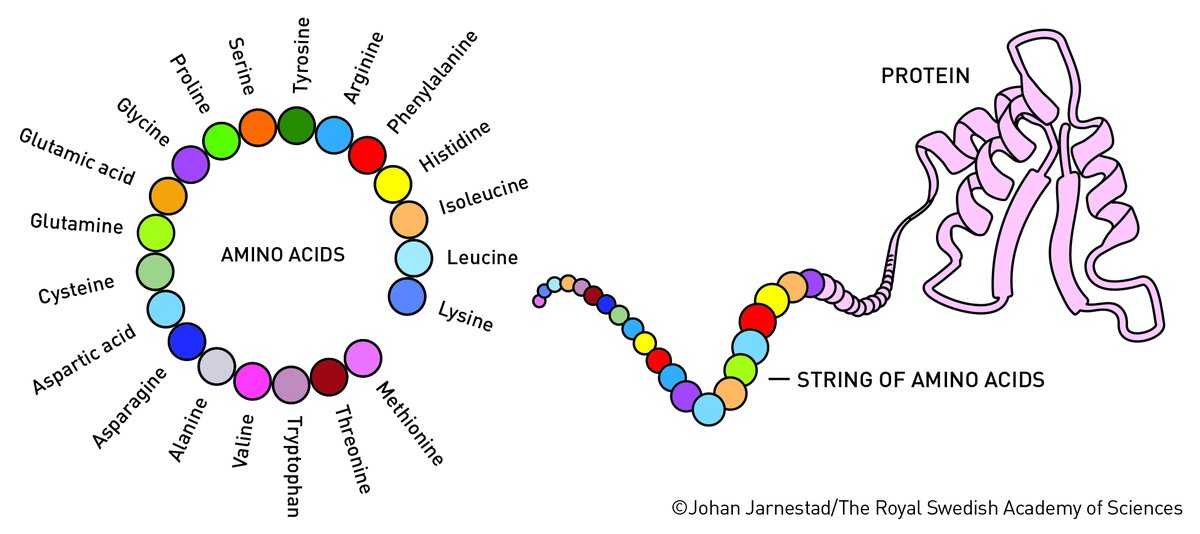
Proteins can be described as brilliant chemical tools. They are generally built from 20 amino acids that can be combined in endless ways. Using the information stored in DNA as a blueprint, the amino acids are linked together in our cells to form long strings.
Then the magic of proteins happens: the string of amino acids twists and folds into a distinct – sometimes unique – three-dimensional structure. This structure is what gives proteins their function.
It is hardly possible to overstate the potential encompassed by life’s chemical building blocks, these 20 amino acids. The #NobelPrize in Chemistry 2024 is about understanding and mastering them at an entirely new level.
This year’s #NobelPrize laureates in chemistry cracked the code for proteins’ amazing structures.
The Nobel Prize in Chemistry 2024 is about proteins, life’s ingenious chemical tools. Chemistry laureate David Baker has succeeded with the almost impossible feat of building entirely new kinds of proteins. His co-laureates Demis Hassabis and John Jumper have developed an AI model to solve a 50-year-old problem: predicting proteins’ complex structures. These discoveries hold enormous potential.
BREAKING NEWS
The Royal Swedish Academy of Sciences has decided to award the 2024 #NobelPrize in Chemistry with one half to David Baker “for computational protein design” and the other half jointly to Demis Hassabis and John M. Jumper “for protein structure prediction.”
Learn more about the 2024 #NobelPrize in Physics
Press release: https://t.co/QnxSEyvNpD
Popular information: https://t.co/fcSC4BQKkr
Advanced information: https://t.co/gr6GuZmGy3
This year’s physics laureates’ breakthroughs stand on the foundations of physical science. They have showed a completely new way for us to use computers to aid and to guide us to tackle many of the
challenges our society face.
Thanks to their work humanity now has a new item in its toolbox, which we can choose to use for good purposes. Machine learning based on artificial neural networks is currently revolutionising science, engineering and daily life.
The field is already on its way to enable breakthroughs toward building a sustainable society, such as identifying new functional materials. How deep learning by artificial neural networks will be used in the future depends on how we humans choose to use these incredibly potent tools, already present in many aspects of our lives.
#NobelPrize
2024 physics laureate Geoffrey Hinton used a network developed by his co-laureate John Hopfield as the foundation for a new network: the Boltzmann machine. This can learn to recognise characteristic elements in a given type of data.
The Boltzmann machine can be used to classify images or create new examples of the type of pattern on which it was trained. Hinton has built upon this work, helping initiate the current explosive development of machine learning.
#NobelPrize
This year’s #NobelPrize laureate in physics John Hopfield created an associative memory that can store and reconstruct images and other types of patterns in data.
The Hopfield network can store patterns and has a method for recreating them. When the network is given an incomplete or slightly distorted pattern, the method can find the stored pattern that is most similar.
Read more about the research that led to this year’s physics prize: https://t.co/QuIdxRvuEP
The 2024 #NobelPrize laureates in physics used tools from physics to construct methods that helped lay the foundation for today’s powerful machine learning.
John Hopfield created a structure that can store and reconstruct information. Geoffrey Hinton invented a method that can independently discover properties in data and which has become important for the large artificial neural networks now in use.
Although computers cannot think, machines can now mimic functions such as memory and learning. This year’s physics laureates have helped make this possible. Using fundamental concepts and methods from physics, they have developed technologies that use structures in networks to process information.
BREAKING NEWS
The Royal Swedish Academy of Sciences has decided to award the 2024 #NobelPrize in Physics to John J. Hopfield and Geoffrey E. Hinton “for foundational discoveries and inventions that enable machine learning with artificial neural networks.”
BREAKING NEWS
The 2024 #NobelPrize in Physiology or Medicine has been awarded to Victor Ambros and Gary Ruvkun for the discovery of microRNA and its role in post-transcriptional gene regulation.
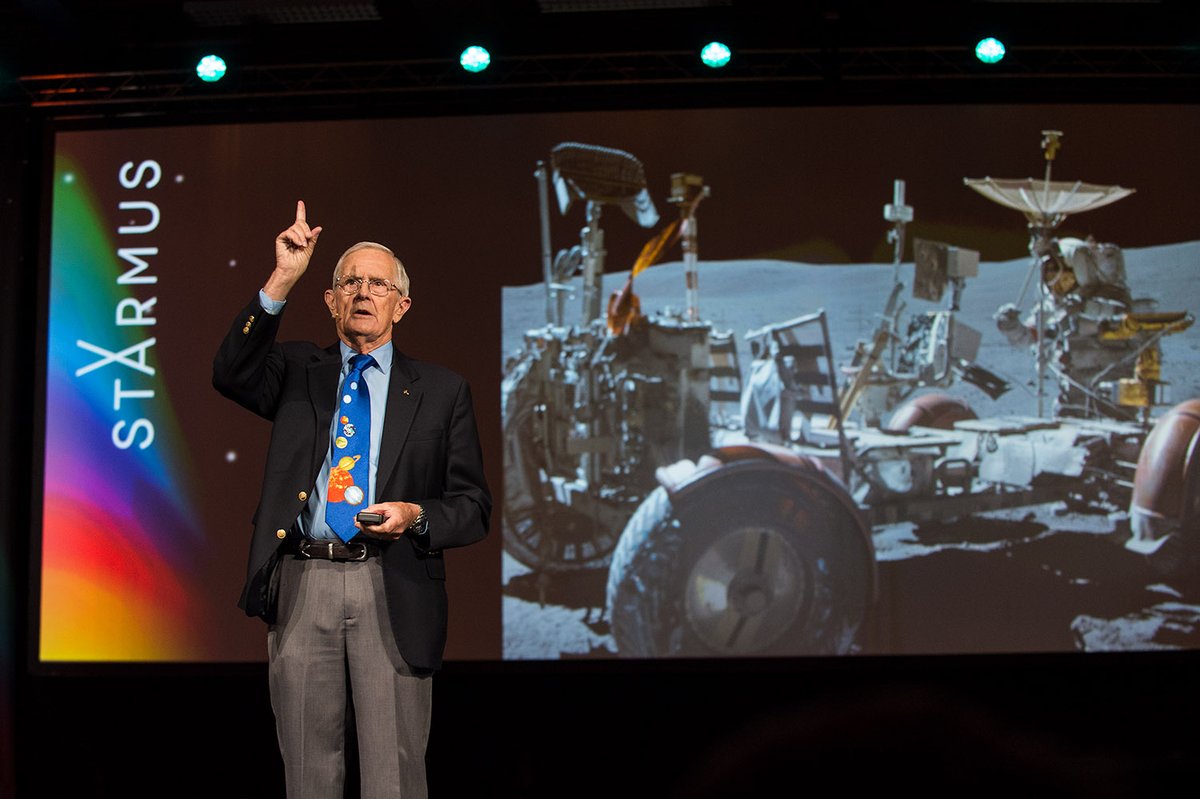
#STARMUS IV in 2017 was epic! The theme was "Life and the Universe," featuring 11 #Nobel Prize laureates, #astronauts, #artists, and more. Over 2300 delegates attended, and it was a blast with discussions by space explorers like Charlie Duke and Sandra Magnus. #TBT#SpaceTalks
Family photo! 📷
Our new economic sciences laureate Claudia Goldin woke up the whole family after getting a very exciting phone call from Stockholm.
Here she is with her husband, Lawrence, and dog, Pika.
Send your congratulations to our latest laureate.