You don't have to search for Cangzhou's signature dishes—they have a way of finding you. 🍲
Walk through the streets around the Grand Canal and Nanchuan Tower, and you'll keep seeing the same three names: Hot Pot Chicken, Hejian Donkey Burger, and Lamb Intestine Soup.
Different meals, different moments of the day, but all unmistakably Cangzhou.
#Cangzhou #GrandCanal #ChineseFood #FoodTravel #VisitChina
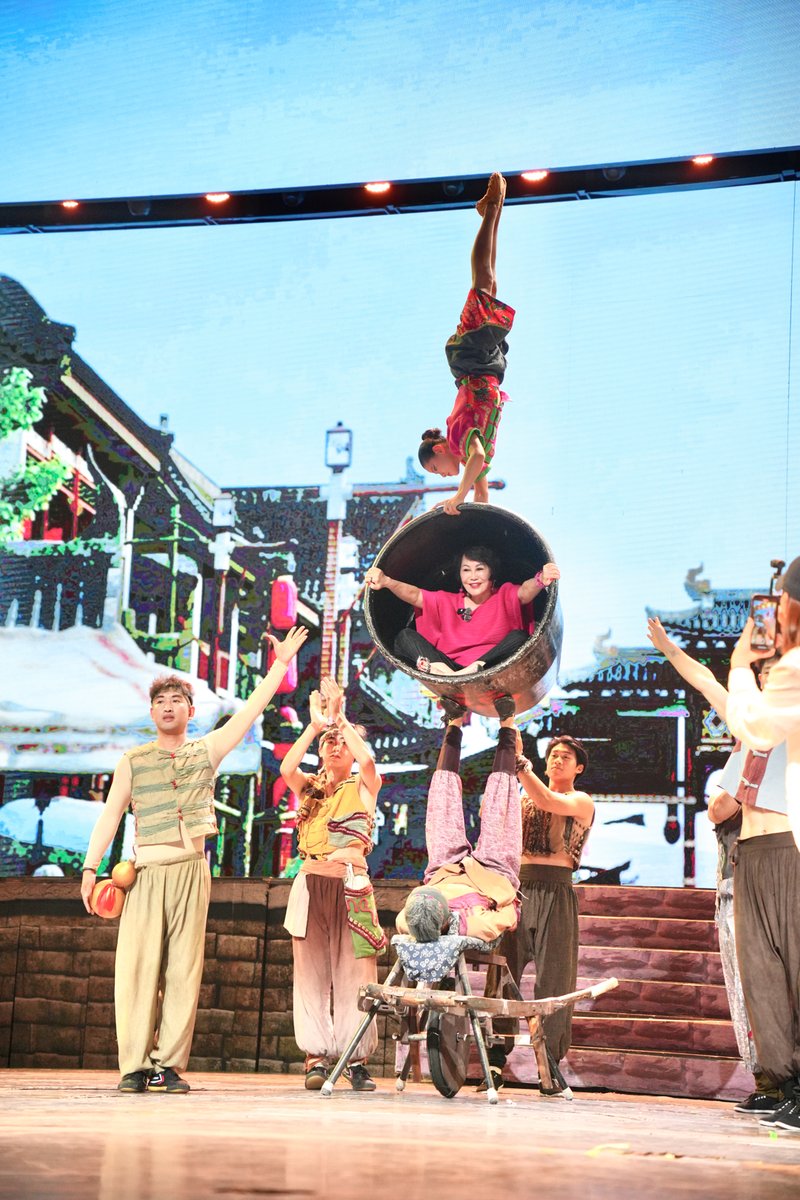
Legendary fashion icon Yue-Sai Kan @yuesaikan experienced the wonders of Wuqiao Acrobatic World! 🥳
From Deng Dagang (Giant Jar Jugging), Sanxianguidong to Ten Variety Acts and the mesmerizing Umbrella Spinning, every performance left her surprised and amazed.
#Wuqiao #ChineseAcrobatics #Cangzhou #ChinaTravel #china
From pioneering Chinese beauty culture to sharing Chinese stories with the world, Yue-Sai Kan has inspired generations.
From 1996 to 2026, three decades of connection have brought Yue-Sai back to China, this time to witness a different kind of beauty: Chinese acrobatics. 🤸♀️✨
#ChineseCulture #Acrobatics #Cangzhou #CulturalExchange #ChinaStories
Yue-Sai Kan sat with Wuqiao's Sanxianguidong, trying to guess where the balls were. She failed every single round but couldn't stop smiling!
Up close, she discovered that this playful art hides decades of discipline, lightning reflexes, and generational mastery. 🤸♀️
#ChineseAcrobatics #Cangzhou #ChineseCulture #CulturalHeritage #ExploreChina
Fashion icon Yue-Sai steps into the world of acrobatics—quite literally!
In Wuqiao, the “hometown of Chinese acrobatics,” she bravely steps inside the giant jar used in the thrilling Deng Dagang act.
Would you dare to give it a try? 😏
#Wuqiao#Cangzhou#ChineseAcrobatics #DengDagang #YueSai #ChinaTravel
【Cangzhou Bird Guide 06 – Paradoxornis heudei】
Paradoxornis heudei, also known as the “Panda of the Bird World” and the “Spirit of the Reeds,” is a rare bird species endemic to China. The name carries strong cultural significance— “Zhendan” (震旦) was historically used in ancient India to denote China. The first specimen of this bird species was collected in Nanjing, China, leading to its scientific name. With its habitat restricted to reed marshes and a critically small population, it is affectionately referred to as the “Panda of Birds” by the Chinese public.
Habitat
The Paradoxornis heudei primarily inhabits reed beds along rivers, lakes, marshes, estuaries, and coastal mudflats. During the winter, when large-scale reed harvesting occurs, they may forage in grassy ditches nearby.
Behavior and Diet
These small, active birds are lively and vocal, often emitting short, sharp “ji-ji” calls. They primarily feed on insects in summer, while in winter, their diet includes berries and seeds.
Conservation Status
✨ Included in the list of terrestrial wild animals of important ecological, scientific and social value, issued by the National Forestry and Grassland Administration.
Listed as Near Threatened (NT) on the IUCN Red List of Threatened Species (Version 3.1, 2016).
#conservation #nature #bird #nandagang #cangzhouchina #panda #wildlife
The Secret Behind Cangzhou’s Saline-Alkali Land Transformation!
Did you know? Cangzhou has over 4 million mu (about 266,667 hectares) of saline-alkali land. This is due to its eastern location bordering the Bohai Sea and low elevation, resulting in high salinity and alkalinity. For centuries, these harsh soils have plagued local crop cultivation and hindered yield growth. But now, Cangzhou’s once “untamable” saline-alkali lands have been transformed into “granaries”! Here’s how they did it:
1. Reducing Soil Salinity to Improve Fertility
Through continuous innovation, techniques like saline water freezing irrigation, microbial-driven remediation, and subsurface pipe drainage have been adopted to lower soil salinity and alkalinity.
2. Cultivating Salt-Tolerant, Drought-Resistant Crops
Crops such as drought-resistant and salt-tolerant wheat, alfalfa, winter jujube, and fennel—naturally suited to saline-alkali conditions—have been prioritized. But that’s not all! Farmers in Cangzhou have also genetically improved these varieties to better adapt to the challenging environment.
Today, these reclaimed lands not only support diverse crops but have also spurred the growth of full agricultural industry chains. Next time, we’ll uncover the “golden benefits” emerging from Cangzhou’s transformed saline-alkali fields!
(Note: 1 mu ≈ 0.067 hectares)