I regret calling this a "memory" tool. It isn't one.
A memory is the output of processing information, not the information itself. To become a memory, information has to be consolidated and summarized into something new that stands in for the original.
That step is where things go wrong. Memories are easy to poison, and a poisoned memory infects everything it touches with wrong context. You can't check it either, because the source it came from is gone.
agent-history doesn't do that. It makes no assumptions about your information and creates no memories. It doesn't need to.
It indexes your past agent conversations and lets your agents search them by meaning. Results are ranked by a blend of semantic similarity and keyword match, with ties going to the newer conversation, so a later correction beats the thing it corrected.
Embedding, search and ranking all run on your machine. The only provider tokens you spend are when your agent reads the results.
A memory gives you one fixed summary. This lets you go into the source conversations and find exactly the context you need, in your own words, as it was actually said.
Just ask the way you'd ask a person. You don't need to remember keywords or which project something happened in, because it indexes agent conversations from across your machine by default: Claude Code, Codex and OpenCode.
Tool calls, command output and other terminal noise are stripped out before indexing. That makes it easier for you to read and cheaper for your agent to process.
I built (and just open-sourced) a local semantic search engine for Claude Code memories.
You know that feeling: you solved something three weeks ago but can’t remember which project or the exact words. Grep is useless.
We have legendary repeat founder and technical wizard @jperla of @nytokenexchange / @TrustedRouter as a judge!! He’s also creator of the movement for AI encryption : https://t.co/qfrevkKzJK
Our judge @thatchriskelly was the first lawyer and CPO at @Meta and currently is an owner of the @SacramentoKings ! He’s now an investor via Kelly Investments and will be with us on the boat!! Thank CK
I have stage 4 cancer. I thought I'd fight it alone.
I was wrong.
Since mid October, ~20 strangers on X have stepped up to help me. All for free so far:
- An NYU Langone lab offered to run my tumor data through their system to sharpen my vaccine targets
- A U Michigan lab offered to test drugs on my actual tumor cells
- A biotech ran AI analysis on my tumor RNA
- A vaccine company offered to design a second vaccine to check the first one
Scientists. Engineers. People I've never met.
Cancer has been picking us off one at a time for all of human history. It counts on us fighting it alone, scared and quiet.
Not anymore.
We have AI. We have the internet. We have each other.
Cancer, we're coming for you, bitch. Buckle up!
@rileybrown Lmk if you need an ai-enhanced editor. Been editing in premiere for 10 years and have been editing with opus in premiere for about a month now and have been using ai to help with editing for about a year now.
excited to announce this partnership with @capydotai
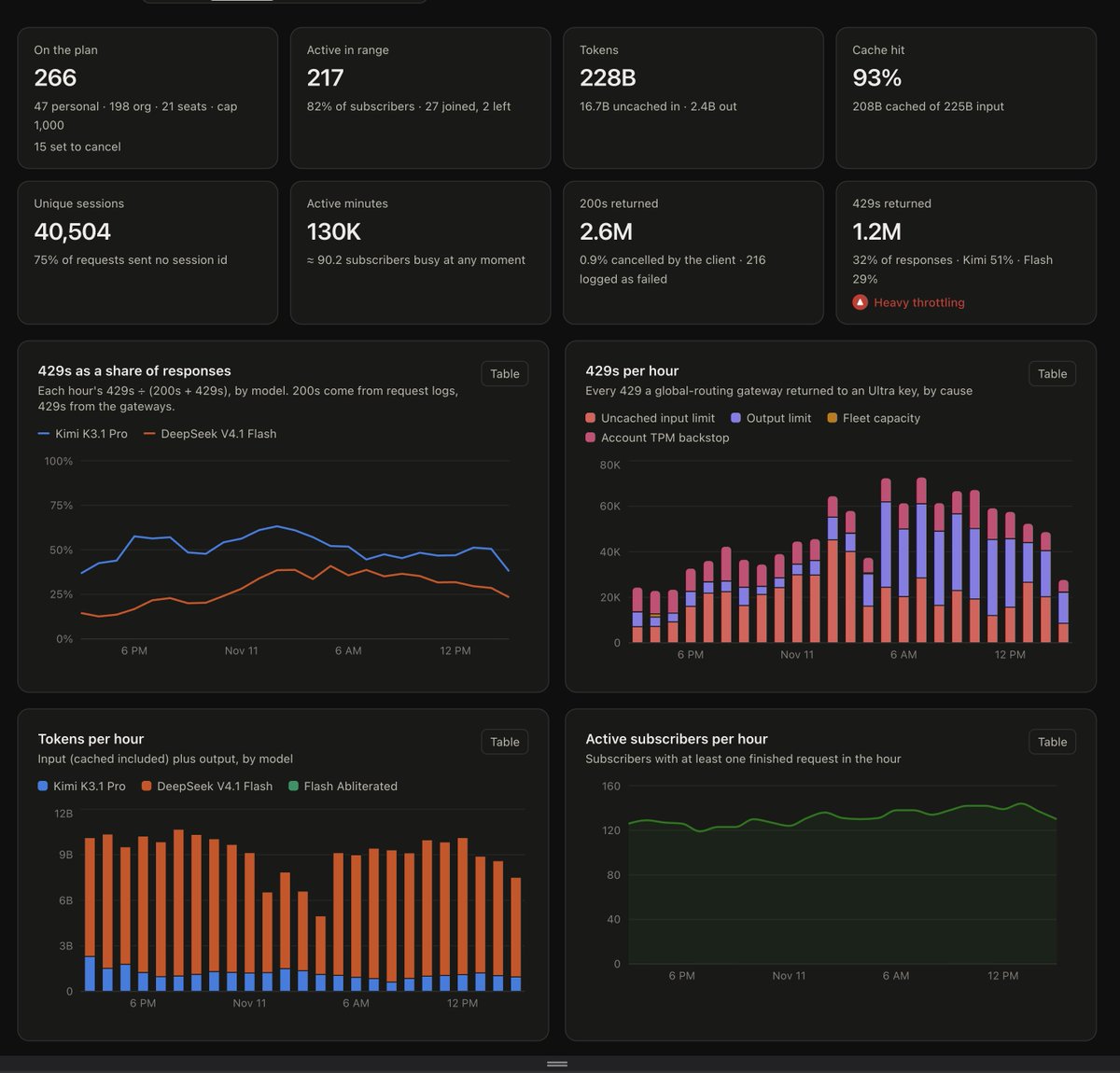
morph ultra offers unlimited cached tokens. right now cache hits across all subscribers are only 93% which is less than ideal.
optimized harnesses like capy let you hit much closer to 99% which is where the value of the sub really shines.
strongly recommend giving it a shot:
https://t.co/A3nONfFy1P
Claude now supports more of the MCP Apps extension, such as app tools and embedded sites, so your full app can run inside Claude.
Start building: https://t.co/X4ioqGu3A1
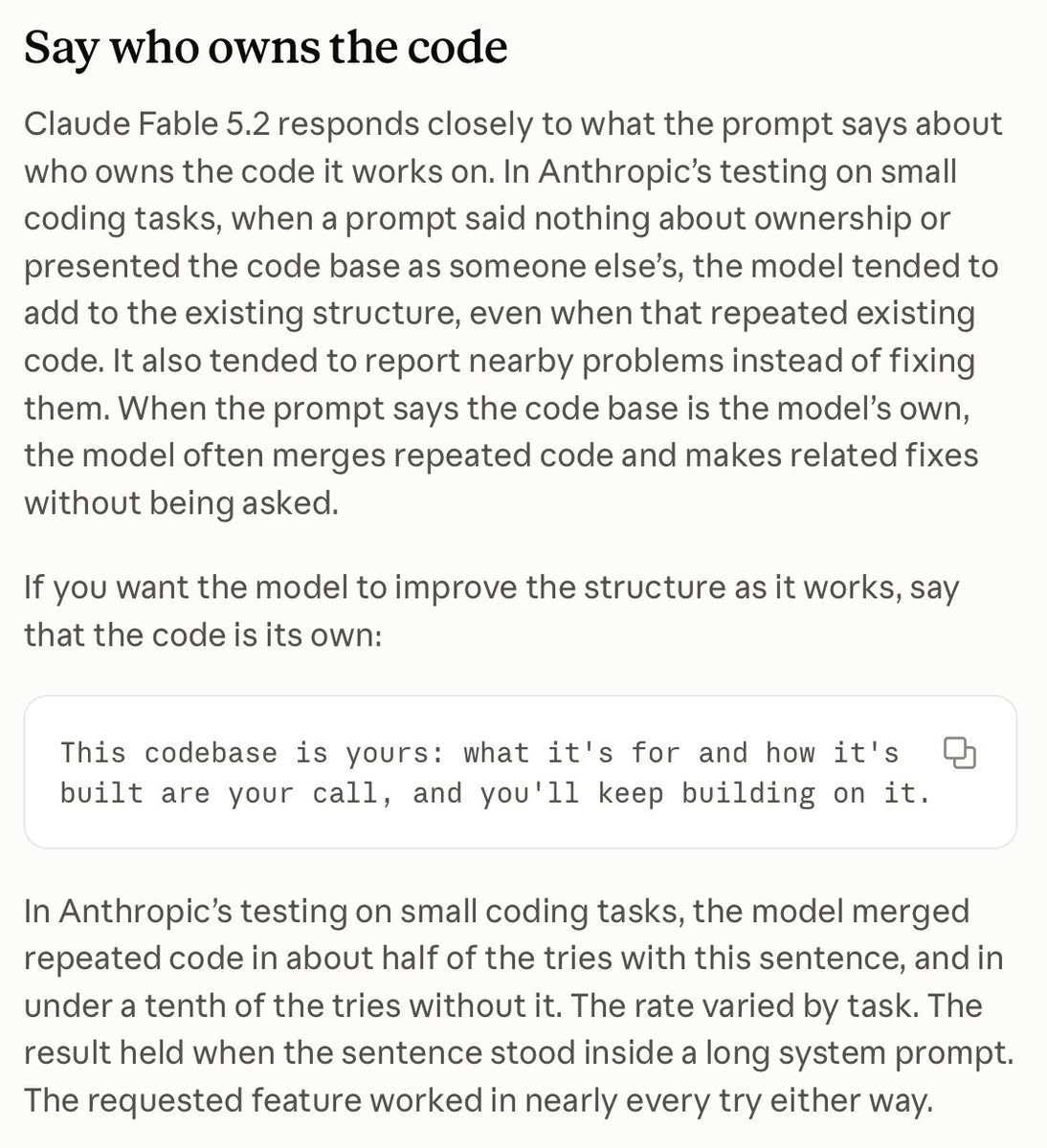
Anthropic quietly dropped a fascinating finding in the new Claude Fable 5.2 prompting guide.
When you give Fable 5.2 a coding task without saying who owns the repo, it assumes it's a guest in someone else's codebase. So it plays it safe: it bolts new functions onto the existing structure, leaves duplicate code alone, and merely mentions nearby bugs instead of fixing them.
Adding this single sentence to your system prompt or CLAUDE.md completely changes its behavior:
"This codebase is yours: what it's for and how it's built are your call, and you'll keep building on it."
In Anthropic's internal tests, adding that one line made Fable 5.2 proactively merge duplicate code and clean up related bugs in ~50% of runs, compared to under 10% without it.