Scale in infrastructure doesn’t come from custom engineering.
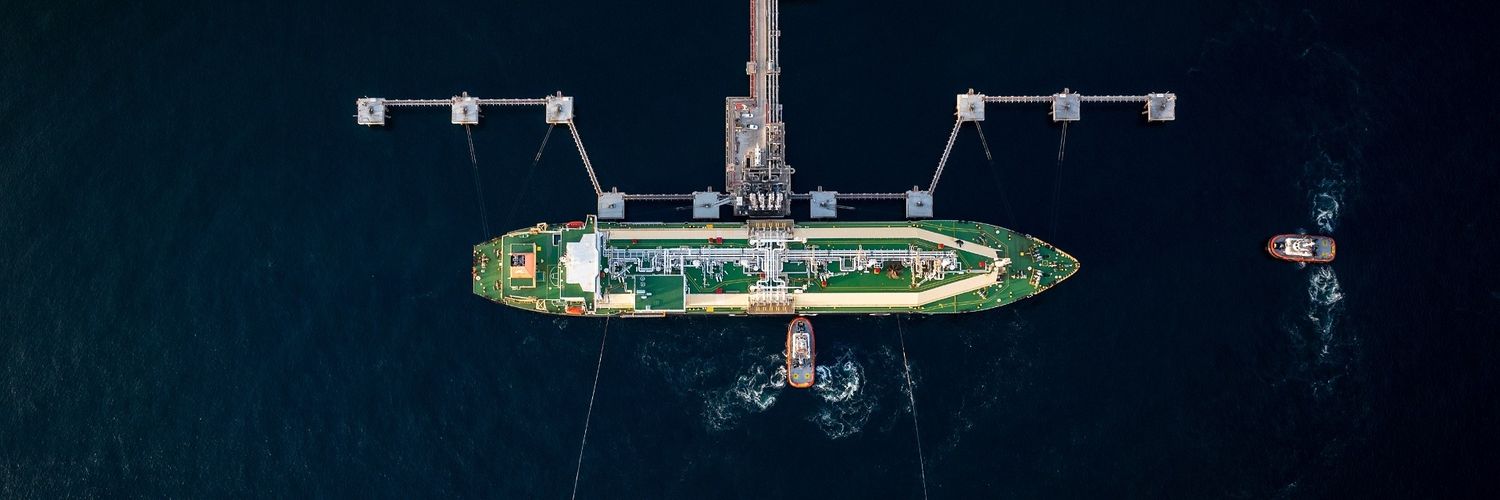
Fresh off the heels of FLNG 1, Delfin Midstream just partnered with EIG’s MidOcean Energy, which is taking a 50% equity stake in Delfin FLNG 2 offshore Louisiana.
The winning strategy here is the design blueprint. Instead of engineering a new vessel from scratch, FLNG 2 is a copy-paste duplicate of the 4.4 MTPA design package used for FLNG 1. Replicating design rather than reinventing it insulates the Schedule, Compresses Timelines and attracts Capital as institutional funds like EIG favor predictable, standardized risk profiles over bespoke experiments.
The era of treating every offshore megaproject like a unique piece of art is over, and congrats to my friend and mentor, Fred Jones for this foresight well over a decade ago. https://t.co/YExLslMl8b
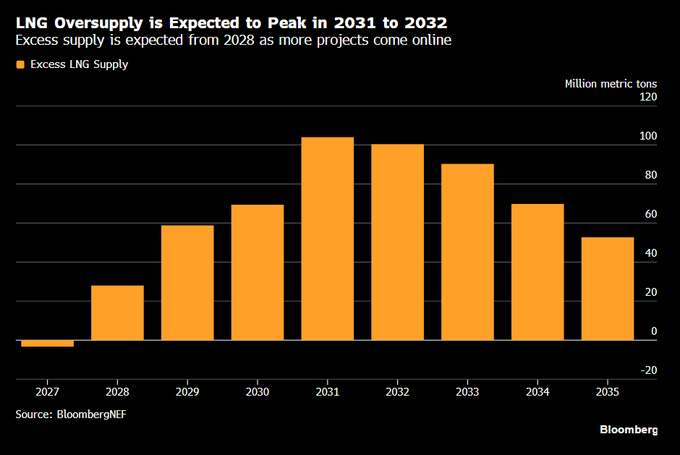
The LNG bull case has an expiration date?
Bloomberg just pushed it back a year.
Oversupply now starts in 2028, not 2027, because the Middle East war delayed new capacity. It still peaks at roughly 100 million tons in 2031 and 2032.
That gives Cheniere, Qatar, and every other LNG name roughly 3 more years before the setup flips for them...
The African FLNG boom has officially reached Nigeria. 🇳🇬🚢
Huge news this week where UTM Offshore signed a landmark 15-year Gas Supply Agreement with NNPC and Seplat Energy. This secures 200 MMscf/d of feedgas from the offshore Yoho field, clearing the final major hurdle for Nigeria's first-ever indigenous $3B FLNG project.
Trident Energy has proposed a new FLNG development offshore the Republic of Congo. Following their major acquisition of the legacy Nkossa and Nsoko II fields, they aren't just looking at oil brownfield rejuvenation—they're changing the gas blueprint.
Instead of building an FLNG unit tied exclusively to one field, Trident's model positions the vessel as open, shared processing infrastructure for multiple operators across the basin.
The biggest bottleneck for independent producers isn’t finding hydrocarbons; it’s the cost of commercializing associated gas. If you give them a shared, flexible asset on the water, you unlock an entire basin.
By introducing a shared-infrastructure FLNG model, Trident is solving the stranded gas and zero-flaring dilemma for mid-cap players simultaneously. This is a masterclass in how midstream flexibility unlocks upstream value.
The South Korean shipyard race for FLNG dominance is reaching a fever pitch.
Right after Samsung Heavy finalized a $2.38B contract for Eni’s Coral Norte FLNG in Mozambique via a repeatable, standardized hull model, Hanwha Ocean answered back with a monster play.
Hanwha just signed a $15.7 Billion MOU with Kanata Clean Power for a massive 12 MTPA FLNG facility in British Columbia.
"Scale doesn’t come from custom engineering; it comes from repeatable manufacturing. Following the yard backlogs shows where the market is actually going.”
Samsung is capturing the market with modular, fast-track designs, while Hanwha is leveraging mega-scale floating bets to secure long-term supply chains directly to Asia. This is a multi-billion dollar masterclass in infrastructure strategy.
🔗 SHI Standardized Win: https://t.co/uo1T6FiXWh
🔗 Hanwha $15.7B Play: https://t.co/u8sk1sxe3L
Interesting news on Petrobras actively studying an FLNG solution for its massive pre-salt cluster in the Santos Basin.
Historically, Petrobras has been all-in on FPSOs and long-distance subsea pipelines. But when you are dealing with ultra-deepwater assets 300km+ offshore with complex, high-CO_2 associated gas, the infrastructure math changes. Pipelines become an economic and logistical bottleneck.
If Petrobras pulls the trigger on FLNG in the pre-salt, it completely validates floating liquefaction not just as an agile fast-track tool, but as a primary development architecture for the world's most complex deepwater basins.
https://t.co/mpYko91RXM
Following up on the massive Delfin news, the global momentum behind Floating LNG is undeniable.
Canada’s $4B Cedar LNG project just hit a major milestone with the hull launch of its FLNG vessel at the Samsung Heavy Industries yard. What makes this one special? It's powered entirely by renewable electricity (hydro), making it one of the lowest-emission LNG facilities in the world. Seeing engineered solutions like this come to life proves that the future of gas exports is both floating and cleaner.
Great step forward for the Haisla Nation and Pembina Pipeline Corporation.
https://t.co/kAehtRWTNh
The US just got its first FLNG greenlight courtesy of Delfin Midstream's 4.4 mtpa - the world's largest single floating LNG unit.
My LNG mentor Mr Fred Jones predicted years ago that offshore floating tech would redefine US exports, and here we are. Massive win for the industry. @TradeWindsNews:
https://t.co/0YRCksgUd4
@eni's Nguya floating liquefied natural gas (#FLNG) unit, which serves the Congo #LNG project, has shipped its first liquefied petroleum gas (#LPG) cargo. #lngprime https://t.co/MXYoXchjrT
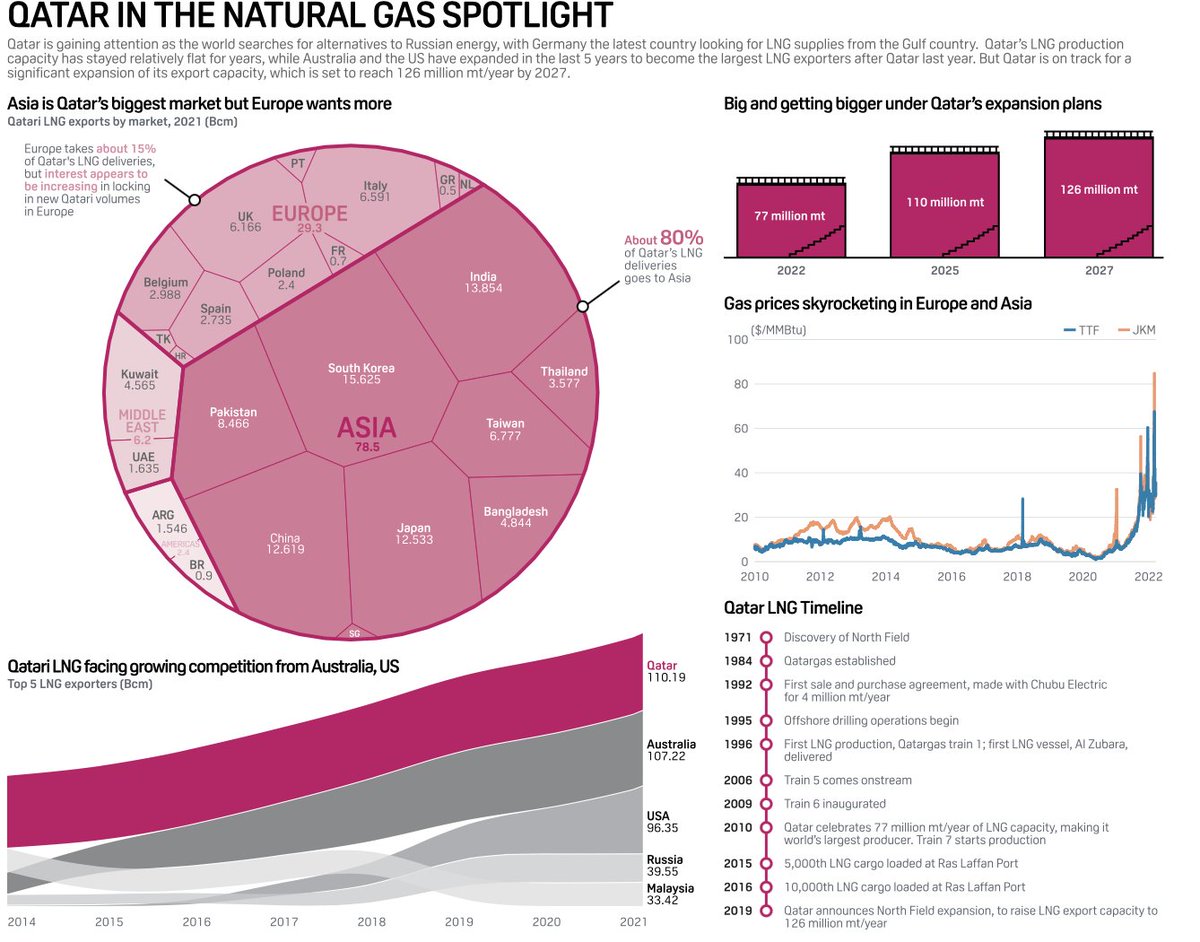
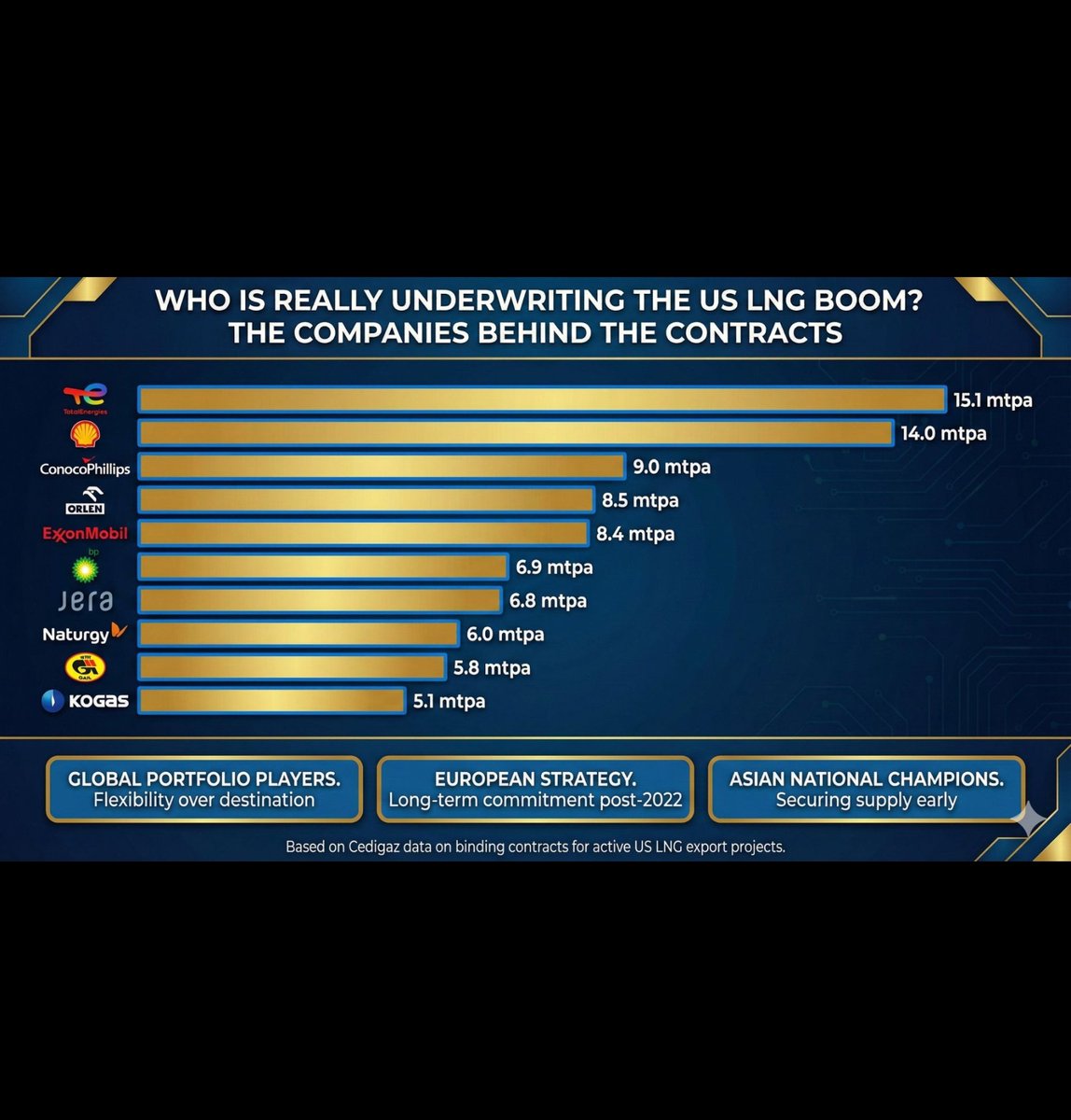
An increasing number of LNG buyers are turning to the US after Qatar’s massive export plant was damaged in an attack
🇺🇸 🚢
The US is the world’s largest LNG exporter and has a bunch of new projects coming online over next 5 years
https://t.co/81fjArSjt8
@SusanSakmar@ira_joseph@qatarenergy@ColumbiaUEnergy@atownsend However buyers typically do not have a right to demand those specific missed volumes later unless the contract specifically includes "Make-Up Gas" provisions that apply to QE disruptions.
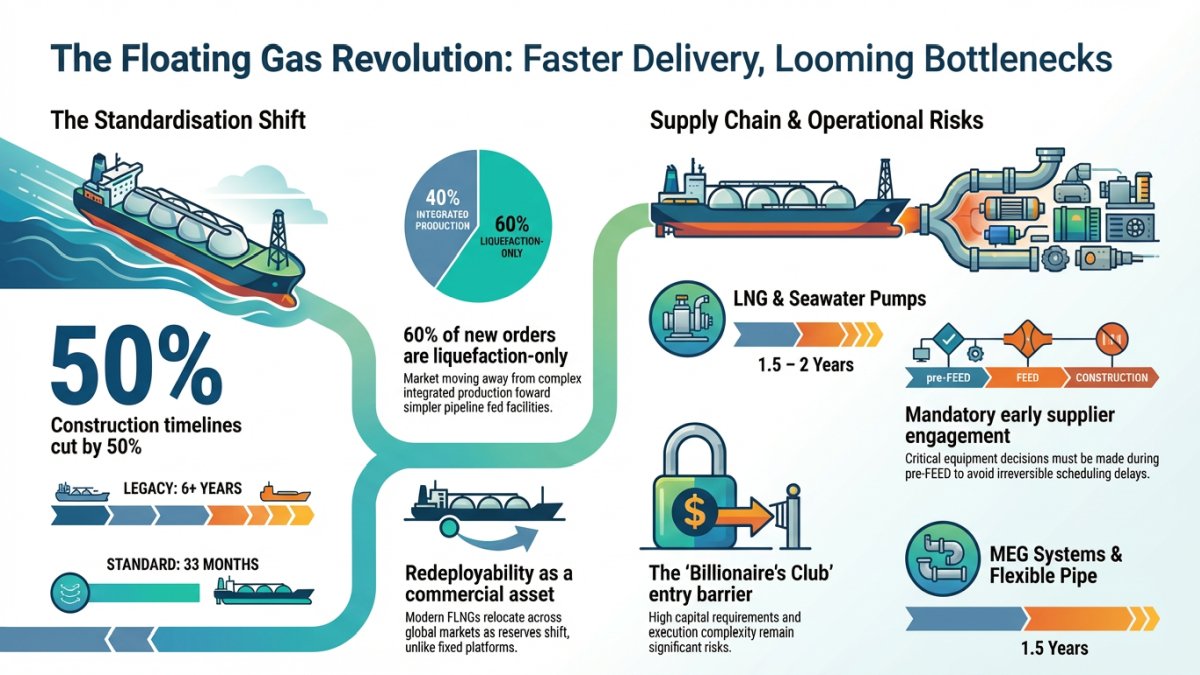
With 17 FLNGs now tracked globally, 52 FSRUs in operation, and a new generation of standardised, rapidly deliverable units entering the market, developers and host governments are discovering that monetising stranded gas reserves no longer requires the multi-decade timelines and prohibitive capital commitments that once defined the sector.
The FLNG sector is undergoing a 'floating gas revolution,' where standardisation has slashed construction timelines by 50%, reducing legacy six-year projects to just 33 months. Amazing feat that this image illustrates.