created Bob
- manage all the work via a custom project board
- custom agents using any harness or model, with skills
- using operators to coordinate
- isolated in containers
lets me do any process automation, while being in the loop
created Bob
- manage all the work via a custom project board
- custom agents using any harness or model, with skills
- using operators to coordinate
- isolated in containers
lets me do any process automation, while being in the loop
networking has some fun challenges
below we can see 3 things
- @netbird - as a awesome way to remote connect to your services
- DNS load balancing over VPS servers
- NAT firewall which can forward traffic to a Virtual IP (for those home lab situations)
fun times
just coded, anyone need
Webhook hub
- define topics with an optional advanced filter (any body)
- multiple subscribers to any topic
- producers which can call the hub, which will then publish to all subscribers
- multiple-retries (on each subscriber)
- multiple workers
:)
Webhook hub
Is very similar to a message broker.
Here is a simple thought on how one could look
Something I think in could build on top of Laters (https://t.co/W9Zb4ch6vD)
The fun part would be how to hander the predicate
VS Code, dev containers with Kubernetes! (on another computer somewhere)
that's pretty cool, I would love to see what i could do with some Operators to automate this!!!
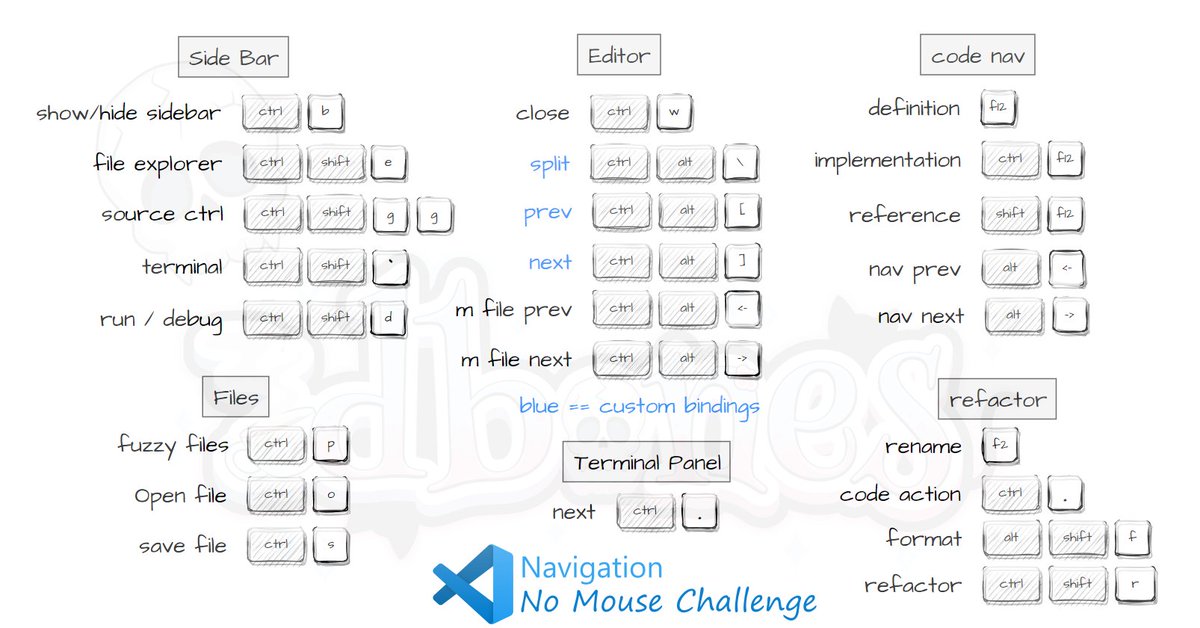
Im having a laugh, seeing if i can get faster with VSCode
The goal is to keep the fingers on the keys, use as many out of the box bindings
I think navigation is key... (oh that is a bad pun)
my current take, no vim, yet
(any i missed)
#NoMouseChallenge#vscode
Using Laters with EntityFrameworkCore
showing how we can setup Scheduled Jobs, easily, with persistence.
(works with #martendb too, let me know if you want a video with that too)
https://t.co/aCjtmX8gXl
#Dotnet#scheduling#LatersDotNet#entityframework#efcore
IBM MQ -> RabbitMQ -> Kafka ->Pulsar, How do message queue architectures evolve?
🔹 IBM MQ
IBM MQ was launched in 1993. It was originally called MQSeries and was renamed WebSphere MQ in 2002. It was renamed to IBM MQ in 2014. IBM MQ is a very successful product widely used in the financial sector. Its revenue still reached 1 billion dollars in 2020.
🔹 RabbitMQ
RabbitMQ architecture differs from IBM MQ and is more similar to Kafka concepts. The producer publishes a message to an exchange with a specified exchange type. It can be direct, topic, or fanout. The exchange then routes the message into the queues based on different message attributes and the exchange type. The consumers pick up the message accordingly.
🔹 Kafka
In early 2011, LinkedIn open sourced Kafka, which is a distributed event streaming platform. It was named after Franz Kafka. As the name suggested, Kafka is optimized for writing. It offers a high-throughput, low-latency platform for handling real-time data feeds. It provides a unified event log to enable event streaming and is widely used in internet companies.
Kafka defines producer, broker, topic, partition, and consumer. Its simplicity and fault tolerance allow it to replace previous products like AMQP-based message queues.
🔹 Pulsar
Pulsar, developed originally by Yahoo, is an all-in-one messaging and streaming platform. Compared with Kafka, Pulsar incorporates many useful features from other products and supports a wide range of capabilities. Also, Pulsar architecture is more cloud-native, providing better support for cluster scaling and partition migration, etc.
There are two layers in Pulsar architecture: the serving layer and the persistent layer. Pulsar natively supports tiered storage, where we can leverage cheaper object storage like AWS S3 to persist messages for a longer term.
Over to you: which message queues have you used?
–
Subscribe to our weekly newsletter to get a Free System Design PDF (158 pages): https://t.co/FIzCeaWsZV
A picture is worth a thousand words: 9 best practices for developing microservices.
When we develop microservices, we need to follow the following best practices:
1. Use separate data storage for each microservice
2. Keep code at a similar level of maturity
3. Separate build for each microservice
4. Assign each microservice with a single responsibility
5. Deploy into containers
6. Design stateless services
7. Adopt domain-driven design
8. Design micro frontend
9. Orchestrating microservices
–
Subscribe to our weekly newsletter to get a Free System Design PDF (158 pages): https://t.co/FIzCeaWsZV
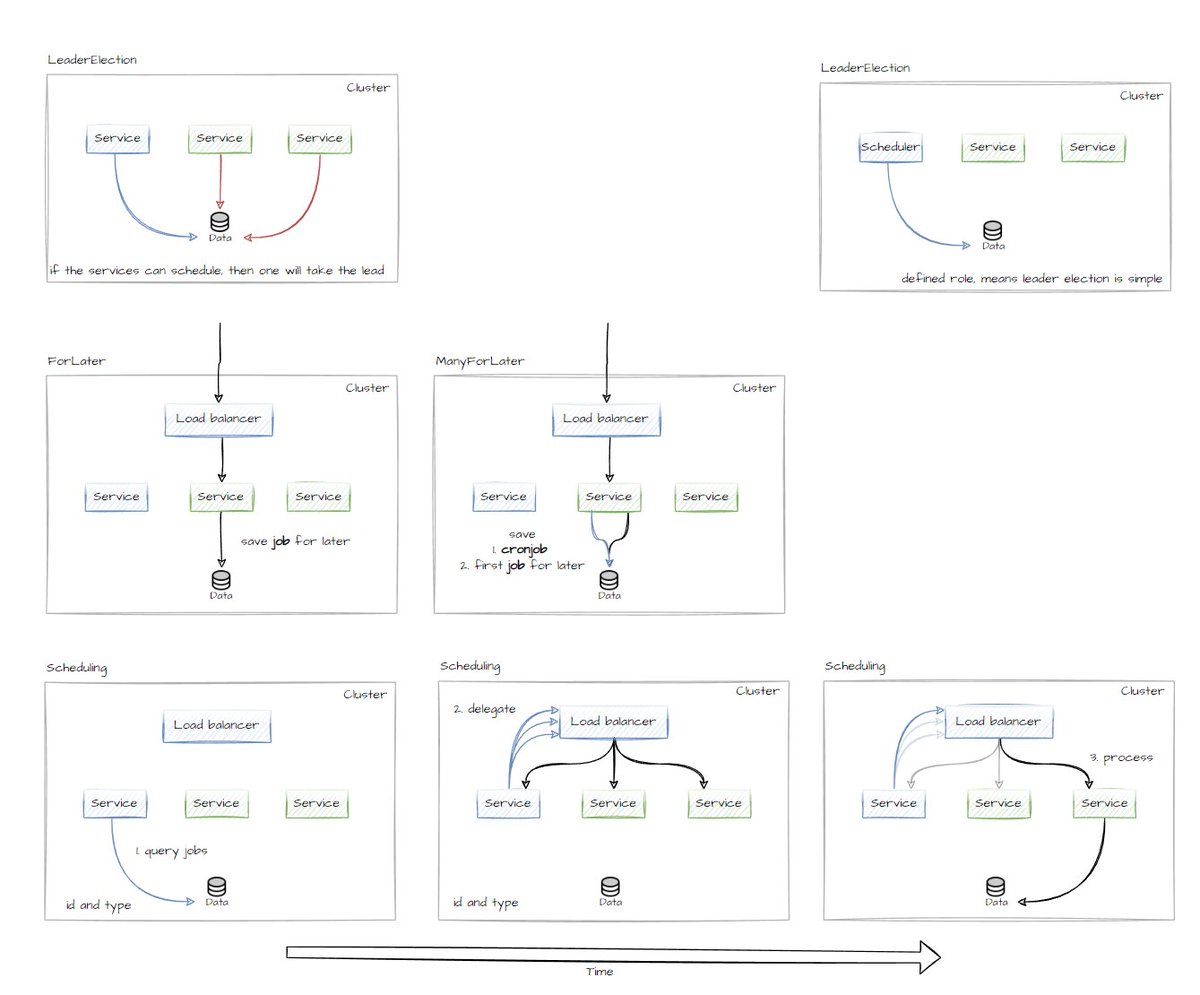
concept for a task/job scheduler
- simple leader election, if the service is used for leader
- only 2 scheduling methods
- delegation will only query and pass id and type (type being the task to execute)
- processing logic will be executed via the services