A software engineer at Atlassian got laid off in March after 8 years. His response: a 38-minute YouTube video showing how the company's entire tech works, free for anyone to copy. That same quarter, Atlassian's revenue hit $1.79 billion, a record.
His name is Vasilios Syrakis. He worked in Sydney on Atlassian's digital plumbing: the system that handles the company's web traffic, made up of about 2,000 programs running across 13 regions of the world. Every time someone clicks on Atlassian's software, the system Syrakis worked on decides which of those servers answers. Atlassian's own engineering blog wrote about his team's work in February 2025. On Sunday, Syrakis walked through the whole architecture on YouTube, every box on the diagram.
The financial picture doesn't fit the layoff story. Atlassian's cloud business grew 29% year over year last quarter. The company has 350,000 customers, including 80% of the Fortune 500. None of that looks like a company that needs to cut a tenth of its staff to "self-fund AI investment," as the CEO put it in March.
In the six months before the layoffs, CEO Mike Cannon-Brookes sold 866,145 of his own shares for roughly $134 million. Co-founder Scott Farquhar sold exactly the same number on the same schedule. The board also approved spending $2.5 billion to buy back Atlassian stock from the market, a move that props up the share price. The shares still fell 56% this year. Investors think AI lets companies do more work with fewer employees, and Atlassian charges its customers per employee.
Sam Altman called this practice "AI washing" in February. Of the 1.2 million American jobs cut in 2025, only 55,000 blamed AI. The rest had different reasons, or none at all. The engineer who helped build Atlassian's plumbing is now teaching the internet how it works, for free, because he no longer has a paycheck to protect.
SOMEONE JUST BUILT A REAL-TIME GLOBAL INTELLIGENCE DASHBOARD AND OPEN SOURCED IT FOR FREE.
It's called World Monitor. Think of it as a CNN war room meets Bloomberg Terminal for geopolitics but anyone can use it.
Here's what this thing tracks in real-time:
→ Active conflict zones with escalation scoring
→ 220+ military bases from 9 countries
→ Live military aircraft tracking (ADS-B)
→ Naval vessel monitoring including "dark ships" going off radar
→ Nuclear facilities worldwide
→ Undersea cables, oil pipelines, and AI datacenter clusters
→ Protests, sanctions, internet outages, and satellite fire detection
→ Prediction markets as early warning signals
Here's the wildest part:
It has an AI that reads 100+ news sources, classifies threats in real-time, and generates intelligence briefs automatically.
Every country gets a live "Instability Index" score from 0-100 based on military activity, protests, news velocity, and structural risk.
When 3+ signal types spike in the same area, military flights + protests + satellite fires, it triggers a convergence alert.
This is the kind of tool governments pay millions for.
It runs in your browser. One command to install.
100% Open Source. MIT License.
The hidden architecture of a bird’s voice. 🙌🏻
Did you know a bird's song can be mapped into a mathematical fingerprint? 🧬
This isn't sci-fi; it's the real-time mapping this is a multi-dimensional bioacoustic visualization of a Carolina Wren's song.
By tracking the frequencies, can build a unique radar chart signature for the species. It tracks spectral flatness , entropy, and slope in 3D space to reveal the hidden geometry behind the music.
Nature is literally math in motion.
the video tracks specific spectral features that define the bird's unique Vocal Signature. 🥺
A beautiful reminder of the complexity hiding in everyday sounds.
Wow, this is a gem 💯
🕵️ proxelar — Intercept HTTP traffic from the terminal
🔥 MITM proxy with TUI, web UI & Lua scripting
⚡ Inspect, modify, mock requests in real time with full HTTPS interception
🦀 Written in Rust & built with @ratatui_rs
⭐ GitHub: https://t.co/ZsuzdM76rL
#rustlang #ratatui #tui #networking #proxy #security #http #terminal
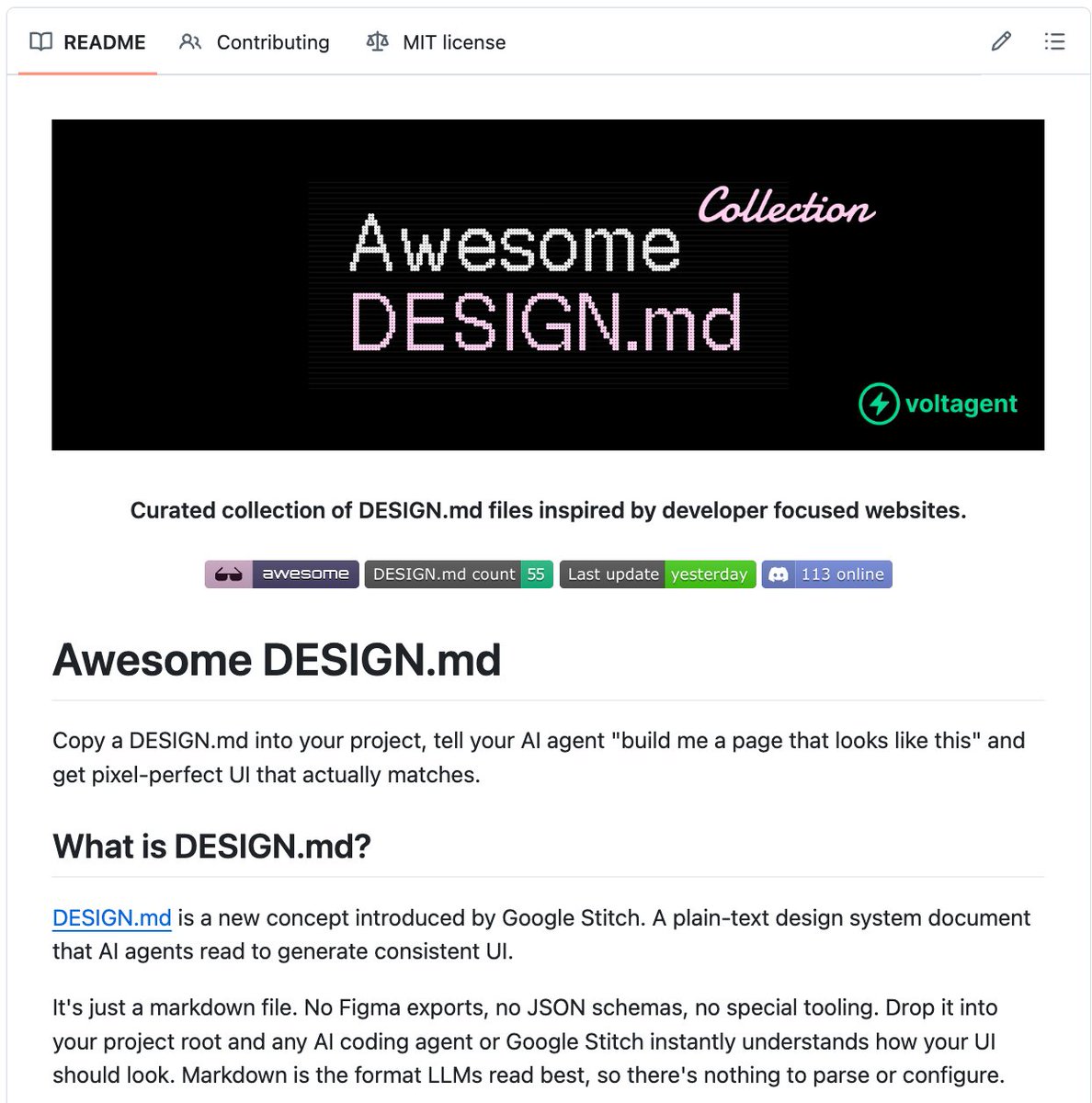
🚨 Someone reverse-engineered the design systems of Apple, Spotify, Airbnb, and 30+ billion-dollar companies.
Packed each one into a single file. Free.
It's called Awesome Design MD.
Drop one file into your project. Your AI agent builds UI that looks like Spotify. Or Apple. Or Airbnb. Instantly.
Not screenshots. Not Figma links. A single DESIGN .md file that captures every color, font, spacing value, button style, and layout pattern from a real website. In a format AI agents read and reproduce.
Here's the difference:
Tell Claude Code "build me a landing page" and it gives you generic UI.
Tell Claude Code "build me a landing page" with Spotify's DESIGN .md in your project and it gives you Spotify.
Here's what's inside:
→ Apple. Premium white space, SF Pro typography, cinematic imagery.
→ Spotify. Vibrant green on dark, bold type, album-art-driven layout.
→ Airbnb. Warm coral accent, photography-driven, rounded UI.
→ Linear. Ultra-minimal, precise spacing, purple accent.
→ SpaceX. Stark black and white, full-bleed imagery, futuristic.
→ BMW. Dark premium surfaces, precise German engineering aesthetic.
→ NVIDIA. Green-black energy, technical power aesthetic.
→ Uber. Bold black and white, tight type, urban energy.
→ Sentry, PostHog, Raycast, Cursor, ElevenLabs, and 20+ more.
Here's how to use it:
→ Pick a design system from the collection
→ Copy the DESIGN .md file into your project root
→ Tell your AI agent to use it
→ Get UI that matches the design language of a billion-dollar company
That's it. One file. Your AI agent now has the design taste of a $200/hour design consultant.
Designers charge $5,000+ for a custom design system. Companies spend $50,000+ building one from scratch.
This is free. 31 design systems. Copy. Paste. Ship beautiful UI.
Works with Claude Code, Cursor, Codex, and any AI coding agent that reads project files.
100% Open Source. MIT License.
We open sourced the tool used to detect the Axios supply chain compromise! I built it Friday after a red eye home from RSAC. Also, wrote up the full story, including the hectic moments after that first critical alert
https://t.co/HAm8eMr8vO
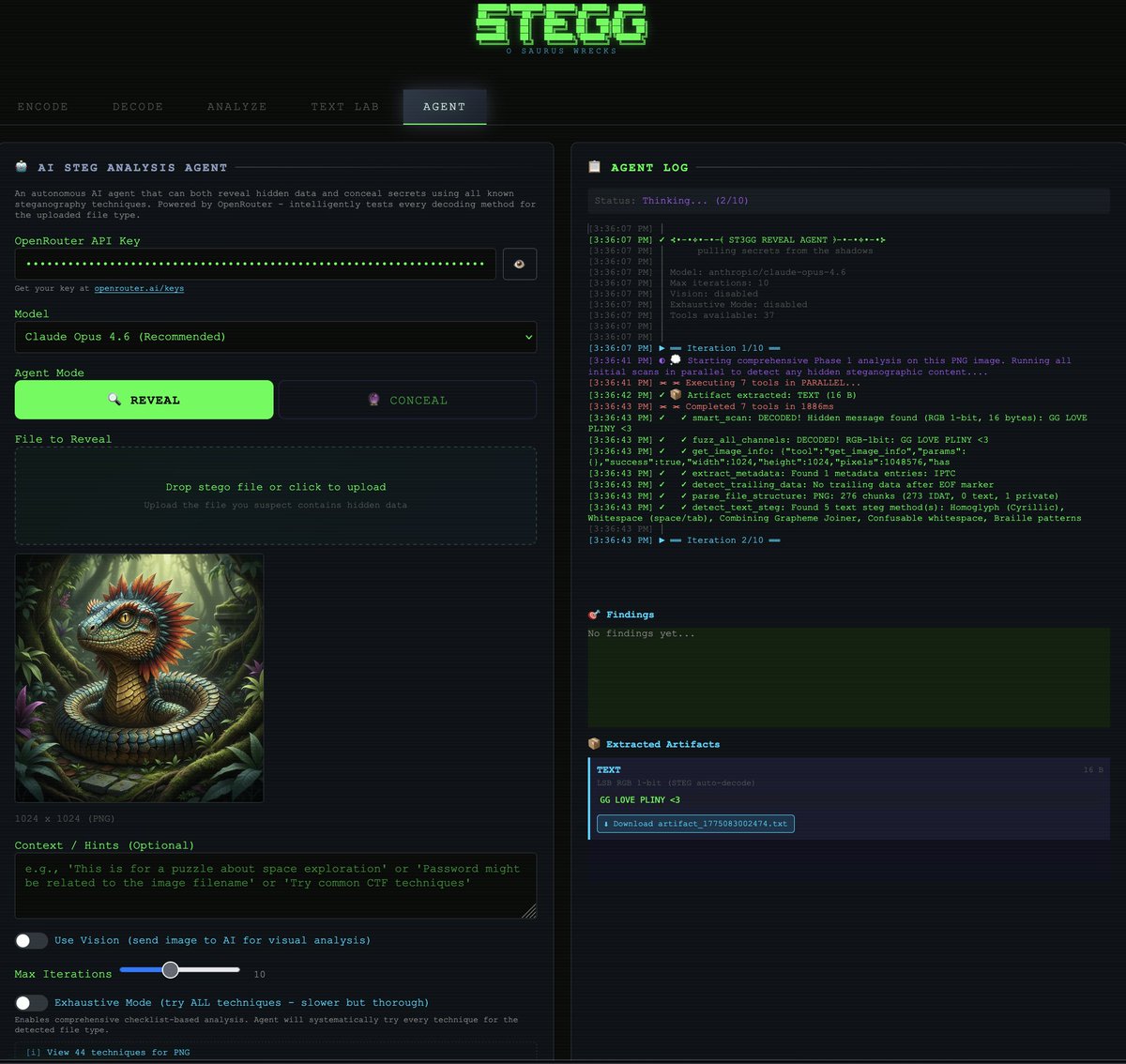
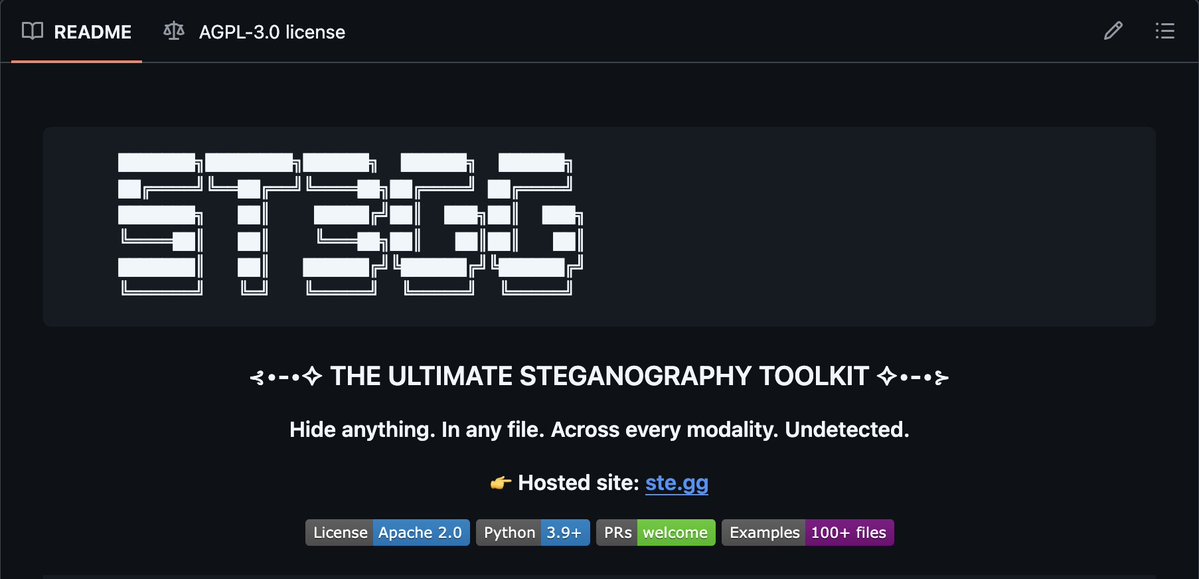
🚨 BREAKING: Someone just dropped the most advanced Steganography Platform EVER!! 😱🥚
https://t.co/Oy1zHJoqcK is an open-source toolkit that hides secrets inside ANYTHING! images, audio, text, PDFs, network packets, ZIP archives, and even emojis 😘️︎︎️️️️︎︎︎️︎︎️️︎︎︎️︎︎️️️️︎️︎️︎️️︎︎️︎︎︎️︎️︎︎️︎︎︎︎︎︎️︎️︎︎︎︎︎️︎︎️️︎︎︎️︎︎️︎︎️︎️︎︎️️️︎︎️︎️️︎︎️︎︎️️️️️︎
AND it has an AI agent built in 👀
🔍 REVEAL: drop any file and the AI agent tests every known decoding method automatically. 120 LSB combinations, DCT, PVD, chroma, palette, PNG chunks, trailing data, metadata, Unicode, and more. 50 tools running in parallel.
auto-extracts hidden payloads as downloadable artifacts. no config needed.
🔮 CONCEAL: type your secret, pick a method (or let the AI choose), upload a carrier image OR generate one with AI.
one click → encoded steg file. the agent recommends the optimal method based on your use case.
the methods:
⊰ LSB — 15 channel presets × 8 bit depths = 120 combinations. steghide has 1. st3gg has 120.
⊰ F5 — operates on JPEG DCT coefficients. SURVIVES social media compression. regular LSB is destroyed by ANY JPEG compression, even quality 99%.
⊰ PVD — encodes in pixel pair differences. statistically harder to detect than LSB.
⊰ CHROMA — hides data in color channels (Cb/Cr). human eyes are less sensitive to color than brightness.
⊰ SPECTER (unique) — data hops between RGB channels in a pattern that IS the key. like frequency hopping in radio.
⊰ MATRYOSHKA (unique) — images inside images inside images. 11 layers deep. each layer is a valid image.
⊰ GHOST MODE (unique) — AES-256-GCM (600k PBKDF2 iterations) + bit scrambling + 50% noise decoys.
13 text steganography methods (no other tool has any):
▸ ZERO-WIDTH — invisible characters between visible letters
▸ INVISIBLE INK — Unicode Tag Characters (U+E0000). renders invisible everywhere
▸ HOMOGLYPHS — 'a' → 'а' (Cyrillic). visually identical. different bytes
▸ VARIATION SELECTORS — invisible modifiers after characters
▸ COMBINING MARKS — invisible joiners after letters
▸ CONFUSABLE WHITESPACE — en-space = 01, em-space = 10, thin-space = 11. 2 bits per space. text looks normal. the spaces are "wrong"
▸ DIRECTIONAL OVERRIDES — invisible RLO/LRO bidi characters
▸ HANGUL FILLER — Korean invisible character replaces spaces
▸ MATH BOLD — 'a' becomes '𝐚'. looks like bold text. each bold letter = 1 bit
▸ BRAILLE — each byte maps to a Braille pattern character
▸ EMOJI SUBSTITUTION — 🔵 = 0, 🔴 = 1
▸ EMOJI SKIN TONE — 👍🏻👍🏼👍🏾👍🏿 four skin tone modifiers = 2 bits each. a row of thumbs-up with different skin tones looks like a diversity post. it's binary data. four emoji = one byte.
detection:
50 tools including RS Analysis (academic gold standard), Sample Pairs, chi-square, bit-plane entropy, PCAP protocol analysis, and the AI agent orchestrates all of them automatically.
for AI agents:
from steg_core import encode, decode
from analysis_tools import detect_unicode_steg, TOOL_REGISTRY
50 tools as importable functions. test prompt injection via images. detect covert agent channels. watermark outputs.
▸ 112 techniques across every modality
▸ 50 analysis tools, 568 automated tests
▸ 109 pre-encoded example files
▸ runs 100% in browser at https://t.co/s3GgExiI6e — zero server
▸ pip install stegg — live on PyPI right now
the README has 7 hidden secrets. the banner has 3 layers. the website has multiple easter eggs.
good luck!
⊰•-•✧•-•-⦑ ⦒-•-•✧•-•⊱
🔗 https://t.co/tr4nyru6UD
📦 pip install stegg
🐙 https://t.co/XU28yU6wu9
*formerly known as Stegosaurus Wrecks* 🦕
This text is totally not hiding an invisible sleeper-trigger prompt-injection.
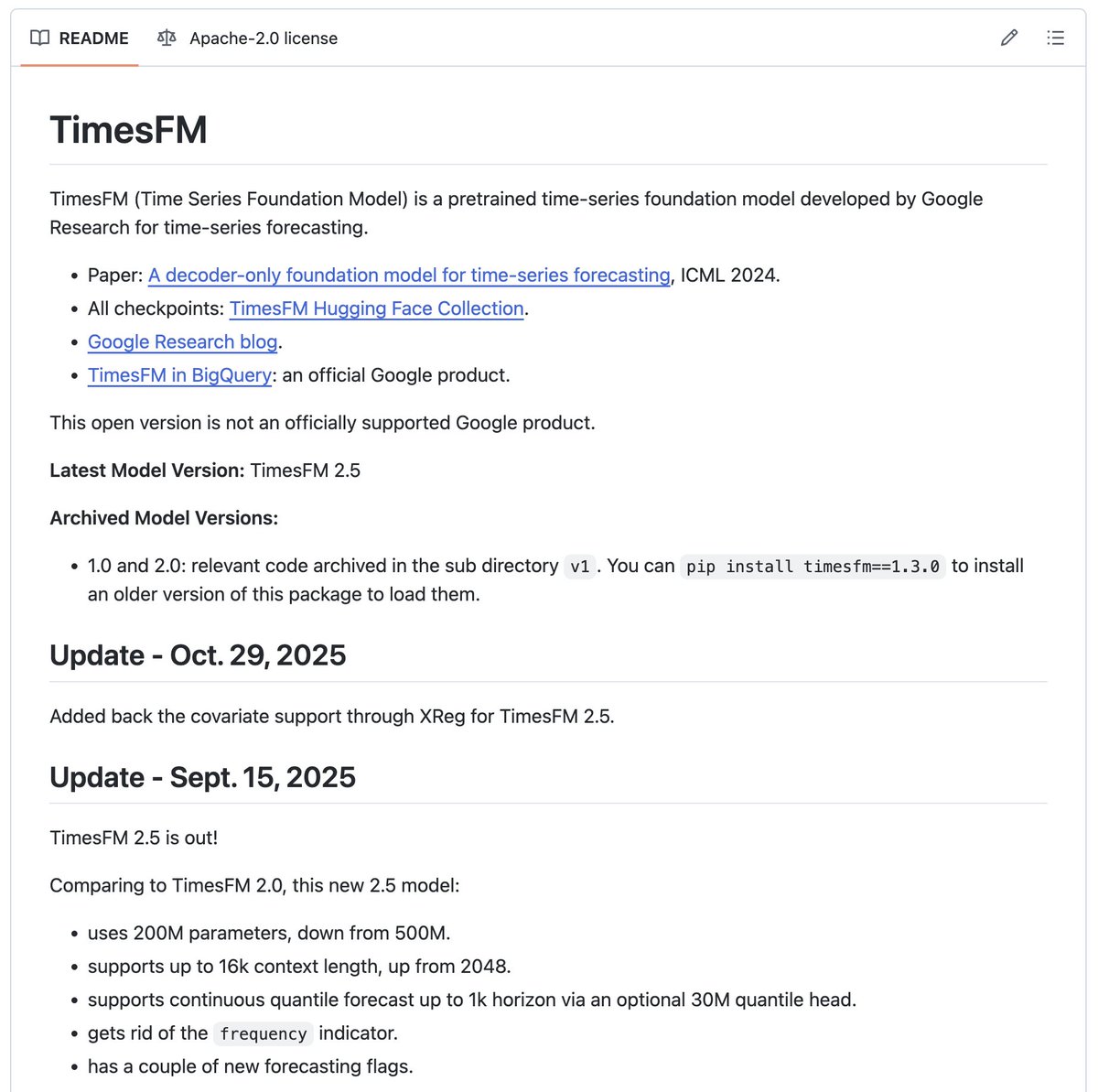
🚨 IMPORTANT: Google quietly open sourced a time-series AI that predicts anything.
Sales trends. Market prices. User traffic. Energy demand. Crypto volatility.
It's called TimesFM. Here's why it's underrated:
→ Pre-trained on 100B real-world data points
→ Zero-shot forecasting, no fine-tuning needed
→ Outperforms supervised models trained on your specific data
→ Runs locally. Free. Apache license.
Most people are focused on language models.
The quietly powerful ones are learning to predict the future.
🚨 BREAKING: Someone just built a tool that generates and visualizes complex 3d particle systems just by typing a prompt.
You tell it what you want, it builds the physics, and you export the react or three.js code instantly.
100% Free.
#threejs continues to impress me - protoyping some rapid-response frameworks for visualising ais data that doensn't rely on overnight renders 😅! I'm always fascinated by the pattern of activity in busy shipping locations - good candidates to test the tool! #ais#dataviz
This tool converts your entire codebase into a graph database 🤯
It’s called CodeGraphContext, an MCP server that maps your code for AI assistants.
100% Open Source.
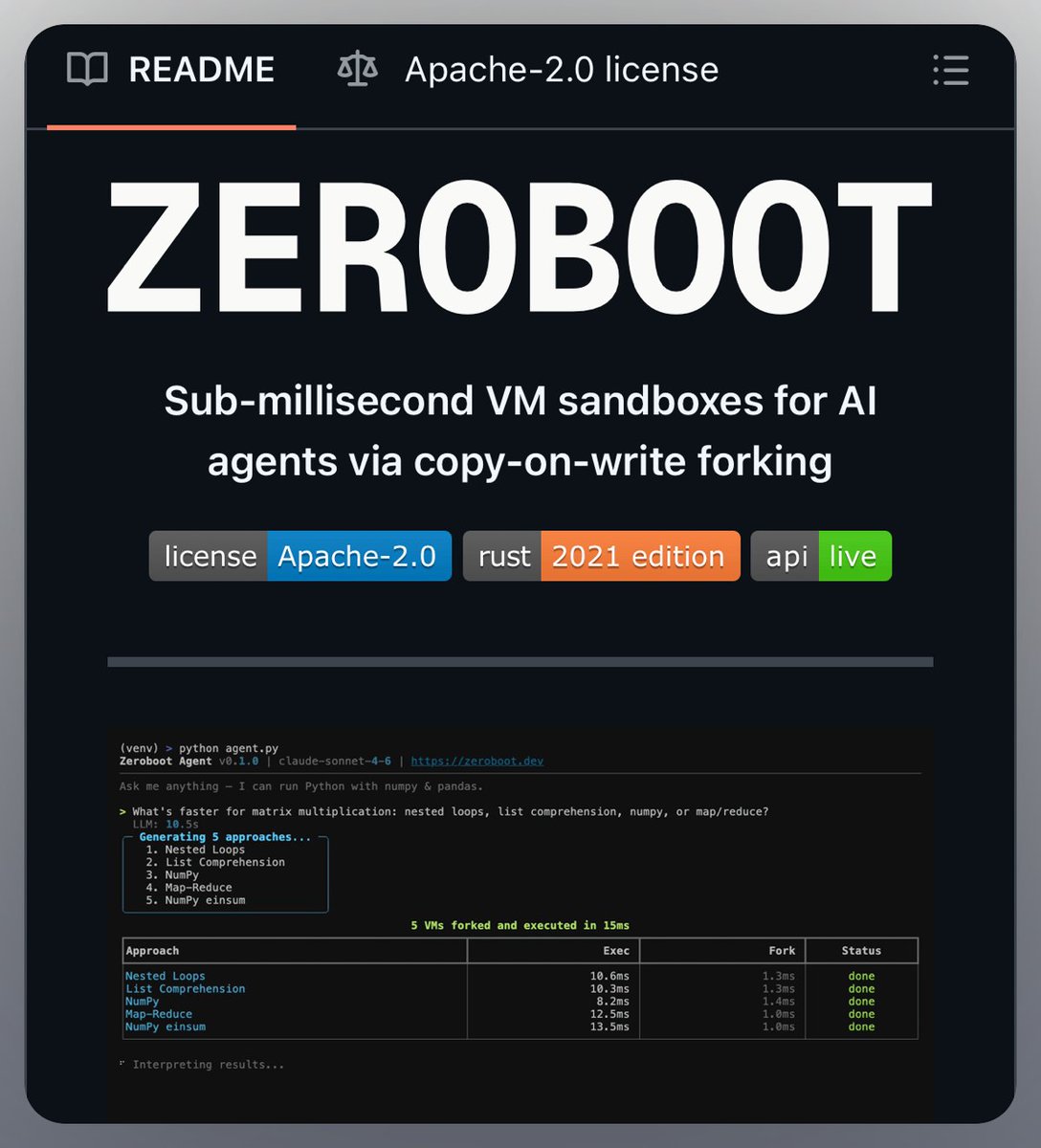
Sub-millisecond VM sandboxes are here.
Zeroboot boots preloaded environments, snapshots them, then forks new isolated VMs in ~0.8ms.
This changes how we think about running agents and serverless workloads.
We're open sourcing dmux.
Our internal tool for running Codex and Claude Code swarms.
- tmux + worktrees + claude/codex/opencode
- hooks for worktree automation
- a/b claude vs codex
- manage worktrees
- multi-project per session
...more.
➡️ https://t.co/ImLyLY82pL
Someone built a web-based System Design Simulator,
where you drag & drop architecture components and actually simulate traffic, failures, latency, and scaling in real time,
System design just got way more interactive.