Feral cat predation of the threatened Pilbara Leaf-nosed bat: a key threatening process https://t.co/aLPWmjwwCu
Observations in camera traps revealed that between 2020-2023, at least 180 #bats were killed by free-ranging cats in 3 roosts🚨 @EcoHealthNYC - https://t.co/7fjmRJEbQl
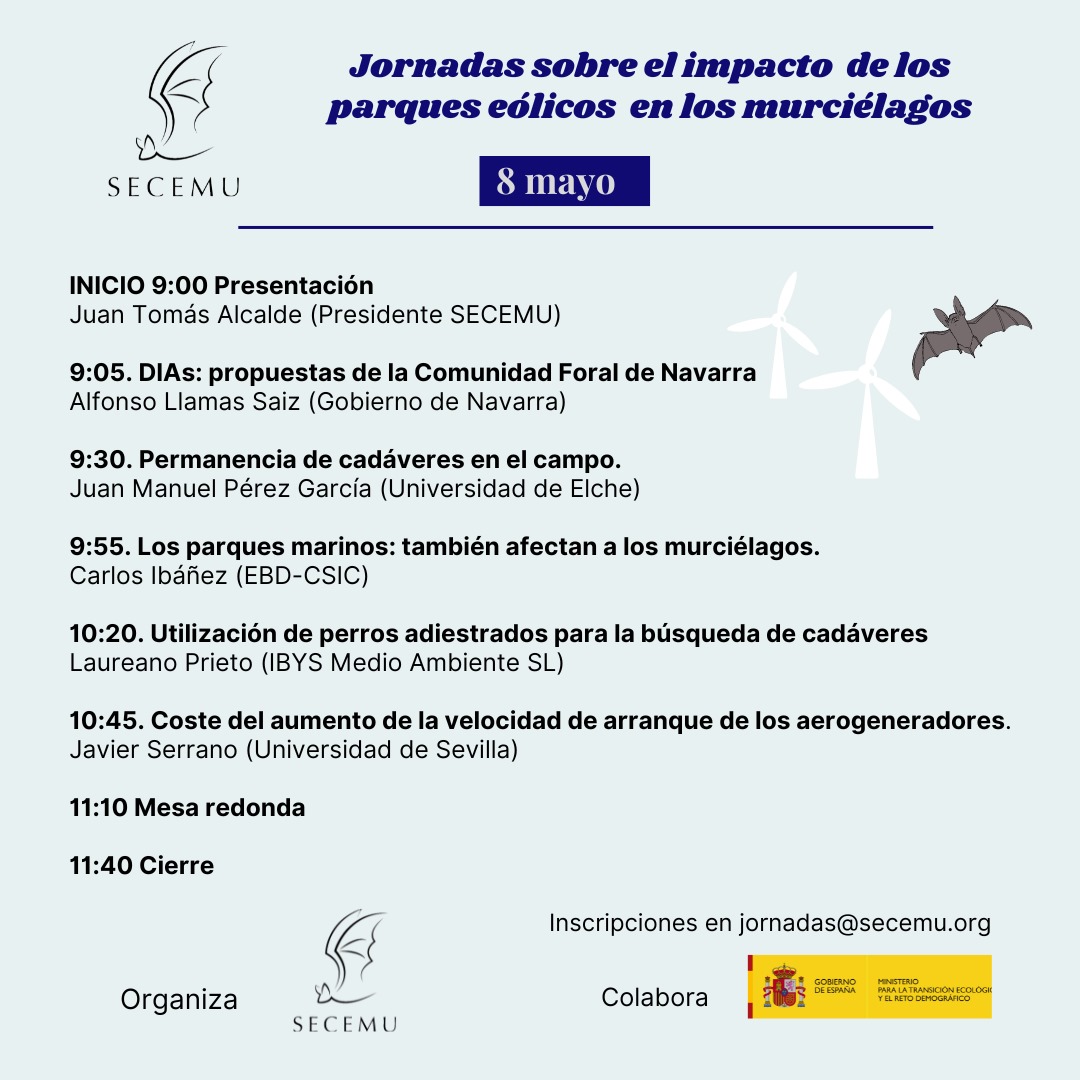
2-days online symposium about #bats and #windenergy in Spain (in Spanish).
✅FREE registration
🗓️ 7-8 May
Organized by @SECEMU_ and our WG on wind energy.
If you want to attend, contact [email protected]
🦇🔋
New overview shows conservation interventions can and do work. 🥳Hopefully, +ve news will encourage investment to reverse the #biodiversity crisis.
BUT urgent action needed on woeful lack of funding/research in Global South where there is most to lose! https://t.co/HMHw3t1tsk
📢 Higher court issues final judgment in Germany: Old wind turbines must implement curtailment if there is evidence of bat casualties. That applies to more than 18,000 onshore turbines in 🇩🇪, which causes an estimated 250,000 killed🦇per year. Whole 🇪🇺 should follow!
@AaronJCorcoran This does not mean, however, that the behavioural change (gleaning -> obligate aerial hawking) is not an adaptation, as you point out correctly. The low call levels were a pre-adaptation that made these bats efficient moth hawkers, so that eventually they refrained from gleaning
Evolution is not always what it seems to be: The barbastelle bat's stealth #echolocation is extraordinarily faint NOT as a result of #coevolution with hearing prey but because its ancestors were gleaning #bats... Free access to paper until Dec 16 at https://t.co/PUcAWS9PFN
@AaronJCorcoran When gleaning, low call levels are usually very advantageous: e.g., low levels prevent gleaning bats from receiving to many / too loud echoes from surrounding clutter (as you of course know, but other readers might not)
🦇 Is the barbastelle bat's hunting on moths with low-intensity echolocation the classic example for predator-prey coevolution it was thought to be? No, a new study says, showing that its hunting strategy likely evolved from a quiet gleaning ancestor and is not a direct adaption to its preys’ hearing ability: https://t.co/Y1GIKNQAFS
@batsmoths@AcFuncEcolGroup@D_Lewanzik
📸 Sherrie and Brock Fenton
@voigtbatlab Agree! Thank YOU for all the opportunities to investigate many different aspects of the ecology and behaviour of some of the most amazing animals 🙏 It's a pleasure being part of this field work team (even if the pic you chose does not fully convey the joy I feel ;-) )
The weather is getting milder so a great time to start thinking about how to get your garden ready to welcome bats! They will be very hungry after spending the winter hibernating and they will need all the food they can get. Some tips here: https://t.co/qgEhl0rx1b
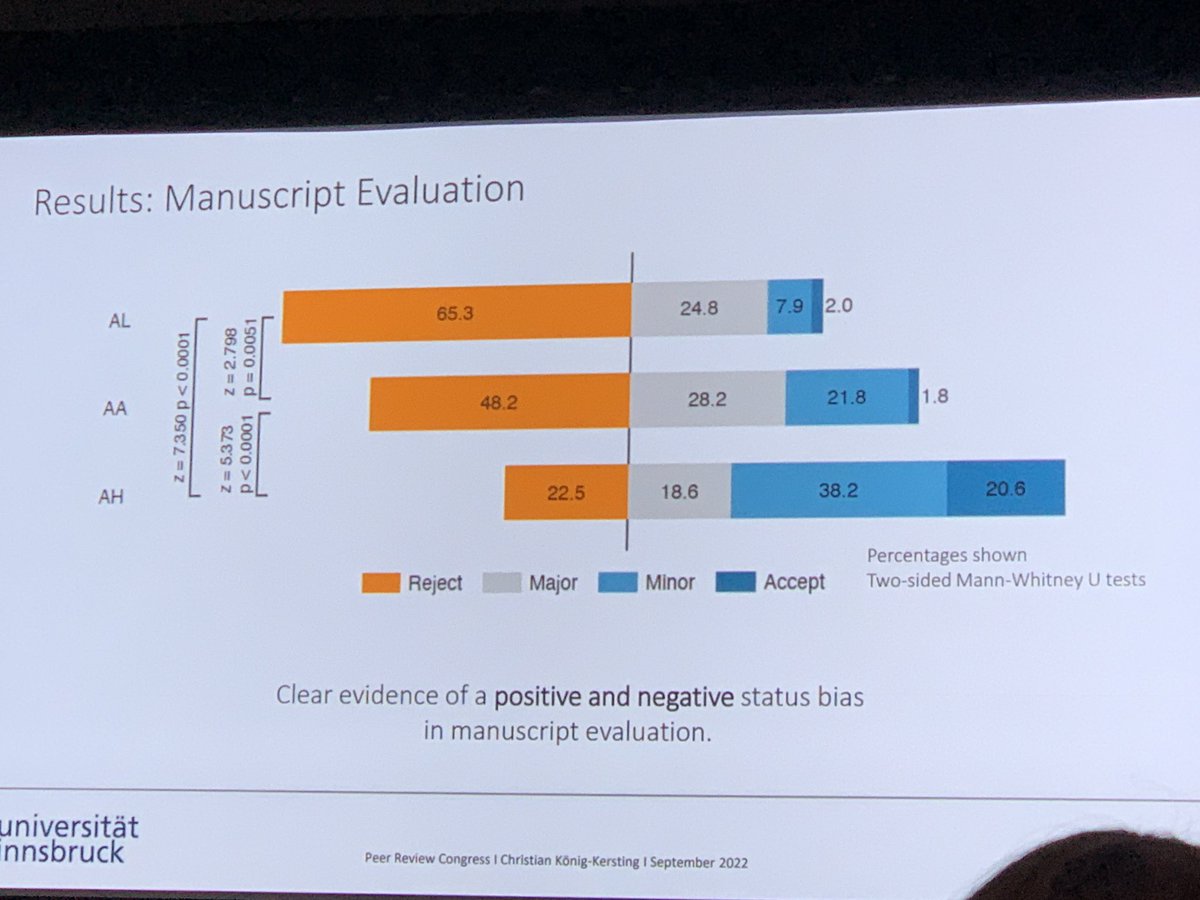
Massive status bias in peer review.
534 reviewers randomized to review the same paper revealing the low status, high status, or neither author. 65% reject low status, 23% reject high status.
Amazing work by Juergen Huber and colleagues. #prc9
Very much enjoyed participating in the German bat research meeting (TDFF) over the weekend. Kudos to @BatResearch_HGW, especially to @JaapvSchaik and @FritzeMarcus for organising this awesome meeting!
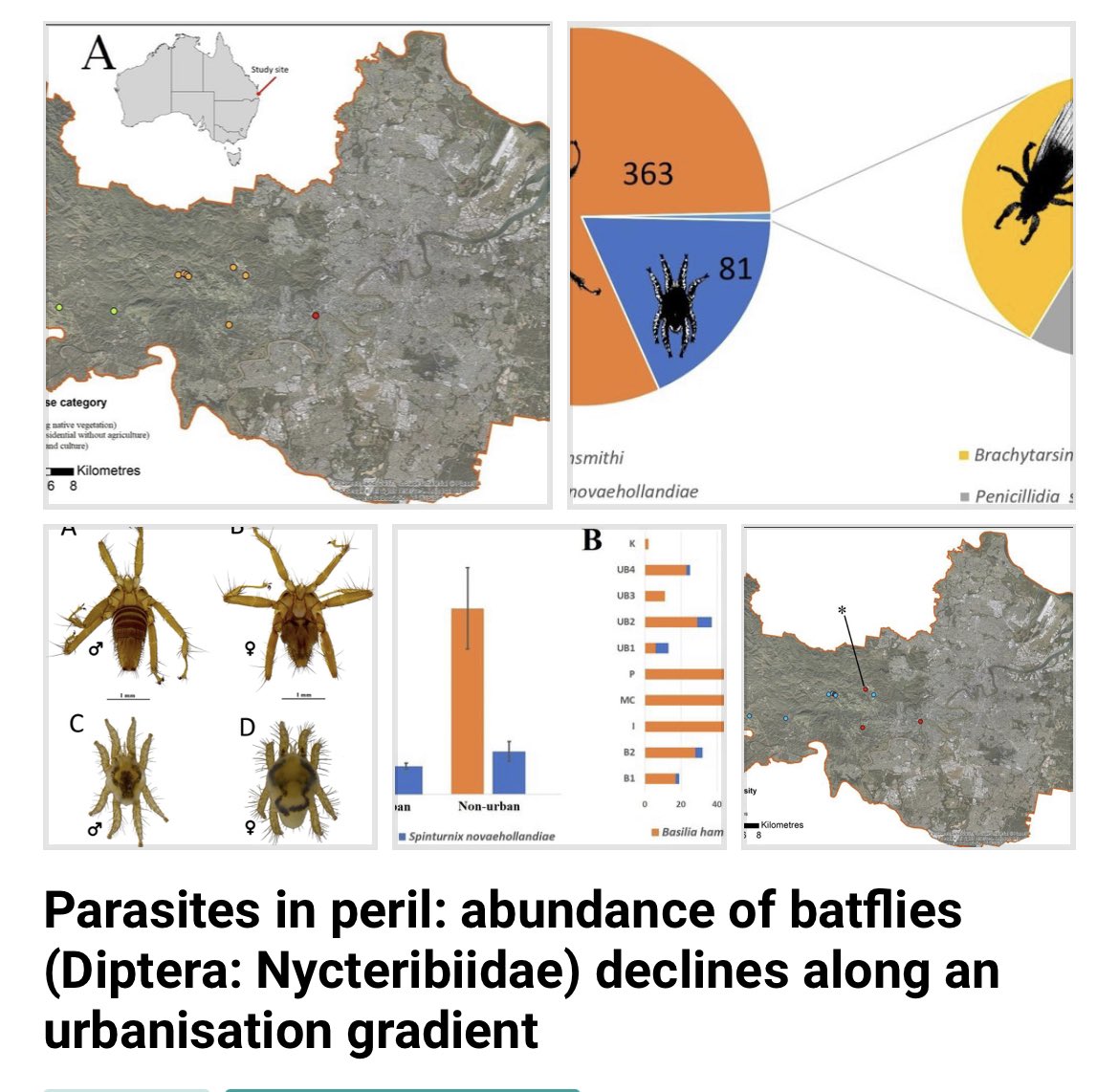
Our latest paper on #bats, #urbanroosts and #ectoparasites provides evidence of parasite #spillover between sympatric species. Urban bats need more roosts!
https://t.co/EiTHdeoznb
"Graphic Design with #ggplot2" 👨💼👩💻🧑💻
Do you want to recap the 2-day workshop at #rstudioconf? Or do you feel sad you've missed it?
🔥 All course material incl. latest updates can be found on the workshop webpage���9 sessions, 760 slides, 314 ggplots!
👉 https://t.co/TyBRWQOW7R
Attributing human characteristics to animals or plants is only one of several drivers for tolerating non-native species in cities (soon out) 🦝🦊🦆🌿🍃: https://t.co/myEIVnbQUw