Tweets of the Acoustic and Functional Ecology Group, MPI for Ornithology Seewiesen. Listen in for bats, moths, cameras & mics, by @batsmoths & @BeleyurThejasvi
Episode 2 of season 2 is coming up this Tuesday! Holger Goerlitz (@batsmoths) and Abel Corver (@AbelCorver) will be discussing ingenious hunting strategies in bats and spiders. Abstracts can be found here: https://t.co/YvSel67RN7
Check out the latest paper featuring led by @LauraStidsholt and featuring @AcFuncEcolGroup looking at echolocation in the wild using the exciting backpack mic system.
This is a nice conversation with Dylan Gomes about part of his dissertation research on how naturally loud acoustic environments shape spider distributions and behavior!
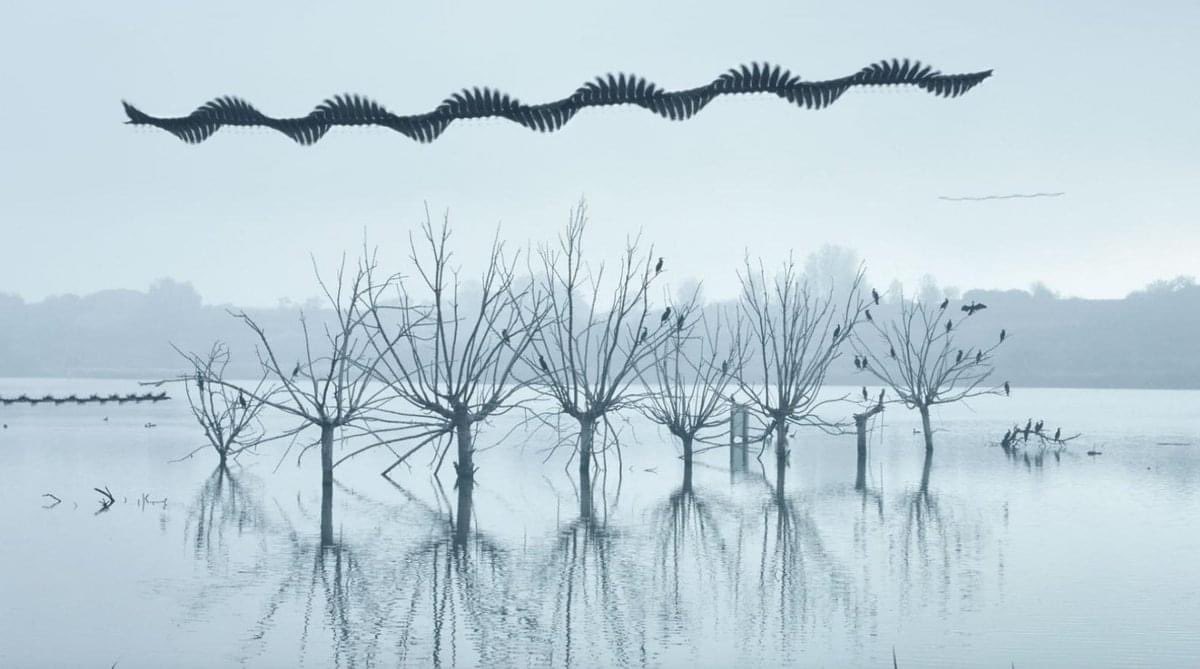
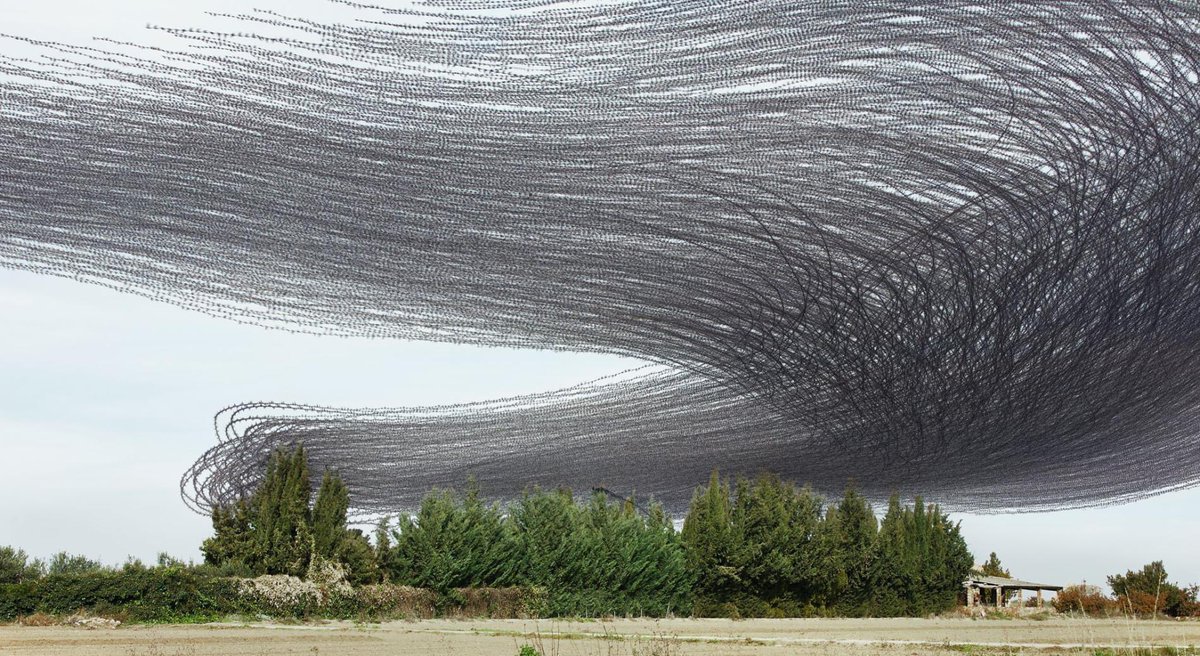
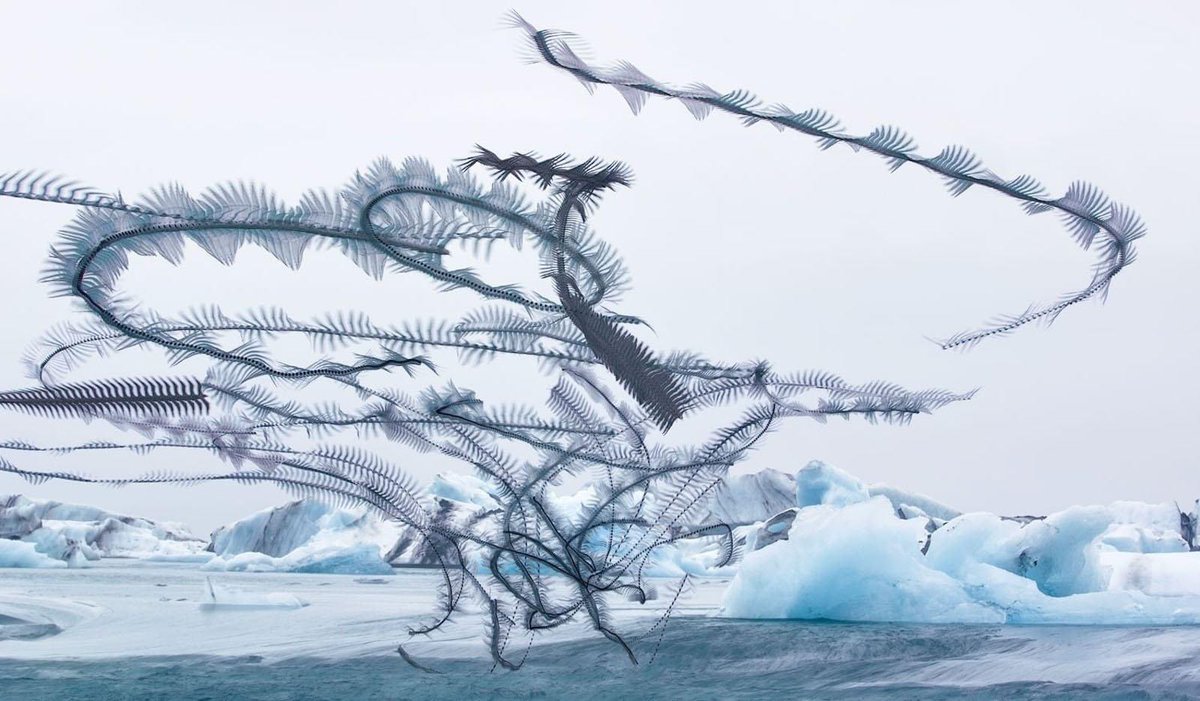
I stumbled across a post today about a man named Xavi Bou from Barcelona who uses photography techniques to help answer the question “if birds left tracks in the sky, what would they look like”. I love the results. Isn’t this just amazing?!
Day 2 Grand Challenges, don't forget to connect at 14:15h, IMPRS best paper award talks.
As winter approaches come listen to Elena Gracheva @Yale on how cellular, molecular and physiological adaptations of hibernation occur. Let's beat yesterday's attending score 🎉80 people👏!
Read about our group's work on bats, moths and the stuff we use to study it all. In German for now(English translation coming soon). No German, no problem! Check out the pics featuring some of our bats, equipment and our very own @batsmoths and @AHubancheva !!
Deceptive calm: #Bats can make a lot of noise. With a lot of technology, Holger Goerlitz @batsmoths can make the ultrasonic sounds of the animals audible. Photo: Axel Griesch #fieldworkfriday
We're always surrounded by sound - speech, music, animal sounds, environmental sounds 🔊. How does our brain process it, and how do we use sound? Happy that our research on🦇🦋🦗 is featured in this @maxplanckpress podcast (in German) - it was a fun🎙️interview!
Very proud and happy for @t_huegel to have defended her PhD on moth 🦋🦋 behavioural defences against bats🦇! 👩🎓👩🔬🎓All done online in a pandemic. Congrats Dr. Hügel!🍾🍸🥳🎉👏🥂
Congratulations🎉👨🎓Dr. Hügel on your recent degree, awarded by @unikonstanz! Your IMPRS is proud🥰 of you! Awesome to see the "social distancing 1,5m" is not preventing a celebratory photo shoot👏🥂!
Congrats to our @AHubancheva for winning the best presentation award!! You should check out her conference tweets featuring the latest in tracking technologies and some cool acoustics experiments 😎
Congratulations to the winner of our Best Presentation award Antoniya Hubancheva @AHubancheva from @AcFuncEcolGroup at MPI with her presentation
'A mating song that jams the echolocation of predators'
A brilliant presentation with some awesome #bat#research!
#WBTC1
Very excited to present my project "A mating song that jams the echolocation of predators" on #WBTC1 tomorrow!
The #EvoBeh1 session starts at 11 UTC 🦗🎶🦇
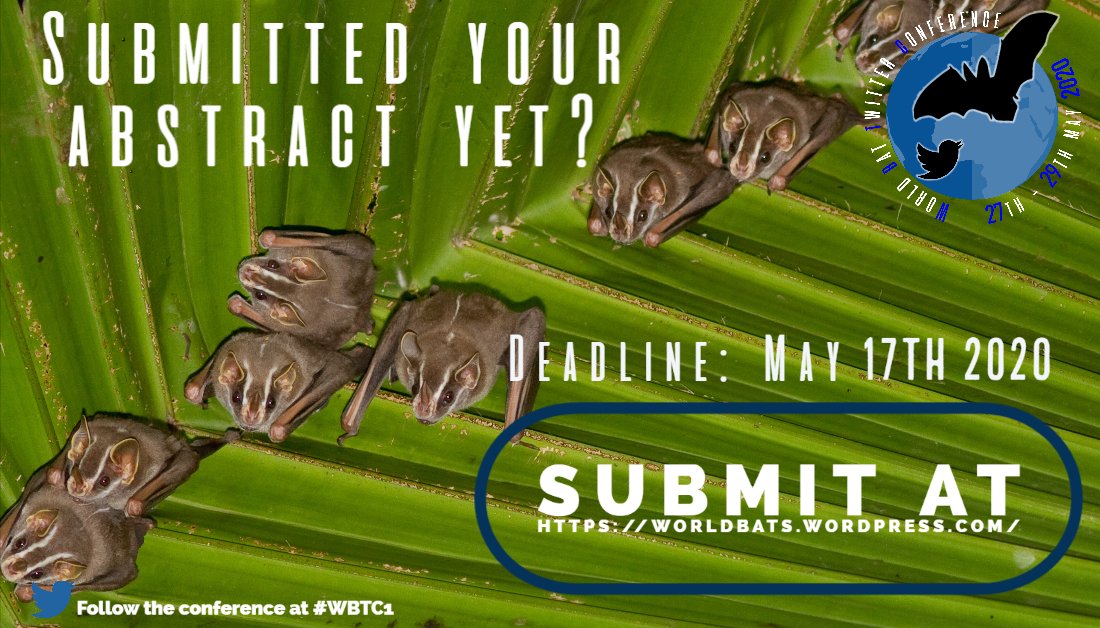
Still deciding if you should presentation your #Bats#research for #WBTC1? The answer is YES!
As well as being #LowCarbon and cost-free, it is an easy and exciting way to reach a #global audience 🦇🌍
Please RT
Deadline 17th May 2020.
Submit at https://t.co/sDAe3Uuj2A
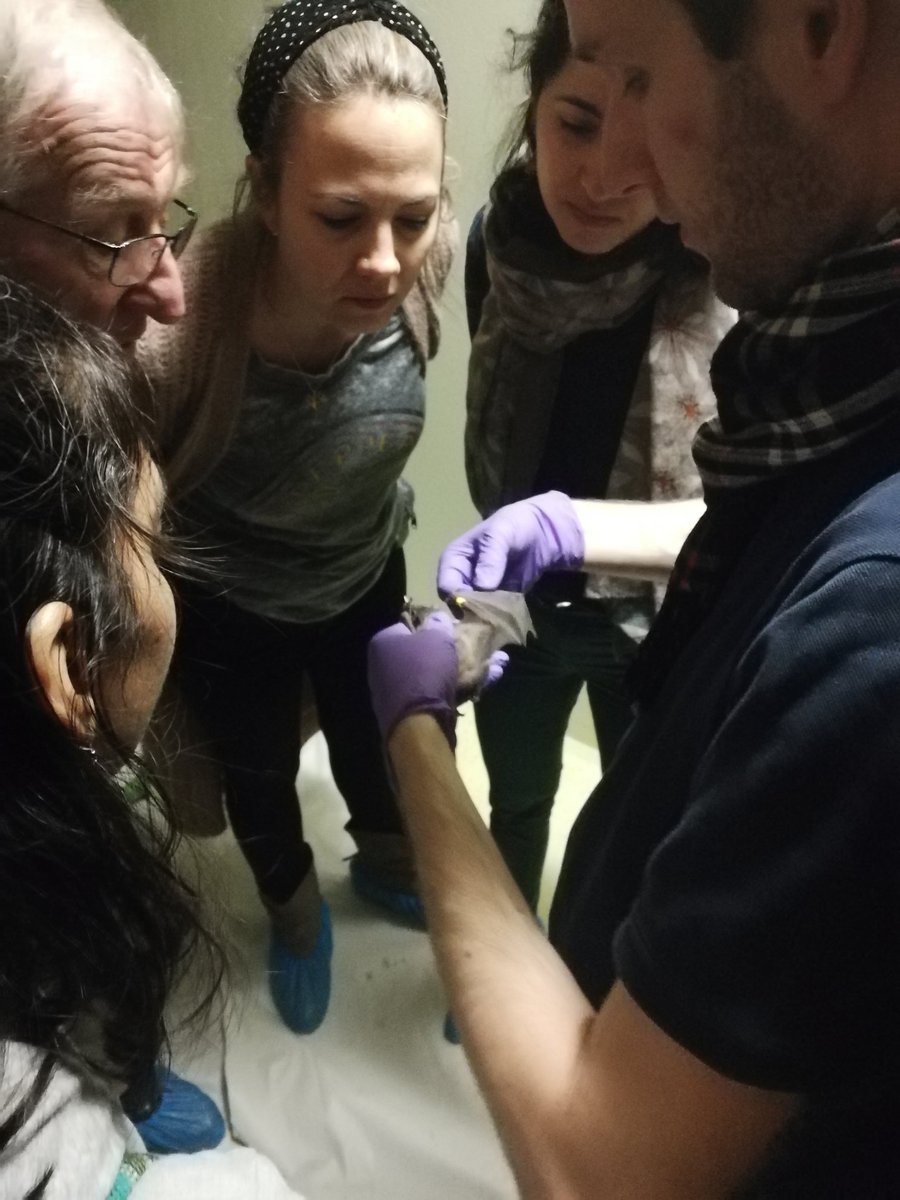
What a wonderful way to end a wonderful conference #etho2020. The bat group getting a bat tour from the Schnitzler lab. Thanks for taking the time and thanks to all the organisers.
Congrats to @hgoerlitz, Hannah Ter Hofstede And Marc Holderied for their recent paper modelling moth evasive responses! Follow this thread from the top to get the whole story with the moth-y details!
Take home: Even very simple sensory systems can adapt to a complex and diverse community of predators, by exploiting a relationship between a perceptible cue (sound frequency) and the relevant, yet imperceptible trait (predation threat). Well done, evolution!
Researcher in bioacoustics? Come join us at the end of the month for our bioacoustics workshop and become a founding member of the new Bioacoustics Special Interest Group (SIG) within the EPSRC-funded UK Acoustics Network.
https://t.co/NWaBooKZnA