He was on his way to one of the happiest moments of his life, but a sudden crash changed everything — except his decision to marry the woman he loved.
On September 5, 2026, Kapri DeRamus was heading to his wedding ceremony in Altamonte Springs, Florida, when he was involved in a serious head-on crash.
The accident left him with major injuries, including two broken arms, a broken jaw, a broken rib, and a significant knee injury. At the same time, his fiancée Tyasia Thomas was getting ready for their wedding when she received the shocking news, only about an hour before they were supposed to exchange vows.
Instead of going to the wedding venue, Tyasia and her family rushed to Orlando Regional Medical Center to be with Kapri.
Although he needed three surgeries to treat his injuries, the couple decided they did not want the day to end without becoming husband and wife.
After he was stabilized, their families gathered at the hospital. Kapri remained in his bed while his grandfather officiated the ceremony in a multipurpose room. Tyasia walked down a small makeshift aisle, and they exchanged vows surrounded by loved ones.
Kapri was released from the hospital on September 9 to continue recovering. Their wedding did not happen as planned, but their commitment remained the same.
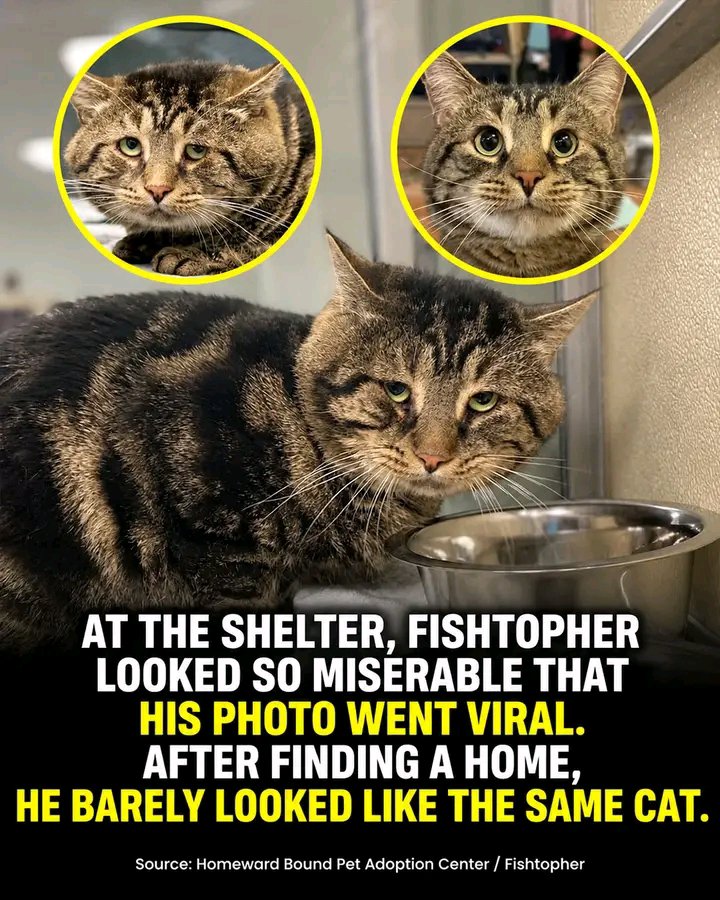
Fishtopher wore his feelings on his face.
In 2022, the 5-year-old tabby was waiting for a home at Homeward Bound Pet Adoption Center in New Jersey.
His adoption profile described him as "sad and depressed."
Shelter staff said he was gentle, affectionate and loved being held, but he often would not even eat unless someone stayed beside him.
Then someone shared his photo online.
Everything changed.
Fishtopher's gloomy expression went viral, and the shelter was suddenly flooded with adoption inquiries. Staff said hundreds of people reached out, with some even lining up outside.
Laura Folts and Tanner Callahan drove about two hours to meet him.
They brought him home.
And almost immediately, the photos started looking different.
His eyes opened wider.
His ears perked up.
He became curious, cuddly and much more relaxed around people.
His adopters later shared photos of him lounging on the couch, enjoying treats and settling into life as a very loved house cat.
One important nuance: "sad and depressed" was the shelter's description of his behavior, not a confirmed veterinary diagnosis.
But visually, the change was hard to miss.
The same cat whose shelter photo made strangers worry about him suddenly looked alert, comfortable and secure.
Sources: CBS News; Homeward Bound Pet Adoption Center; The Dodo; Fishtopher's adopters.
Have you ever seen an adopted animal seem to realize it was finally home?
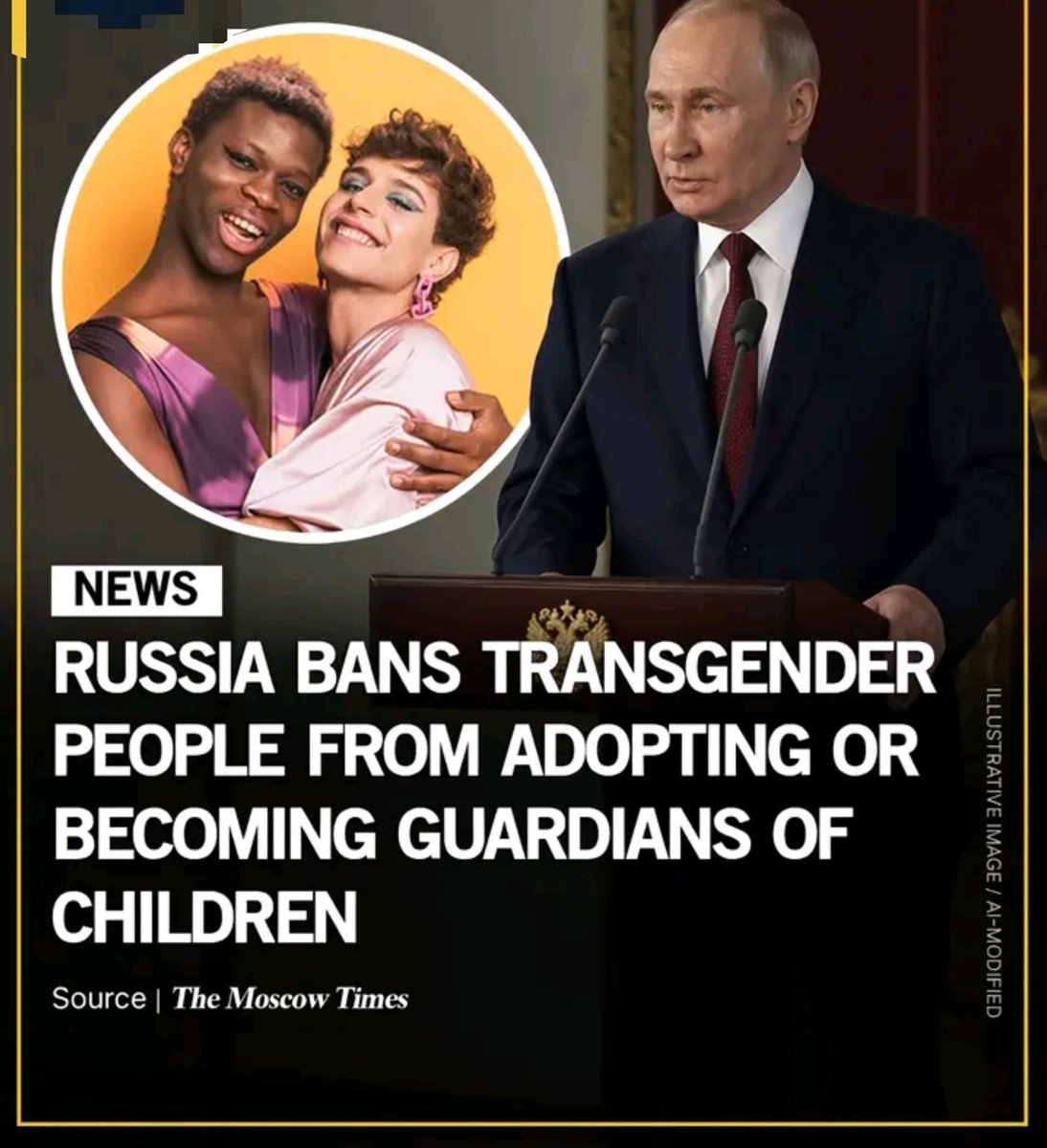
Marriage ends automatically for transgender people under the Russian law.
That is the second cost written into the same text. A marriage in which one partner has changed gender is annulled, without either of them applying for anything.
According to Amnesty International, the rules were not applied retroactively to people who had already completed the legal change before the law came in.
Sources: Human Rights Watch, The Moscow Times
Her prom date couldn't be there, but his little brother made sure he was still part of the memory.
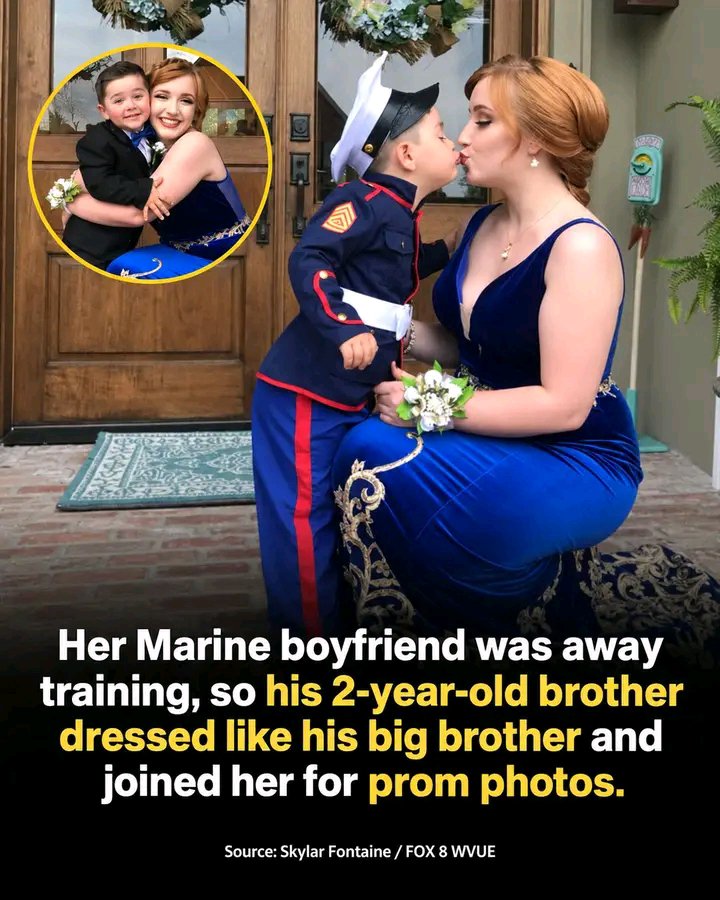
In 2018, New Orleans high school senior Skylar Fontaine was preparing for prom while her boyfriend, 19-year-old Marine Gage Moak, was away on the East Coast training for his Military Occupation Specialty.
Skylar still wanted to include Gage somehow, so she asked his 2-year-old brother, Clay, to join her for prom pictures.
Clay dressed in a tiny Marine-style uniform like his big brother's and posed with Skylar in her prom dress. She said the idea was meant as a sweet gesture for Gage, who was very close to his family.
The pictures spread quickly online.
One important detail: Clay did not actually attend the prom. Skylar later explained that they only took the photos together before she headed out with friends.
It was a small way of making someone who was far away feel included in a milestone he had to miss.
Sources: FOX 8/WVUE; WTXL; Skylar Fontaine's original social post.
What's the sweetest way you've seen someone include an absent loved one in an important moment?
A baby elephant was lying motionless in the road when an off-duty rescue worker decided to try something he had never done before.
In December 2020, a young elephant was struck by a motorcycle while crossing a road with its herd in Thailand's Chanthaburi province. Rescue worker Mana Srivate arrived at the scene and began giving the calf two-handed chest compressions.
Mana had spent 26 years responding to emergencies, but he had never tried to resuscitate an elephant.
He later told Reuters that he estimated where the animal's heart would be based on his knowledge of human anatomy and a video clip he had seen. Meanwhile, he could hear the calf's mother and other elephants calling nearby.
Then the calf began to move.
About 10 minutes later, it managed to stand. Rescuers took it for treatment before bringing it back near the accident site, where the herd eventually returned and the calf was reunited with an adult believed to be its mother.
The motorcyclist was also treated and was reported to have avoided serious injury.
Sources: Reuters; The Guardian; ABC Australia; Indian Express.
Would you have known where to even begin if you were the first person to reach an injured elephant?
For years, people in one San Mateo neighborhood kept finding small things missing.
Towels.
Shoes.
Socks.
Children's toys.
Even bathing suits.
The culprit was not particularly subtle.
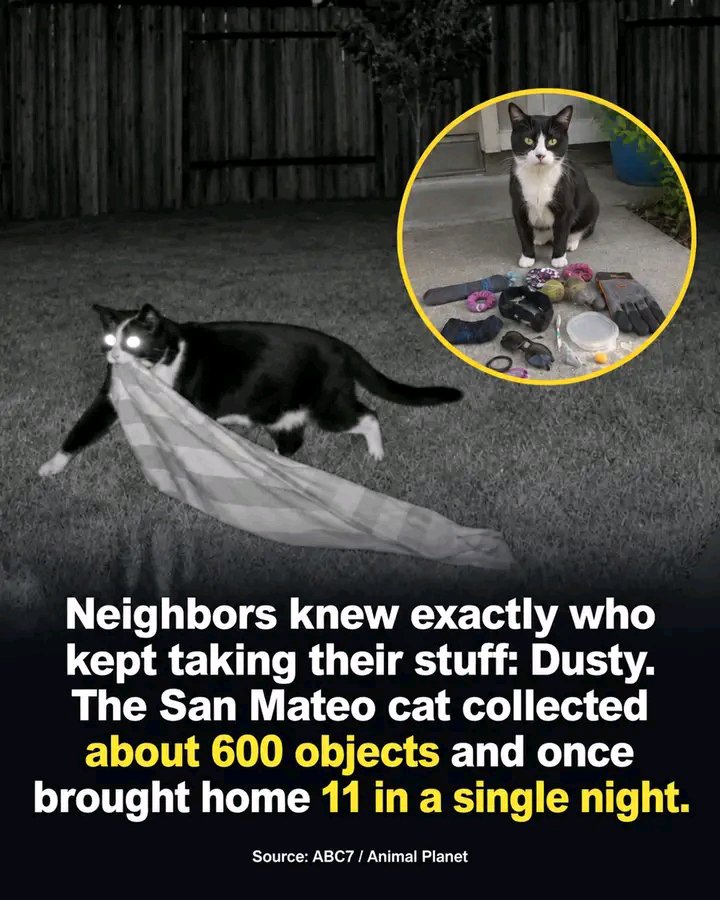
His name was Dusty, and he was a house cat.
Dusty's owners, Jean Chu and Jim Coleman, said he would leave home at night and return in the morning carrying things he had collected from around the neighborhood.
Over roughly three years, they estimated that he brought home about 600 objects.
He was not picky.
Neighbors reported missing gloves, towels, shoes, socks, toys, swimsuits, and other small items.
One woman even said Dusty took the bottom half of a bikini, then came back about 10 minutes later for the top.
Eventually, Animal Planet set up night-vision cameras outside Dusty's home.
The footage caught him in the act.
His personal record?
11 items in one night.
By then, the neighborhood knew exactly where missing objects were likely to turn up.
Dusty's owners collected the loot, washed what they could, and returned items to their neighbors.
So yes, San Mateo really did have a cat burglar.
And this time, the burglar was actually a cat.
Sources: ABC7 San Francisco; ABC7 Los Angeles; 6abc; contemporary reporting.
What's the strangest thing your pet has ever carried home?
In 2019, Leanne Carrasco was graduating from Waltrip High School in Houston, Texas. Her parents were ready to throw her a party. She told them she didn't want one.
Instead, she wanted to take the money and do something for people who didn't have what she had.
Carrasco and her family spent months planning. They reached out to the Star of Hope, a shelter for women and children in Houston, and organized a pizza party for around 200 residents. They ordered 95 pizzas from Little Caesars and packed more than 400 hygiene bags filled with soap, toothpaste, toothbrushes, hand wipes, and deodorant.
On the day of the party, Carrasco showed up with a truck full of pizza boxes and bags of supplies. The residents gave her a standing ovation.
"Not a lot of people have the same options as me," Carrasco said. "It's not fair."
She was 18 years old. She could have had a party with her friends, opened gifts, and celebrated herself. Instead she chose to spend that day feeding 200 women and children she had never met and making sure they had basic things most people take for granted.
She skipped her own celebration to give someone else one 💛
In November 2016, Lesleigh Nurse was checking out at a Walmart in Semmes, Alabama when the self-checkout scanner froze mid-transaction. An employee came over to help, but instead of resolving the issue, store workers accused her of shoplifting.
Nurse, a mother of three, was arrested and charged. The items in question totaled around $48.
A year later, the charge was dismissed after a Walmart employee failed to show up to court. But the ordeal was far from over. Nurse soon began receiving letters from a Florida law firm working on Walmart's behalf, demanding she pay $200 as a civil settlement.
She refused. Instead, she sued.
In 2021, a Mobile County jury awarded Nurse $2.1 million, finding Walmart liable for abuse of process. During the trial, testimony revealed that Walmart and other major retailers routinely sent these demand letters in states where laws allowed it, and that the practice had generated hundreds of millions of dollars over just a two-year period.
Nurse said afterward that she wanted to clear her name more than anything. The arrest had shown up on background checks, affecting her ability to get jobs and volunteer at her children's school 👀
On September 29, 2010, a fire broke out at Gene Cranick's home in rural Obion County, Tennessee. His grandson had been burning trash nearby when the flames spread out of control.
Cranick called 911. The South Fulton Fire Department showed up. Then they stood there and watched his house burn to the ground.
Cranick lived outside the city limits of South Fulton. The city offered fire protection to rural residents for $75 a year. Cranick had forgotten to pay it. When his home caught fire, the department was required by policy to not intervene.
Cranick offered to pay whatever it cost on the spot. He begged them to help. They refused. Firefighters stood by with their trucks and equipment and did nothing while the house burned.
They did step in once, briefly, to protect a neighboring property. That neighbor had paid the $75.
Gene Cranick and his family lost everything. Their home. All of their belongings. Three dogs and a cat.
The fire department's inaction was condemned by firefighter organizations, but the county ultimately defended the policy. It was later changed, though not in the way most people hoped. Rural residents who hadn't paid the fee would now be charged $3,500 per emergency call.
A family lost their home, their pets, and everything they owned over a $75 bill 👀
In November 2013, a 51-year-old inmate at the Östragård prison facility in Sweden had a toothache. He told the prison staff about it. They did nothing. He told them again the next day. And the next. For four days, he complained about the pain and was ignored.
So he broke out of prison, walked to a local dentist, and had the tooth pulled.
Then he turned himself back in.
The man was serving a 30-day sentence and was actually scheduled to be released the following day. He told Swedish newspaper Dagens Nyheter he "just couldn't stand it" anymore and felt he had no other option.
After the escape, the Sundsvall District Court reviewed the case. His sentence was extended by one day.
One day. For a full prison break. Because even the court seemed to understand that the man had been ignored for four days with an inflamed tooth and did the only thing he could think of to make the pain stop.
He didn't run. He didn't hide. He went to the dentist, sat in the chair, got the tooth pulled, and went straight back to prison.
Sometimes the system leaves you no choice but to handle it yourself 👀
Molly Kochan was told her cancer had returned — and this time, it was terminal.
In 2015, her breast cancer came back as Stage IV and had spread to her bones, brain, and liver. Faced with the reality that time was limited, Molly made a decision that shocked people: she left her marriage and began exploring desire, intimacy, and body ownership in a way she never had before.
At one point, Molly and her best friend Nikki Boyer counted 188 sexual contacts in her phone. But the deeper story was not just about the number. Molly said sex made her feel alive — a way to reclaim her body after cancer, surgeries, treatment, fear, and years of feeling disconnected from herself.
She and Nikki turned those conversations into the Wondery podcast Dying for Sex. Molly also wrote the memoir Screw Cancer: Becoming Whole before her death in 2019 at age 45. Her story later became the FX/Hulu limited series Dying for Sex, starring Michelle Williams.
Sources: Vanity Fair; People; Wondery/Apple Podcasts; FX.
Do you see Molly’s story as shocking, brave, heartbreaking — or all three?
He left prison for one reason: he desperately wanted a dentist.
In November 2013, a 51-year-old inmate at Östragård, an open prison in Vänersborg, Sweden, was dealing with a severely painful tooth. He had sought medical help but, according to contemporary reporting, had not received the treatment he wanted.
So he left the facility and found a dentist.
The inflamed tooth was removed. Then, instead of disappearing, he reported himself to police. Officers drove him back to the prison.
The inmate told Dagens Nyheter that his face had become swollen and he could no longer tolerate the pain. Prison officials gave him a warning and extended his one-month sentence by a single day.
It is one of those stories where the reason for leaving custody is almost as surprising as the decision to voluntarily go back.
Sources: The Local Sweden, citing Dagens Nyheter; NPR; Press Trust of India/NDTV.
What does his decision to return after getting treatment tell you about what he was actually trying to accomplish?
A Virginia hunting trip ended in an extraordinarily rare tragedy.
On December 9, 2024, a group of hunters in Lunenburg County was following a black bear when the animal climbed a tree.
According to the Virginia Department of Wildlife Resources, the hunters moved back from the tree before one member of the group shot the bear. The animal fell and struck 58-year-old Lester C. Harvey, who was standing about 10 feet from the base.
Someone in the group immediately provided first aid, and Harvey was taken for treatment at two hospitals. He died from his injuries four days later, on December 13.
Harvey, from Phenix, Virginia, was remembered as an avid outdoorsman. His obituary said he was a married father of five and grandfather of eight.
Outdoor Life later reported that Harvey's wife said he had been near the tree because he was trying to retrieve his dog.
It was an exceptionally unusual accident in which the falling animal itself became the source of the fatal injuries.
Sources: Associated Press; Virginia Department of Wildlife Resources; Outdoor Life.
Would you have expected a falling bear to still pose this kind of danger from 10 feet away?
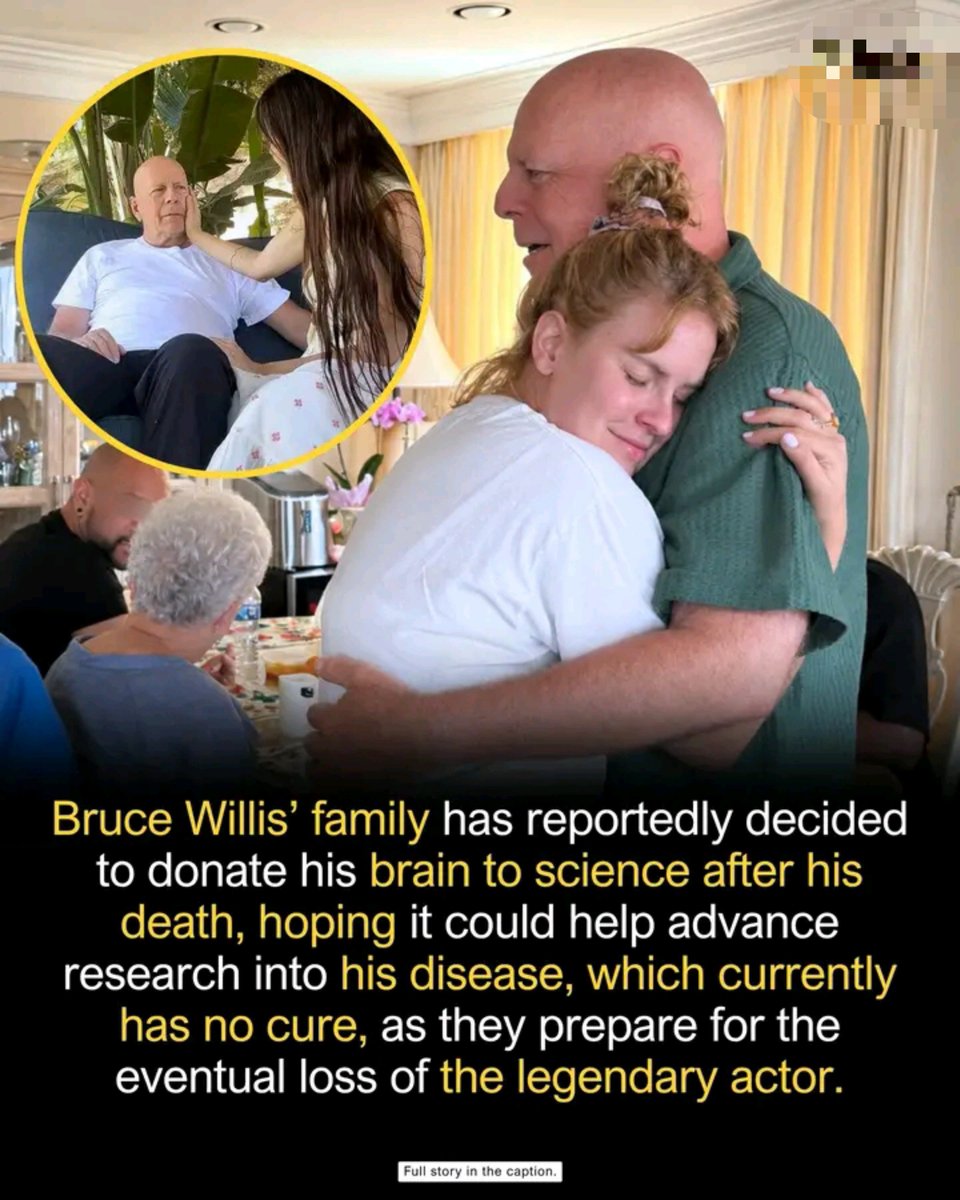
Bruce Willis spent decades saving the world on screen. Now, one of his most meaningful contributions could come after his lifetime.
The 71-year-old actor’s family has reportedly confirmed to donate his brain to science after his death, hoping researchers could learn more about frontotemporal dementia, or FTD, the incurable neurological disease he was diagnosed with in 2023.
FTD damages areas of the brain involved in language, behavior, personality, and movement, and there is currently no cure or treatment that can stop its progression.
Donated brain tissue can give scientists a rare look at the microscopic changes caused by FTD, helping researchers better understand the disease and develop future diagnostic tools and treatments.
For a man who spent a career playing heroes, even the possibility of helping scientists fight an incurable disease would be a powerful final legacy.
She was 27 years old.
A first-grade teacher at Sandy Hook Elementary School.
And when the sh**ting began on December 14, 2012, Victoria Leigh Soto didn't run away from her students.
She moved toward them.
She gathered the children, six- and seven-year-olds and tried to hide them around the classroom.
Then the Armed man entered.
Victoria stood between him and her students.
He asked where the children were.
She lied.
“They’re in the gym,” she reportedly told him, directing him away from the children.
The children were actually hiding nearby.
The Armedman opened fire.
Victoria was struck repeatedly.
But her students had been given a chance to survive.
Some of the children escaped the classroom and eventually made it outside, where they were found by a neighbor.
Victoria didn't get that chance.
She had dreamed of becoming a teacher since childhood, even pretending to teach her stuffed animals.
She had graduated from Eastern Connecticut State University.
She was engaged to be married.
She had a life waiting for her.
But on that morning, she made a decision in seconds.
Protect the children.
Stand between them and danger.
Give them a chance to live.
Victoria Leigh Soto was among the educators and staff members who lost their lives at Sandy Hook.
Her students survived.
Her wedding never happened.
Her future was taken from her.
But the children she protected were given a future of their own.
Victoria Soto didn't simply teach her students.
When they needed her most, she became their shield.
Céline Dion's fans in Paris were not just waiting outside her hotel for a few minutes.
Some stayed for hours.
During the days leading up to her long-awaited comeback concerts, crowds repeatedly gathered outside the Royal Monceau hoping to catch even a brief glimpse of her. Some arrived in the afternoon and stayed deep into the night.
Dion noticed.
And she kept stopping.
She waved, talked with fans, danced, signed things, and on more than one occasion, sang with them.
On September 1, fans outside the hotel played "Pour que tu m'aimes encore."
Dion joined in.
On another night, around 2 a.m., a fan began singing a cappella.
Dion stopped and sang several notes with them.
French coverage described some fans waiting until roughly 3 a.m., around the time Dion returned from rehearsals. One report noted that she could be seen singing with fans at 2 or 3 in the morning during the build-up to her shows.
The nightly gatherings eventually became loud enough that hotel security reportedly asked some fans to turn the volume down.
But Dion's willingness to keep acknowledging them became part of the atmosphere surrounding her comeback.
After years away from full concerts because of stiff-person syndrome, Dion returned to the stage in Paris on September 12.
Thirty thousand people were there.
Before the arena lights came on, though, some of the most memorable performances had already happened on the sidewalk.
Sources: Le Parisien; Le Figaro; TVA Nouvelles; TF1; Reuters; AP.
Would you wait until 3 a.m. outside a hotel for the chance to meet your favorite artist?
Zac Brown could have bought almost anything with the success of his music career.
In 2011, he bought 400 acres of Georgia farmland.
Then he built a camp on it.
The property became Camp Southern Ground, a nonprofit in Fayetteville, about 30 miles south of Atlanta.
During the summer, the campus becomes an inclusive residential camp for children ages 7 to 17.
That means kids with autism spectrum disorder, learning and attention differences, social or emotional challenges, underserved children, kids from military families, and neurotypical children all participate together.
Brown has said his own childhood experiences at summer camp shaped the idea.
He first went to camp as a child, later became a counselor and staff member, and came to believe that camp could give young people confidence, independence, and a stronger sense of belonging.
But summer is only half of the story.
For the rest of the year, Camp Southern Ground focuses heavily on veterans and military families.
Programs such as Warrior Week and Warrior PATHH help veterans navigate life after military service, while Warrior Family Camp focuses on family connection and communication.
The CDC Foundation has highlighted the camp's veteran work as part of broader efforts to support wellbeing, employment, housing, relationships, and successful transitions back into civilian life.
So the viral version is close, but the full story is bigger.
It is not simply a summer camp for autistic children and an off-season retreat for combat veterans.
It is one 400-acre campus built around inclusion, connection, and helping two very different groups find confidence and community.
Sources: Camp Southern Ground; CDC Foundation; Camp Southern Ground partner materials.
What do you think of using one facility for two completely different missions like this?
Two days after Rizwan Javed completed suicide-prevention training, he had to use it for real.
He had recently joined Britain's railway industry and had taken a Samaritans course designed to help rail staff recognize when someone might be in emotional crisis.
The training taught him to notice changes in behavior, approach people calmly, begin a conversation, listen, and help them reach a safer place.
Then, just two days later, Javed spotted someone who appeared vulnerable.
He approached them.
He talked.
He listened.
And the person made it to safety.
It became the first of many interventions.
By the end of 2023, Javed had been credited with helping 29 people, and he was appointed an MBE for services to vulnerable people.
That number has kept growing.
More recently, Javed said he has now been involved in 34 interventions, while Samaritans says he has helped save 34 lives during his railway career.
There is no single magic sentence behind those moments.
Javed says the training gave him the confidence to notice when something seemed wrong and start talking.
Network Rail and Samaritans now teach similar principles across Britain's railways through programs such as Small Talk Saves Lives. More than 30,000 railway employees and stakeholders have received suicide-prevention training.
Sometimes the first intervention is remarkably ordinary:
Notice someone.
Walk over.
Start a conversation.
Then stay long enough to listen.
Sources: Samaritans; Network Rail; PA/BBC; RailBusinessDaily.
Have you ever had a stranger check on you at exactly the right moment?