Chancellor Merz (@bundeskanzler) has lamented that the Iran war has cost Europe more than €100 billion in higher energy prices and declared that the conflict has no military solution.
Apparently, the war became a European concern when its costs appeared on Europe's energy bills.
Not when missiles struck a girls' elementary school in Minab, killing 168 girls in their classrooms, some so horrifically dismembered that they could be identified only through DNA.
Not when missiles struck a sports hall and residential homes in Lamerd, scattering tungsten pellets that killed at least 21 civilians, seven of them children.
Not when US strikes hit bridges and power plants, after Trump openly vowed to "knock out all their power plants."
Not when diplomacy was betrayed. Two days before the war began, Oman's foreign minister, acting as mediator, had announced significant progress in the Geneva negotiations.
Not when the UN Charter was violated.
And not when Merz, alongside Macron and Starmer, condemned Iran's exercise of self-defence "in the strongest terms", while withholding that condemnation from the aggression that had provoked it.
Throughout these events, Merz stood with the attackers. He had already described Israel's 2025 strikes as "the dirty work Israel is doing for all of us." The day after the Minab massacre, he declared that Germany would not lecture its partners about their military strikes.
There was no legal ambiguity here. The UN Charter prohibits the use of force against another state's territorial integrity or political independence, except under the recognised exceptions, including self-defence in response to an armed attack. Iran was at the negotiating table when the war began. Deliberate or indiscriminate attacks against civilians constitute war crimes under international humanitarian law and the Rome Statute, which Germany has ratified. Common Article 1 of the Geneva Conventions obliges Germany to respect and ensure respect for international humanitarian law in all circumstances.
Europe's €100 billion bill is the price of a political choice. Berlin helped undermine the prohibition on the use of force when the victims were Iranian children. It now laments the economic consequences when those consequences reach European households.
The children of Minab and Lamerd were priceless. Their lives cannot be reduced to an energy bill.
We will never forget them, Mr. Chancellor.
Where's Europe in all this?
For much of the world, the United States became a lost cause when it elected Donald Trump. Then it elected him again. A system that hands the presidency to a man of his temperament and moral deficits, then watches him tear through the rule of law while every check and balance folds, is not a country to rely on. Europe had a chance to become the serious partner America no longer was. It failed miserably.
After 1945, Europe chose not to lead with armies. It would rely instead on what scholars call "normative power": setting the rules, building the institutions and letting law do the work that force once did. That is why it stood at the forefront of nearly every legal and multilateral project since, from the human rights system to the International Criminal Court.
It squandered that power in three stages.
The first began when Trump tore up the Iran nuclear deal in 2018. Europe had played a central role in securing that deal and regarded it as the first real achievement of EU foreign policy. It vowed to save it, yet gradually aligned itself with Trump's maximum pressure campaign in all but name. By 2020, Britain, France and Germany had turned the deal's dispute mechanism against Iran rather than against the party that had walked out, and Boris Johnson was proposing a "Trump deal."
The second came after October 7. A UN Commission of Inquiry found that Israel had committed genocide in Gaza. The EU's own review found Israel in breach of the human rights clause of its Association Agreement, yet Brussels looked the other way. When the ICC issued an arrest warrant for Netanyahu, France discovered an immunity the Rome Statute expressly denies, and Merz promised to find "ways and means" for him to visit Germany and leave unarrested. European capitals clung to the refrain that Israel has a right to defend itself and set aside their legal and moral obligations. Israel's attacks on Iran received the same pass. When Israel bombed Iran's consulate in Damascus in 2024, Britain and France joined Washington in blocking a Security Council statement condemning the strike. When Israel assassinated Ismail Haniyeh in Tehran, the European troika addressed its message to Iran: do not retaliate.
The third stage was open support for war. In June 2025, Merz thanked Israel for doing "the dirty work" for all of us. That August, with Iran's safeguarded nuclear sites freshly bombed, the troika turned snapback on the victim. It invoked a mechanism it had no standing to use after years of failing to meet its own obligations under the deal. And when US and Israeli attacked Iran again in February, London, Paris and Berlin condemned Iran's exercise of its right of self-defense under the UN Charter "in the strongest terms." They found no such words for the war of aggression itself.
Europe lost the most. It lost its seat at the negotiating table and made itself irrelevant. It even defied its own citizens, for all its claims to democratic legitimacy. A million Europeans petitioned to suspend the EU-Israel Association agreement, and 59 percent of Germans opposed the attack on Iran. Their governments ignored both, and many Europeans have stopped believing them. As for autonomy, the world no longer takes Europe seriously, not even as a messenger.
There is only one way back. Europe must undo the harm it has done, starting with a snapback it had no right to trigger. It must call its allies' breaches of international law by their name, above all when the culprit is Washington or Israel. It must state plainly that it will arrest Netanyahu, as the Rome Statute obliges it to. And it must seek a role with some humility, instead of dictating to Iran what it may and may not do.
Schon als Kind wollte ich wissen, wie der Teufel aussieht. Jetzt weiß ich es. So wie Trump, nur wahrscheinlich mit Pferdefuß. Auf der Bühne der Welt verkündet Trump offen, den Iran auslöschen und zu sich in die Hölle holen wollen. Sein letztes Angebot: Unterwerfung oder Völkermord.
Wenn unsere Regierung jetzt wieder schweigt und Trumps Serien-Verbrechen weiter vom deutschen Ramstein aus ermöglicht, sollte sie die nächsten Jahrzehnte zum Thema Menschenrechte die Klappe halten. Wer Trump jetzt noch unterstützt, ist Komplize im Reich des Bösen. Wenn Kuba, Nordkorea, China, Russland oder Iran gestern eine derartige Rede gehalten hätten, wäre ein empörter Aufschrei durch die Welt gegangen. Trumps Reich des Bösen aber schweigt.
Was für eine Heuchlerbande!
DER SPIEGEL schreibt im Leitartikel „Der Krieg ist verloren“: „Die US-Regierung muss eine unbequeme Wahrheit akzeptieren: Iran hat den Krieg gewonnen, und Trump hat nahezu keines seiner Kriegsziele erreicht.“ Doch es war nicht einfach ein „Krieg“, ...1/3
نیلی: ایران بارها به صراحت گفته سلاح هستهای را ابزار مناسب برای دفاع نمیداند. اگر آلمان واقعاً مخالف سلاح هستهای است، معیارش «باید» یکسان باشد، نه گزینشی:
مطالبه خلع سلاح هستهای رژیم اسرائیل، "نه" به جنگ از طریق محکومیت صریح هرگونه تجاوز نظامی به ایران و حمله به غیرنظامیان، با شروع از حملات موشکی آمریکا به مدرسه میناب.
صلح با استاندارد دوگانه ممکن نیست.
#تنگه_هرمز
نیلی: همصدا با سایر ایرانیان، من هم این پرسش را دارم؛ نه فقط از آمریکا و جنگطلبانی که باید پاسخگوی اقدامات خود باشند، بلکه از اروپا. چرا برخی دولتها و نهادهای اروپایی در برابر کشتار ۱۶۸ دانشآموز دبستانی در میناب با موشکهای آمریکایی سکوت کردهاند؟ این همه تردید و ملاحظه در محکوم کردن متجاوزان نظامی از کجا میآید؟
#مدرسه_میناب #جنگ_رمضان
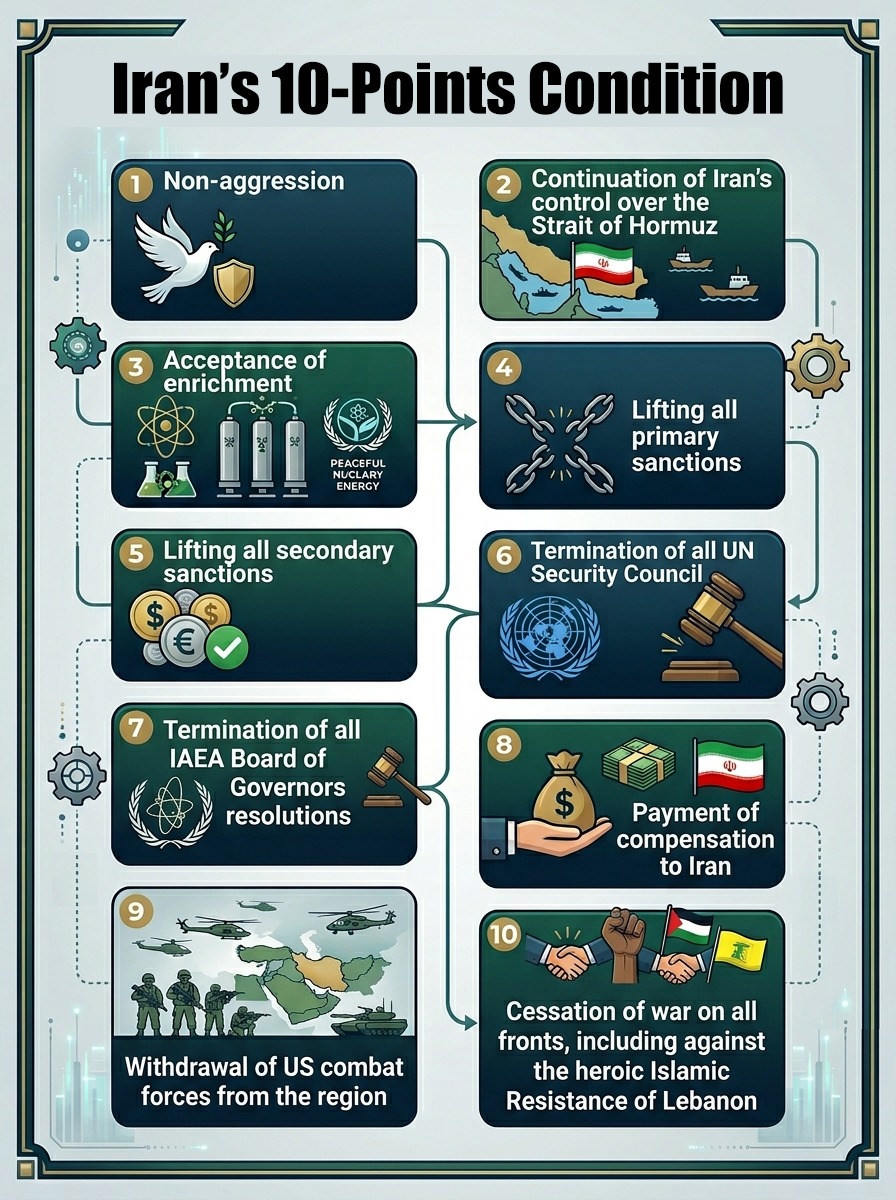
اینکه ترامپ گفته طرح ده مادهای ایران مبنای مذاکره است یعنی چارچوب و پارامترهای توافق نهایی را ایران تعیین کرده است. اگر چنین توافقی حاصل شود، دستاوردی تاریخی خواهد بود که بازتابدهنده جایگاه جدید ایران در نظم جهانی است.