Next up in my series about whether my 9 year old daughter will be going to college: I talked to 12 professors about how AI has changed their classrooms. https://t.co/8m0SBvRyKp
This CBS interview w Thomas Massie is insane.
Massie: “my policy has always been, no country is special and no country deserves my constituents’ taxpayer dollars.
So I’ve never voted for foreign aid, to Egypt, to Syria, to Israel or to Ukraine… but the ones in Israel … they are the biggest recipients so they are mad.” […]
CBS: “…are you antisemitic?”
@booksandbbq My grandfather always said it's not cornbread without buttermilk. (Cast iron and bacon grease and local weisenberger grits were also requirements.)
@PhilipDBunn In my experience, AI-generated upper-level papers are terrible. For me, the problem is that it is incredibly difficult to assign essays in the history surveys, and doing away with essays in the surveys will hurt the majors down the line.
@AstorAaron@CarlPaulus Heard on NPR that the federal gov gives what amounts to a tiny percent of the NPR budget. But iirc, a good bit more for PBS. (25%?) You are right on the local affiliates.
Don't know if it exists already--completely out of my field--but I would love to read a piece on the history of undecided voters. Whence the term/concept? How has the idea been a part of/ functioned in political discourse?
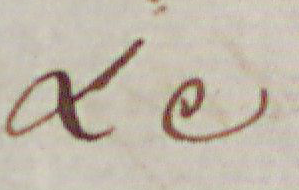
Turning to crowdsourcing for some paleography help on a nineteenth-century letter:
What is the word or abbreviation in the first picture?
The second picture gives the entire sentence and the third picture shows it being used in another sentence.
@monicaklem That's what I initially thought--and it still might be true--but they seemed to use etc. a few lines down. And it feels odd to have a two letter abbreviation of a three letter abbreviation.
@IVMiles Also, have you read Patrick J. Kelly's articles on this? He's got also got a book coming out with LSU press at some point. (Mentioned here: https://t.co/CleLjs5EIB)