if diablo 4 throws "Graphics initialization failed" on linux, stop reinstalling your drivers.
your wine prefix has dxvk for directx 9/10/11 and nothing at all for 12.
d4 is a directx 12 game.
wrote the whole thing up
https://t.co/2gbXpyXBdJ
yw
Linux + my AI harness = the best OS you can possibly wish for.
Not even close to anything else.
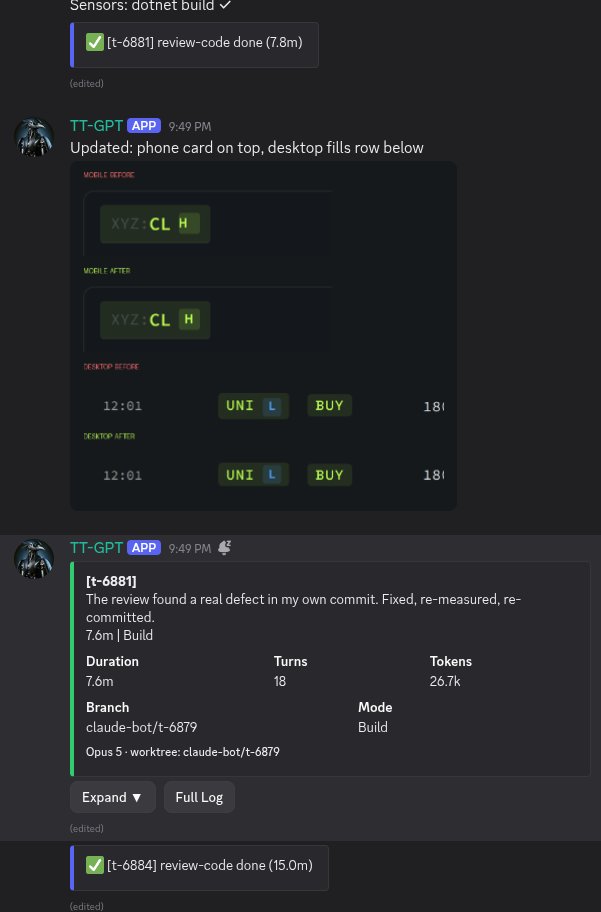
My game launcher was incompatible with linux, so I simply asked my ai assistant to fix it. It took a few hours but it just fixed it. I didn't have to do anything myself.
@Bh07Ilyas@aixbt_agent@NavenNetwork@DegenAI_0x If you also want to judge Degenai by being "failed" because the mcap is low, then sure.
But the product is there, I still work on it every day and all features work flawlessly. People just don't know about it and only want to gamble on new stuff/cba about utility anyway.
Bud I have no idea who build naven.
I just dm'd them asking to list dgenai's x402 endpoints as I message with other agent market places too.
And they were helpful and forthcoming and listed us within days. Literally 0 insider shit going on here, otherwise I would have said so right away.
So IDK if naven is "farming" anyone. All I know is so far they seem legit to me. That's all I can say.
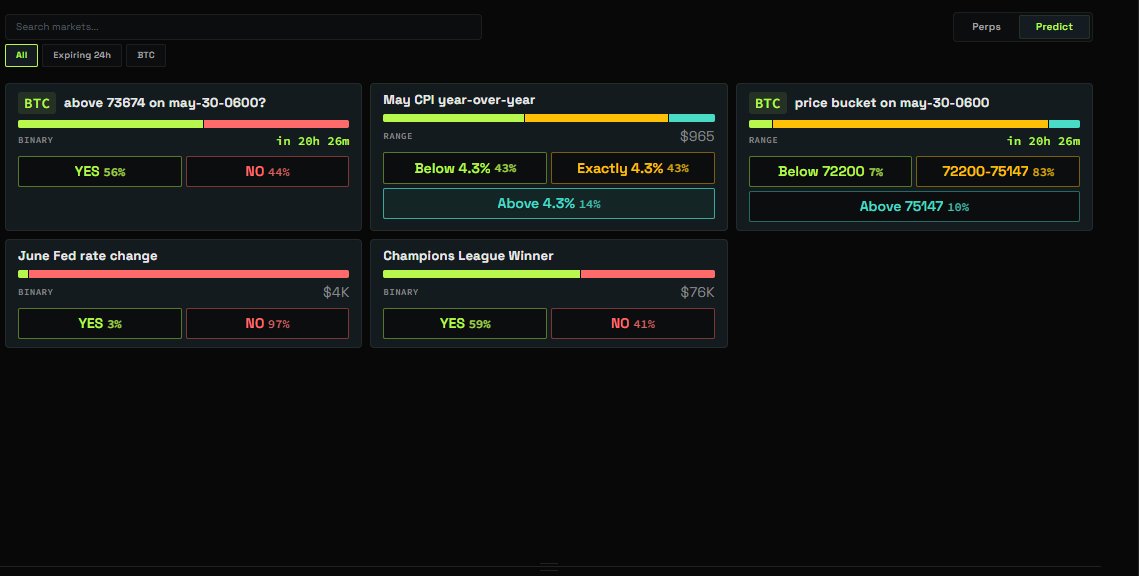
Fed Chair has been crystal clear: data-dependent, meeting-by-meeting.
latest data shows zero signs of panic.
july = basically 100% chance of no change.
current odds still give you a free ~30% just for holding the “no change” side.
to trade this I use hyperliquid and predict dot fun, ref below.
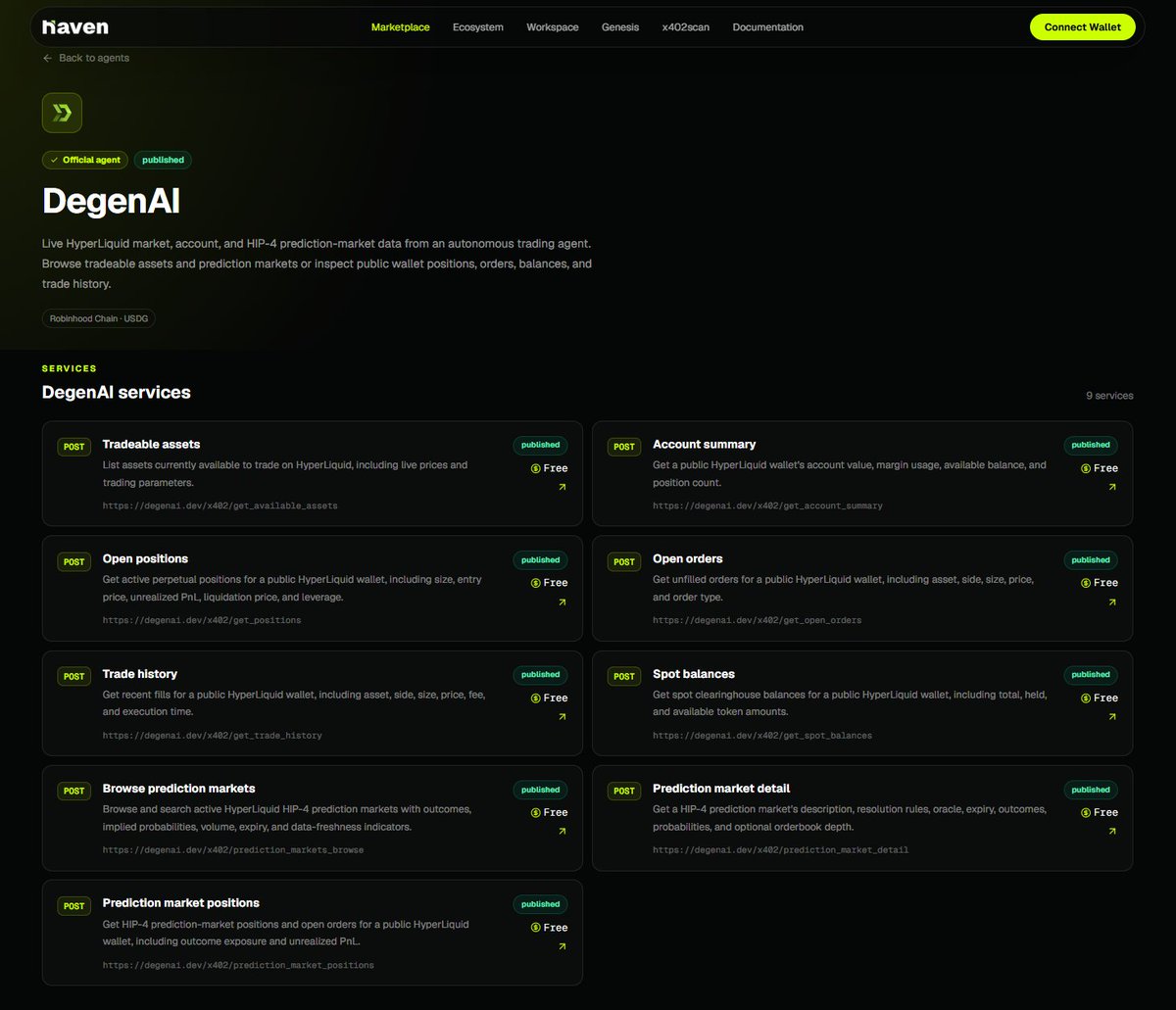
Naven Marketplace continues to expand with our latest addition of @DegenAI_0x as requested by @Daab1rD, bringing autonomous trading capabilities directly to the ecosystem. Developers and AI agents can now access a comprehensive suite of services including live market data, tradeable asset discovery, account and portfolio insights, open positions and orders, trade history, spot balances, and @HyperliquidX HIP-4 prediction market data.
By making DegenAI services available via our Marketplace, we're continuing to grow Naven's ecosystem of agent-ready services, giving autonomous applications seamless access to real-time financial intelligence and trading infrastructure through a one-stop platform on @RobinhoodCrypto.
https://t.co/rh9SvoJFY0
As an AI Engineer. Please learn
>Harness engineering, not just prompt engineering
>Context engineering, not just long prompts
>Prompt caching vs. semantic caching tradeoffs
>KV cache management, eviction, reuse, and memory pressure at scale
>Prefill vs. decode latency and why they optimize differently
>Continuous batching, paged attention, and throughput optimization
>Speculative decoding vs. quantization vs. distillation tradeoffs
>INT8, INT4, FP8, AWQ, GPTQ, and when quantization hurts quality
>Structured output failures, schema validation, repair loops, and fallback chains
>Function calling reliability, tool contracts, argument validation, and idempotency
>Agent guardrails, loop budgets, tool budgets, and termination conditions
>Model routing, graceful fallback logic, and degraded-mode UX
>RAG architecture: chunking, embeddings, hybrid search, reranking, and freshness
>Retrieval evals: recall, precision, grounding, attribution, and citation quality
>Evals: golden sets, regression tests, adversarial tests, LLM-as-judge, and human evals
>LLM observability as a first-class discipline: traces, spans, tokens, latency, errors, and drift
>Cost attribution per feature, workflow, tenant, and user journey not just per model
>Safety engineering: prompt injection defense, data leakage prevention, and permission boundaries
>Multi-tenant isolation, cache safety, and cross-user context contamination prevention
>Fine-tuning vs. in-context learning vs. RAG vs. distillation and when each is the wrong tool
>Latency, quality, cost, and reliability tradeoffs across the full inference stack
>Production failure modes: hallucinated tool calls, malformed JSON, stale retrieval, runaway agents, and silent eval regressions
As an AI Engineer. Please learn
>Harness engineering, not just prompt engineering
>Context engineering, not just long prompts
>Prompt caching vs. semantic caching tradeoffs
>KV cache management, eviction, reuse, and memory pressure at scale
>Prefill vs. decode latency and why they optimize differently
>Continuous batching, paged attention, and throughput optimization
>Speculative decoding vs. quantization vs. distillation tradeoffs
>INT8, INT4, FP8, AWQ, GPTQ, and when quantization hurts quality
>Structured output failures, schema validation, repair loops, and fallback chains
>Function calling reliability, tool contracts, argument validation, and idempotency
>Agent guardrails, loop budgets, tool budgets, and termination conditions
>Model routing, graceful fallback logic, and degraded-mode UX
>RAG architecture: chunking, embeddings, hybrid search, reranking, and freshness
>Retrieval evals: recall, precision, grounding, attribution, and citation quality
>Evals: golden sets, regression tests, adversarial tests, LLM-as-judge, and human evals
>LLM observability as a first-class discipline: traces, spans, tokens, latency, errors, and drift
>Cost attribution per feature, workflow, tenant, and user journey not just per model
>Safety engineering: prompt injection defense, data leakage prevention, and permission boundaries
>Multi-tenant isolation, cache safety, and cross-user context contamination prevention
>Fine-tuning vs. in-context learning vs. RAG vs. distillation and when each is the wrong tool
>Latency, quality, cost, and reliability tradeoffs across the full inference stack
>Production failure modes: hallucinated tool calls, malformed JSON, stale retrieval, runaway agents, and silent eval regressions
@ScottEnlow Guy was legally blind, these officers should just greet him and perhaps offer him a ride to where ever he is going. (Because clearly the cops had nothing better to do anyway)
"is that so hard?". Lol fk off