Facts below (1/5):
In 2025, average earnings per hour (EPH), excluding tips, for a delivery partner on Zomato were ₹102.
In 2024, this number was ₹92. That’s a ~10.9% year-on-year increase. Over a longer horizon also, EPH has shown steady growth.
Most delivery partners work for a few hours and only a few days in a month. But if someone were to work for 10 hours/day, 26 days/month, this translates to ~₹26,500/month in gross earnings. After accounting for fuel and maintenance (~20%), the net earnings for the partner are ~₹21,000/month.
Note: Earnings per hour are calculated on total hours logged in, including the time when the partner might be waiting to receive an order. Earnings per “busy hour” will be higher but that’s not the right metric to look at.
On top of this - delivery partners earn 100% of tips given by customers. The average tip per hour in 2025 on Zomato was INR 2.6 and in 2024 was INR 2.4 per hour. Tips are transferred instantly, with zero deductions. We absorb the payment gateway processing cost ourselves. About 5% of the orders get tipped on Zomato; 2.5% on Blinkit.
Last one on this topic, and I have been holding this in myself for a while.
For centuries, class divides kept the labor of the poor invisible to the rich. Factory workers toiled behind walls, farmers in distant fields, domestic help in backrooms. The wealthy consumed the fruits of that labor without ever seeing the faces or the fatigue behind it. No direct encounter, no personal guilt.
The gig economy shattered that invisibility, at unprecedented scale.
Suddenly, the poor aren't hidden away. They're at your doorstep: the delivery partner handing over your ₹1000+ biryani, late-night groceries, or quick-commerce essentials. You see them in the rain, heat, traffic, often on borrowed bikes, working 8–10 hours for earnings that give them sustenance. You see their exhaustion, their polite smile masking frustration with life in general.
This is the first time in history at this scale that the working class and consuming class interact face-to-face, transaction after transaction. And that discomfort with our own selves is why we are uncomfortable about the gig economy. We want these people to look our part, so that the guilt we feel while taking orders from them feels less.
We aren't just debating economics. We are confronting guilt. That ₹800 order might equal their entire day's earnings after fuel, bike rent, and app cuts. We tip awkwardly, or avoid eye contact, because the inequality is no longer abstract. It's personal.
Pre-gig era, the rich could enjoy luxury without moral discomfort. Labor was out of sight. Now, every doorbell ring is a reminder of systemic inequality. That's why debates explode. It's not just policy. It's emotional reckoning. Some defend the system (“they choose it”), others demand change (“this isn't progress, its exploitation”).
And here’s the uncomfortable twist: the unsaid ask of clumsy ‘solutions’ isn’t dignity. It is about returning to invisibility.
Ban gig work and you don’t solve inequality. You remove livelihoods. These jobs don’t magically reappear as formal, protected employment the next day. They disappear, or they get pushed back into the informal economy where there are even fewer protections and even less accountability. Over-regulate it until the model breaks, and you achieve the same outcome through paperwork instead of slogans: the work evaporates, prices rise, demand collapses, and the people we claim to protect are the first to lose income.
And then what happens?
The rich get their old comfort back. Convenience returns without faces. Guilt dissolves. We go back to clean abstractions and moral posturing from a distance. The poor don’t become safer, they become invisible again: back in cash economies, back in backrooms, back in shadows where regulation rarely reaches and dignity isn’t even debated.
The gig economy just exposed the reality of inequality to the people who previously had the luxury of not seeing it. The doorbell is not the problem. The question is what we do after opening the door.
Visibility is the price of progress. We can either use this discomfort to build something better (which we keep doing continuously as delivery partners are our backbone), or we can ban and over-regulate our way back into ignorance. One of those choices improves lives. The other simply helps the consuming class feel virtuous in the dark.
Update: you can now schedule orders on Zomato.
Plan your meals better by placing an order up to 2 days in advance, and we’ll deliver right on time. For now, scheduling is available for orders above ₹1,000, at around 13,000 outlets across Delhi NCR, Bengaluru, Mumbai, Ahmedabad, Chandigarh, Lucknow and Jaipur.
These restaurants historically, have high quantities of dishes in stock and have shown kitchen-preparation-time consistency. More restaurants and cities are being added. We will soon extend this for all orders.
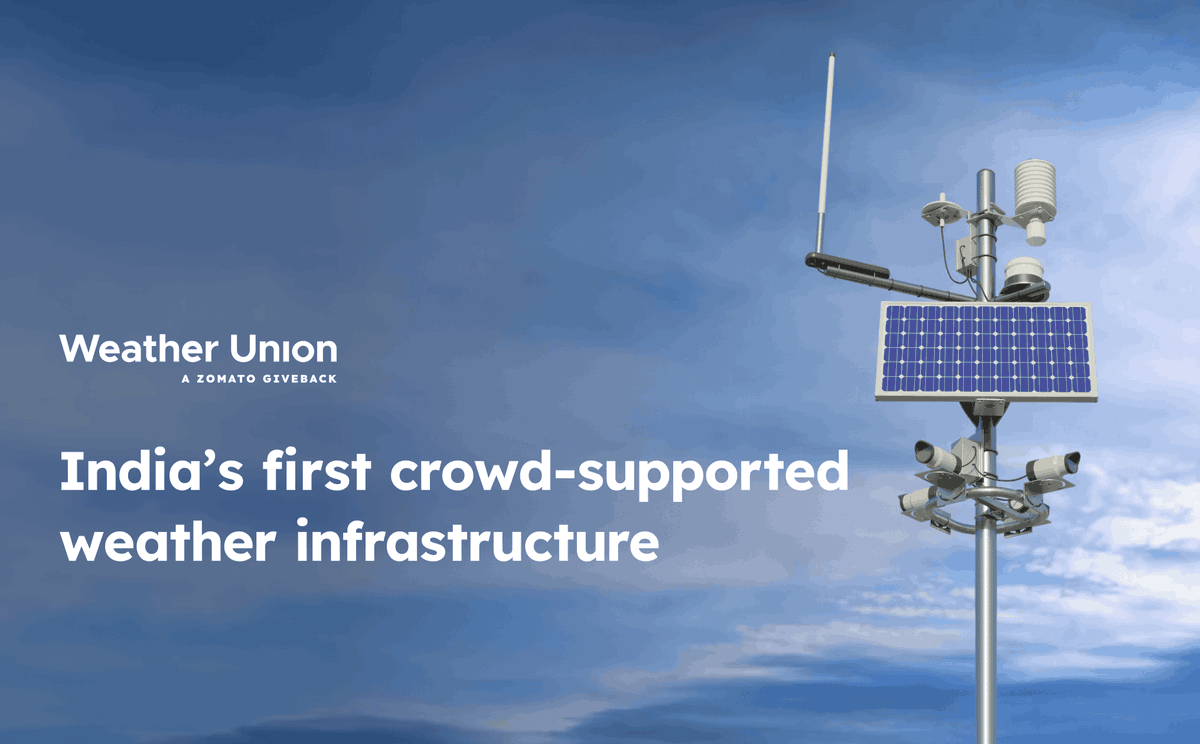
Excited to unveil India's first crowd-supported weather infrastructure, https://t.co/qE9kkfoisG. A proprietary network of 650+ on-ground weather stations, it is the largest private infrastructure of its kind in our country.
These weather stations, developed by Zomato, provide localised, real-time information on key weather parameters such as temperature, humidity, wind speed, rainfall etc. Currently available across 45 large cities, we are expanding this in other Indian cities very soon.
This rich data holds significant potential in unlocking weather use cases for enterprises and research institutes. Having already collaborated with CAS - IIT Delhi, we expect more institutions and companies to benefit from this and contribute towards the greater good of our economy.
At Zomato, it was crucial for us to have access to precise and real-time weather information to make the right business decisions to serve our customers better. Hence, we took it upon ourselves to develop a solution capable of empowering us on this front.
We are now opening up free access to this (through an API) to all institutions and companies in the country. Wait. What? Free? Really? Yes, we believe that this data is too valuable to keep to ourselves or to monetise; therefore, as a Zomato Giveback, we are opening up access to this data to everyone for public good. Multiple companies and public institutions should use real-time weather data, to boost the productivity of our economy.
Also, a lot of Zomato employees have hosted weather stations at their homes. As we look forward to further expanding this infrastructure, we welcome volunteers who want to provide us space on their premises to install these weather stations and contribute to nation building.
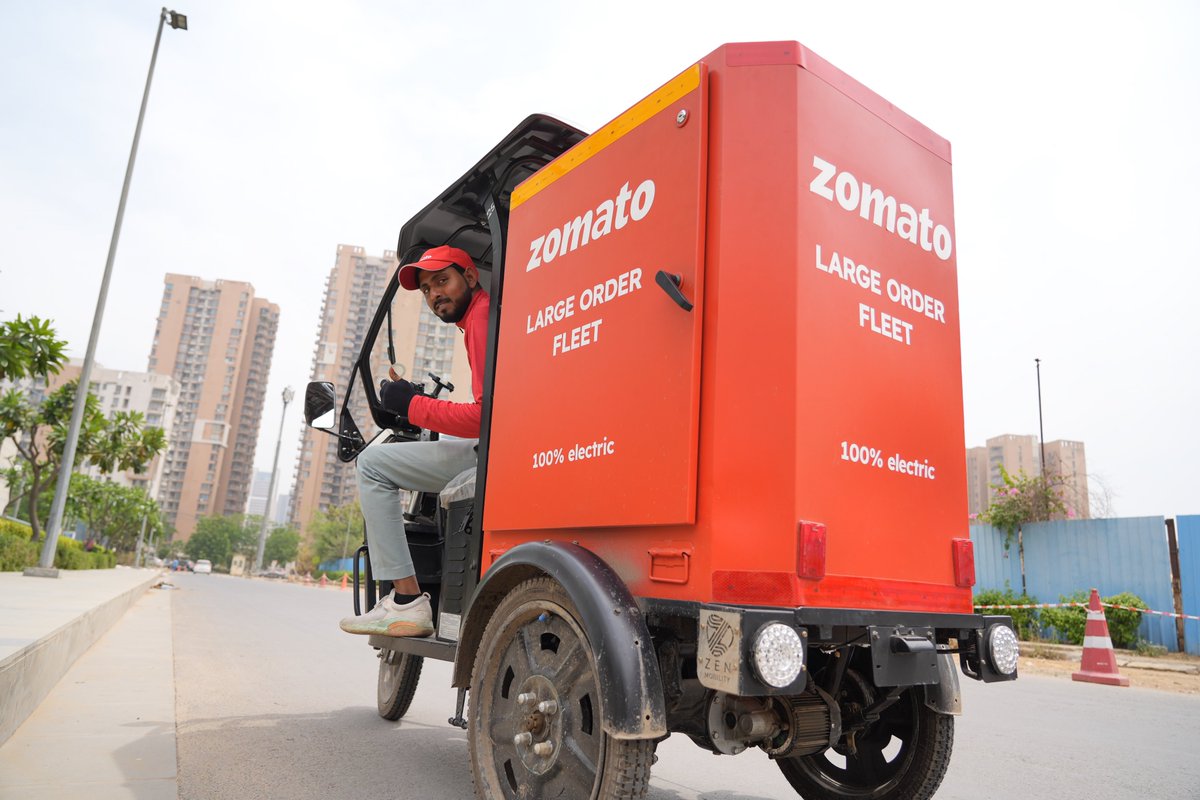
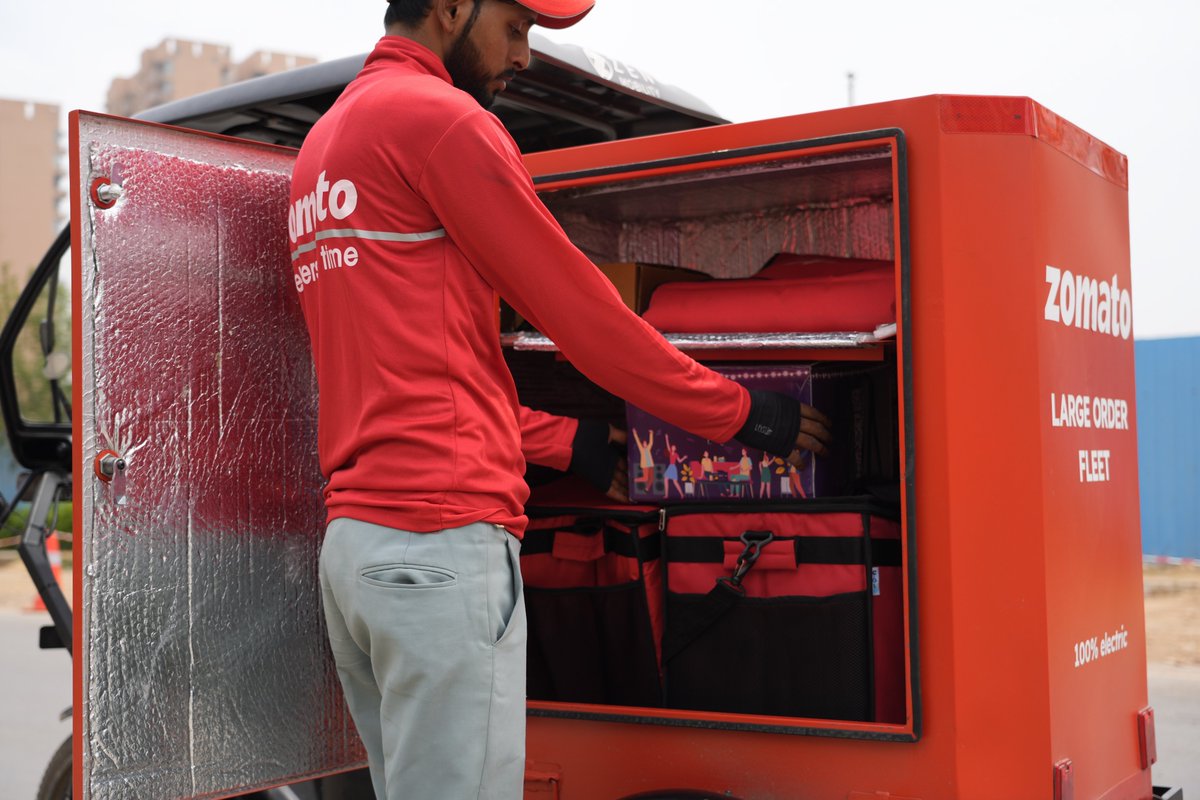
Today, we are excited to introduce India's first large order fleet, designed to handle all your large (group/party/event) orders with ease. This is an all electric fleet, designed specifically to serve orders for a gathering of upto 50 people.
We didn't need tonight's 8.45pm tamasha to realize this, but what we are currently witnessing is MASS EXTERMINATION as State Policy.
The Modi Government is waging a war on behalf of the billionaire class against the vast majority of people in the country. Here's why 👇 1/n
@Yaadi_G How do you counter argument then the exact precise calculations of predicting solar/lunar eclipse events, and exact positions of sun/moon and planets included in astrology texts?
India's Biggest Virtual Product Conference #TheProductSummit2020 is 1 MONTH away! 🚀🚀🚀
The Early Bird offer ends in less than 15 HOURS⌛ Grab your tickets now: https://t.co/fmc5vjbzn2 | @Inc42
@rishabhmhjn I believe Co-working space in Amritsar will also bring a sense of inclusion among budding entrepreneurs/product enthusiasts.
Do you see Co-working spaces helping students in Amritsar bridge gap between learning skills and working on products/solution at early stage?