𝑻𝒉𝒆 𝒑𝒓𝒊𝒄𝒆 𝒚𝒐𝒖 𝒔𝒆𝒆 𝒐𝒏 𝒂 𝑫𝑬𝑿 𝒊𝒔 𝒓𝒂𝒓𝒆𝒍𝒚 𝒕𝒉𝒆 𝒑𝒓𝒊𝒄𝒆 𝒚𝒐𝒖 𝒂𝒄𝒕𝒖𝒂𝒍𝒍𝒚 𝒈𝒆𝒕, 𝒂𝒏𝒅 𝒕𝒉𝒆 𝒓𝒆𝒂𝒔𝒐𝒏 𝒉𝒂𝒔 𝒍𝒊𝒕𝒕𝒍𝒆 𝒕𝒐 𝒅𝒐 𝒘𝒊𝒕𝒉 𝒕𝒉𝒆 𝒎𝒂𝒓𝒌𝒆𝒕 𝒊𝒕𝒔𝒆𝒍𝒇.
Many traders lose a meaningful portion of each swap to costs they never see coming, and understanding where those costs come from is one of the simplest ways to protect your capital.
Where the price comes from
A decentralized exchange has no order book like @binance does.
Instead, you trade against a liquidity pool, which is a smart contract holding two #tokens, and the price is determined by the ratio between them.
Every trade you make changes that ratio, which means your own order moves the price while it fills.
𝗪𝗵𝗮𝘁 𝘀𝗹𝗶𝗽𝗽𝗮𝗴𝗲 𝗮𝗰𝘁𝘂𝗮𝗹𝗹𝘆 𝗶𝘀
Slippage is the difference between the price you expected and the price you received.
If you swap $500 of $SOL into $USDT in a deep pool, the price barely moves and the cost is negligible. If you swap the same amount into a small token with only around $20,000 in liquidity, your order alone could shift the price by several percent.
Those figures are illustrative, but the principle holds consistently: the thinner the pool, the more you pay.
𝗪𝗵𝘆 𝘆𝗼𝘂𝗿 𝘁𝗼𝗹𝗲𝗿𝗮𝗻𝗰𝗲 𝘀𝗲𝘁𝘁𝗶𝗻𝗴 𝗺𝗮𝘁𝘁𝗲𝗿𝘀
Slippage tolerance is the maximum price movement you are willing to accept before the trade cancels itself.
Setting it too low causes your swaps to fail repeatedly, while setting it too high leaves you exposed to bots that buy just before your trade and sell just after it, keeping the difference as profit.
𝗚𝗮𝘀 𝗶𝘀 𝗮 𝘀𝗲𝗽𝗮𝗿𝗮𝘁𝗲 𝗰𝗼𝘀𝘁
Gas is the fee you pay the network to process your transaction, and it is independent of slippage. On @solana it is typically a fraction of a cent, while on @ethereum it can rise considerably when the network is congested. You still pay it when a trade fails, so repeated failed attempts become an expensive habit.
Here's a simple routine before you swap:
› Check the pool's liquidity first
› Keep your tolerance at a sensible level
› Reduce your position size when you're trading low-volume tokens.
These three habits cost nothing and prevent most avoidable losses.
Pls let’s all put @Bulacan_10 in our prayers
Bro has been in and out of the hospital these past months. Let’s hope he gets well soon and permanently at that.
If you know him well, he’s a very supportive and friendly person. Drop a prayer for him🙏🏽
something i've been thinking about lately, crypto has made it easier to own digital assets, but we still don't talk enough about what happens when you lose access to them.
not every problem requires another wallet or another security tool. sometimes, what we need is a better recovery system.
that's one of the interesting problems @ReclaimrTech is exploring.
the project just went live, and its focus on digital asset recovery and protection is worth looking into.
might be worth having on your radar.
check out what they're building:
🌐 https://t.co/awVwGEKxaV
𝕏 @ReclaimrTech
Bro is really having a good time on @1win
Watching this makes you wish you were the one getting those wins.
Beautiful session to watch. Hopefully, my turn to enjoy some luck comes soon too.
one thing worth knowing about earning a0points on @AquaZero0 is that some rewards don't count immediately.
for example, when you commit funds through Trustware, you can earn 1.5 a0points for every $10 committed.
but here's the catch.
your commitment must stay in place for 24 hours before those points count.
so if you've completed the task and haven't received your points yet, don't rush to assume something went wrong.
just make sure you've met the requirements and given it enough time.
explore: https://t.co/hcGeL6Fs7u
@steveXmeta@Ulys_AI Solid take. Reducing the jump from market observation to an executable basket is exactly the kind of friction Ulys is well positioned to remove.
Most trading ideas start with an observation.
You notice something happening in an industry, spot a market trend or have a take on an event.
But turning that thought into an actual portfolio usually means jumping between assets and tools.
That’s what makes @Ulys_AI interesting.
Its AI first chat lets you turn an idea into a basket of supported assets, adjust the weights and decide what to execute.
Smart Orders add another layer of flexibility.
Ideas based trading is an interesting direction for onchain finance.
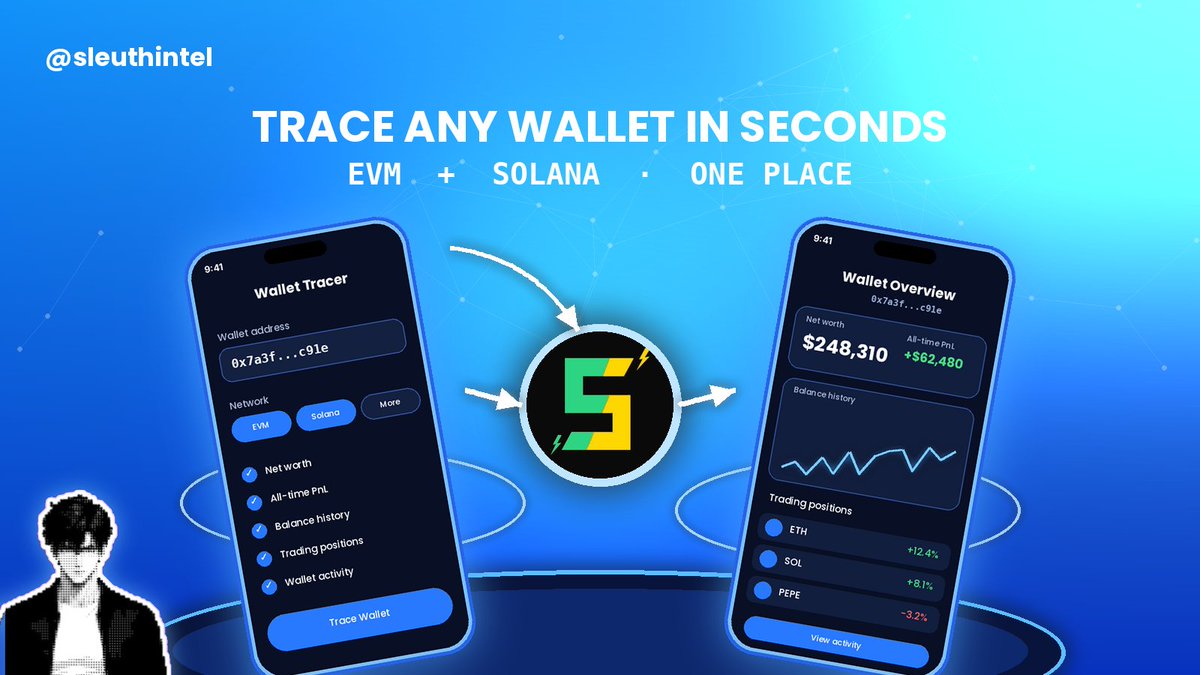
lately i've been exploring the wallet tracing feature on @sleuthintel, and it's another tool really worth looking into.
so one thing I enjoyed the most using it is that It allows users to investigate EVM and Solana wallets, with insights into net worth, all-time PnL, balance history, trading positions and wallet activity.
another thing I found useful is having these different wallet insights accessible in one place instead of checking multiple platforms.....i love these part
for me i think this can make wallet research more convenient and help users better understand on-chain activity.
you can also explore their website below.