Teranode was publicly released Oct 2025 after 3+ years of development. Now in production deployment on BSV mainnet.
Source-available. Open for peer review. Built in Go.
Infrastructure, not hype. #Teranode#BSV
There are more than 10,000 people who should hear this message. The reality is that most of them never will. Modern communication systems are increasingly filtered through algorithms that decide what people see, what gains visibility, and what disappears beneath the surface. The result is that ideas are often judged not by their merit but by whether they fit the incentives of the platforms that distribute them. If this vision is ever going to become reality, it will not happen because an algorithm decides it should. It will happen because people choose to discuss it, challenge it, improve it, and share it with others.
What is being proposed is not another technology company. It is not another token project. It is not another attempt to build a larger data centre or a more powerful centralised model. The objective is something much broader. It is the creation of a distributed intelligence economy in which individuals own their knowledge, own their tools, own their models, and participate directly in the creation of value.
For too long the assumption has been that progress requires concentration. Larger institutions. Larger platforms. Larger data centres. Larger models. Larger corporations. The belief is that intelligence improves as more information is gathered into fewer hands. Yet history repeatedly demonstrates that knowledge does not originate from centres of power. It originates from individuals. Discovery is distributed. Expertise is distributed. Creativity is distributed. Innovation is distributed.
Artificial intelligence should reflect that reality.
The future should not consist of a handful of corporations acting as gatekeepers to intelligence. It should consist of millions of people creating specialised tools, specialised agents, specialised services, and specialised knowledge systems. A physician understands things that an engineer does not. An engineer understands things that a lawyer does not. A scientist understands things that an accountant does not. Human civilisation works because knowledge is dispersed across society. The strength of the system comes from the interaction between specialists, not from the existence of a single authority.
The same principle can be applied to artificial intelligence. Instead of one giant model attempting to know everything, we can build networks of specialised agents that cooperate, compete, verify one another, and continuously improve. We can create systems that discover expertise rather than pretending expertise can be centralised. We can build mechanisms that reward truth, reward reliability, reward contribution, and reward innovation.
Most importantly, we can create systems that help people become more capable rather than making people increasingly dependent upon a small number of organisations. Technology should extend human potential. It should allow individuals to do more, learn more, create more, and contribute more. It should not exist primarily to extract value from users and concentrate it among a small group of owners.
This is why ownership matters. This is why reputation matters. This is why open systems matter. If individuals cannot own what they create, cannot control the knowledge they develop, and cannot participate directly in the value they generate, then the future will simply reproduce the same concentration of power under a different technological label.
A distributed intelligence economy offers a different path. It allows individuals to build. It allows communities to experiment. It allows experts to encode their knowledge into specialised systems. It allows markets to discover value through competition rather than through central planning. It creates diversity rather than uniformity and resilience rather than dependence.
This month I will be releasing the systems I have been building.
Not a token. Not another wallet. Not another "Web3" toy.
A complete banking framework integrated with Bitcoin.
A Bitcoin-enabled SQL database where transactions, records, contracts, invoices, and audit trails are natively tied to the blockchain.
A financial management platform that operates more like Quicken than a cryptocurrency wallet, allowing individuals and enterprises to manage accounts, assets, invoices, contracts, and records within a single system.
Every payment uses deterministic single-use addresses derived through ECDH key exchange. No address reuse. No public identity leakage. Parties can regenerate payment information when authorised, while outside observers see only ordinary transactions.
The architecture is built around master keys, derived subkeys, transaction chains, and hash-key chains, creating a single cryptographic source of truth.
In addition, I will be releasing a digital asset system that supports true transfer of ownership.
When Alice transfers a document or digital asset to Bob, the system is designed so ownership can move rather than merely be copied. The objective is to provide cryptographic evidence that Alice no longer retains access after transfer, creating a form of digital possession that more closely resembles physical property.
These releases are prototypes and will require substantial work before reaching enterprise-grade deployment, but the foundations are now complete.
For years people have talked about what Bitcoin might become.
I intend to show what can actually be built.
#CES2026 highlights: Intel Core Ultra Series 3 lands Jan. 27 with breakthrough battery life, gaming uplevels with discrete‑level graphics + a custom handheld chip, & robotics innovators are choosing Intel at the edge for AI inferencing. #IAmIntel https://t.co/X1XHyvdfol
Well, getting rid of Core would indeed be a good thing—but don’t delude yourself into thinking they’d be replaced by anything better. You’d just get another clique of self-appointed gatekeepers with a different banner. The point isn’t to trade one priesthood for another. The point is to end the priesthood altogether.
A protocol isn’t a playground for developers to endlessly tweak and mutate. It’s a set of defined rules—immutable, testable, and universal. Nobody is recoding TCP/IP every other year to “improve” it. The protocol exists; it’s the foundation. You write software that conforms to it, you don’t keep redrafting the foundation because you’ve grown bored. If you truly understood what the word protocol meant, you’d understand how absurd it is to glorify codebases that shift under your feet.
Bitcoin was designed as a fixed system—a digital cash protocol, not a software experiment. Core turned it into a hobbyist sandbox with arbitrary rule changes, fragile consensus politics, and no accountability. A real protocol scales. It remains stable while implementation competes on efficiency, performance, and usability—not ideology.
So yes, Core and its funding structure should fail. Because the system they built isn’t Bitcoin. It’s a constantly rewritten imitation that can’t scale, can’t settle at volume, and can’t decide whether it’s an academic thesis or a payment system. Bitcoin was an invention. Core is a bureaucracy. And bureaucracies never build—they only bloat.
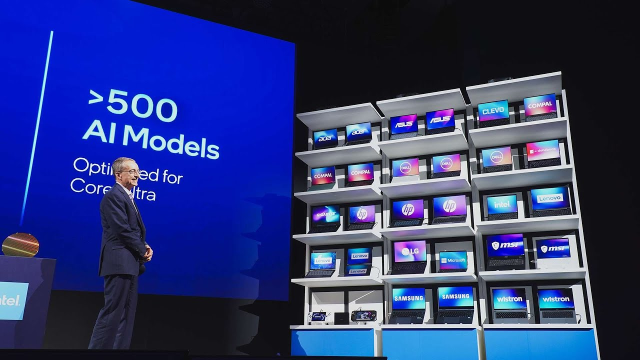
Summer's hot but AI is hotter! Catch up on all the latest from Intel, including Intel Xeon 6 with E-cores, Intel Gaudi accelerators, Lunar Lake architecture and more. #IAmIntel https://t.co/QfJiBmKXR6
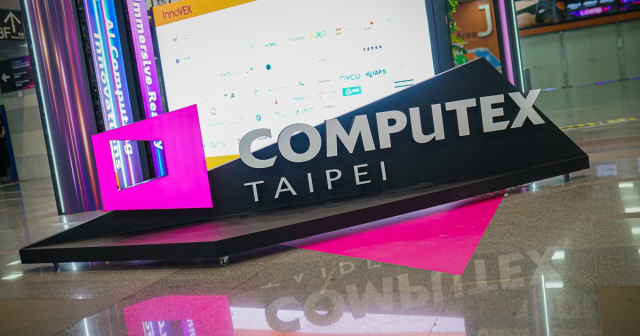
Intel CEO Pat Geisinger announced the launch of the company's Xeon 6 'Sierra Forest' processors during his Computex 2024 keynote in Taipei, Taiwan. #IAmIntel https://t.co/WMLF2v8rnR
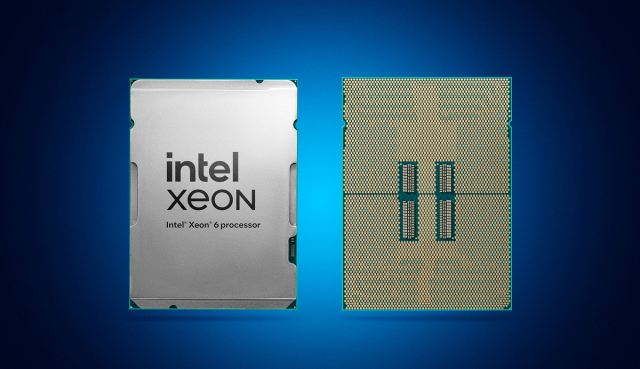
Intel's newest parts offer up to 144 cores per socket with only a 250W TDP. The new Intel Xeon 6 parts, codenamed "Sierra Forest" are a huge step forward. #IAmIntel https://t.co/VUE1dfBnMr
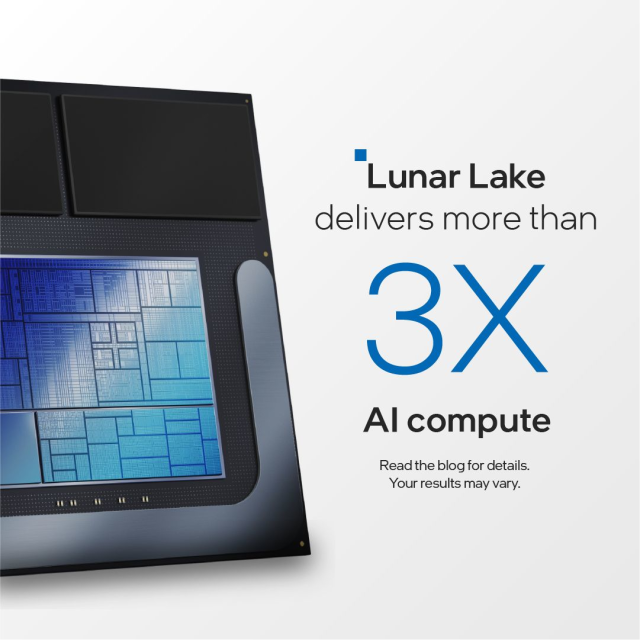
Thrilled about Lunar Lake, our latest processor announced by Pat Gelsinger. It delivers up to 40% lower SoC power and over three times the AI compute. Can’t wait to see the impact this will have on the next generation of AI PCs. Go team Intel! #IAmIntel https://t.co/AFJgwS8k56