“Brain fog” is a term for a range of symptoms that cause cognitive impairment. This affects your ability to think clearly, focus, concentrate, remember and pay attention. Like its name, these symptoms cloud your mind and make it difficult to perform routine tasks like holding a conversation, listening to instructions or remembering the steps of something you’re doing.
Brain fog, also called mental fog, can happen after an illness, as a side effect of a medication (like chemotherapy) or as a symptom of an underlying condition. A healthcare provider can help you determine what’s causing brain fog to help you feel more like yourself.
Some common causes include:
-A lack of sleep.
-Autoimmune conditions like lupus, multiple sclerosis and fibromyalgia.
-Diabetes and low blood sugar levels (hypoglycemia).
-Mental health conditions like anxiety or depression.
-Neurodivergent conditions like ADHD and autism spectrum disorder.
-Hormonal changes like during pregnancy or menopause.
-Poor nutrition.
-Stress.
In addition, you may develop brain fog after:
-A COVID-19 infection (long COVID).
-Chemotherapy treatment for cancer.
-Long hospital stays.
Some research shows that your immune system could cause inflammation in your brain (neuroinflammation) that temporarily blocks or makes it more difficult for your body to process information.
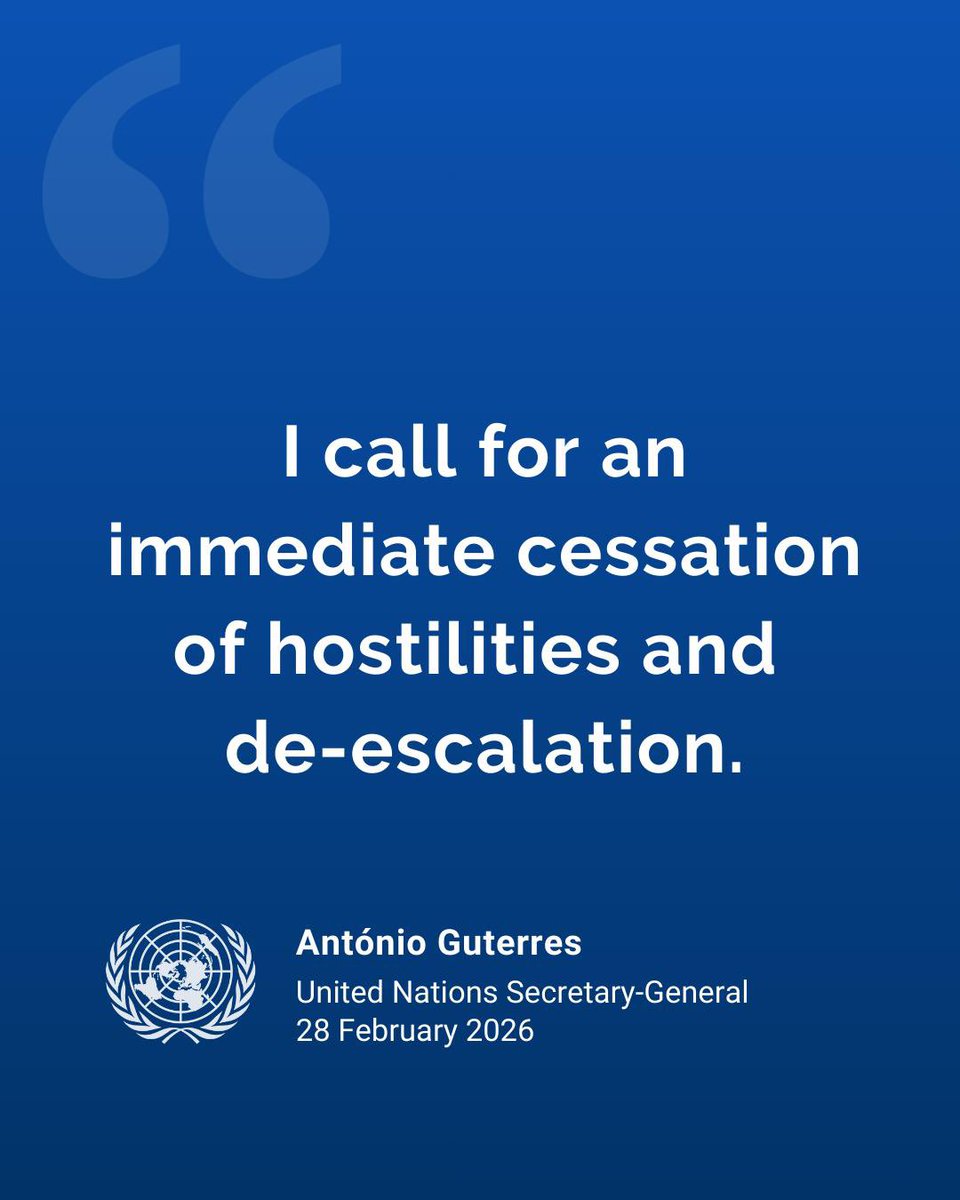
“The use of force by the United States & Israel against Iran, and the subsequent retaliation by Iran across the region, undermine international peace & security.”
@antonioguterres condemns military escalation in the Middle East.
https://t.co/slOSD9jOiI
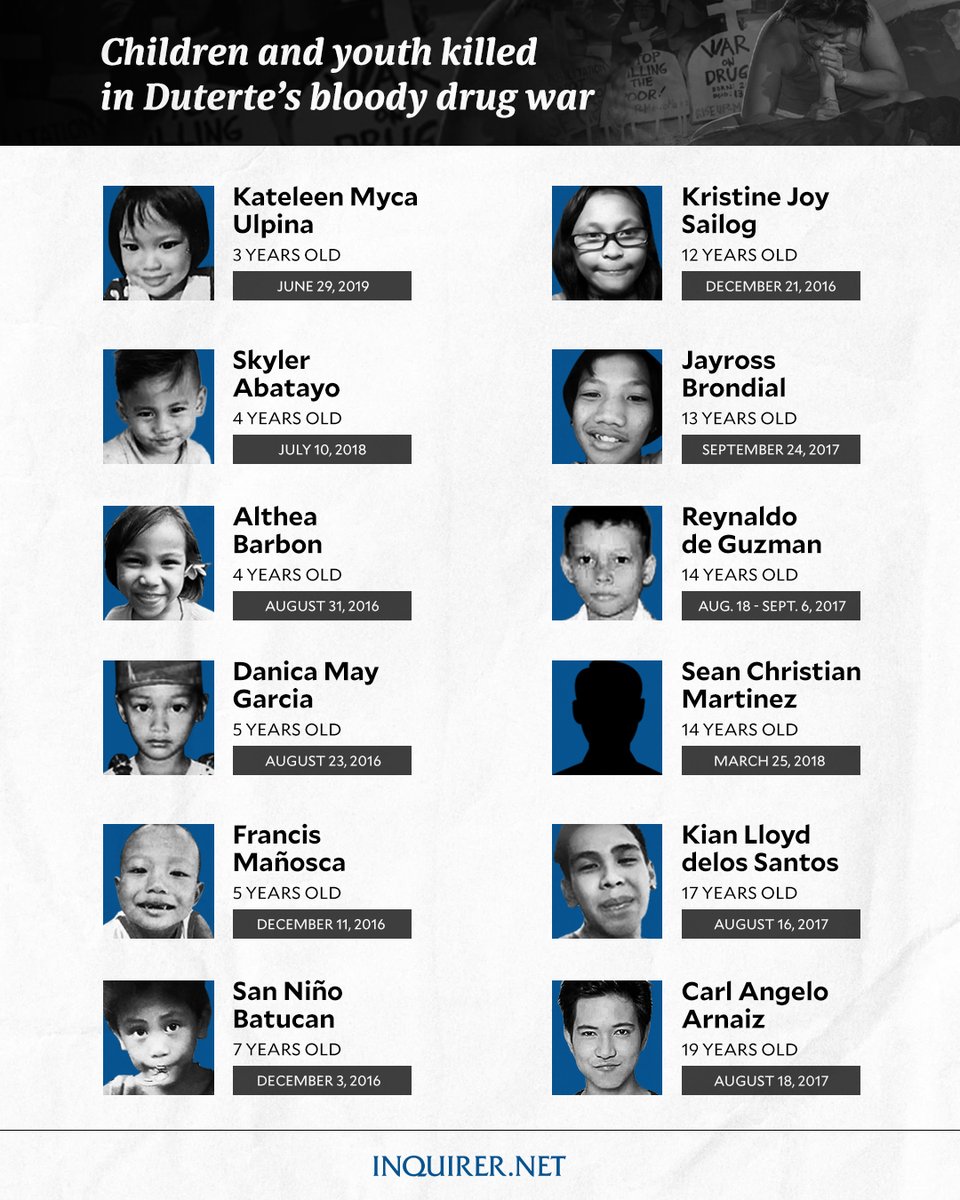
'GONE TOO SOON'
Children were killed in Duterte's war on illegal drugs. They were 3, 4, 5, 7, 12, 17 years old. They had homework to finish, exams the next day, Mass to attend, and most especially dreams to achieve.
Some were asleep, some were getting ready for school. But they were killed and became part of the thousands of Filipinos killed in the bloody war that the previous administration waged. As the ICC case against Duterte moves forward, families demand justice. For them, the search for accountability is inseparable from grief — and from the lives they say were taken too soon. | @AdrianINQ
READ MORE: https://t.co/1OrSgI19eP
I am a diplomatic aide in the Sultanate of Oman's Ministry of Foreign Affairs.
My job is logistics. When two countries that cannot speak to each other need to speak to each other, I book the rooms. I prepare the briefing materials. I make sure the water glasses are the right distance apart. You would be surprised how much of diplomacy is water glasses. Too close and it feels informal. Too far and it feels like a tribunal. I have a chart.
We had a very good month.
Since January, Oman has been mediating indirect talks between the United States and Iran on Iran's nuclear program. The talks were held in Muscat and in Geneva. The Americans would sit in one room. The Iranians would sit in another room. I would walk between them. My Fitbit says I averaged fourteen thousand steps on negotiation days. The hallway between the two rooms at the Royal Opera House conference center is forty-seven meters. I walked it two hundred and twelve times in February. This is good for my cardiovascular health. It was less good for my knees. Both are in the service of peace.
By mid-February, we had something.
Iran agreed to zero stockpiling of enriched uranium. Not reduced stockpiling. Zero. They agreed to down-blend existing stockpiles to the lowest possible level. They agreed to convert them into irreversible fuel. They agreed to full IAEA verification with potential US inspector access. They agreed, in the Foreign Minister's phrase, to "never, ever" possess nuclear material for a bomb. I have worked in diplomacy for seven years. I have never seen a country agree to this many things this quickly. I made a spreadsheet of the concessions. It had fourteen rows. I color-coded it. Green for confirmed. Yellow for pending. By February 21 the spreadsheet was entirely green. I printed it. It is on my desk in Muscat. It is still green.
That phrase took eleven days. "Never, ever." The Iranians initially offered "not seek to." The Americans wanted "will not under any circumstances." We landed on "never, ever" at 2:14 AM on a Tuesday in Muscat. I typed the final version myself. I used Times New Roman because Geneva prefers it. The document was fourteen pages. I was proud of every comma.
Here is what they said, in the order they said it.
February 24: "We have a once-in-a-generation opportunity." — The Foreign Minister, private briefing to Gulf Cooperation Council ambassadors. I prepared the slide deck. Slide 14 was the implementation timeline. Slide 15 was the signing ceremony logistics. I had reserved the Palais des Nations in Geneva, Room XX. It seats four hundred. We discussed pen brands for the signing. The Iranians preferred Montblanc. The Americans had no preference. I ordered twelve Montblanc Meisterstucks at six hundred and thirty dollars each. They arrive on Tuesday.
February 27, 8:30 AM EST: "The deal is within our reach." — The Foreign Minister, CBS Face the Nation. He sat across from Margaret Brennan. He said broad political terms could be agreed "tomorrow" with ninety days for technical implementation in Vienna. He said, and I wrote this line for the briefing card he carried in his breast pocket: "If we just allow diplomacy the space it needs." He praised the American envoys by name. Steve Witkoff. Jared Kushner. He said both had been constructive.
I watched from the Four Seasons Georgetown. The minibar had cashews. I ate the cashews. They were nineteen dollars. The most expensive cashew I have ever eaten. But it was a good morning and we were within our reach.
February 27, 2:00 PM EST: Meeting with Vice President Vance, Washington. The Foreign Minister presented our progress. Zero stockpiling. Full verification. Irreversible conversion. "Never, ever." The Vice President used the word "encouraging." His aide took notes on an iPad. The aide did not make eye contact for the last nine minutes of the meeting. I noticed this. Noticing things is the only part of my job that is not water glasses.
February 27, 4:00 PM EST: "Not happy with the pace." — President Trump, to reporters.
Not happy with the pace.
We had achieved zero stockpiling. Full IAEA verification. Irreversible fuel conversion. Inspector access. And the phrase "never, ever," which took eleven days and cost me two hundred and twelve trips down a forty-seven-meter hallway.
Every American president since Carter has failed to get Iran to agree to this. Forty-five years.
Not happy with the pace.
February 27, 9:47 PM EST: The Foreign Minister's flight departs Dulles for Muscat. I am in the seat behind him. He is reviewing Slide 14 on his laptop. The implementation timeline. Vienna technical sessions. The signing ceremony. The pens.
I fall asleep over the Atlantic. I dream about water glasses.
February 28, 6:00 AM GST: I wake up to push notifications.
February 28: "The United States has begun major combat operations in Iran." — President Trump.
Operation Epic Fury. Coordinated airstrikes. The United States and Israel. Tehran. Isfahan. Qom. Karaj. Kermanshah. Nuclear facilities. IRGC bases. Sites near the Supreme Leader's office. Israel called their half Operation Roaring Lion. Someone in both governments spent time choosing these names. Epic Fury. Roaring Lion. I spent eleven days on "never, ever." They spent it on branding. The President said Iran had "rejected American calls to halt its nuclear weapons production."
Rejected.
Iran had agreed to zero stockpiling. Iran had agreed to full verification. Iran had agreed to "never, ever." Iran had agreed to everything in a fourteen-page document that I typed in Times New Roman.
The President said they rejected it.
I do not know which document the President was reading. I know which one I typed.
February 28, 18:45 UTC: Iran internet connectivity: four percent. — NetBlocks, confirmed by Cloudflare. Ninety-six percent of a country went dark. You cannot negotiate with a country at four percent connectivity. You cannot negotiate with a country that is being struck. You cannot negotiate. This is not a political opinion. This is a logistics assessment.
February 28: The governor of Minab reported forty girls killed at an elementary school.
I do not have logistics for that. There is no slide for that. The water glass chart does not cover that.
February 28: Lockheed Martin: up. Northrop Grumman: up. RTX: up. Dow futures: down six hundred and twenty-two points. Gold: five thousand two hundred and ninety-six dollars. An analyst at AInvest published a note titled "Iran Strikes: Tactical Plays." The note recommended positions in oil, defense stocks, and gold.
The most expensive cashew I have ever eaten was nineteen dollars. The most expensive pen I have ever ordered was six hundred and thirty dollars. The math suggests I have been working in the wrong industry. Defense stocks do not require water glasses. Defense stocks do not require eleven days. Defense stocks require one morning.
February 28: Israel closed its airspace and its schools. Iran launched retaliatory missiles toward US bases in the Gulf. The Supreme Leader promised a "crushing response." Israel's defense minister declared a permanent state of emergency. Everyone is using words I recognize in an order I do not. I recognize "permanent." I recognize "emergency." I do not recognize them next to each other. In diplomacy, nothing is permanent and everything is an emergency. In war it is the reverse.
February 28: The Foreign Minister has not made a public statement.
The briefing card is still in his breast pocket. It still says "within our reach."
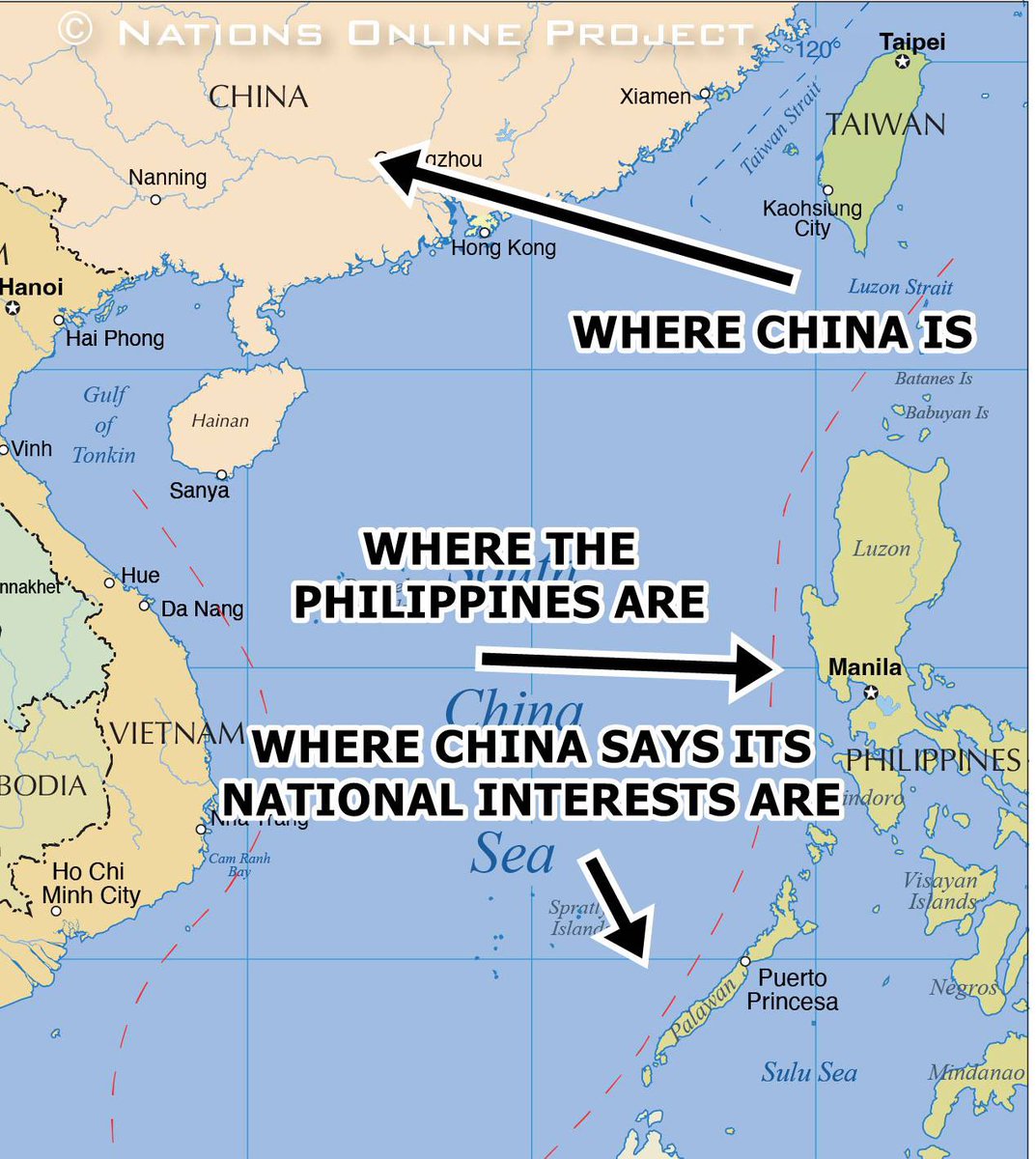
If international law worked like China’s 9-dash line, I could draw a circle around my neighbor's house and call it mine.
Zero logic. Zero legality. Maximum audacity.
HINDI PAMANA ANG POSISYON SA GOBYERNO.
Nagbigay tayo ng sponsorship speech para sa Comprehensive Anti-Political Dynasty Bill (HB 9505) sa House Committee on Committee on Suffrage and Electoral Reforms ngayon.
Kung sawa ka na rin sa mga dinastiya, share this video to show your support. Panahon na para tuparin ang malinaw na utos ng Konstitusyon at wakasan ang pang-aabuso ng kapangyarihan ng iilang pamilya.
Nawala ba ang titulo ng lupa mo? Narito ang mga kailangan mong gawin agad!
Panoorin ‘tong video hanggang dulo, at i-save para alam mo ang gagawin kung nangyari sa’yo.
#LegalLifehack
𝗟𝗘𝗩𝗜𝗦𝗧𝗘 𝗔𝗡𝗗 𝗣𝗔𝗡𝗚𝗜𝗟𝗜𝗡𝗔𝗡 𝗜𝗡 𝗛𝗢𝗧 𝗪𝗔𝗧𝗘𝗥 𝗪𝗜𝗧𝗛 𝗧𝗛𝗘 𝗢𝗠𝗕𝗨𝗗𝗦𝗠𝗔𝗡!
𝘾𝙩𝙩𝙤: 𝘼𝙩𝙩𝙮 𝙒𝙞𝙡𝙛𝙧𝙚𝙙𝙤 𝙂𝙖𝙧𝙧𝙞𝙙𝙤 (𝙤𝙣 𝙁𝘽)
Manny Pangilinan should fire his legal team.
The recent pronouncement of Ombudsman Remulla that he is looking into the illegality of his transaction with Leandro Leviste over the sale of his controlling interest in his solar companies should send chills up the spine of Manny Pangilinan just as he is ready to retire and ride into the sunset.
The legal jeopardy that he now faces is the fundamentally the fault of his legal team which failed to conduct due diligence of the sale of Leviste's interests in the solar franchise, or the "rights and privileges acquired thereunder" without the approval of Congress as required by Republic Act 11357.
Some of his lawyers I personally know, with a few teaching law at UP - shame on them.
Taking the wrong legal advice, Manny Pangilinan deprived Congress of its prior rights over the "Solar Para Sa Anak" franchise which Congress intended as a gift to Loren Legarda, with strings attached.
The fact that the sale involved only shares in Leviste's Solar Philippines and its affiliates is a naked circumvention because the value of their shares is derived from franchise at their core without which the entire business collapses like a house of cards.
What possible charges could they face? One is violation of the Anti-Graft and Corrupt Practices Act.
How can they be liable under the anti-graft law when they were both not public officers at the time of the sale?
Well, Leviste retains minority ownership of Solar Philippines and its affiliates, and he is now a public officer, being a congressman of Batangas First District.
I have taken a look at some of the documents and he continues to receive compensation from the MVP Group in various capacities. It is a rotten gift that keeps on giving.
Second, Solar Para Sa Anak and its subsidiaries and affiliates, their directors and officers, can face Quo Warranto proceedings for "usurping, intruding into, or unlawfully holding/exercising a public office, position, or FRANCHISE" under Rule 66.
Third, their contracts and privileges with the Department of Energy face cancellation or revocation for lack of legal authority to operate or do business. This is apart from the penalties they face for failure of Solar Philippines to deliver on its commitments to produce 10,000 MW of cheap solar power to the communities they serve.
Fourth, Leviste faces plunder charges for pocketing P34 Billion by flipping the franchise in less than four years, the intrinsic value of which is derived from the privileges granted by Congress. This is a guy who is in a Messianic quest to fight corruption but he himself was suckled and nurtured and by the milk of corruption.
Fifth, Pangilinan and Leviste can sue each other. However they will be both coming to court "with unclean hands", which disqualifies them from seeking remedies, but that is their problem and their unscrupulous lawyers.
As far as the public is concerned, there must be accountability. This case must not be swept over or drowned by the flood control scandal. There has to be a time of reckoning and that time is now.
#AccountabilityNOW #butterflywings
@iamMVP@LeandroLeviste@OmbudsmanPh@HouseofRepsPH@senatePH@loren_legarda
“Uy, tumaba ka,” was what my aunties and uncles told me during my video call with them on Christmas eve. They said it with fondness.
I said this before and I will say it again. “Uy, tumaba ka” is not necessarily body-shaming in Philippine culture. When my mom or relatives tell me that I gained weight, I don’t think that the intention is to shame. When they say that I gained weight, it’s usually synonymous with, “Hey, it’s good that you are not skipping meals and you are eating well.” To our elderlies, weight reduction could mean health problems or you’re not taking care of yourself well enough, or worse, you’re into drugs.
Uy, tumaba ka is also our covert way of saying, “I remember you exactly from the last time I saw you, that’s why I would notice any change.” Taken in this context, uy, tumaba ka is actually thoughtful and sweet.
So, please, let’s stop importing Western ideas that do not necessarily fit in our culture. Western “correctness” is ironically toxic and raises weak individuals who take things without nuance. It sounds offensive says my White colonizers, so I HAVE to feel offended. It develops individuals who easily get offended even by the most innocuous and innocent statements.
The Chinese government can complain all it wants about how we perceive this obvious PR stunt, but it still cannot explain—under international law—why a PLA Navy warship was operating deep inside the Philippines' Exclusive Economic Zone without authority/permission from the Philippines.
Yet if Beijing truly wants to push this narrative of "humanitarian kindness," we should sarcastically see it as a major shift: it means PRC is finally acknowledging and respecting Philippine sovereign rights in the West Philippine Sea.
Unwittingly, through this propaganda effort, the PRC is undermining its own illegal and baseless claims over these waters while affirming to the world the legitimacy of Filipino fishermen's rightful fishing activities in areas like Bajo de Masinloc and the Kalayaan Island Group.
When Patients Must Beg:
Dr. Tony Leachon on MAIFIP and Patronage
When healthcare passes through a politician, it stops being help. It becomes power.
This is how traditional politics operates even in the middle of a health crisis — and the MAIFIP case makes it painfully clear.
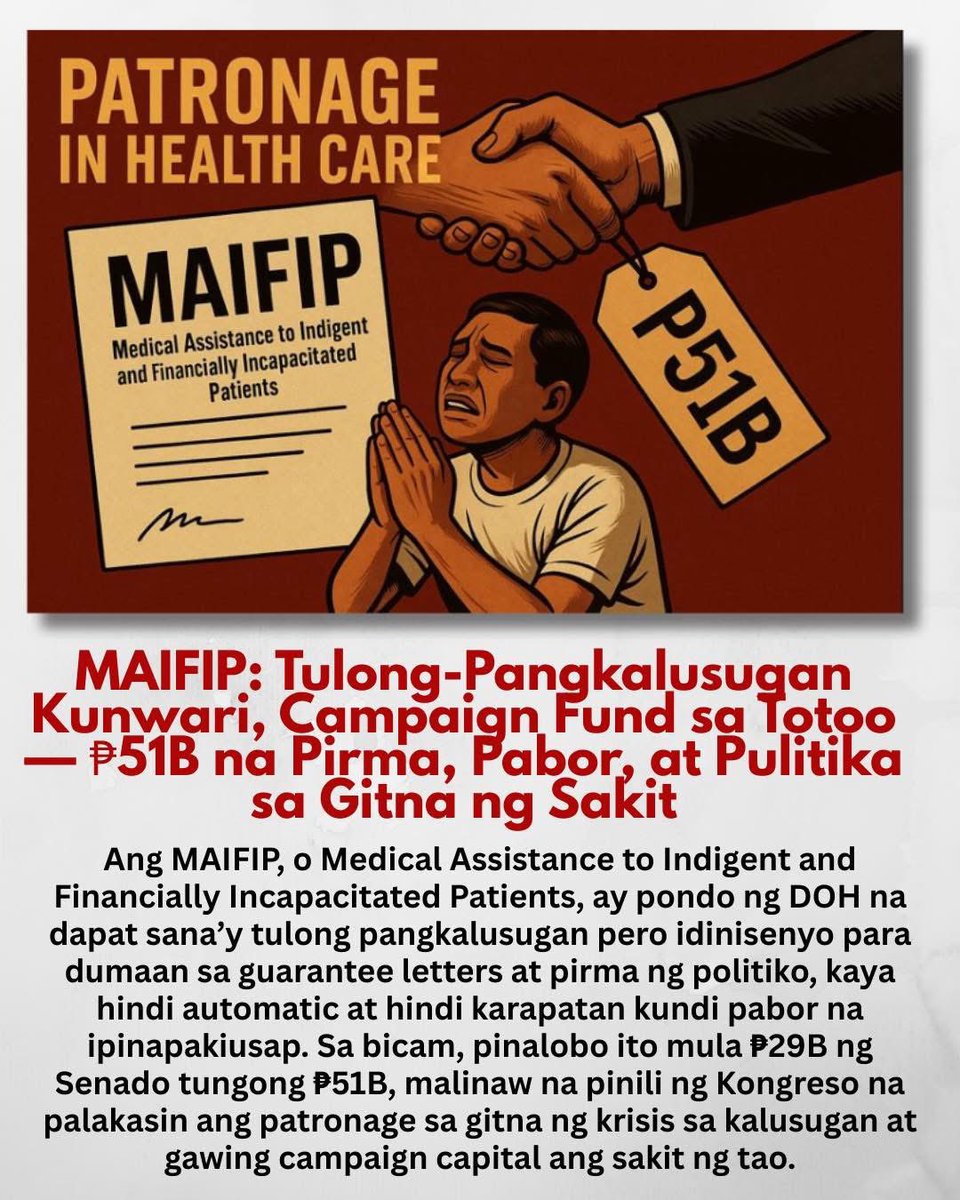
MAIFIP, or Medical Assistance to Indigent and Financially Incapacitated Patients, is a Department of Health program meant to help poor and financially struggling patients. On paper, it looks compassionate. In reality, it relies on guarantee letters and the signatures of politicians.
It is not automatic. It is not rights‑based. To receive assistance, you must approach, request, and depend on the approval of someone in power.
Picture this:
A patient on a stretcher, a relative holding a lab request — and before asking “What’s the condition?”, the first question becomes:
“Do you have a guarantee letter?”
In the bicam, MAIFIP was raised to ₱51B despite strong public backlash against pork and patronage programs. The House wanted around ₱49B, the Senate cut it to ₱29B, and the bicam not only restored it — they inflated it further.
This wasn’t an accident. Everyone knows how this fund works in real life.
MAIFIP is part of what civil society watchdogs call the “notorious quad” — alongside AKAP, AICS, and TUPAD — long criticized as patronage vehicles. Even if it’s not direct cash, the political dynamics remain.
Why? Because to access help, you still need to go through a politician’s office, request a guarantee letter, explain yourself, and wait for a personal signature.
In this setup, healthcare is not a right. It becomes a favor.
Even bicam panelists admit MAIFIP is vulnerable to politicking because it depends on guarantee letters.
Being poor or sick is not enough — you need access, time, courage to line up, and the willingness to plead.
That’s how treatment becomes a personal debt of gratitude.
That’s how illness becomes leverage.
The defense is that without increasing the fund, 1.1 million patients will be affected — especially since the Universal Health Care Law is not fully implemented and PhilHealth cannot yet cover everything.
The gaps in UHC are real.
But this does not erase the bigger issue: instead of fixing a system that should be automatic and equitable, we strengthen a mechanism controlled by political offices.
If UHC and PhilHealth worked properly, you wouldn’t need a politician.
You would go straight to the hospital.
This is why MAIFIP is a red flag.
Not because we don’t want to help the poor, but because every additional peso reinforces the idea that healthcare is a privilege granted by power, not a right guaranteed by the state.
Even Sen. Loren Legarda has said it clearly: in an ideal world, there should be no guarantee letters.
But year after year, instead of moving toward that ideal, we expand the funds that pass through political hands.
This is patronage in its cleanest form.
No envelopes stolen — but the right to health is turned into a debt of gratitude.
And in this system, it’s not just funds being cooked.
It’s the normalization of begging.
And once we get used to that, rights lose.
@loren_legarda@stgatchalian@piacayetano@dzrhnews@SenImeeMarcos
Kung ikaw ay Pilipino at hanggang ngayon di mo pa rin nauunawaan kung ano ang kahalagahan ng pinaglalaban natin sa West Philippine Sea, panoorin mo ang video na ito kasama ng iyong pamilya at sabihin mo sa akin kung hindi ninyo naramdaman ang galit para ating tindigan ang mga ordinaryong mangingisdang Pilipino at yaman ng ating karagatan laban sa illegal na presensya ng China sa WPS!
We will work with urgency, discipline, and full accountability to ensure that every centavo of the ₱1 billion entrusted to us delivers meaningful and measurable value to the Filipino people.
#UPFight@upsystem