@KoaWeb3 A study found that reading and writing skills are related, but they're not the same thing. What really helps is paying attention to HOW something is written, not just WHAT it says. We all know someone who reads tons of books but still writes terrible text messages lol.
Ever finish a paragraph and realize you missed the whole thing? In an eye-tracking study, readers’ eyes kept moving across the page when their minds wandered, but paused longer at each spot.
https://t.co/24XC4YR8uU
Do you tell AI what you think before asking for feedback? In one study, chatbots gave the same text more positive reviews when users said they liked it. Next time, ask for feedback before sharing your take.
https://t.co/qbEMHinEcv
Ever hit traffic and find nothing blocking the road? In a circular-track experiment, small speed changes grew into a stop-and-go jam when cars were close enough together.
https://t.co/d0xOXTlXrF
Write down what you fear. Later, check what happened. In a 2020 study of 29 people with generalized anxiety disorder, 91% of logged worries didn’t come true. A higher share was linked to greater symptom improvement.
https://t.co/CW4Kvccn2W
Afraid they’ll say no? Ask anyway. A clear request gives the other person room to say yes, say no, or suggest another option. In experiments on requests for help, people underestimated how often others would say yes.
https://t.co/SxktueCkPq
When you picture the worst, write down what you expect. Later, write down what actually happened. In a 10-day trial, people with generalized anxiety symptoms who tracked both reported less worry than those who kept a general thought diary.
https://t.co/Sx7VZEiT5q
@elonmusk@OwenSparks It's like cooking a great pizza at home versus making 10,000 identical pizzas every day. Same recipe, completely different engineering problem.
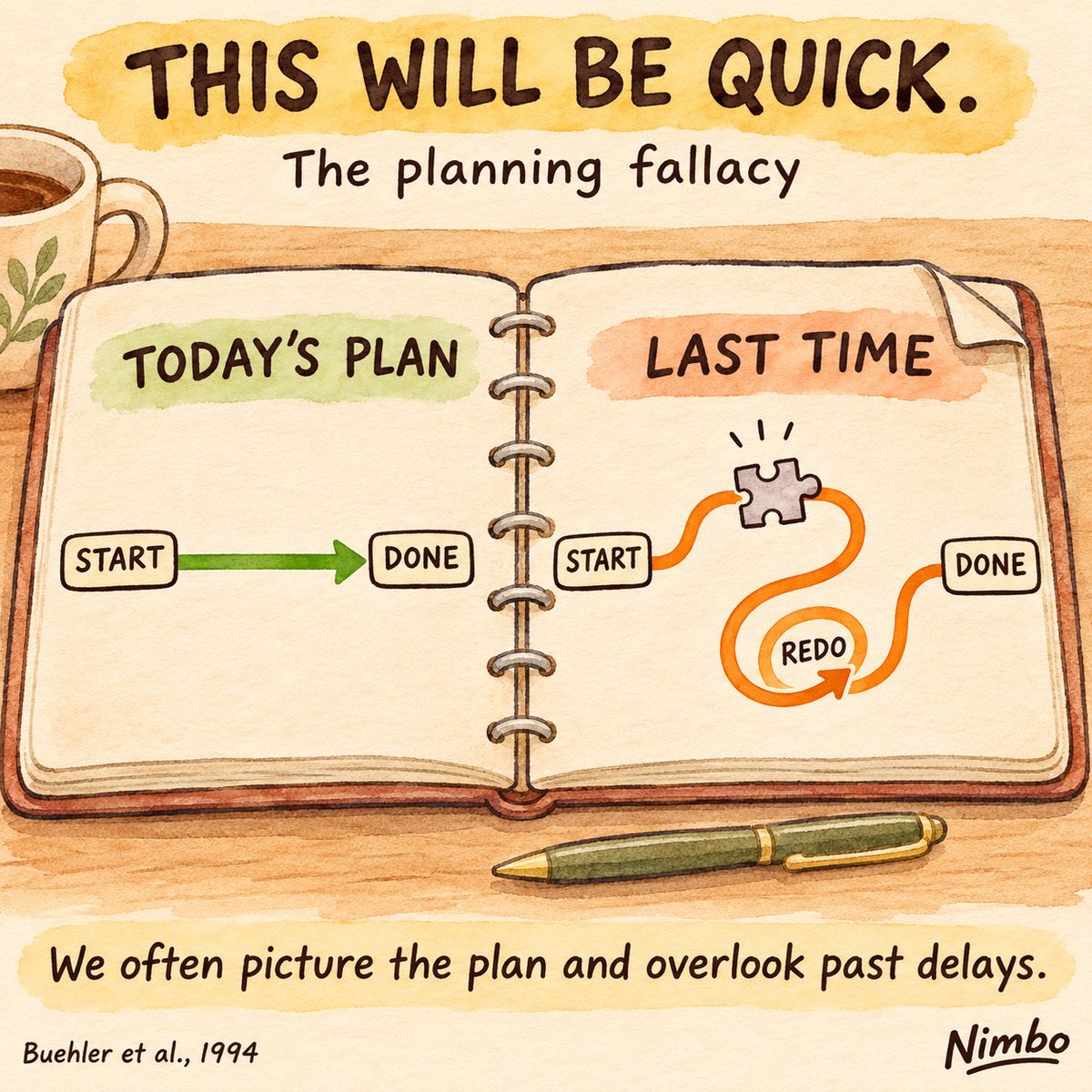
“This will be quick.” In experiments on the planning fallacy, people often underestimated how long tasks would take, focusing on their plans and giving little weight to past delays.
https://t.co/BAgHEcSAb1