Today is December 24, the anniversary of St. Charbel Makhlouf’s death in 1898—a day when heaven gained one of its greatest wonderworkers. Though his universal feast is July 24 (Latin calendar), many honor him especially on this Christmas Eve, remembering his holy passing after a stroke while celebrating the Eucharist.
St. Charbel, the humble Lebanese Maronite hermit, lived a life of radical silence, prayer, and penance at the Monastery of St. Maron in Annaya and its nearby hermitage. Known as the “Miracle Monk of Lebanon,” he performed wonders in life—like blessing crops against locusts—and countless more after death.
Famous miracles include:
• His tomb emitting bright light for days after burial, drawing pilgrims.
• His body remaining incorrupt and flexible for decades (even “bleeding” oil-like liquid), examined multiple times with no natural explanation.
• The 1993 healing of Nohad El Shami from partial paralysis after dreaming of two monks (one identified as St. Charbel), who touched her neck—verified medically.
• Over 33,000 reported favors, from healings of blindness, cancer, infertility, to profound spiritual conversions, many documented at Annaya.
On this day, let’s turn to his powerful intercession. Here’s a beautiful traditional prayer to St. Charbel:
Prayer to St. Charbel for Intercession:
Lord, infinitely Holy and glorified in Your saints,
You inspired St. Charbel, the holy monk and hermit,
to live a holy life in likeness to Jesus.
Grant us the grace to love and serve You as he did,
detached from worldly distractions.
Almighty God, who manifested the power of St. Charbel’s intercession
through countless miracles and favors,
hear our prayers through his merits
and grant what we ask in faith, for Your glory and our salvation.
St. Charbel Makhlouf, pray for us!
Amen.
May the Miracle Monk intercede for your needs today—health, peace, faith, whatever weighs on your heart. Glory to God in the highest! 🙏🇱🇧 #StCharbel #MiracleMonk #LebaneseSaint #CatholicTwitter
St. John of the Cross, pray for us! A Portuguese-born soldier turned healthcare worker in Spain. He started the Brothers Hospitallers to continue his work among the poor, sick, homeless and unwanted. https://t.co/9afzaFGv5c
December 12 – Feast of Our Lady of Guadalupe 🌹✨
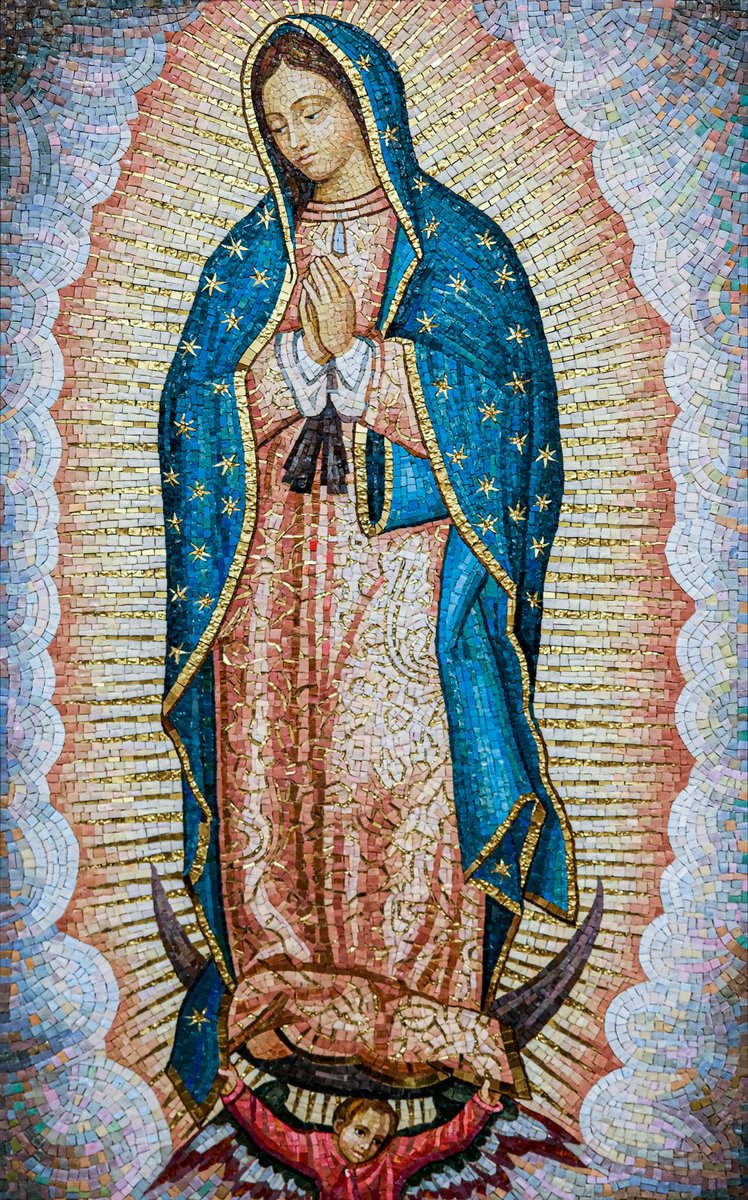
On this day in 1531, the Mother of God appeared on Tepeyac hill clothed with the sun, standing on the moon and crowned with stars.
She spoke tenderly in Nahuatl to St. Juan Diego: “My dear little son, am I not here, I who am your Mother?”
Winter roses bloomed at her command. Her miraculous image was painted by heaven itself on a poor man’s tilma, an image that still converts hearts almost 500 years later.
Because of her, nine million souls entered the Church in just a few years, the greatest harvest of souls the world has ever seen.
She came as Mother to the conquered, to the humble, to the forgotten, reminding every nation: God chooses the small to do the impossible.
¡Viva la Virgen de Guadalupe! ¡Viva Cristo Rey!
Our Lady of Guadalupe, Empress of the Americas and Mother of Life, pray for us 🤍🌹
#OurLadyOfGuadalupe #catholicx #CatholicTwitter #VirgenDeGuadalupe
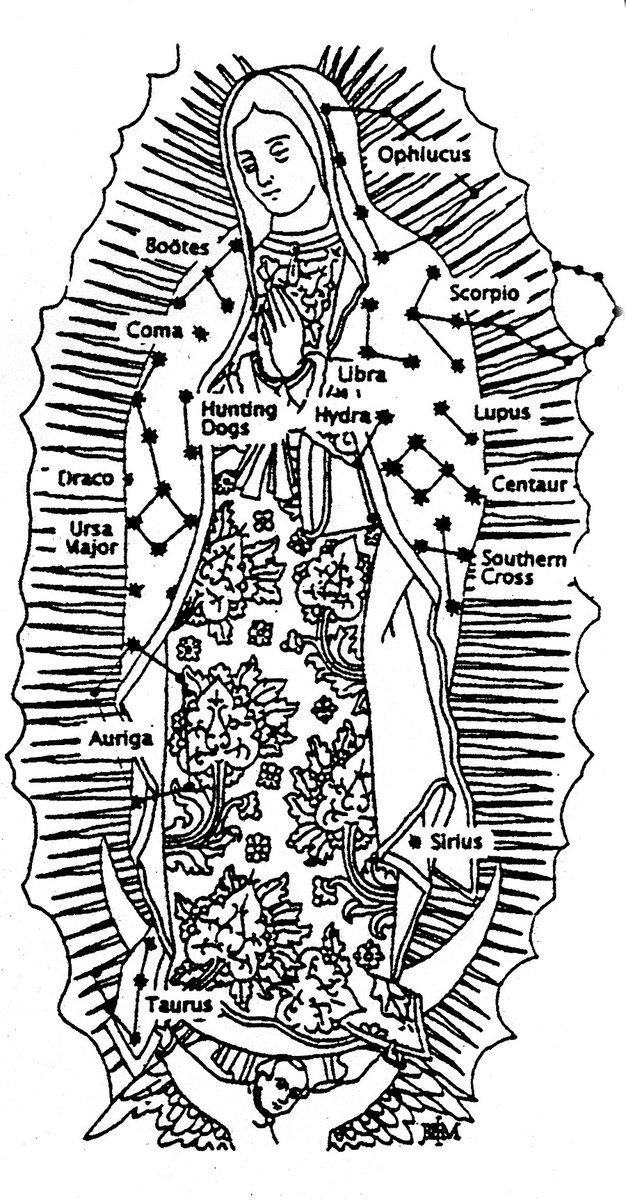
The constellation of the winter solstice as it appeared over the Mexican skies at the time of the apparitions of our Lady of Guadalupe, and represented by the stars which adorn the Virgin's mantle.
From Our Lady of Guadalupe to St. Juan Diego
“Am I not here who am your Mother? Are you not under my shadow and protection? Am I not your fountain of life? Are you not in the folds of my mantle? In the crossing of my arms? Is there anything else you need?”
Let us pray one Hail Mary and entrust all unborn babies, and all those considering abortion, to Our Lady of Guadalupe, the patroness of the unborn. Please comment “Amen” as a response. #OneHailMaryCampaign
Today is the feast of Our Lady of Guadalupe
In 1531, a humble Mexican man named Juan Diego saw an appearance of the Blessed Virgin Mary on Tepeyac Hill, in the northern part of Mexico City which today is part of the grounds of the Basilica of Our Lady of Guadalupe, one of the most visited Catholic shrines in the world.
She asked him to tell the bishop to build a church there. When the bishop asked for a sign, Mary told Juan Diego to gather roses, miraculously blooming in winter, and carry them in his tilma, a simple cloak made from cactus fibre 🌵.
When Juan Diego opened his tilma before the bishop, the roses fell to the ground and a full, beautiful image of Our Lady appeared instantly on the cloth. No one painted it. No brush strokes exist. Also no known technique that could have made it. The colours seem to float above the fibres, and the material, which should rot in 20 years, has lasted for almost 500 years. Scientists cannot explain how the image was formed or how the fabric has survived nearly 500 years.
This unexplained, perfectly preserved image is one of the greatest miracles connected to Our Lady of Guadalupe.
Today, this same tilma is displayed in the Basilica of Our Lady of Guadalupe in Mexico City, and it continues to amaze millions.
“Let not your heart be disturbed… Am I not here, who is your Mother? Are you not under my protection? Am I not your health? Are you not happily within my fold? What else do you wish? Do not grieve nor be disturbed by anything.”
- Our Lady of Guadalupe
Prayer to Our Lady of Guadalupe
Our Lady of Guadalupe, Mystical Rose, make intercession for the Holy Church, protect the Sovereign Pontiff, help all those who invoke thee in their necessities, and since thou art the ever Virgin Mary, and Mother of the True God, obtain for us from thy most holy Son the grace of keeping our faith, of sweet hope in the midst of the bitterness of life, of burning charity, and the precious gift of final perseverance. Amen.
Our Lady of Guadalupe, pray for us 🙏🏽
The image of Our Lady of Guadalupe
"The process by which the gold in the crown, stars, and rays has been laid on is a mystery ... its consistency would almost lead one to believe that the very threads of the tissue had been changed into threads of gold"
https://t.co/k9P1PvbpzI
In 1531, the Blessed Mother appeared four times to St. Juan Diego asking for a church to be built in her honor. The last time she appeared to him, on December 12, 1531. We therefore celebrate the Feast day of Our Lady under the title of Guadalupe on December 12. It is preceded on December 9 by the Feast of St. Juan Diego, who was canonized in 2002 by Pope St. John Paul II.
https://t.co/AVCZlhM1AU
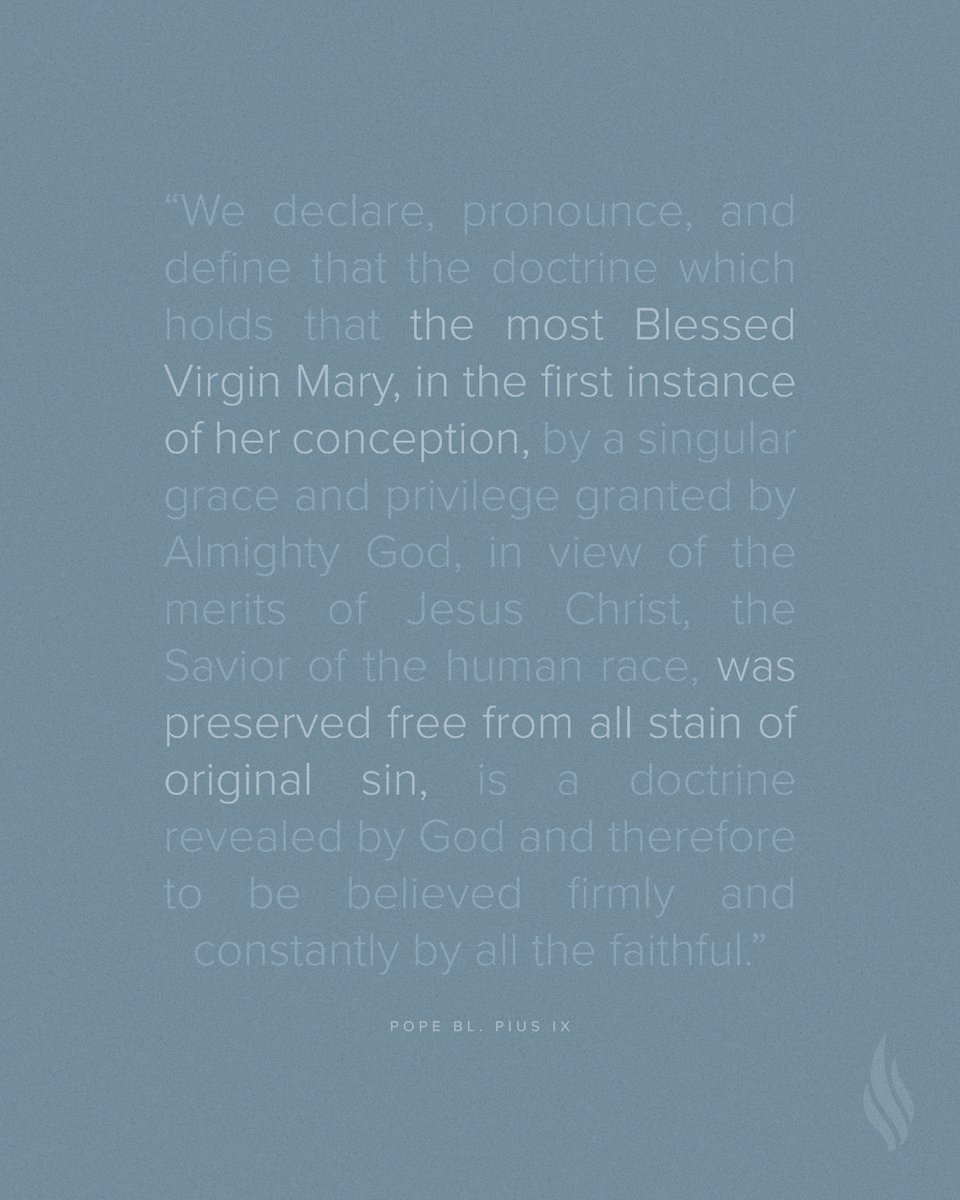
“We declare, pronounce, and define that the doctrine which holds that the most Blessed Virgin Mary, in the first instance of her conception, by a singular grace and privilege granted by Almighty God, in view of the merits of Jesus Christ, the Savior of the human race, was preserved free from all stain of original sin, is a doctrine revealed by God and therefore to be believed firmly and constantly by all the faithful.” —Pope Bl. Pius IX
December 8 – The Solemnity of the Immaculate Conception A feast of breathtaking beauty and quiet triumph.
In the cold grotto of Lourdes, a radiant Lady clothed in white, with a blue sash and golden roses on her feet, appeared to 14-year-old Bernadette Soubirous.
On the sixteenth apparition, Bernadette asked the Lady her name. Four times she asked. On the fourth, the beautiful woman raised her eyes to heaven, joined her hands at her heart, and answered:
“Que soy era Immaculada Councepciou.” “I am the Immaculate Conception.”
Bernadette had never heard those words. She could not read, had never been taught formal catechism, and repeated them like a treasure all the way to her parish priest. When she delivered the message, the priest wept.
Just four years earlier, the Church had defined the dogma that Mary was preserved from original sin from the very first instant of her conception. A child who could not possibly have known the phrase had just carried heaven’s own confirmation.
Today — exactly nine months before we celebrate Mary’s birth on September 8 — the Church rejoices that she was full of grace even before she drew her first breath.
Tota pulchra es, O Maria, et macula originalis non est in te. “You are all-beautiful, O Mary, and the original stain is not in you.”
O Mary, conceived without sin, pray for us who have recourse to thee. 💙🙏
#ImmaculateConception #OurLadyOfLourdes #StBernadette #CatholicX #CatholicTwitter
On December 7 we celebrate St. Ambrose, the honey-tongued bishop (his name literally means “immortal nectar” 🐝)
374 AD: Milan is rioting over the bishop election. Ambrose, a 34-year-old unbaptized Roman governor, shows up to keep the peace. A child suddenly yells “Ambrose bishop!” The crowd goes wild, barricades the doors, and eight days later Ambrose was baptized and became the bishop of Milan.
Enter Augustine, 386 AD: a brilliant, restless 31-year-old professor having a full existential meltdown. Ambrose’s preaching blows his mind—here was someone smarter than the philosophers who actually believed. Ambrose showed him you could love truth AND love Christ, and taught him how to read Scripture without twisting it into knots.
One garden, one “take up and read” moment later, and the restless Augustine becomes… St. Augustine, the greatest theologian the West ever produced. Ambrose basically spiritually midwifed him.
Oh, and Ambrose also stared down emperors (told Theodosius “no communion until you repent”), hammered Arian heresy into the ground, and basically invented Western church music (Ambrosian chant → Gregorian chant’s grandpa).
Today, raise some honey to the unbaptized governor who accidentally converted the guy who wrote Confessions and changed history forever.
St. Ambrose, pray for us! ✝️🐝
#StAmbrose #StAugustine #ChurchHistory #CatholicTwitter
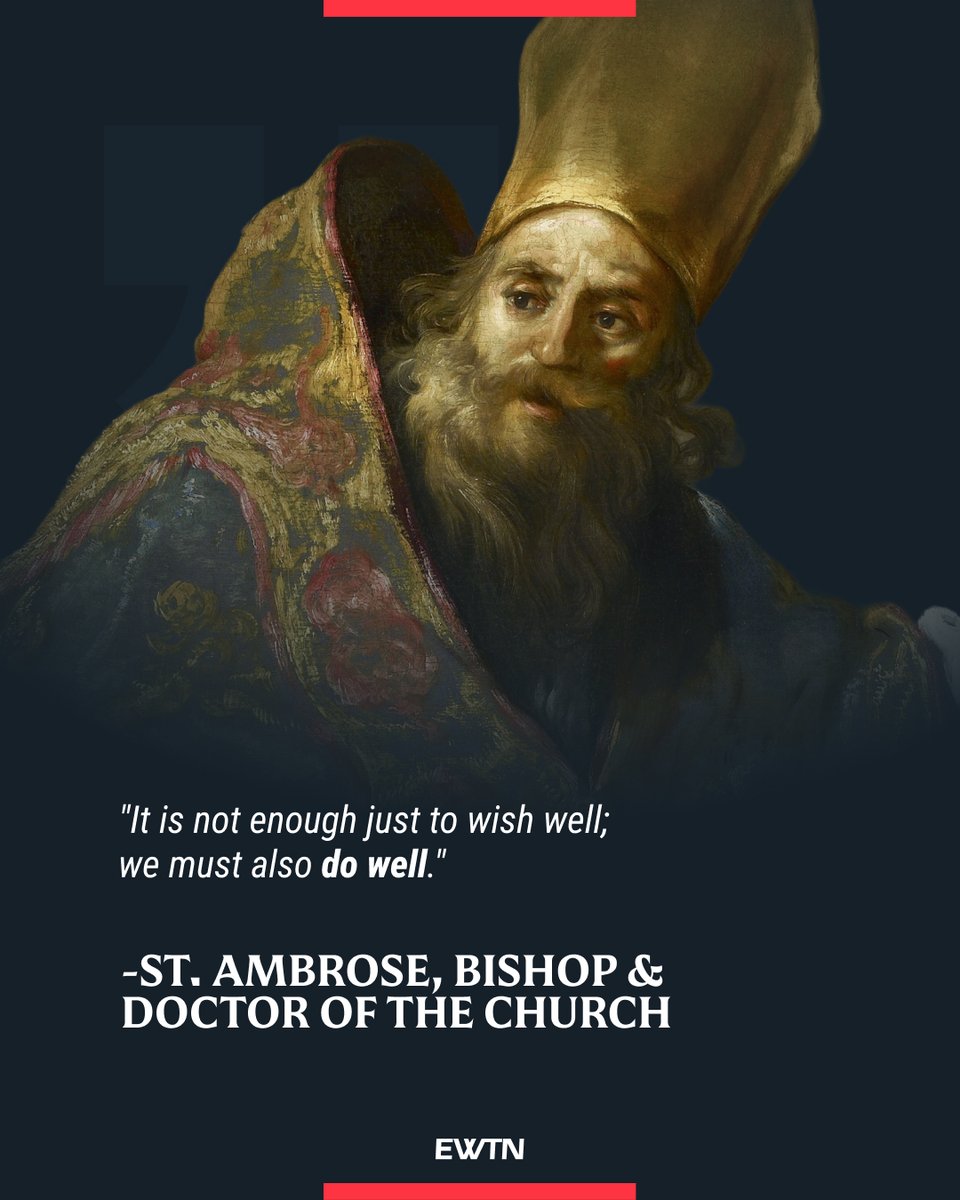
St. Ambrose was a small man with pale yellow hair like a nimbus. In the violence and confusion of his time, he stood out courageously resisting evil, strengthening the Church, and administering it with extraordinary ability.
https://t.co/KeMsNNYIV0