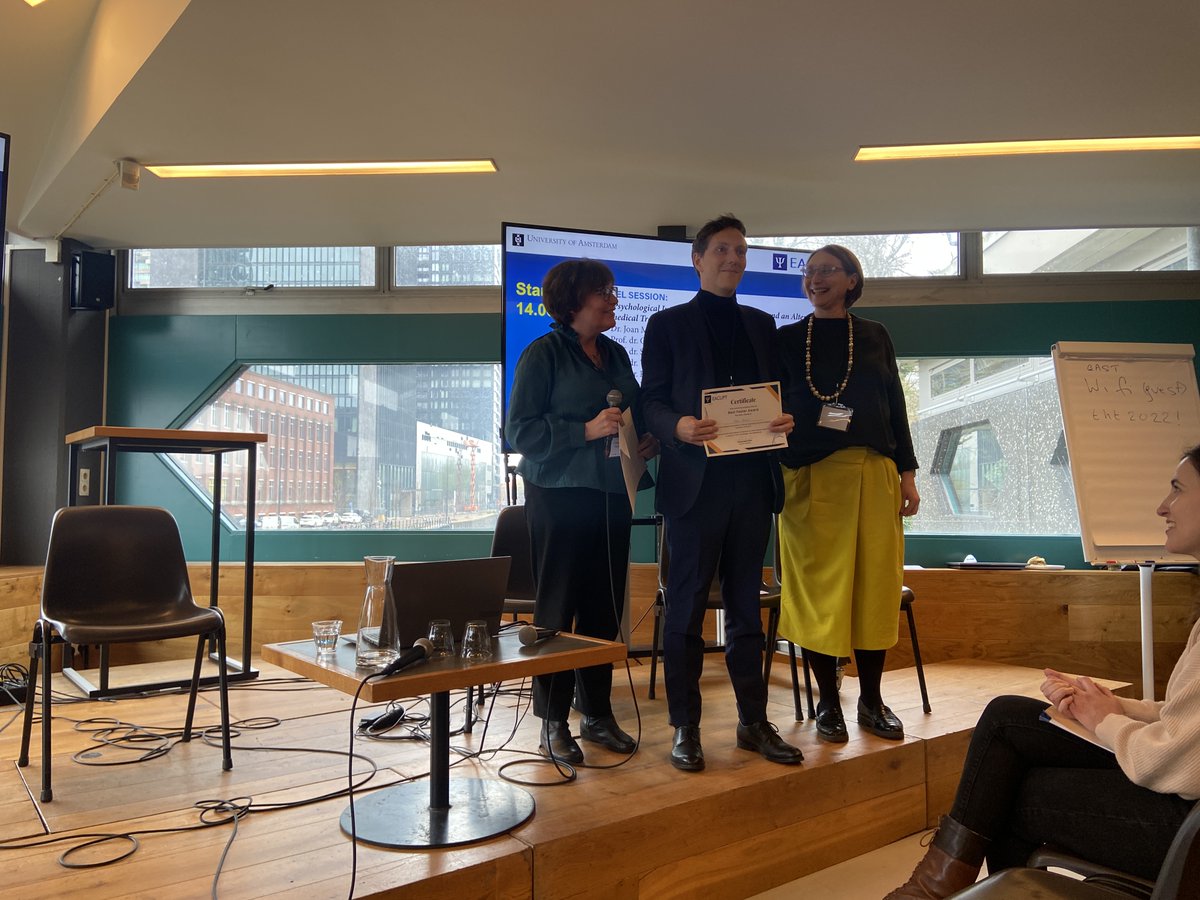
Pleasure to join a symposium on Tackling Mental Health Inequalities with @daina_k, @MGultzow, chaired by Dr Marielle Beenackers at the #UrbanMentalHealth Conference 2024. We discussed socioeconomic, gender and housing disparities in mental health.
📎 https://t.co/HlqWxOGSeO
We're now moving into the parallel sessions! Today I am in Room 1, for a group symposia focused on tackling #mentalhealth#inequalities ✊ #UrbanMentalHealth
(featuring artwork by @Juliet_Young1 who has just released a book, which is waiting for me at home!)
🧵THREAD
💡Just published at @TheLancetPsych, our study finds that disparities favorable to patients with a higher income persist through 4 different stages of mental health treatment 🧵1/4
https://t.co/r3QyHerrqR
@TomVanOurti @cjriumalloherl
@ErasmusMCPH@EsCHER_EUR@ErasmusSCBH
This was spine-tingling: Lēc, Saulīte! “Rise, dear sun, and slash the darkness; unite all the Latvian nation!”
Conductor Māris Sirmais using the pause to great effect.
@Dziesmu_svetki#DzSv150 🇱🇻
⏰Apply for CSaP policy internship now!
CSaP is looking to recruit policy interns for three months starting in September 2023.
Our policy internship offers PhD students a unique career development opportunity.
Find out more and apply now👇
https://t.co/vhSSoLvggX
We are looking for a PhD student to join our team in Maastricht on the NWO project New Science of Mental Disorders, supervised by Lotte Lemmens, @EikoFried and myself ... https://t.co/I4nCuR4H8o @NSMDresearch @professorjansen @jonashaslbeck@gerasimoss@AlbertoJover
🍊 UCL Lunch Hour Lecture - Social justice and health equity | 23 May @ 1pm
In this lecture Prof Sir Michael Marmot will explain that taking action to reduce health inequalities is a matter of social justice.
REGISTER 👉 https://t.co/4dxUsepkpP
So excited to spend the next two months in this amazing city to work together with colleagues from @ISGLOBALorg on a research project about urban mental health.
This is Barcelona at night, one of the world's most unique cities. But why does it look like that?
Well, until 1855 it was overcrowded, dirty, and diseased — then something special happened.
Here is how you build a beautiful city...
Very excited about the launch of the Lancet series on #CDoH tonight! #CDoH are crucial for understanding and addressing commercial harms on planet and health equity
In preparation for @BritishNeuro’s #BNA2023 I am thinking about inclusive poster design 📝
A few simple tips...
Dyslexic-friendly font
1.5 line spacing
Sufficiently large text
High contrast and colour-blind friendly colours
Simple layout - no clutter!
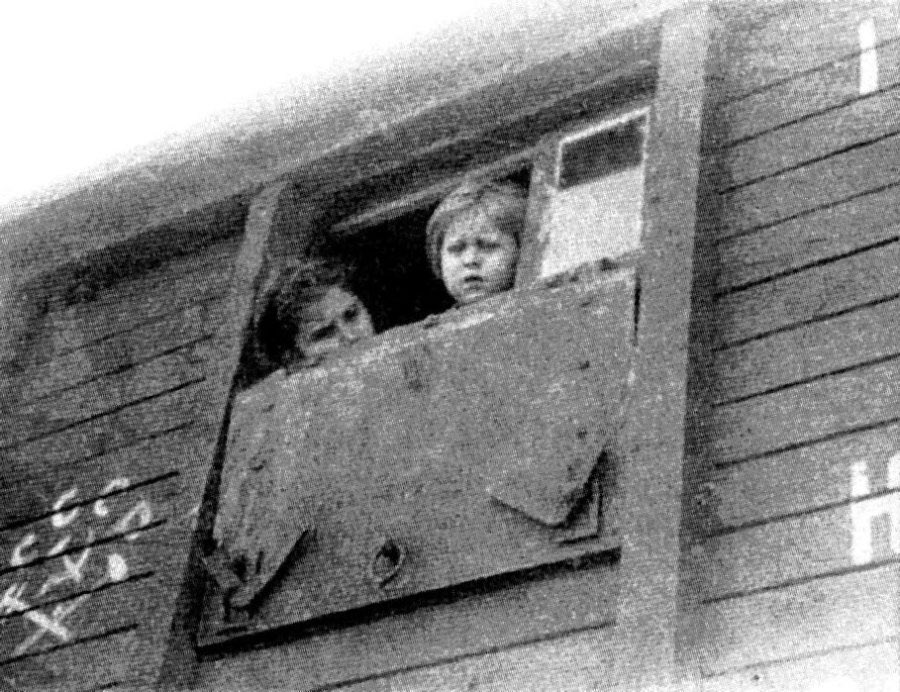
Today we remember the March deportations.
On 25 March 1949, the Soviet Union resumed its mass deportations in the Baltic states, mostly targeting women & children. Even babies, pregnant women, and separated children were snatched in the night, packed into cattle wagons, and dispersed across remote parts of Russia in labour camps where they faced hunger, cold, and brutality. Many died on the way or shortly after arrival. Some were even settled in nuclear testing fallout zones.
The first wave of mass deportations took place in 1941 after the Soviet Union - in collusion with the Nazis - had first invaded & illegally annexed the Baltic states. The main aim then was state decapitation.
This second wave was much broader, named Operation Priboi (Breaker’). It was mostly targeted at rural communities, ultimately aimed at breaking society and national identity, while providing more hard labour inside Russia.
Around a quarter of the population fell into the Soviet category of ‘undesirables’. However, the snatching was chaotic. Many families were taken randomly just to fill quotas when the listed family couldn’t be found. Some were taken for just having similar names to those listed. Some local collaborators just wanted to settle scores.
Deportations also continued regularly outside of these mass waves.
It’s estimated that about 200,000 were deported just from the occupied Baltic states & a further 6 million forcibly transferred in total by the Soviet Union, mostly based on ethnicity (either by removing entire ethnic groups or targeting ‘undesirables’ specifically within ethnic groups).
Even the Soviet Union eventually denounced its own mass deportations. They were described as “monstrous acts” by Khrushchev & “terrible felonies” by the Supreme Soviet in 1989.
I’m not gonna do the usual screenshotting of bad takes here. The bigger problem is how little the world has learnt about it at all to even have any takes. That’s how history repeats, as we see in the mass deportations that Moscow has resumed in Ukraine today. It’s one part of Russia’s genocidal war that the world finds difficult to comprehend. Some media reports even repeat the nonsense characterisation of it as ‘evacuations’. But mass deportations are key to understanding how Russia intends to consume captured territory. It’s delusional to think you can achieve any peace by giving up on lands and lives already stolen. Every inch of territory consumed only emboldens it to consume more.
But hope remains. The Soviets quietly praised themselves for carrying out the mass deportations in the Baltics. But, many historians argue these crimes were also a major political mistake. They deepened opposition to occupation. The topic was heavily censored but people never forgot. That anger eventually spilled out into the open during the Singing Revolution in the Baltics, leading to the restoration of the modern, independent, vibrant, fully restored states we live in here today.
In the Baltics today, candles will be lit, names of victims will be read out, and displays will fill public squares. Unfortunately, we are no longer just remembering history but all those in Ukraine facing it today.
Join us - in any way you can - to remember the mass deportations and help consign this brutality back into history.
Are you interested in pre-registering secondary data analysis studies & looking for expert advice?
Join this @ucl workshop with @MarjanBakker to learn how to effectively pre-register secondary data analysis studies: https://t.co/hiAyvqNgaC
30th March, 2-4pm BST. All welcome!
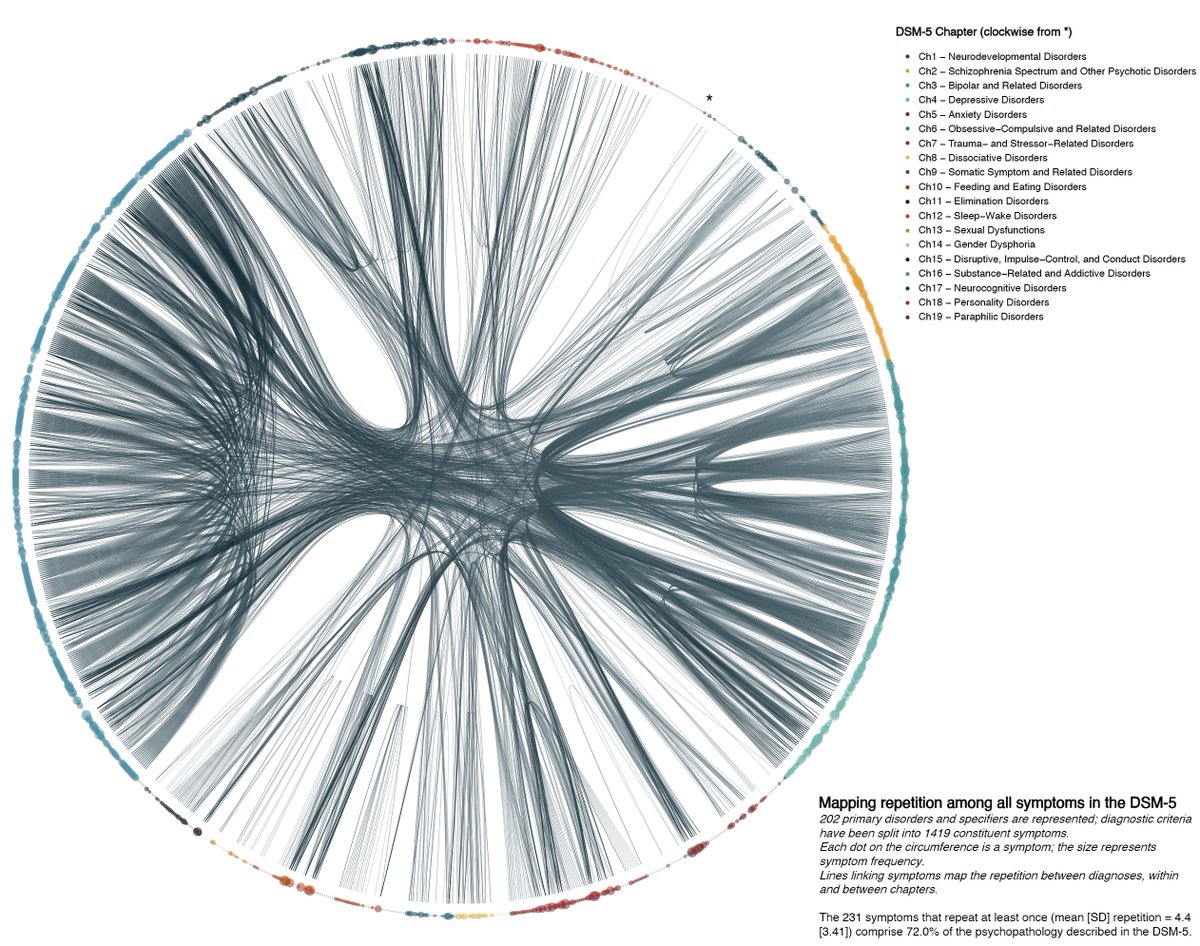
Ever wondered how many symptoms make up all of adult psychopathology described in the DSM-5? It’s 628!
How many do you think repeat across multiple diagnoses? If you answered 231 symptoms repeating a total of 1022 times (median 3 times per symptom, range 2-22), good job!
🧵
Hawaii has just passed a bill requiring climate change warnings to be displayed on all petrol pumps in a bid to reduce consumption. If signed into law it would be the first US state to do so
https://t.co/1rIGInp0zq @munkeatlooi
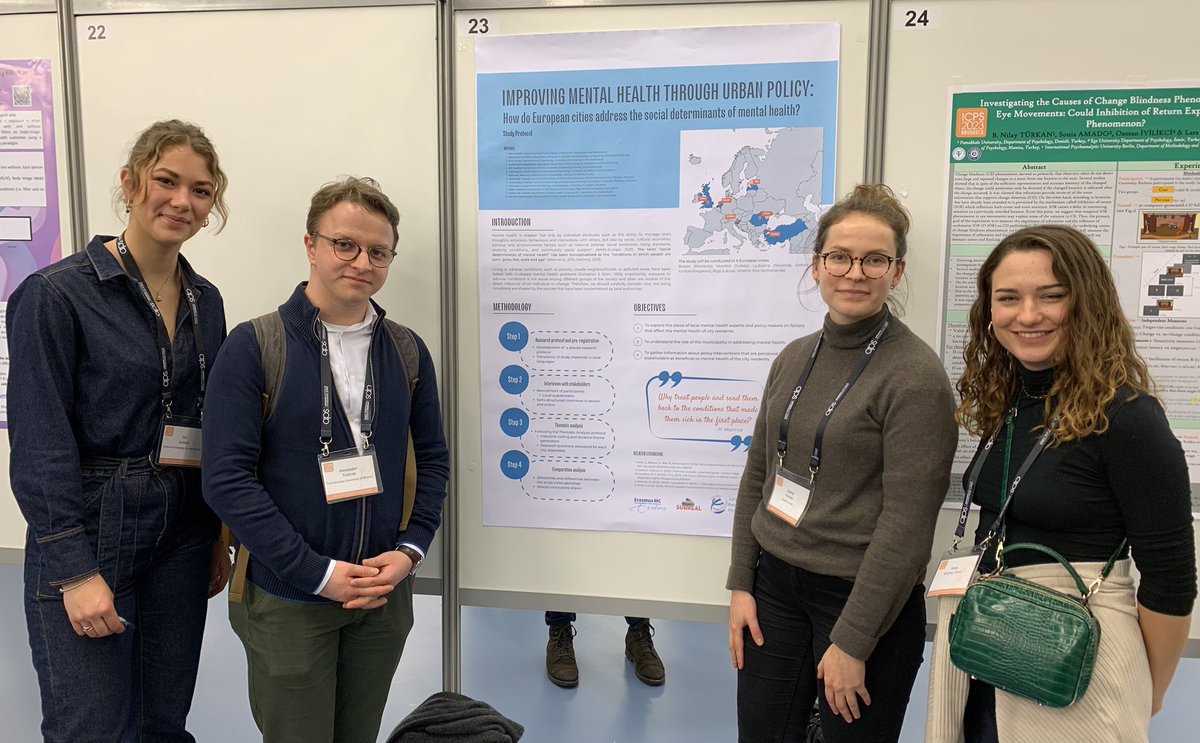
Presented our study protocol on mental health policy in European cities today at the International Conference of Psychological Science. #ICPS2023 @jResearcherProg