On this day in 1993, the late Layne Staley of Alice In Chains saw a man giving Nazi salutes in the crowd during one of his concerts. Staley invited the man on stage, and then proceeded to punch him twice in the face and have him ejected. Legend.
Call me a crazy "conspiracy theorist," but...
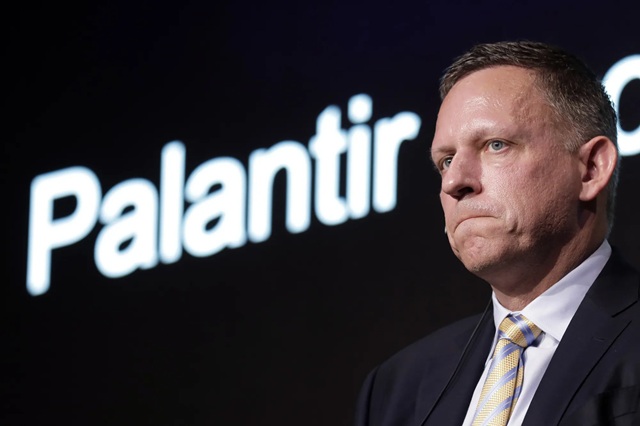
maybe military intelligence, national security systems, criminal databases, mass surveillance monitoring, immigration files, ICE operational planning, VA records, health-data reports, IRS probes, supply‑chain metrics, predictive policing analytics, social-network mapping and prosecutorial tools
shouldn’t be owned and controlled by Jeffrey Epstein’s friend and business partner?
The 50-year mortgage sounds appealing on paper and it's supposed to make homeownership more accessible when first time buyers are hitting 40 years old and getting priced out of everything. But you do some basic math and it will show you a whole different story.
On a $400k loan at 6%, you're only saving roughly $166 per month versus a 30 year mortgage. That's pocket change. The catch is you'll pay roughly double the principal amount in interest over the life of the loan we're talking $863k instead of $418k. Lenders will also charge you an extra 0.3-0.5% just for the extended term which basically erases whatever payment relief you were supposed to get.
What really gets you is the equity problem. In the early years of a 50 year mortgage almost all your payment goes to interest. You're barely building equity while someone taking a standard 30year loan is stacking wealth and opening up refinancing opportunities way faster. It's like comparing someone who invests early versus someone who waits, the compounding works against you here instead of for you.
The harder truth is that 50 year mortgages don't actually solve the affordability crisis, they just mask it. The real issue is that home prices have completely detached from wages. We're at a 5:1 price to income ratio when it's historically been around 3:1.
Supply is constrained, zoning is broken and institutional capital is buying up single family homes to reprice entire neighborhoods. A longer mortgage term doesn't fix any of that. It just locks people into longer debt while the system keeps extracting value upward.
The only scenario where this could work is if you treat it tactically, grab the low monthly payment now, then refinance into something shorter when rates drop and your income increases. But that's a lot of ifs and with ever increasing costs, would people do that? No. Real solutions would actually address supply, zoning, and policy, not just make people's monthly slightly more bearable for the next 50 years.
There is no such thing as white culture, however white people have culture because all of those are different cultures that do not identify with each other. Only weird americans have retroactively made these cultures the same
MAGA melts down over NYC electing a 'commie' — yet completely ignores when Trump:
-Centralized economic planning
-Favored corporate deals/cronyism
-Put militarized soldiers on our streets
-Bought US equity stakes in private firms
-Bailed out corporations/industries/countries
"Socialism” is fine — as long as it wears a red hat.
This really shows once more that Trump really doesn't get China, which should really worry you if you're American.
The officials in question weren't "scared", they were serious and disciplined, which is a pretty meaningful difference.
There's a huge difference in culture when it comes to the spoken word between the West and China, especially at such high levels of government. At that level there isn't any room for unscripted or unprepared speech, especially when addressing the U.S. president. Why? Because when you speak it's not your word as an individual but the official position of the state, with immense implications.
This is something we've completely lost in the West (to the extent we ever had it): we're deeply unserious about the weight and discipline that official speech ought to require. We've normalized leaders speaking off the cuff, making jokes, lying constantly, and blurring personal opinion with state policy. The result, as we can all witness every day, is a complete shattering of trust, because we know words don't mean much.
In China however they take this stuff extremely seriously. I know it's cliché to cite Confucius when it comes to China but one of his most fundamental teachings is that trust is the foundation of everything: without trust the state collapses. Here's what's written in the Analects:
"Zigong asked about government. The Master said, 'Sufficient food, sufficient weapons, and the trust of the people.'
Zigong asked, 'If it could not be helped, and one of these had to be dispensed with, which should be foregone first?'
The Master said, "Dispense with the weapons.'
Zigong asked, 'If it could not be helped, and one of the remaining two had to be dispensed with, which should be foregone first?'
The Master said, 'Dispense with the food. From of old, death has been the lot of all men; but if the people have no faith in their rulers, there is no standing for the state.'"
That's the culture: maintaining trust is absolutely paramount, more important than even providing food or security.
As a result, when officials speak, you know every single one of their words was prepared by a team that weighed and considered every aspect in advance. Which is why, incidentally, they almost never do interviews and when they do, it sounds super boring because there's nothing spontaneous: the questions were received in advance and the guy just reads the answers that were prepared. It makes for terrible entertainment but they, unlike us, don't think that governing is supposed to be entertaining.
It's not the first time a US president is confused by this. Obama too in his book "A promised land" made similarly mocking remarks about his meetings with Hu Jintao. Quote: “As usual, my meeting with President Hu Jintao was a sleepy affair: Whatever the topic, he liked to read from thick stacks of prepared remarks [...] When it was my turn to speak, he’d shuffle through his papers, looking for whatever response his aides had prepared for him. Efforts to break the monotony with personal anecdotes or the occasional joke usually resulted in a blank stare."
So no, nothing to do with fear or being afraid to displease some "dear leader." This same discipline predates Xi and it constrains Xi - as it constrained Hu - just as much as anyone else at that table. It's institutional. It's not about a strongman keeping people in line: what Trump sees as people being "scared" is actually a 2,000-year-old tradition of treating official communication as an instrument of statecraft rather than personal expression.
But of course, to someone who governs by social media posts, the idea that words should be carefully considered before being spoken probably does look like very scary.