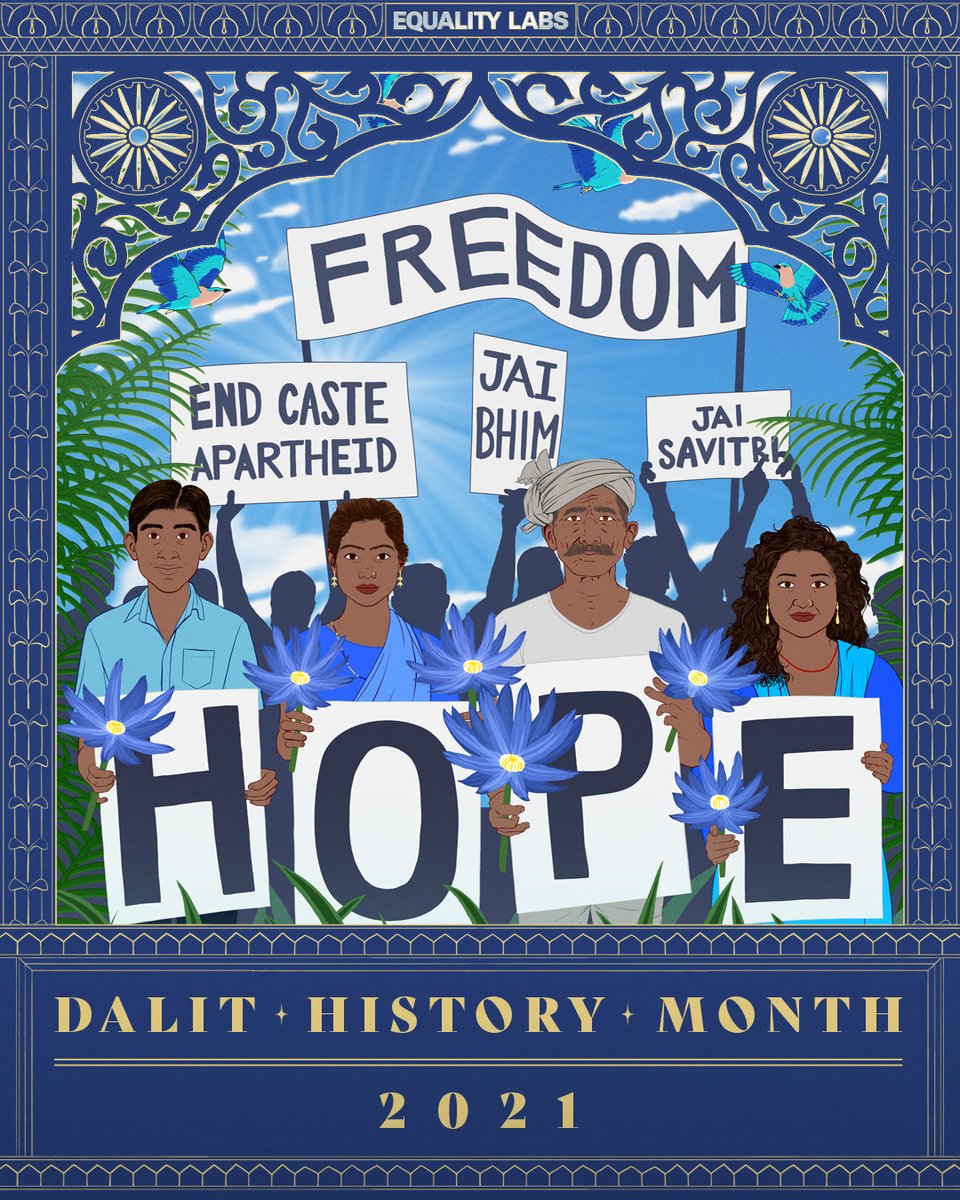
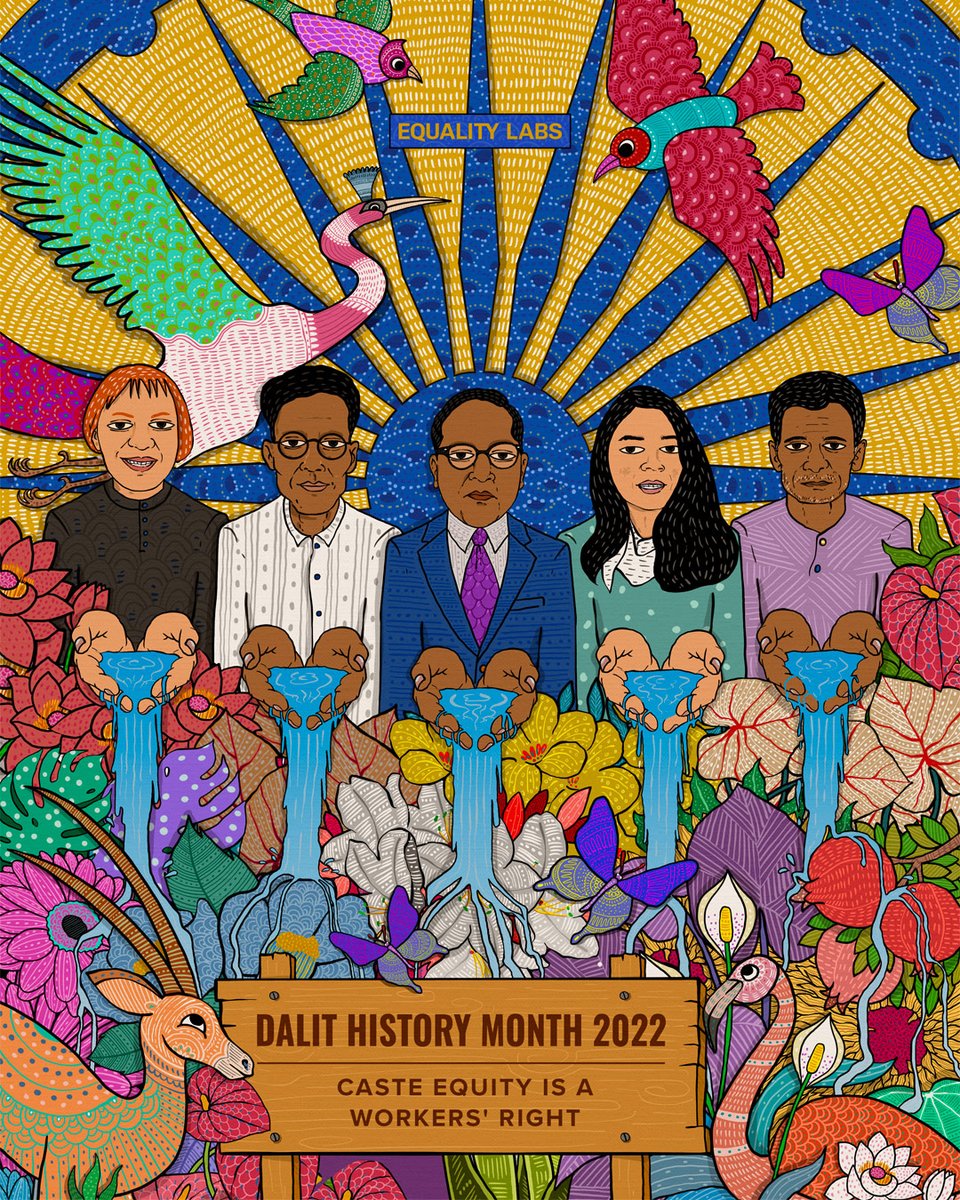
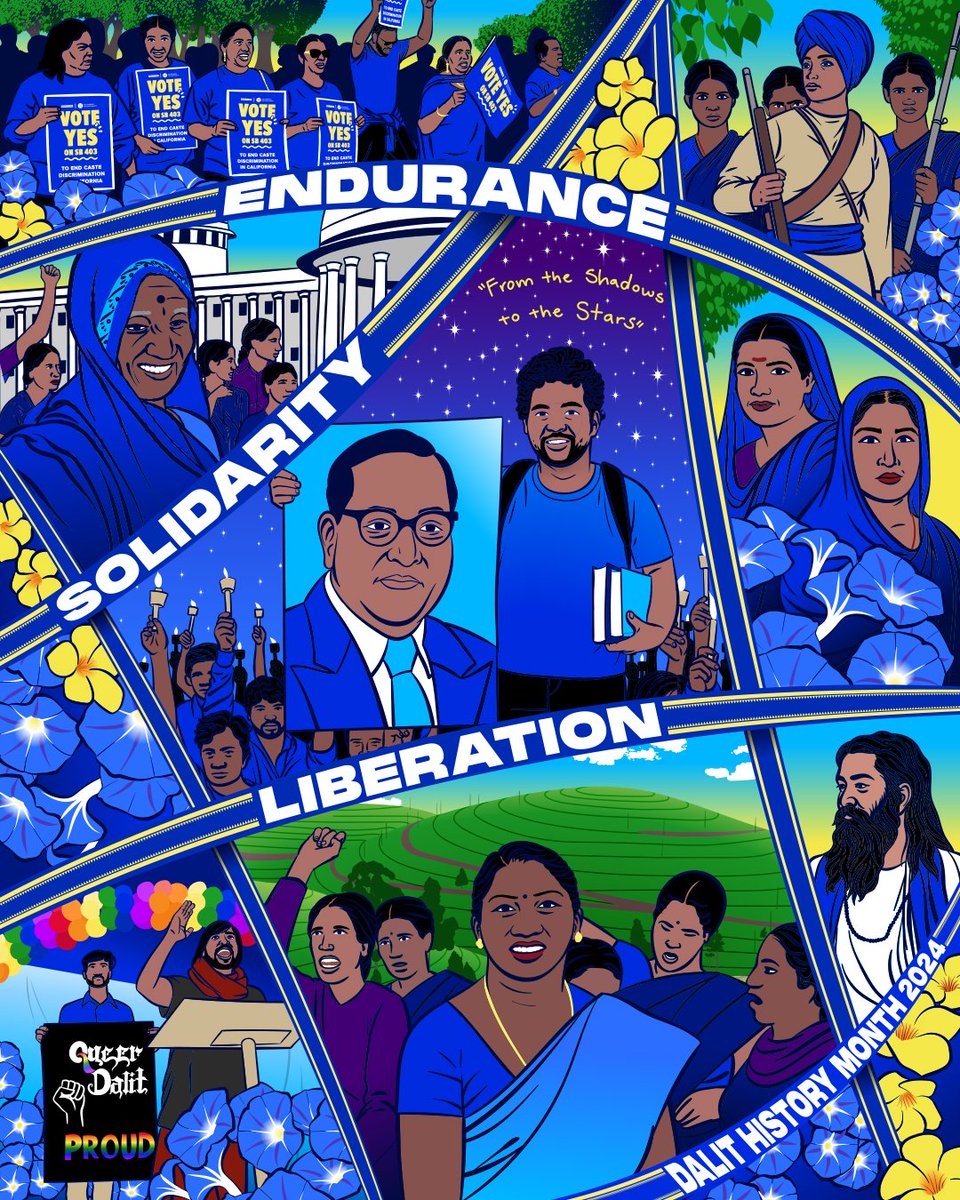
Since 2015, Dalit History Month has uplifted caste-oppressed art and stories as a celebration of who we are, where we have been, and where we are going. Here are some of the incredible posters created over the years for #DHM. We hope these images inspire you.
3/ We fight against those who try to reduce our community to stereotypes by embracing our Dalit-ness. This process can be difficult and uncertain, yet it allows us to reclaim our identities as caste-oppressed people and empowers us to make sense of a world in which caste persists
1/ Our fourth #DHM submission is a reflection on what it means to be “free in an unfree world.” “My Dalitness Saved Me” is a stunning story submitted by Akanksha Prakash and an honest exploration into having an identity that is both Dalit and American. https://t.co/FnphtPG3xV
2/ It is very dangerous for Dalits to be vulnerable, yet Prakash embraces the uncertainty of Dalit-ness. It feels impossible to make sense of caste oppression, but when we write our own histories and document our experiences we can reclaim our stories and our identities as Dalits
3/ In the 2015 Delhi Pride speech, Dhrubo Jyoti explains, "we bring caste up because caste is everywhere and in my everything, Caste is in my shirt; Caste is in my pant, Caste is in my sex, Caste is in my being and Caste is in every part of you too!” https://t.co/Yv2VEVnXRW
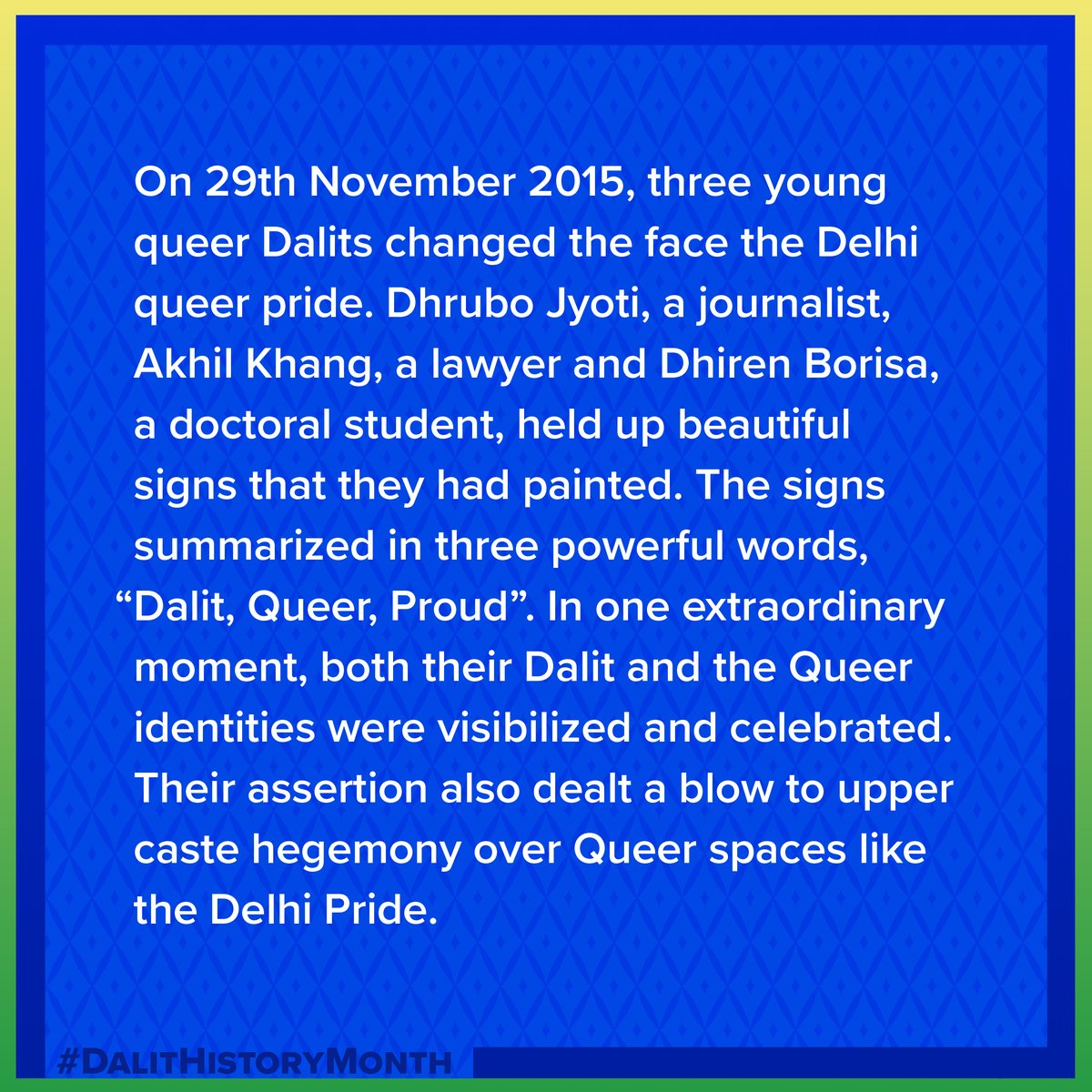
1/ #DHM is an opportunity to amplify the voices of queer Dalits. When Dhrubo Jyoti, Akhil Khang, and Dhiren Borisa declared they were "Dalit, Queer, Proud" at Delhi Pride, they challenged dominant-caste hegemony over queer spaces by making their identities visible and celebrated.
2/ As Dalits, we bear the brunt of anti-queer violence and discrimination, yet events like Delhi Pride only reflect dominant-caste queer activism, ignoring the role of caste in queer liberation. Yet we know caste is everywhere, and cannot be extracted from queer liberation.
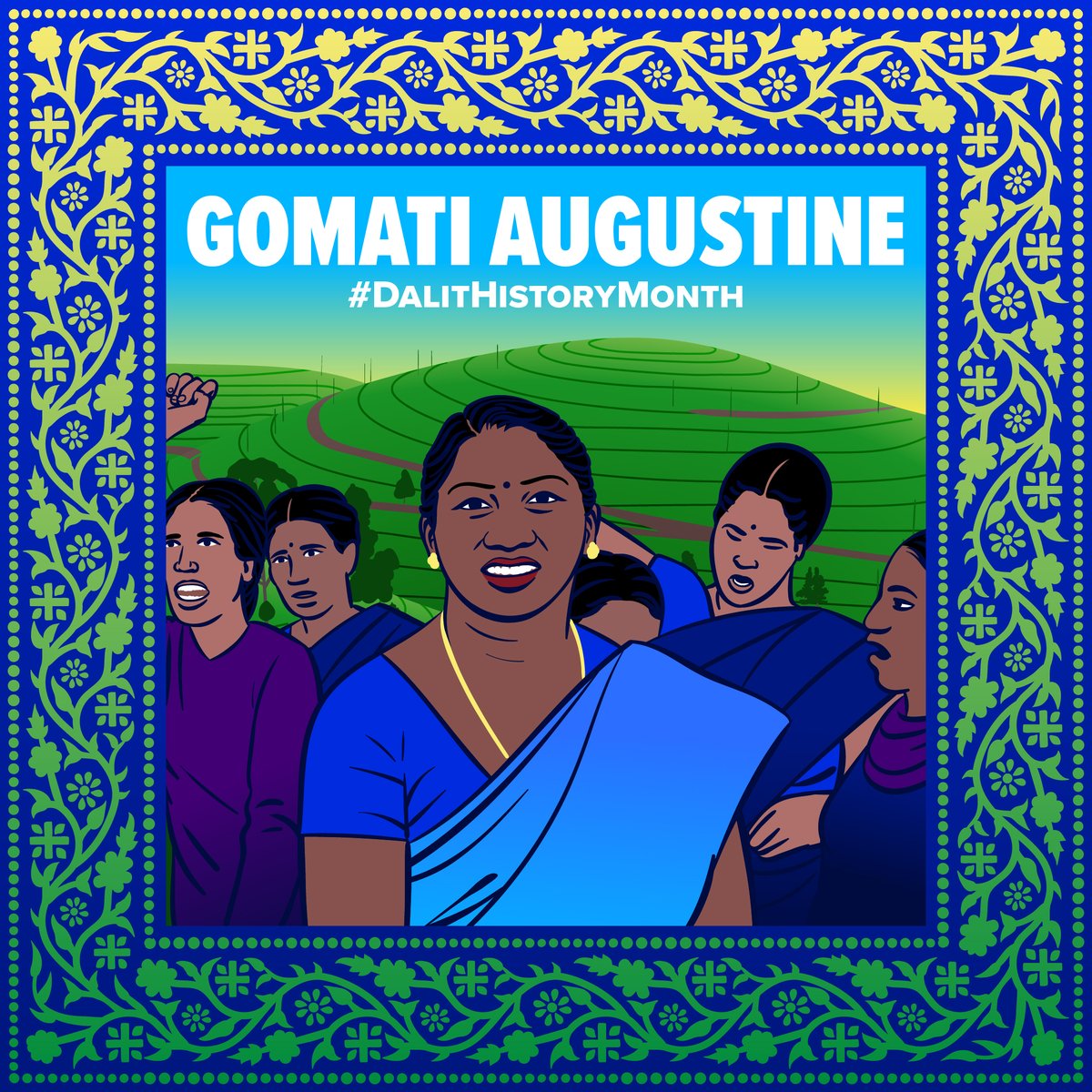
3/ Gomati’s successes have not happened despite her identities as a Dalit woman; instead she has become empowered to fight for the rights of workers because of her gender and caste. Jai Bhim! Learn more here: https://t.co/SDOwsjMY1X
1/ As an anti-caste and anti-corporation movement leader, Gomati Augustine is a voice for the voiceless. Gomati was a plantation worker who saw the exploitative conditions workers were subject to. She created a women’s rights group in response and led a 9 day strike w/ 5000 women
2/ Because of her power and bravery, politicians and trade union leaders continue to attempt to diminish Gomati’s achievements, most often attacking her gender and caste. Yet Gomati remains the voice of the people, and has won elections to become a representative of her community
2/ The same caste discrimination faced by Rohith continues to take place in the everyday lived experiences of so many Dalit students. We embrace his memory as fuel in the fight for caste equity. We honor Rohith’s legacy by working toward a world free from the violence of caste.
1/ Today we celebrate Rohith Vemula, a Dalit student who became the victim of institutional murder. We refer to Rohith’s death this way due to the historical barriers he faced and b/c his death was the direct result of the violent caste apartheid he experienced at his university.
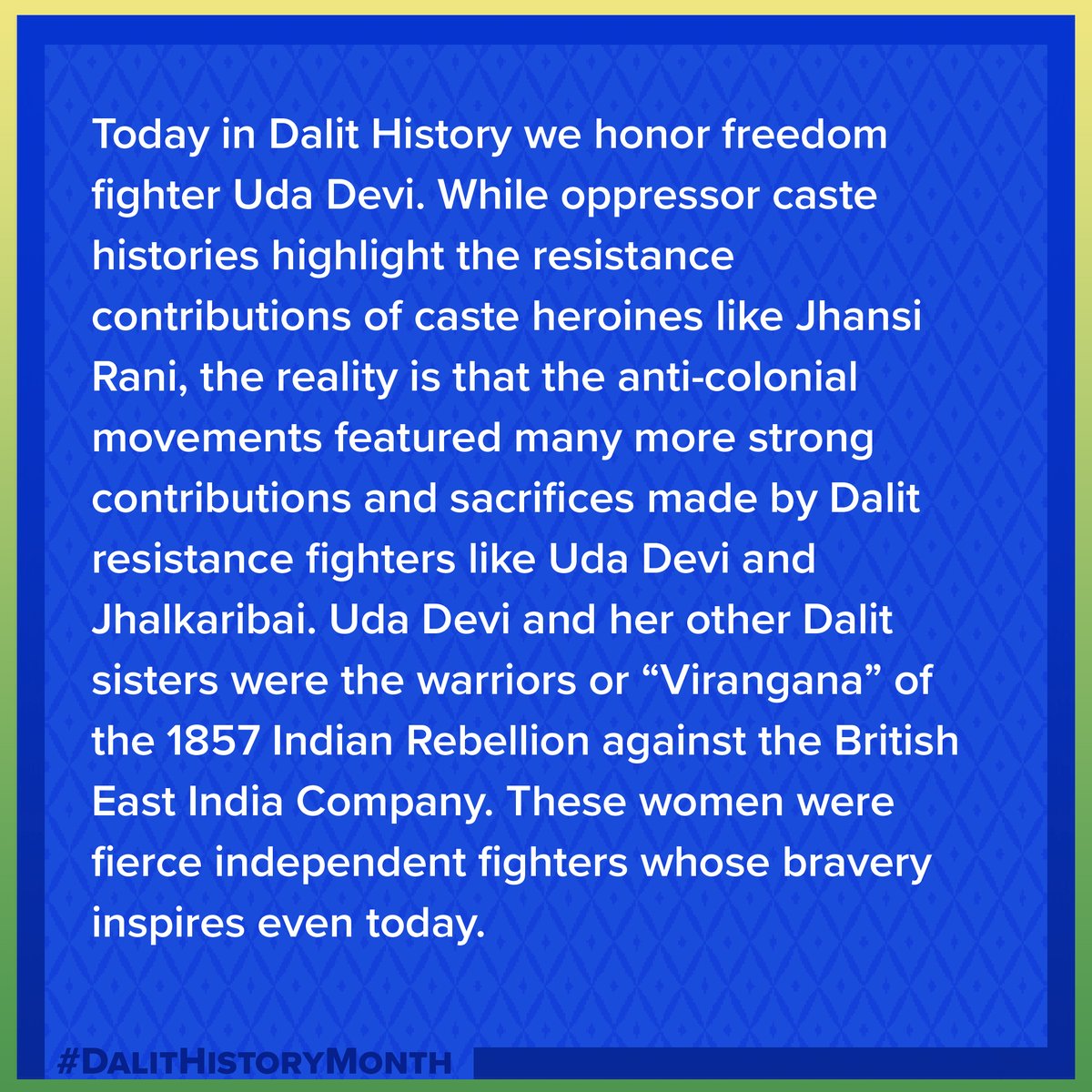
2/ Uda Devi was called “Virangana,” or warrior, during the 1857 Indian Rebellion against the British East India Company. Today, we are grateful to Uda Devi for her courage and sacrifice to advance the liberation of our community. https://t.co/N3vFIJ6kOp
1/ Today we honor the bravery of Uda Devi, an anti-colonial freedom fighter and one of many fierce Dalit women who resisted British colonial rule. Uda Devi participated in armed resistance against her oppressors as the leader of a heroic battalion.
Communicating through poetry is a radical act of love, liberation, & resilience. Dalit poetry has always been a revolution and a bold rebellion. In this poem, Jay addresses the shame associated with caste and by doing so, dismantles it. https://t.co/OH4ytYFjC6
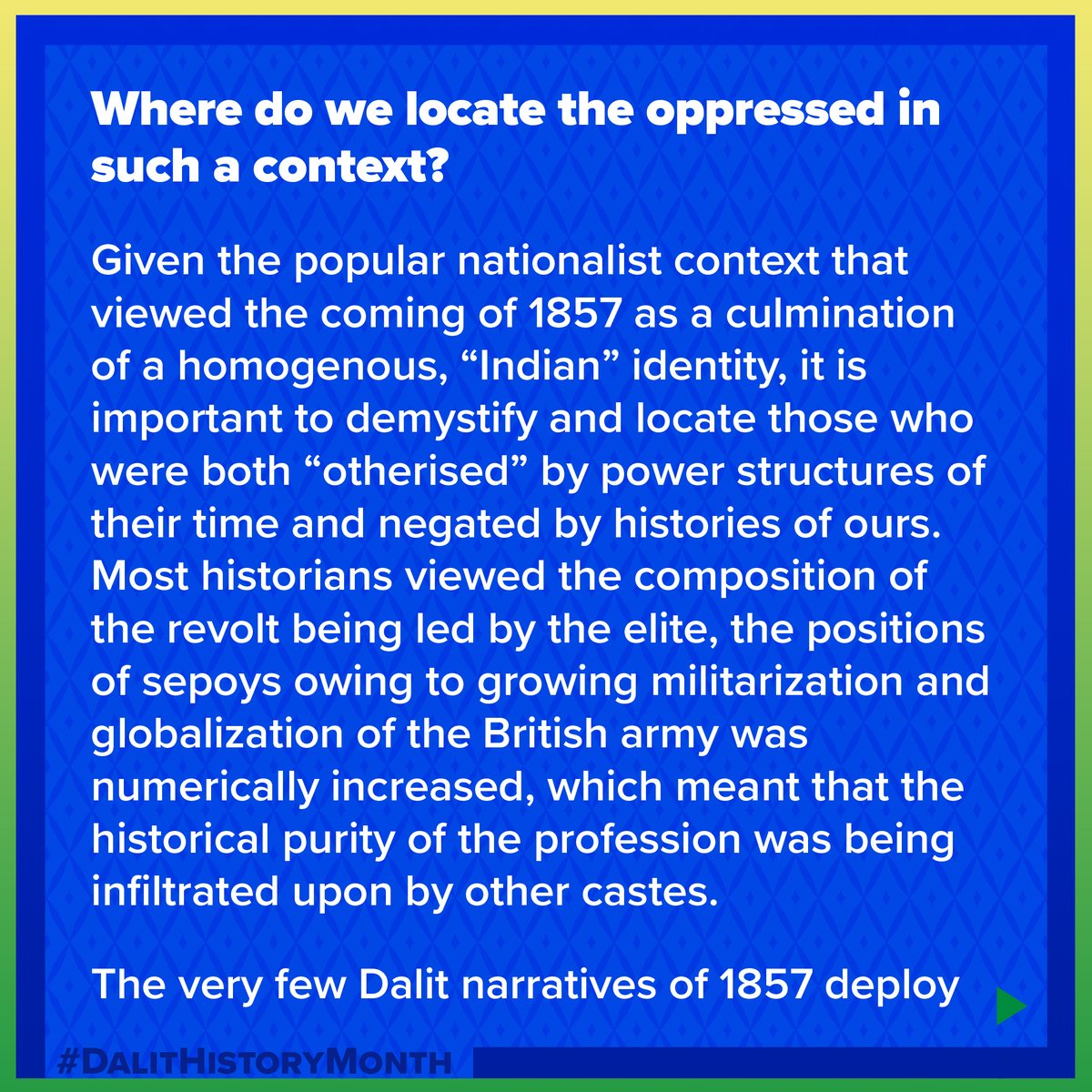
1/ Aditi Verma writes about the revolution of 1857 and its manifestations from a caste-oppressed perspective. While Dalit history is often absent from textbooks, our traditions of oral storytelling have kept our achievements alive and present within our collective memory.
1/ In honor of #DalitHistoryMonth and #AmbedkarJayanti, here is our first community submission for the month. Through a photographer’s lens, we can see the world from a Dalit perspective.
1/ As we go into the weekend to celebrate Ambedkar Jayanti, one of the most significant moments in Dalit resistance, we are launching our #DalitHistoryMonth poster and our theme for this year.
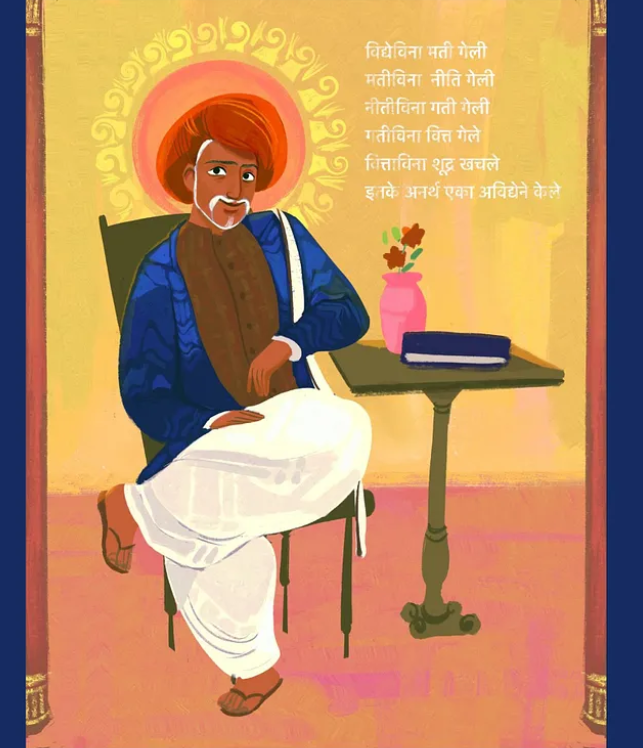
3/ His birthday continues to be a celebration all around the world where Dalits, Adivasis and Bahujans honour him on Mahatma Phule Jayanthi! Jai Bhim! Jai Phule!
1/ Today in #Dalithistory, we dedicate our post to Jyotirao Phule — an activist, a thinker, and a social revolutionary of the nineteenth century. While he was of Shudra background, his ideas, work and actions have had an invaluable liberatory impact on Dalits.
2/ Born in 1827 before the widespread Adi-movements, Phule was the first to propound caste as subjugation and oppression on indigenous peoples by invaders. He stressed that caste was equivalent to slavery, as vicious and brutal as the enslavement of Africans in the Americas.