Smash a Maserati into a wall at 100 miles per hour and it is gone. Tap the same wall 100 times at one mile per hour and it drives home. Nassim Taleb showed this for free at Google in 2012.
He was an options trader for twenty years before anyone called him a philosopher. He told the room Harvard and Stanford teach students they can measure risk. "In reality, we can't measure risk. I can measure fragility."
Fragility has one rule. The bigger the single dose, the worse the damage. Jump from 10 meters and you die. Jump 10 centimeters a hundred times and nothing happens. Same total distance.
He pulled the same math on money. A 100 million pound project in the UK had 30% higher cost overruns than a 5 million pound one. Not worse management. Worse physics. Size itself is fragility.
Then he flipped the famous line. "What doesn't kill me makes me stronger" is wrong. What kills me makes others stronger. The survivors learn. The dead don't get credit.
The full lecture is in this post. Fifty five minutes. He opens by asking the audience to interrupt him if they're angry. They do.
A self-correcting democracy would have launched a major incident investigation + corrective actions during the second legislature in which this happened. Because it's obvious that re-electing such a congressman is a bug.
Sadly, Italy is not a self-correcting democracy.
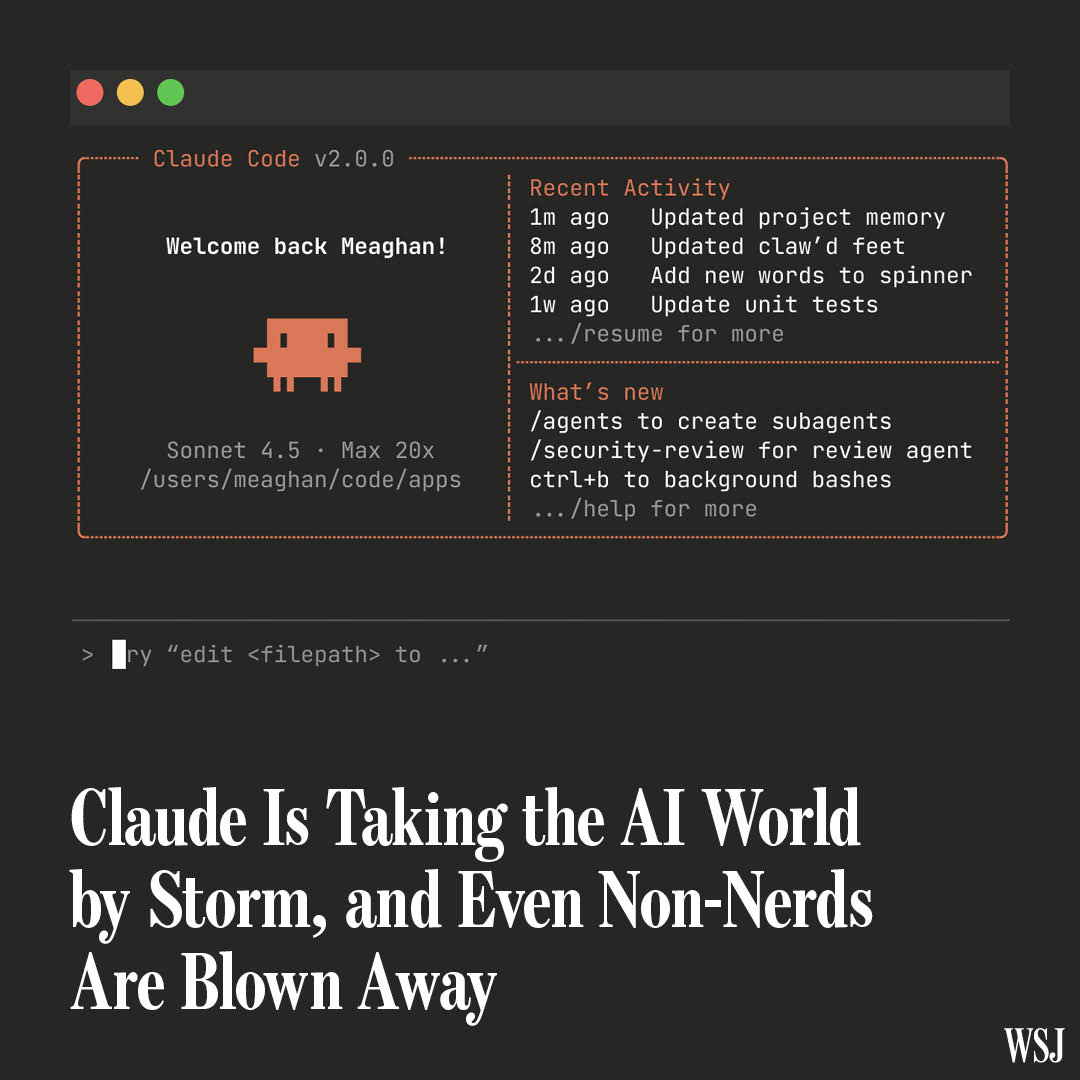
They call it getting “Claude-pilled.”
It’s the moment software engineers, executives and investors turn their work over to Anthropic’s Claude AI—and then witness a thinking machine of shocking capability, even in an age awash in powerful AI tools. https://t.co/sm2yyLTsev
PearPass is the first super-secure password manager. 🍐🍐
It synchronizes your info across your devices, without the need of any server. No middlemen. No reliance on pinky swear security.
Fully peer-to-peer and open-source.
You can review it for yourself.
It's available for mobile, desktop and browser extension.
Test it and let us know.
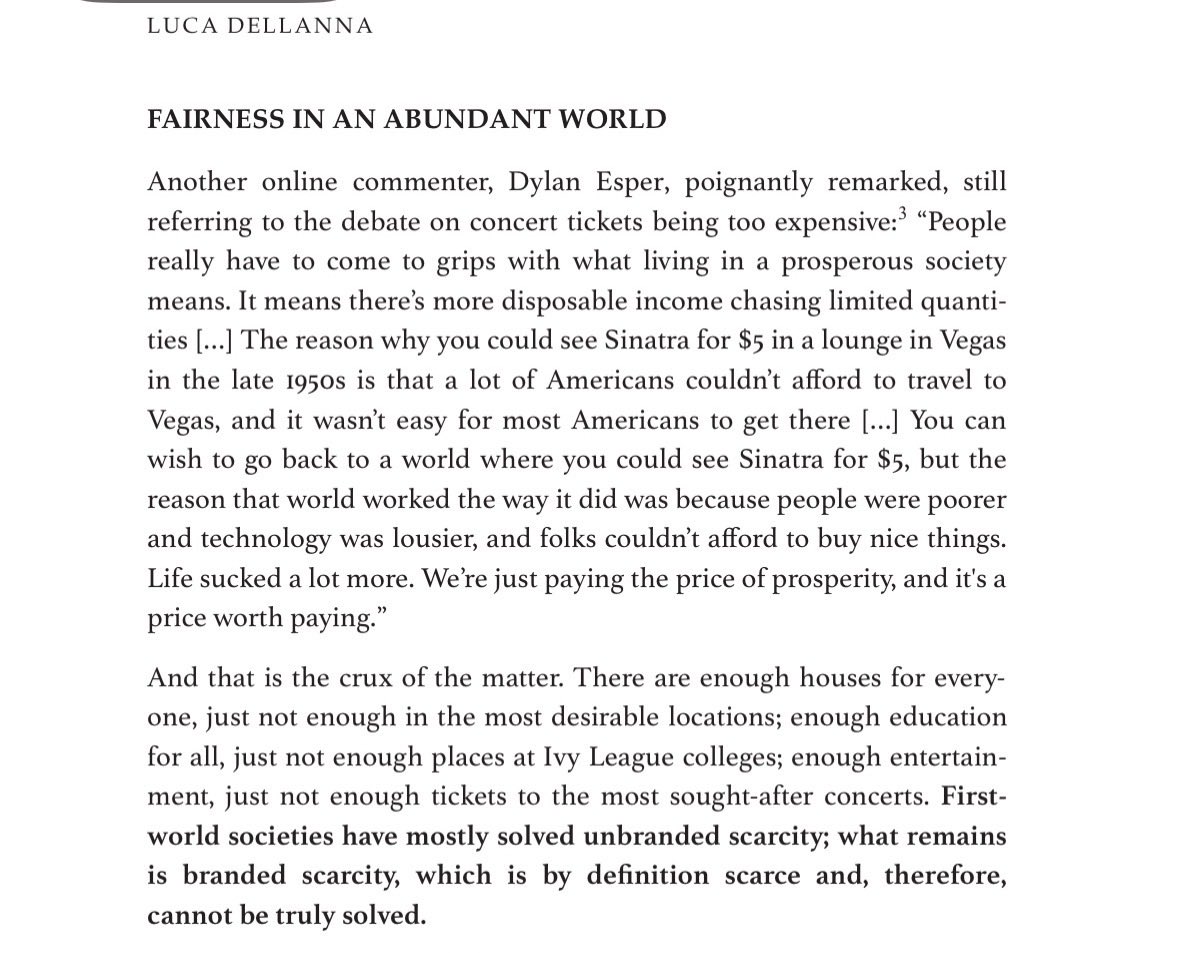
Complaints about affordability of things that until recently didn’t exist or were reserved for the elite are a sign of prosperity.
Colleges degrees, large houses, overseas travel, etc, were not even accessible to the non-elite. Now we’re complaining they’re expensive: a sign of increased access.
Econ 43 (Introduction to Financial Decision-Making) is one of the most popular undergraduate courses at @Stanford . The popularity speaks of the need for personal financial education, including across generations, as we've found students bring knowledge back to their families. This winter, I'm excited to teach a personal finance course open to the public: BUS 09 — Mastering Financial Decision-Making.
Developed by the Stanford Initiative for Financial Decision-Making (IFDM) team, the course draws on two decades of research on financial literacy and financial decision-making and offers evidence-based strategies for navigating today’s financial choices.
I hope you’ll join me. You can attend the course in person (if you live in the Bay Area) or online. Below are the links to register:
- On-campus: https://t.co/xUcdW3CfHQ
- Online: https://t.co/FF3IUHojuU
Returns this year:
US stocks +18%
International stocks +30%
US bonds +7%
Simple 3-fund 60/40 portfolio +16%
Boring investing still works:
https://t.co/xk9fgq47uC
"We’ve forgotten that every right has its price. We want the same welfare as 40 years ago but working less, to live longer but retire at the same age, peace without defense.”
And, I would add, “higher productivity without job market shifts, higher innovation without entrepreneurial risk, and fertility without the relevant subset of cultural values.”
An easy way to visualize the hidden costs of credentialism is to imagine that top sports leagues required their athletes to have a university degree.
Not only would it cut some great athletes from participating, but it would also make all athletes worse, for it would substitute on-the-job training time with less useful classroom work and would make them delay direct exposure to top professionals.
25 years ago each major US company had a German and/or French equivalent. Today equivalents of US tech giants are in China and Europe is on its way to become an open-air museum. What happened?
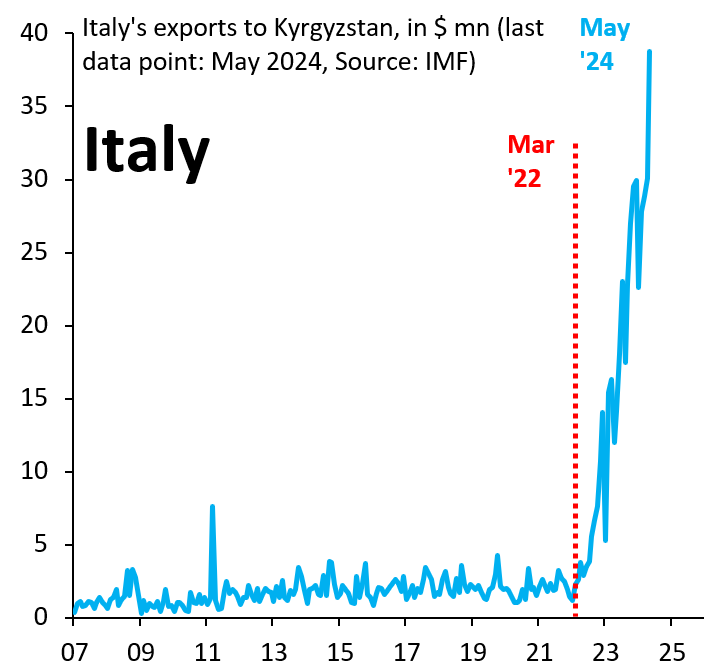
New all-time high for Italy's exports to Kyrgyzstan in May 2024. This puts Italy's exports 2200% above where they were before Russia invaded Ukraine. You don't have to be a genius to know this stuff is going to Russia. Two years of this nonsense and the EU just looks away...