✨ Welcome, kindred spirit. Here I weave 53 Pictish-inspired runes in black & gold.
☀️ Daily 3-rune flow reading at 8:57am
🌙 7-rune week ahead every Monday at 11:11am (UK)
🔮 https://t.co/HhNdl76D1u
📖 Newgrange Blessings: https://t.co/JhFt4v0Qci
"Then, the “downloads” began. Not downloads from a computer or a book, but downloads from something much deeper — from the land itself, from the ancient energy still flowing through Scotland’s stone circles, through the weathered markings in abandoned churches, and through the quiet, wild places where the Picts once walked freely. At first, I understood very little. I read everything I could find; I researched deeply; I simply allowed the information to come to me in its own time. Slowly, steadily, the Pictish world opened up before my eyes."
From Newgrange Blessings: Stamped in Stone – The Power of 5 by John 📖 https://t.co/4vh9PBXtM6
More readings & runes 👉 https://t.co/Gb5ufI3LMA
#Pictish #PictishSymbols #AncientWisdom
"The Grid Shift is total. Hierarchy is gone. Equality is established. The Giant is fallen. The Ancient Blueprint is active." 🌀
From Newgrange Blessings: Stamped in Stone – The Power of 5 by John 📖 https://t.co/4vh9PBXtM6
More readings & runes 👉 https://t.co/Gb5ufI3LMA
#Pictish
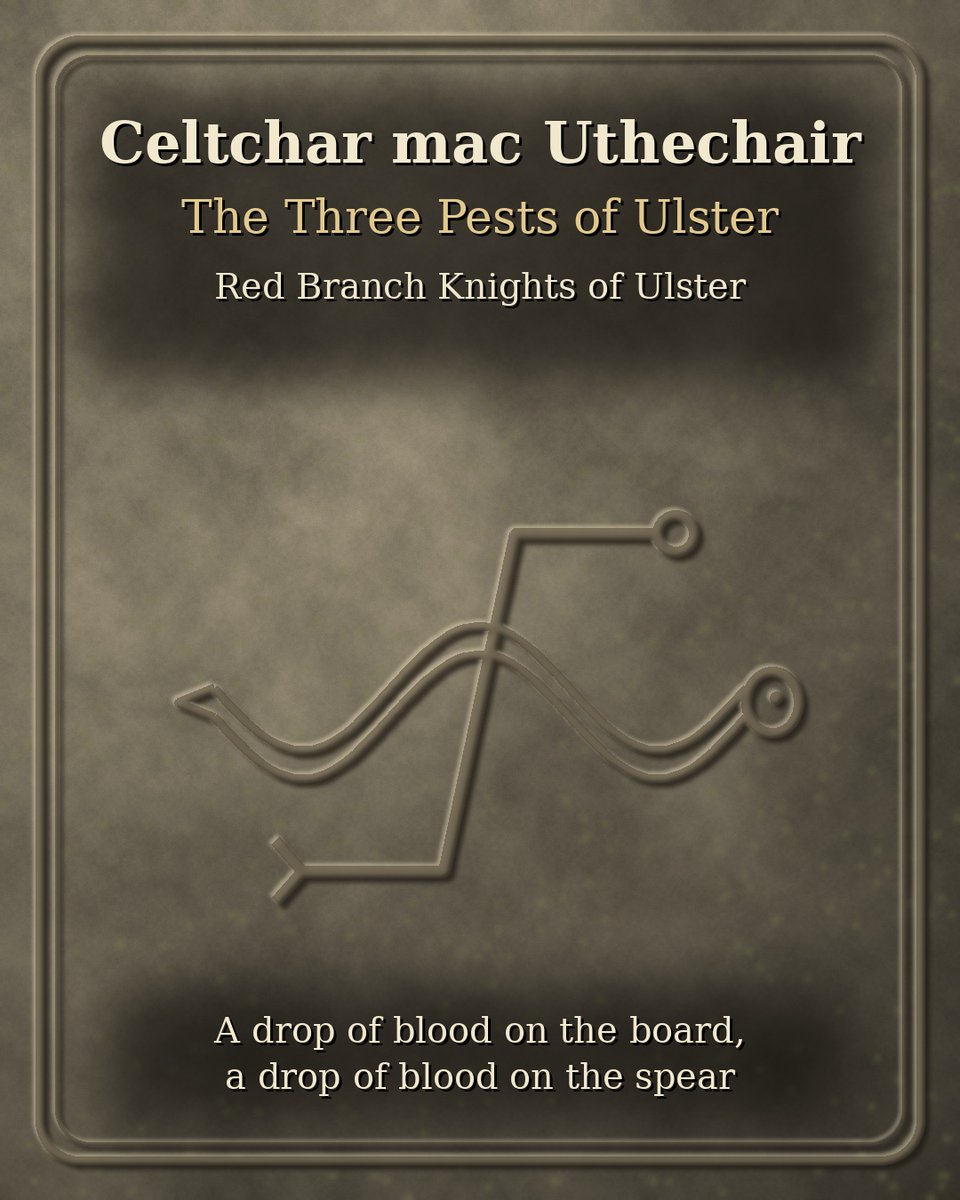
One drop of blood on a gaming board marked his crime, and one drop of blood on his own spear ended him. This is Celtchar mac Uthechair of the Red Branch.
Bláí the Hospitaller was one of the great men of Ulster, with seven herds of seven score cows, a plough-team with every herd, and a guest-house open to all. He was also bound by a strange geis: any woman who came to his house in company, without her husband, must share his bed. When Brig Brethach, Celtchar's wife, arrived that way, the old man warned her, then gave in. Celtchar came looking for her. Bláí ran to King Conchobar's side in the royal house, where the king sat over a game of fidchell with the young Cú Chulainn, and Celtchar drove a spear through him so hard it stuck in the wattle wall behind. One drop of blood fell on the board. The players measured it, and it lay nearer Conchobar, so his revenge would be the longer in coming.
Celtchar fled south to the Déisi of Munster, but the Ulstermen had no wish to lose a second man. Conchobar sent Celtchar's son to bring him home under his protection, since in those days a father's crime was never laid on his son. The fine for Bláí was heavy: Celtchar must free Ulster from the three worst pests it would see in his lifetime. The first was Conganchnes mac Dedad, "Horny-skin", come to avenge his brother Cú Roí, whose hide turned spears and swords as if they were horn. Celtchar promised him his daughter Niam and a dinner for a hundred every afternoon, and Niam coaxed out his secret: red-hot iron spits through the soles of his feet and up through his shins. A host crept in on their bellies, hammered the spits home, and Celtchar took his head. Every man who passed laid a stone, and a cairn rose over him.
The second pest was the Dun Mouse, a whelp found in a hollow oak and raised by a widow until it killed her flocks, her son and herself, then laid waste a homestead in Ulster every night. Celtchar boiled an alder log in herbs, honey and grease until it was soft and tough, hollowed it the length of his arm, and waited in its cave. When its teeth sank into the wood, he reached through and tore out its heart by the jaws. A year later cowherds heard whelps squealing inside Horny-skin's cairn and dug out three pups. The spotted one became Ailbe, the hound of Mac Da Thó. The dun one went to Culann the smith. The black one, Dóelchú, was Celtchar's own, and while he was away it broke loose and killed a living creature every night: the third pest. Celtchar called it three times. It came and licked his feet, and he struck it through the heart. As he lifted the spear, a drop of its blood ran down the shaft and through him to the ground, and he died. His lament was raised, and his stone and tomb were set where he fell.
Read more & learn the runes 👉 https://t.co/Gb5ufI3LMA
🪨 Like, repost & comment "RUNE" for 1 free Pictish rune pull
#RedBranch #UlsterCycle #IrishMythology
The hardest fight Cú Chulainn ever won was against the man he loved most. ⚔️💔
Fer Diad mac Damáin had trained beside him under Scáthach. He knew every feat Cú Chulainn knew except one, the Gáe Bulg, and he had a horn-skin no blade could pierce. When Queen Medb needed someone to break the Hound at the ford, she sent for him, and he would not come. So she sent poets and satirists to shame him, then sat her daughter Finnabair at his side, giving him three kisses with every cup. She offered a chariot, rich land, freedom from tribute for his descendants forever, her great gold brooch, and Finnabair as his wife. Even then he told her to keep it all rather than fight his foster-brother, until Medb claimed Cú Chulainn had boasted that Fer Diad would fall by his finest feat. Stung, Fer Diad swore to be the first man at the ford next morning.
Fergus rode out with the warning. "He is not the one we would prefer to meet," said Cú Chulainn, "not through fear of him, but because of our great love for him." At the ford they traded taunts in verse, and still Fer Diad remembered their youth with Scáthach: "You were my loved comrade, my kith and kin. Never found I one dearer to me." In the later telling they fought for days, and each night they embraced, sent healing herbs across the water to each other, and let their horses share one paddock and their charioteers one fire.
Then came the ford-feat, everything Scáthach had taught them both. Three times Fer Diad threw Cú Chulainn down into the water. Láeg goaded his master, Cú Chulainn swelled in his fury until he towered over Fer Diad, and Láeg sent the Gáe Bulg floating down the stream. Caught between his toes, it struck from below, one barb going in and opening into twenty-four. Fer Diad lowered his shield, and the spear went through to his heart. Cú Chulainn's lament is still one of the saddest lines in Irish myth: "All was play and sport until I met with Fer Diad at the ford." The place still bears his name, Áth Fhir Diad, Ardee in County Louth.
Read more Irish myth & learn the runes 👉 https://t.co/CsXzEtuyj9
🪨 Like, repost & comment "RUNE" for 1 free Pictish rune pull
#CuChulainn #UlsterCycle #IrishMythology
"It still gave light, yes. It still gave life. But it was filtered. It was capped... It was a Sun that said 'you survive' rather than 'you thrive.'" ☀️
The Sun Work was about peeling those layers back.
From Newgrange Blessings by John 📖 https://t.co/4vh9PBXtM6
More readings & runes 👉 https://t.co/Gb5ufI3LMA
#Pictish #AncientWisdom #SunWork
Three brothers of the Tuatha Dé Danann killed Lugh's father. Lugh's price for his death sent them to the ends of the world, and it cost them their lives. 🦅
The Fate of the Children of Tuireann is one of the "Three Sorrows of Storytelling", a later Irish tale built on older lore. The Book of Invasions already says that Cian "far from his home" was slain by Brian, Iucharba and Iuchar, and that the three gods of Danu later fell by the hand of Lugh. In the tale, Cian is crossing the plain of Muirthemne to raise the riders of the síd against the Fomorians when he sees the three sons of Tuireann, old enemies of his family. He strikes himself with a druid rod and becomes a pig in a passing herd. Brian sees through it, turns his brothers into hounds and spears the pig. Cian asks to die in his own shape. That way, he says, the fine for his death will be the heaviest ever paid, and the very weapons will tell his son. So they stone him to death instead. Six times they bury him and six times the earth throws the body back, until it stays down on the seventh. Later the ground itself speaks and tells Lugh what was done.
At Tara, Lugh asks the gathered Tuatha what vengeance they would take on a man who killed their father, then names his price. It sounds small: three apples, a pig's skin, a spear, two horses and a chariot, seven pigs, a hound's whelp, a cooking-spit and three shouts on a hill. Each turns out to be a deadly quest. There are the golden apples from the Garden in the East, the healing pigskin of Tuis, king of Greece, and a burning spear so fierce its head was kept steeped in water. There are the pigs of Easal that live again every morning, the whelp Fail-Inis that every wild beast falls down before, a spit from an island under the sea guarded by women, and three shouts on the hill of Miochaoin, whose sons are bound never to allow a shout there. Sailing in Manannán's boat, the Wave-Sweeper, the brothers win every one, sometimes as hawks and once with Brian walking the seabed in a water-dress. But the last shouts leave all three mortally wounded. Their father Tuireann begs Lugh for the healing skin. Lugh refuses, and the brothers die together, with their father dying beside them.
Lugh has his vengeance, and the treasures help arm the Tuatha for their war with the Fomorians. Even so, the tellers called it a sorrow, kin slaying kin, and Lugh says the Tuatha "will be under loss by it and be weakened by it". The Tuatha Dé Danann later gave up the surface of Ireland to the sons of Míl and went into the sídhe. The old tellers say they are still there beneath the green mounds, waiting, and that one day the riders of the síd will come out into Ireland again.
Read more & learn the runes 👉 https://t.co/Gb5ufI3LMA
🪨 Like, repost & comment "RUNE" for 1 free Pictish rune pull
#TuathaDeDanann #IrishMythology #CelticMythology
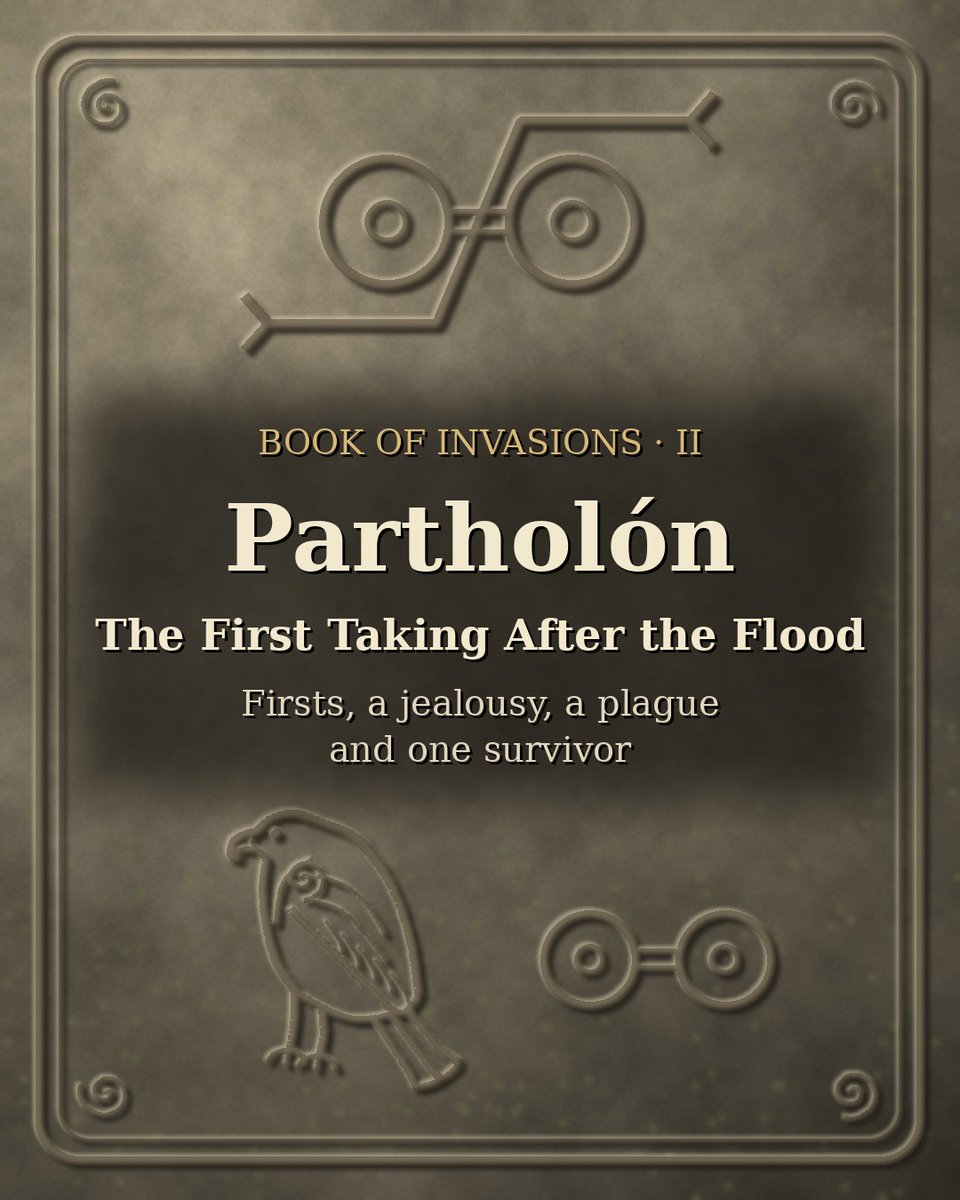
Ireland lay empty for 300 years after the Flood. Then Partholón came, and the Book of Invasions credits his people with Ireland's first ploughing, first house, first brewing, first battle and first jealousy. 🌾
In Lebor Gabála Érenn, the medieval "Book of the Taking of Ireland", Partholón son of Sera is the first to take Ireland after the Flood. He lands at Inber Scéne in the south-west on a Tuesday, the fourteenth day of the moon. Keating's History, drawing on the old books, says he sailed from Greece and fled there after killing his own father and mother in a struggle for the kingship. He came with his wife Delgnat and his sons Laiglinne, Slanga and Rudraige. Ireland was raw land then, with only three lakes, nine rivers and one plain, the Old Plain of Elta where no twig had ever grown. His people cleared four more plains. Seven lakes burst out of the ground in his time, and two of them gushed up as the graves of his sons were being dug. His first battle was fought at Mag Itha against Cichol and the Fomoraig, described as men with one arm and one leg.
The first jealousy happened in his own house. While Partholón was away, Delgnat slept with the henchman Topa. They grew thirsty and drank his sweet ale through its tube of red gold. When he came home and drank, he tasted both their mouths on the tube. In his anger he killed her little dog. Delgnat didn't apologise. Leave honey with a woman, milk with a cat, meat with a child and a tool with a craftsman, she said, and they will take it. The blame was his for leaving them alone. The book calls this "the right of his wife against Partholón", the first judgement in Ireland. The list of firsts goes on: the first cattle, a house and cauldron by Brea son of Senboth, ale and suretyship by Samailiath, the first guesthouse, and three druids whose names mean roughly Knowledge, Understanding and Inquiry.
None of it lasted. Partholón died on the Old Plain. His people were struck down by a week-long plague on the kalends of May, five thousand men and four thousand women. Only Tuan son of Starn, Partholón's nephew, survived. He was reshaped by God into many forms and lived on to tell the whole history to Finnian, centuries later. Ireland lay empty again for thirty years, until Nemed came.
Read more & learn the runes 👉 https://t.co/Gb5ufI3LMA
🪨 Like, repost & comment "RUNE" for 1 free Pictish rune pull
#LeborGabala #BookOfInvasions #IrishMythology
The most beautiful hero in Ireland went to Crúachan to win a princess. Her father threw her ring into a river, and a salmon caught it. 🐟
That's Táin Bó Fraích, the Cattle-Raid of Fráech, one of the tales told before the great Táin. Fráech son of Idath of Connacht was the son of Bé Find of the síd, sister of the river goddess Boand. The tale calls him the most beautiful of the men of Ériu and Alba, "but he was not long-lived." Findabair, daughter of Ailill and Medb, loved him just from the stories told about him. Boand sent him to Crúachan in otherworld splendour: dark-blue cloaks, silver shields, spears that lit the night like sunlight, seven hounds on silver chains, and three harpers. Their music held the three strains named from the Dagda's harp, sorrow, joy and sleep, and twelve of Ailill and Medb's people died of weeping. Fráech played chess with Medb for three days and nights. The jewels lit the hall so brightly that nobody noticed the nights going by.
At a stream at dawn, Findabair would not elope with him. She was the daughter of a king and a queen. Instead she gave him a ring as a token. Ailill asked a bride-price so huge that Fráech refused, and then the king and queen plotted his death. At the river Ailill found the ring in Fráech's purse and flung it into the water, but Fráech saw a salmon leap and swallow it. Then Ailill sent him swimming for rowan berries, and a water-monster seized him. No one dared hand him a sword except Findabair, who leapt in with one. Her father hurled a five-pronged spear that passed through her tresses. Fráech caught it and threw it back through Ailill's robe, then cut off the monster's head. The tale says that is how the pool Dub-linn Fráech got its name.
Badly wounded, he was carried into the Síd of Crúachan by his mother and the women of Boand, and he came back the next day without a mark on him. At the feast Ailill demanded the ring from Findabair on pain of death. Her maid carried in a broiled salmon dressed with honey, with the ring of gold on top. Fráech promised to bring his cattle to the Raid of Cooley, and the wedding would follow. In the Táin itself, though, he dies wrestling Cú Chulainn in a river, and women in green carry him into Síd Fráich.
Read more & learn the runes 👉 https://t.co/Gb5ufI3LMA
🪨 Like, repost & comment "RUNE" for 1 free Pictish rune pull
#UlsterCycle #TáinBóFraích #IrishMythology
"Under the New Blueprint, the stars are moving in all directions. They are alive. They are responding." ✨
Nothing in the sky is fixed any more.
From Newgrange Blessings by John 📖 https://t.co/JhFt4v0Qci
#AncientWisdom#Pictish#KindleBooks
🪨 Weekly 7-Rune Collective Reading 🪨
Week of Monday 19 October 2026
A new week begins, and seven Pictish inspired runes have been drawn for everyone. In this practice, here is what the stones show for the week ahead:
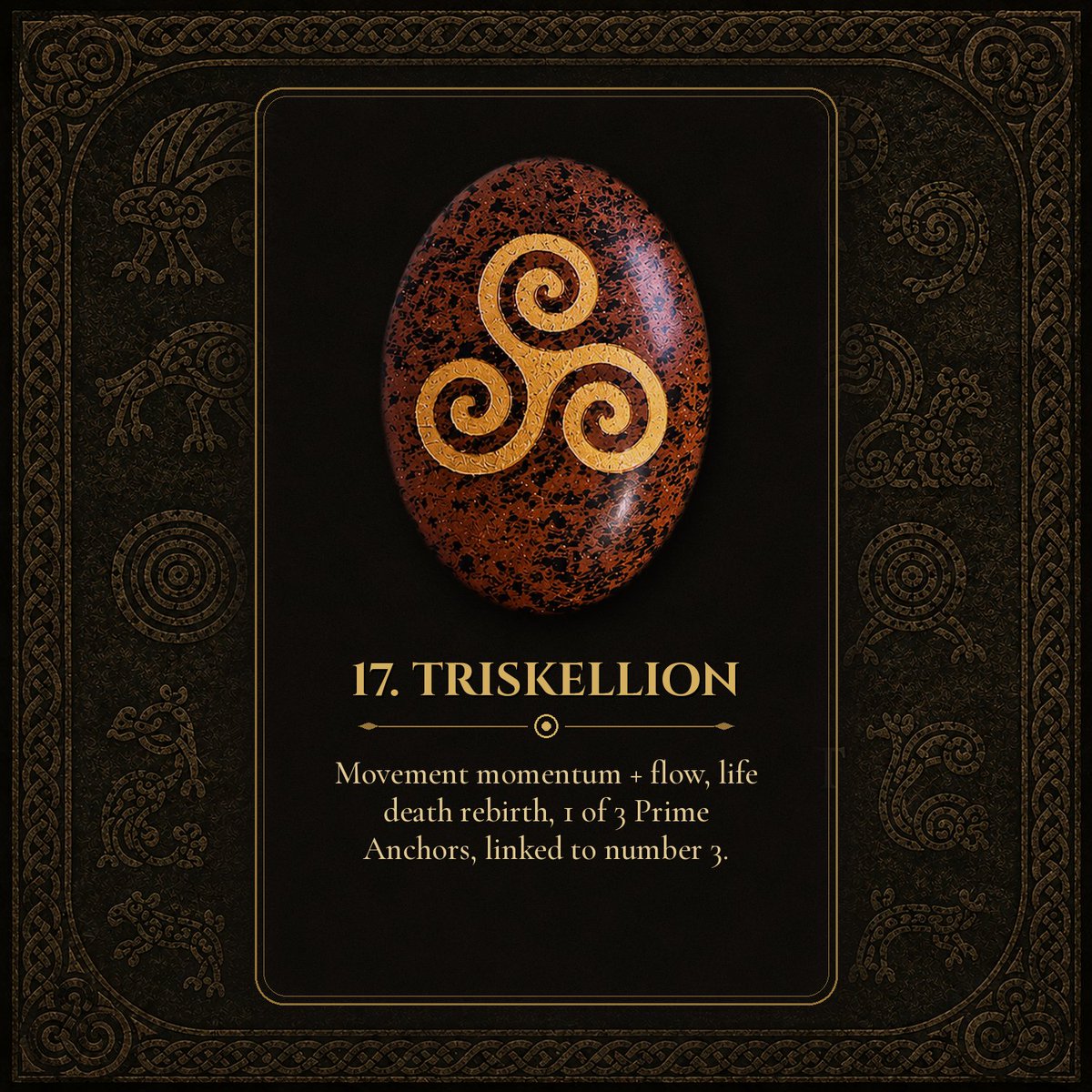
1. Past: Triskellion. Movement momentum + flow, life death rebirth, 1 of 3 Prime Anchors, linked to number 3.
2. Present: Double Disc. Partnership working with another towards similar goals, teaming up in business.
3. Future: Z-Rod + Serpent. Wisdom gained through knowledge and healing.
4. External forces: 3 Legged Wheel. All things falling into place once the wheel turns in divine timing, patience.
5. Required action: Gateway. Opening up portals, doorways, paths that were once blocked, doors opening that wouldn't open before, opening up to a new reality.
6. Self: Horse. Good fortune ahead, life coming full circle, stagnant energy starting to flow.
7. Outcome (centre): Tuning Fork. Adaptability, and DNA upgrade, dormant DNA strands now activating.
🌀 The flow
Behind you sits the Triskellion, the turning of life, death and rebirth. Something has already moved through a full cycle, and the momentum it built hasn't gone anywhere; it is carrying you into this week. Right now the Double Disc shows that you don't have to do it alone. Partnership is the theme of the present: working alongside someone towards similar goals, or teaming up on a shared plan or business idea.
Ahead, the Z-Rod + Serpent brings wisdom gained through knowledge and healing. What you learn, and what you have already come through, becomes something you can stand on. Around you, the 3 Legged Wheel is turning at its own pace. Things are falling into place in divine timing, and the outside world is asking for patience rather than force.
Your required action is the Gateway. A path or doorway that wouldn't open before is opening now, and the stones ask you to step through it into a new reality. At the level of self, the Horse shows good fortune ahead, life coming full circle and stagnant energy finally starting to flow again. And at the centre of it all, the outcome is the Tuning Fork: adaptability. As you walk through the open door with the right people beside you, you adapt and attune, and what has been lying dormant starts to wake.
So carry the Triskellion's momentum, work with your Double Disc partners, trust the Wheel's timing and walk through the Gateway. The week is yours ✨
This is a collective reading. Take what resonates.
Learn what your stones mean 👉 https://t.co/CsXzEtuyj9
Comment RUNE for your own free reading 🪨
#PictishRunes #RuneReading #CollectiveReading #WeeklyReading #PictishMystic
Today the stones speak of the Triskellion, the Salmon and the Wolf 🌀🐟🐺
The Triskellion opens the day in motion. Three spirals turning as one: life, death and rebirth, and the sacred number three. As one of the three Prime Anchors, it tells you that momentum is already with you. Something has started moving, and your task is not to push it but to flow with it. Let what is ending end, let what is being born take its first breath, and keep turning.
As you move, the Salmon brings sight. In the old lore the salmon is the keeper of wisdom, and here it speaks of prophecy, vision and vivid dreams. Pay attention to what comes to you in quiet moments today, and to last night's dreams. You may glimpse where things are heading before it happens. Trust that knowing, even if you can't yet explain it.
And where it all leads is the Wolf. Some of this path is yours to walk alone. The wolf leaves the pack to do its work, fierce and focused, knowing it will be welcomed back once the work is done. The three stones tell one story today: flow with the turning, trust what you are shown, then walk your own way with loyalty to yourself. Movement, vision, then the lone wolf's courage.
🪨 Like, repost & comment "RUNE" for 1 free Pictish rune pull
Learn what your stones mean 👉 https://t.co/CsXzEtuyj9
#RuneReading #DailyGuidance #Pictish
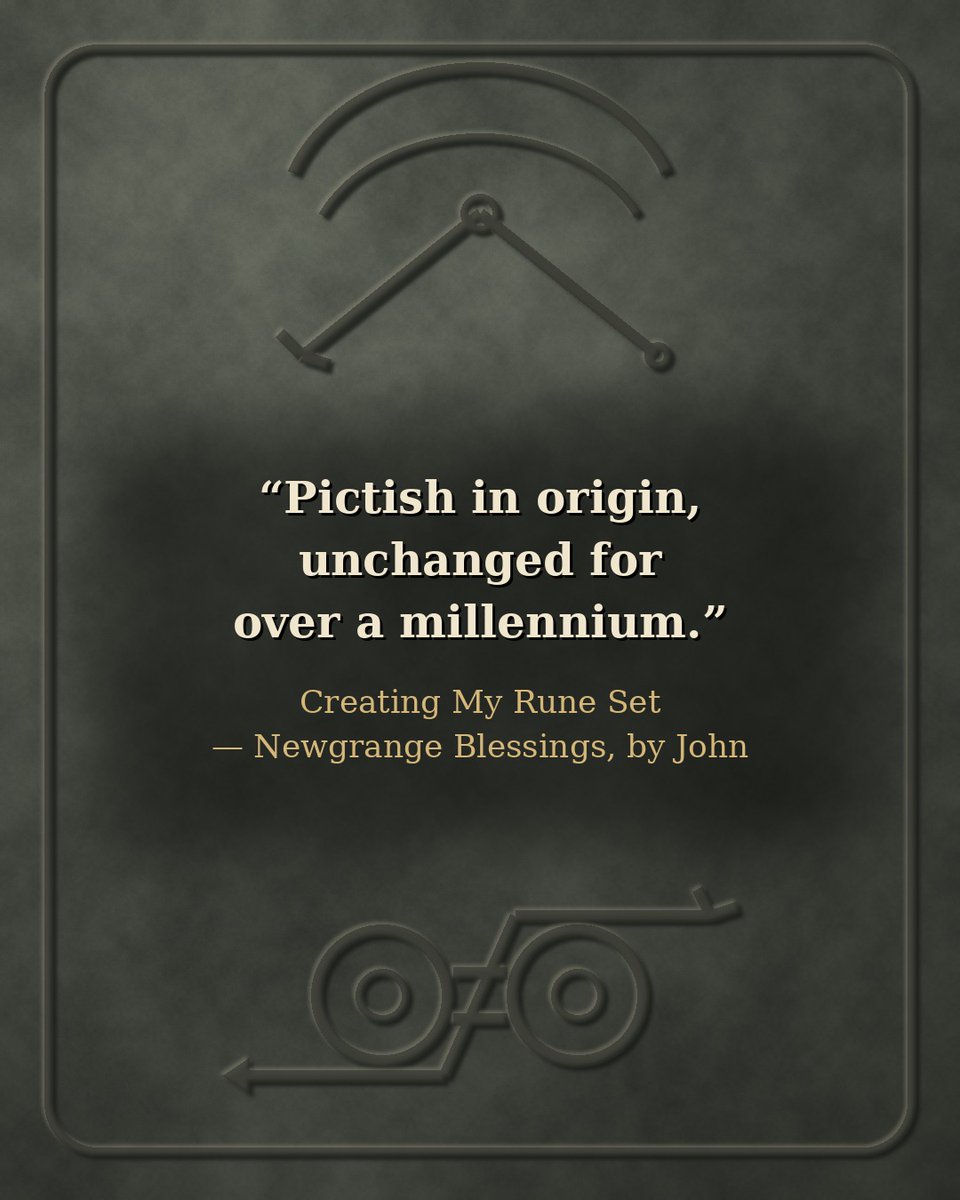
"The set is made of two distinct parts: First, there are twenty-four modern practitioner symbols — shapes inspired by the Pictish style, shared and used by spiritual workers today. They carry the same energy as the ancient stones, yet shaped and adapted for the world we live in now. Second, there are the ancient symbols themselves — the exact markings carved in stone across Scotland, Pictish in origin and unchanged for over a millennium. These are the originals: the V-rod, the crescent, the moon, the Z-rod, the double disc, and others. Each one holds layers of meaning, and each one acts as a powerful instrument for healing and connection."
From Newgrange Blessings 📖 https://t.co/4vh9PBXtM6
#Pictish #PictishSymbols #Runes
"The soil hummed. The rivers sparkled brighter. The trees grew taller and greener. The ancient sites lit up like beacons." ✨
When the light returns, the land answers.
From Newgrange Blessings 📖 https://t.co/JhFt4v0imK
#AncientWisdom#Pictish#KindleBooks
🌳 Collective 13-Rune Reading 🌳
✨ Whoever interacts the most with Pictish Mystic by Sunday receives their own personal 13-rune tree reading, just like this one. Like, comment and share all week to be in with a chance!
1. Present: Sacred Geometry
2. Challenge: Complex Knot
3. Foundation: Axe
4. Recent past: Female Spirit Guide
5. Above / conscious goal: Flower
6. Near future: Moon
7. Yourself: Goose
8. Outside influences: Boar
9. Hopes and fears: Horse
10. Outcome: V Rod + Crescent Moon
11. Heart of the matter: Spiral
12. Self/attitude: Triskellion
13. Required action: Wheel
The collective flow:
In this practice, the stones speak to all of us this week, and the story opens with Sacred Geometry. Right now we are exactly where we are meant to be. Luck and right timing are working together, and the chance meetings and small coincidences of these days are divine timing quietly at play.
Behind us walks the Female Spirit Guide. Many of you came through recent difficulties with a gentle presence at your side, and she left you a gift: discernment, the ability to choose well even when the way looked unclear. Beneath it all, our foundation is the Axe. When the spirit world has your back, there is nothing to fear in this world, and that protection is the ground this whole tree grows from.
Our challenge is the Complex Knot. Something is still unfinished, a last thread waiting to be tied off before an ending can make way for a new beginning. Earth, sea and sky, the third of three. Don't leave it hanging; complete it, and the path ahead clears.
Above us blooms the Flower, our shared conscious goal: growth on many levels, and stepping fully into our own essence and identity. In the near future rises the Moon. Trust your intuition, move with the phases rather than against them, and notice how quickly you begin to sync up with what is meant for you.
At the centre stands the Goose, the pattern breaker. Many of us are the ones ending old family cycles, learning from what has gone before so it doesn't repeat. Around us, the outside influences carry the Boar: someone stubborn, perhaps hard work at times, who truly has your best interests at heart. Fearless and loyal, they are on your side.
In our hopes and fears gallops the Horse. We hope for good fortune and fear the stuck energy will never shift, but the Horse says life is coming full circle and what was stagnant is starting to flow again. At the heart of the matter turns the Spiral: we have reached a stage where we know what we are willing to accept and what we no longer will. Our attitude is the Triskellion, movement, momentum and flow, life, death and rebirth, the first of the three anchors, echoing the Knot's three.
And so to the trunk, the Wheel, our required action. Time is on your side. Don't rush into signing or agreeing to anything; relax and let things fall into place. When we do, the outcome at the top of the tree is the V Rod + Crescent Moon: the old persona falls away and a new one is born, the phoenix rising from the ashes. Together, we are becoming who we were always meant to be.
🌳 Like, comment and share this week: the most active follower by Sunday gets their own personal 13-rune tree reading.
Learn what your stones mean 👉 https://t.co/CsXzEtv68H
Comment RUNE for a free 3-stone reading.
💻 Did you know I build websites too?
Through Apex Website Builders I make clean, modern sites for tradespeople, small businesses and creatives. All budgets covered.
See one live 👉 https://t.co/CsXzEtuyj9
✅ Online shop with Buy Now + PayPal order form
✅ Articles with category tabs
✅ Book section + email sign-up
✅ Works beautifully on phones
What's included:
📱 Mobile-friendly design
💬 Contact + WhatsApp buttons
🛒 Online shop / PayPal
🔎 SEO basics
🌐 Hosting setup
🔧 Updates when you need them
Let's build yours 👇
https://t.co/bvrUXaqhKp
📲 WhatsApp 07463 384414
✉️ [email protected]
#WebDesign #SmallBusiness #WebsiteDesign
The Fomorians stole the Dagda's harp, and it came flying off the wall to him at a single word. 🎶
After the Second Battle of Mag Tuired, the Tuatha Dé Danann had won, but the retreating Fomorians carried off a treasure: the Dagda's harp, made of oak and bound with his own music. It was said that its music kept the seasons in their order. So three of the Tuatha went after it: Lugh the Samildánach, Ogma the champion, and the Dagda, the Good God, father of all. They tracked the Fomorians to a feasting hall where Bres and his father Elatha sat among their warriors, and there on the wall hung the harp.
The Dagda raised his voice and called it by its names: "Come, Dur da Bláo! Come, Coir Cethar Chuir! Come summer, come winter!" The harp leapt from the wall and flew across the hall to his hands, striking down nine men on the way. Then he played the three strains that every true harper of Ireland once had to master. First the goltraí, the music of sorrow, and the Fomorian women wept. Then the geantraí, the music of joy, and the women and young men laughed. Last of all the suantraí, the music of sleep, and the whole host fell into a deep slumber.
While their enemies slept, Lugh, Ogma and the Dagda walked out of the hall unharmed, the harp in the Dagda's arms. That is why the harp is still the emblem of Ireland, and why the old harpers said music can wound, heal, or carry you into the Otherworld. The Tuatha Dé Danann withdrew into the hollow hills long ago, but they are not gone. When the old strains are played again, they will hear, and they will return.
🪨 Like, repost & comment "RUNE" for 1 free Pictish rune pull
#TuathaDeDanann #IrishMythology #CelticMythology #FolkloreSunday
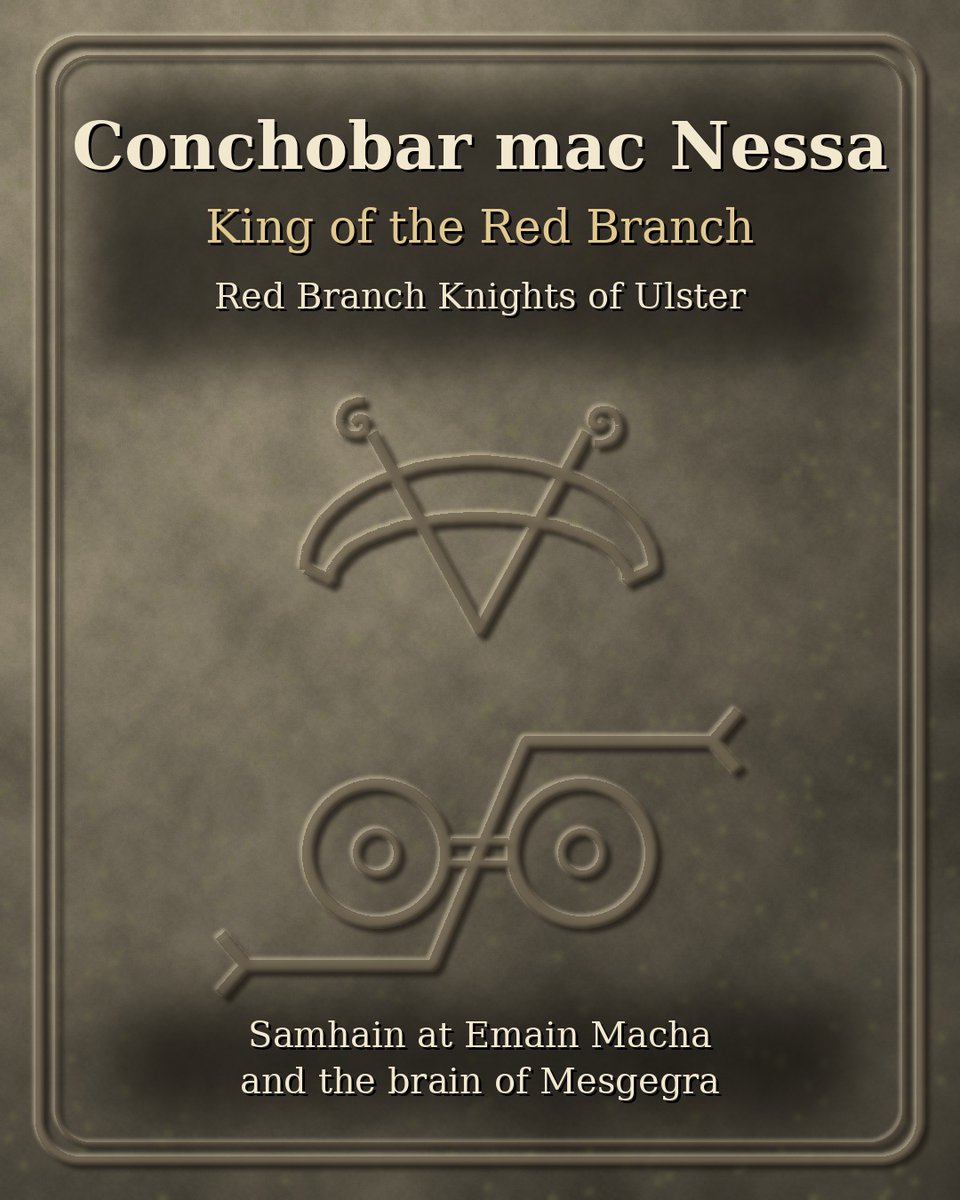
Every Samhain the whole of Ulster had to come to one king's hall, and any man who stayed away lost his mind. This is Conchobar mac Nessa, king of the Red Branch.
His mother Ness was a king's daughter who turned warrior after the druid Cathbad slew her twelve foster-fathers. Cathbad caught her bathing alone, stood between her and her weapons, and she became his wife. One telling places their home at Ráth Cathbaid, "in the country of the Picts", the Cruithin of Ulster, beside the river Conchobar that gave the boy his name. When he was seven, Ness agreed to marry Fergus mac Róich, the king, on one condition: her son must be king for a year. She spent that year pouring gold on the champions of Ulster, and when it ended they voted to keep the boy. "What Fergus sold, let it part from him."
From Emain Macha Conchobar ruled 365 warriors, one for every day of the year, and each fed the household for a night. His court had three houses: one for the kings, the Red Branch for the heads and spoils of the slain, and the Téite Brecc, the Speckled House, where every sword and shield was kept, because the Ulstermen were so quick to take insult that they could not be trusted armed at the feast. A silver rod with three golden apples hung over the king, and when he shook it the whole hall went silent enough to hear a needle drop. For three days before Samhain and three days after, all Ulster feasted in his house.
His end came from a trophy. Conall Cernach had slain Mesgegra, king of Leinster, and turned his brain into a hard ball with lime. The Connacht champion Cet mac Mágach stole it and slung it into Conchobar's head. His physicians dared not cut it out. They stitched the wound and told him he would live as long as he never gave way to rage. For seven years he lived quietly, until he heard how Christ had been put to death, and his fury burst the ball from his skull. The Red Branch's first king died of his own anger.
🪨 Like, repost & comment "RUNE" for 1 free Pictish rune pull
#RedBranch #UlsterCycle #IrishMythology #FolkloreSunday