Here are 10 GitHub repos that quietly print money while you sleep.
1. Cal. com
Open-source Calendly. Fork it, white-label it, sell to dentists and lawyers for $200/month. The founders hit $5M ARR in 3 years doing exactly this.
Repo → https://t.co/haz8ihRsHm
2. Plausible Analytics
Privacy-first Google Analytics. Self-host it, resell to agencies for $50/month per client. Two founders bootstrapped this to 7 figures.
Repo → https://t.co/RFrcpqTBQ7
3. Ghost
Open-source Substack with 100% margin. 1,000 readers at $5/month equals $60,000 a year. Forever.
Repo → https://t.co/Z1MdZ5Zapg
4. n8n
Open-source Zapier. Sell automation services for $500-$2,000 per setup. n8n raised $14M because the agency model behind it works.
Repo → https://t.co/hdycABGGc1
5. Supabase
Free Firebase replacement. Build a SaaS in a weekend, charge $29-$99/month. They raised $116M for a reason.
Repo → https://t.co/dFB2QvafA7
6. Medusa
Open-source Shopify. Take 5% on every sale forever. Zero rev share to Shopify.
Repo → https://t.co/uEuCK6zuZO
7. AppFlowy
Open-source Notion. Sell self-hosted to enterprises worried about data privacy. They raised $30M because this market is massive.
Repo → https://t.co/IDMykTCkMU
8. Coolify
Open-source Vercel and Heroku. Charge developers $20/month to manage their deployments. Replace their $200 Vercel bill.
Repo → https://t.co/N5Fk22qraT
9. Listmonk
Open-source Mailchimp. Send unlimited emails for the cost of an AWS bill. Resell to agencies at 10x markup.
Repo → https://t.co/NS6Uukcklw
10. Penpot
Open-source Figma. Sell self-hosted design tools to agencies who refuse to upload client files to the cloud.
Repo → https://t.co/Lx1CYUP4p4
The difference between developers who build features and developers who build businesses is one decision.
Pick one of these. Fork it this weekend. Ship it next week.
The founders behind these repos already proved the model.
Save this. Share it with the developer in your life who deserves to break free.
100% free. 100% open source.
Founders don't have time to write 100+ prompts just to get some half baked-designs, they'll still hire someone to save their time, time is the real money
AI is insanely useful, no doubt.
But mostly for people who are just starting, experimenting, or don’t really have a budget to hire a designer or developer
So if you’re a designer feeling threatened by AI, you are wrong
The smart ones are using it.
Speeding up their workflow.
Delivering faster.
Back-to-back wins for Taka and Aaron! 🤯🏆
Thierry Neuville suffers damage after an off on the Wolf Power Stage, allowing the Toyota pair to move into P1 to take a dramatic victory in Croatia! 😳
This marks the second WRC win of their careers after securing their maiden victory in Kenya!
#WRC | #CroatiaRally 🇭🇷
Ugandan Crew
Makes Safari
Rally History
History has been made at the world-famous Safari Rally in Kenya, a World Rally Championship (WRC) event, as Oscar Ntambi and Uthimaan Muhamadi won their category. The Uganda crew won the ARC2 category on Sunday, in a rally that claimed so many top drivers it was unanimously described as brutal. The Ugandan pair, backed by Kenya Commercial Bank (KCB), finished 22nd overall in the WRC rankings, in a truly heroic showing in Naivasha.
Most people treat CLAUDE.md like a prompt file.
That’s the mistake.
If you want Claude Code to feel like a senior engineer living inside your repo, your project needs structure.
Claude needs 4 things at all times:
• the why → what the system does
• the map → where things live
• the rules → what’s allowed / not allowed
• the workflows → how work gets done
I call this:
The Anatomy of a Claude Code Project 👇
━━━━━━━━━━━━━━━
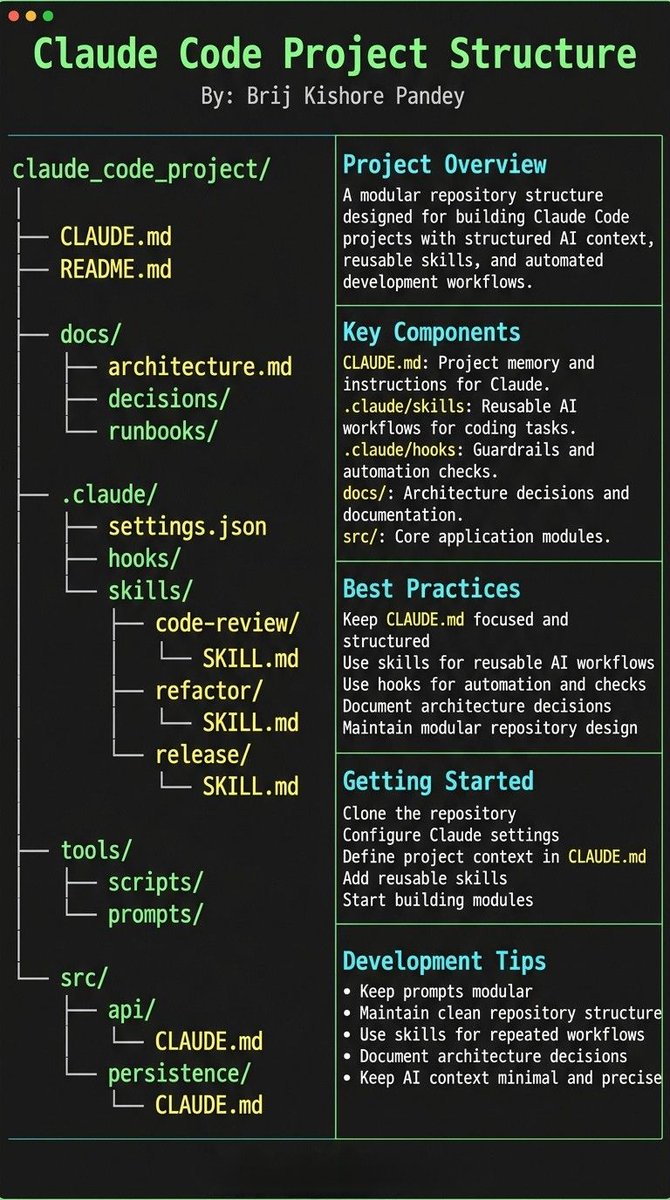
1️⃣ CLAUDE.md = Repo Memory (keep it short)
This is the north star file.
Not a knowledge dump. Just:
• Purpose (WHY)
• Repo map (WHAT)
• Rules + commands (HOW)
If it gets too long, the model starts missing important context.
━━━━━━━━━━━━━━━
2️⃣ .claude/skills/ = Reusable Expert Modes
Stop rewriting instructions.
Turn common workflows into skills:
• code review checklist
• refactor playbook
• release procedure
• debugging flow
Result:
Consistency across sessions and teammates.
━━━━━━━━━━━━━━━
3️⃣ .claude/hooks/ = Guardrails
Models forget.
Hooks don’t.
Use them for things that must be deterministic:
• run formatter after edits
• run tests on core changes
• block unsafe directories (auth, billing, migrations)
━━━━━━━━━━━━━━━
4️⃣ docs/ = Progressive Context
Don’t bloat prompts.
Claude just needs to know where truth lives:
• architecture overview
• ADRs (engineering decisions)
• operational runbooks
━━━━━━━━━━━━━━━
5️⃣ Local CLAUDE.md for risky modules
Put small files near sharp edges:
src/auth/CLAUDE.md
src/persistence/CLAUDE.md
infra/CLAUDE.md
Now Claude sees the gotchas exactly when it works there.
━━━━━━━━━━━━━━━
Prompting is temporary.
Structure is permanent.
When your repo is organized this way, Claude stops behaving like a chatbot…
…and starts acting like a project-native engineer.
An engineer at Anthropic wrote a spec, pointed Claude at an Asana board, and went home. Claude broke the spec into tickets, spawned agents for each one, and they started building independently.
When the agent is confused it runs git-blame and messages the right engineers in Slack. By Monday the agents finished the plugin feature.
That's one example of how the best engineers are shipping software right now.
Developers will soon orchestrate 50 AI agents in parallel and the difference between a good engineer & a great one would come down to specs.
You can't write a spec that holds up at that scale without genuinely understanding what you're building at a deeper level.
The next-gen developer who understands the fundamentals, can architect well and orchestrate agent is going to be a 1000x developer!
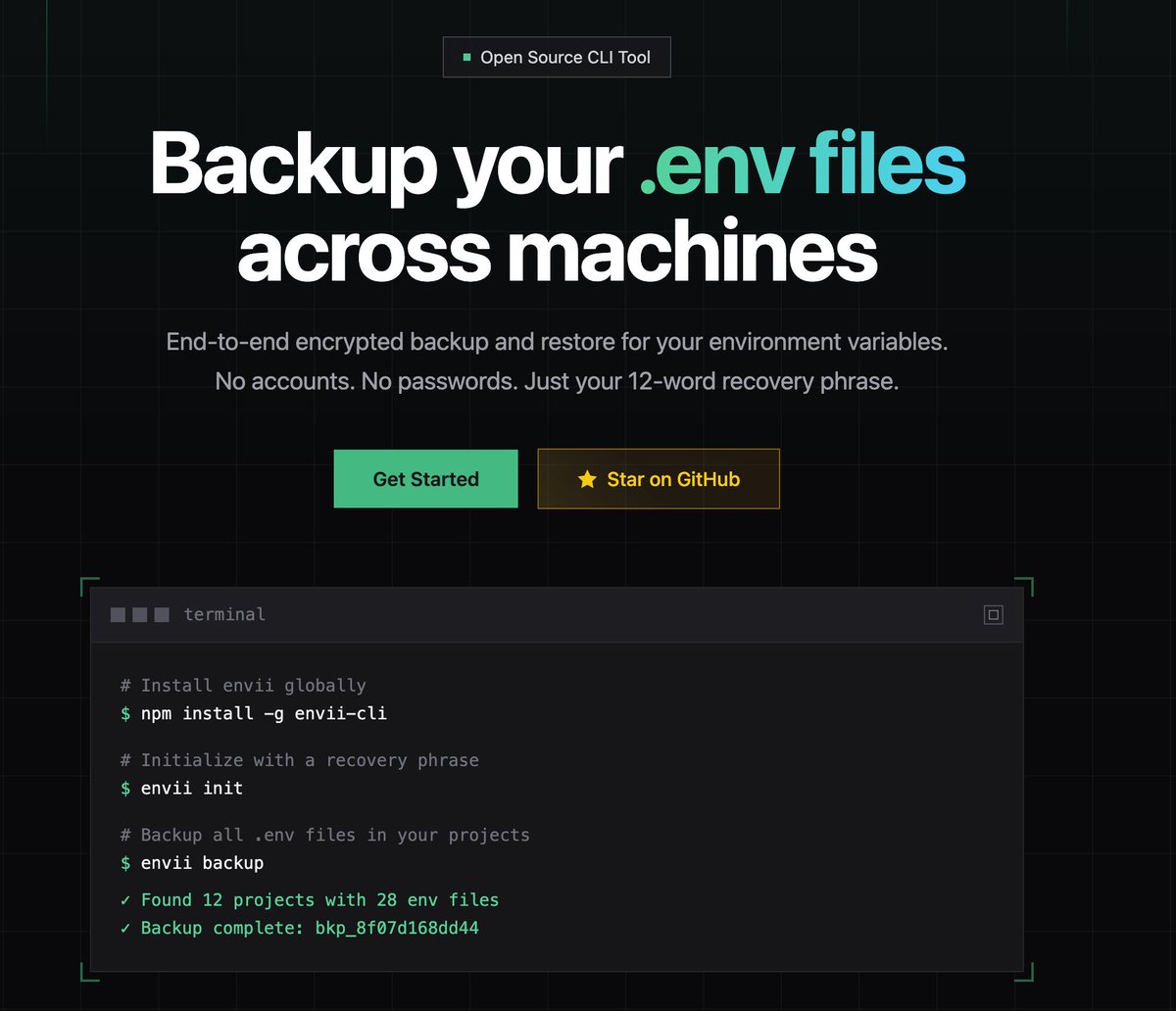
Introducing my new project Envii.
A CLI tool for backing up and restoring environment variables across your computers.
Check it out here---> https://t.co/tmpyBYhfxQ
100% Opensource: https://t.co/CrjHZMxb3g