The Man in the Red Bandana
On every 9/11, we remember the heroism and bravery of Welles Crowther.
A lacrosse player at Boston College, Welles had experience as a volunteer firefighter, and gave his life saving as many as 18 people on that fateful day.
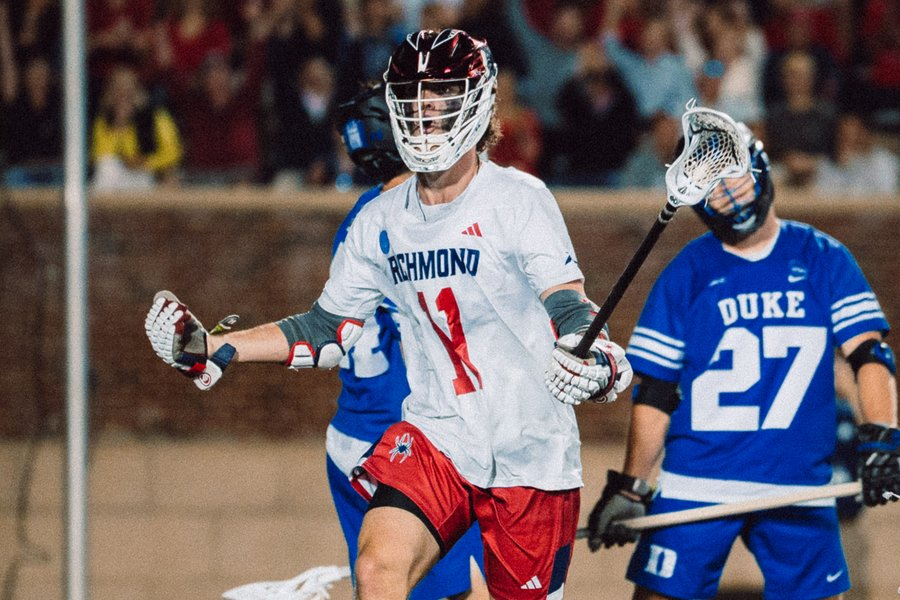
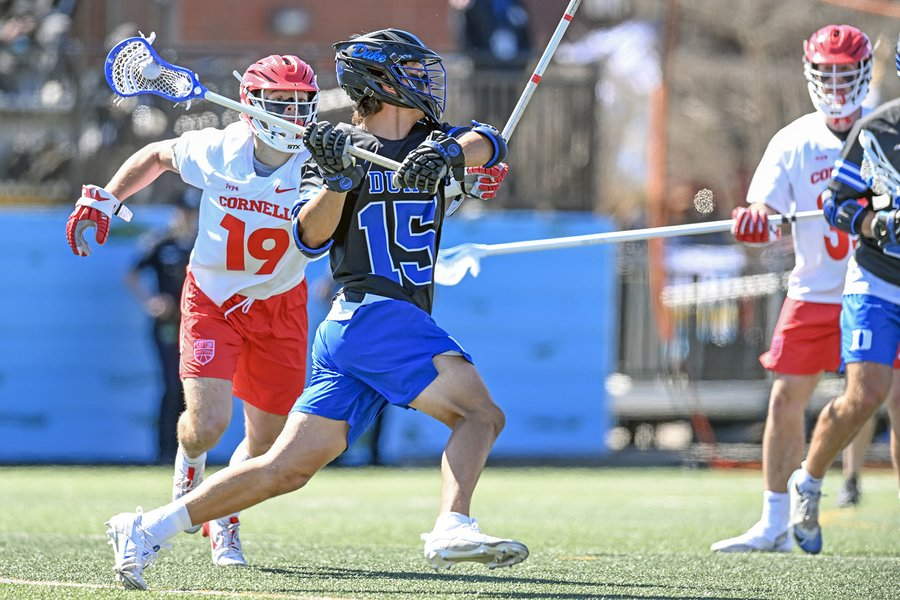
The question mark dodge has been one of the most popular moves for attackmen.
From Mark Millon’s early 2000s instructional vids to Rob Pannell's dominance of the move, it quickly became the go-to move for attackers.
But as the game has evolved, so has the question mark. 🧵👇
Watch any lacrosse game and you���ll see players sprint to the endline when a ball goes out of bounds… 🏃♂️
But did you know that this “Run Out” rule actually stems from the Indigenous roots of the game?
A thread: 👇🧠
@FoulTerritoryTV@Ken_Rosenthal The Braves have shown that signing extensions and not going big in free agency definitely can work as long as you extend the right players. Seattle has a good squad and should stay the course.
Ronald Acuña Jr. is the third player in MLB history to have 200+ hits, 140+ runs scored, 100+ RBI and 50+ stolen bases in a single season.
Hughie Jennings (1895)
Ty Cobb (1911)
Ronald Acuña Jr. (2023)
FINAL SCORE:
Helena - 31, Homewood - 17
The Huskies have an explosive second half after falling down 10-0 to begin the game to win on the road. Helena improves to 3-0 on the season tonight and continues a dominant beginning to the season.
“Anyone using BsR to devalue Ronald Acuña Jr’s season, respectfully, has no idea what they’re talking about.”
Why Ronald Acuña Jr’s base running is more valuable than some advanced analytic could ever tell you.
How the Braves Win with Moneyball
(Mini-column)
When you hear the term “Moneyball,” you may reflexively imagine Jonah Hill repeating the words, “because he gets on base” on cue like a life sized Tickle-Me-Elmo every time Brad Pitt points to him.
But as I recently heard an MLB analyst point out, Moneyball, at its essence, is about finding and maximizing value.
And by that definition, the Atlanta Braves under Alex Anthopoulos are as Moneyball as it gets.
As of Monday, the Braves were top-15 in WAR in the NL at FIVE positions: C, 1B, 2B, 3B, RF.
The Braves are paying the players who man those positions a total of $72 million this year.
The Mets, by contrast, were set to pay $72 million to just two players, Francisco Lindor and Max Scherzer — with the latter no longer wearing a Mets uniform.
Like every other team in baseball, circumstances will force the Braves to change their plans from time to time, but they never stray from their methodology. VALUE is paramount.
Some fans mistake the Braves reluctance to join bidding wars for top shelf free agents for being “cheap.”
Not so. The Braves are spending. But they’re doing it their way. The Moneyball way.
Some fans argue that with all the money they’re saving on team-friendly contracts like those signed by Ronald Acuña Jr and Ozzie Albies, the Braves can afford to swim in the deep waters of free agency, hunting whales like Moby Dick.
These fans miss the point. The Braves don’t drive past Bloomingdale’s on their way to Kohls because they can’t afford the big name brands. They do so because they believe they can maximize value by spreading it out, carefully weighing the likely return of each dollar they spend.
The more money, Alex Anthopoulos has to spend, the more he will dispense it in the exact same manner he has since arriving in Atlanta.
“Yeah, but [insert player name] is worth it!”
Maybe so. But Alex Anthopoulos believes everything he could buy with that money instead of [big name, free agent] is *more* worth it.
What’s more, maximizing value means minimizing risk. And paying Juan Soto a half billion dollars to suit up in Atlanta doesn’t accomplish that.
It was fair to question AA’s methodology at the start. But 5 NL East titles and one World Series victory later, with the closing of Atlanta’s World Series window, nowhere in sight, it’s hard to argue that Moneyball, at least the way the Atlanta Braves play it, works.