5. @Seinosaurz
Unlike the others I mention this is on #SeiNetwork and not solana, but I see a lot of hype around it
Supply: 3889
Mint price: free
Mint date: TBA
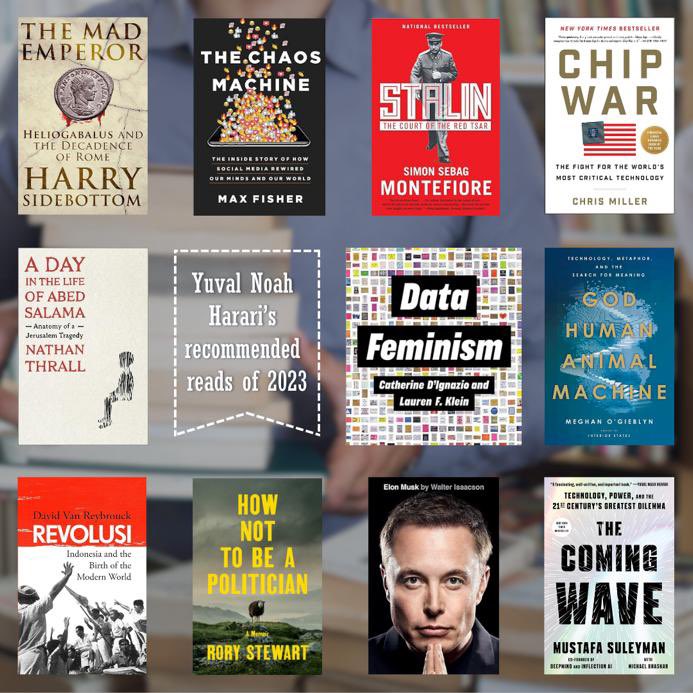
Here are 11 books I enjoyed reading in 2023. The first is 20 years old, the last is not out yet (in English), and all are recommended:
* 'Stalin: The Court of the Red Tsar' by Simon Sebag Montefiore (2003) * 'Data Feminism' by Catherine D'Ignazio and Lauren F. Klein (2020)
* 'God, Human, Animal, Machine: Technology, Metaphor, and the Search for Meaning' by Meghan O'Gieblyn (2021) * 'Chip War: The Fight for the World's Most Critical Technology' by Chris Miller (2022) * 'The Chaos Machine: The Inside Story of How Social Media Rewired Our Minds and Our World' by Max Fisher (2022)
* 'The Mad Emperor: Heliogabalus and the Decadence of Rome' by Harry Sidebottom (2022)
* 'The Coming Wave: Technology, Power, and the Twenty-first Century's Greatest Dilemma' by Mustafa Suleyman (2023)
* 'How Not To Be a Politician: A Memoir' by Rory Stewart (2023) * 'Elon Musk' by Walter Isaacson (2023) * 'A Day in the Life of Abed Salama: Anatomy of a Jerusalem Tragedy' by Nathan Thrall (2023)
* 'Revolusi: Indonesia and the Birth of the Modern World' by David van Reybrouck (out February 2024)
@simonmontefiore @kanarinka @laurenfklein @crmiller1@Max_Fisher@mustafasuleyman@RoryStewartUK@WalterIsaacson@NathanThrall@Davidvanrey
#books #bookrecommendations #goodreads
To get what you want, you have to deserve what you want. The world is not yet a crazy enough place to reward a whole bunch of undeserving people.
~ Charlie Munger
Here is a collection of some of the his pearls of wisdom
RIP Legend 🙌 👑
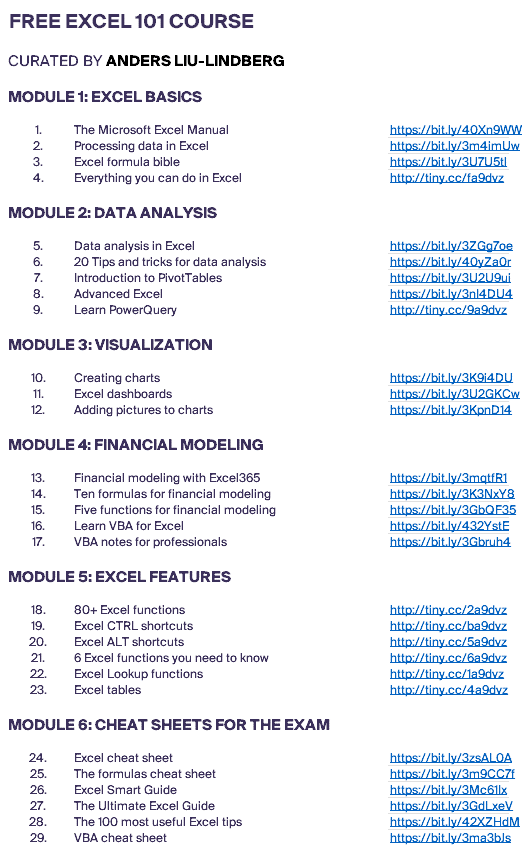
Free Excel 101 course. Save thousands of dollars!
Get the PDF version with all the clickable links in one place here: https://t.co/Drdp0iOoiJ
6 modules and 29 lessons. Are you ready?
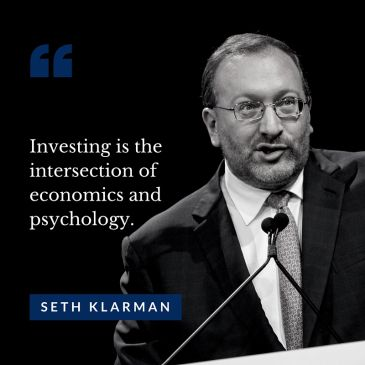
Seth Klarman once said:
"Investing is the intersection of economics and psychology"
Here are 5 Psychological Biases you need to know about to become an effective investor:
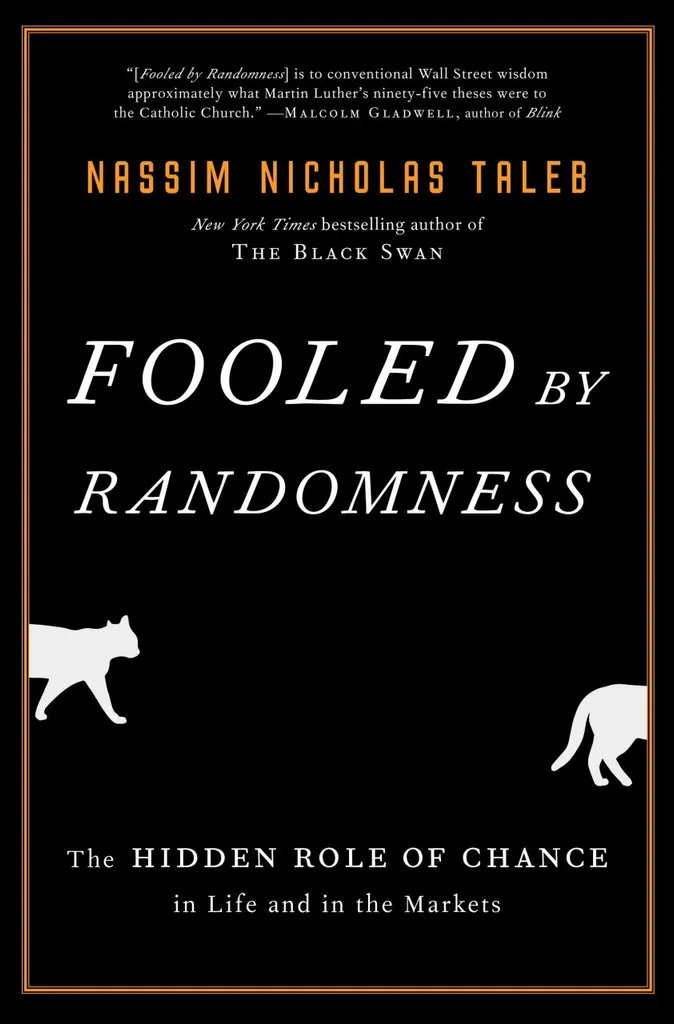
Some of my favorite Notes from one of the best Books on Decision-Making ever:
Fooled by Randomness
1. The quality of a decision cannot be solely judged based on its outcome.
2. The problem of today's media is increasing simplification in an increasingly complex world.
3. We need emotional errors and irrationalities to function as humans.
4. Considering that alternative outcomes could have taken place.
That the world could have been different, is the core of probabilistic thinking.
5. Intelligent people do not escape being fooled by randomness; they accept it.
6. Consequences of randomness can be good and bad.
Use stoicism to cope with bad randomness and enjoy the good randomness.
7. A mistake is not something to be determined after the fact, but in the light of the information until that point.
8. In an open society, there are no permanent truths. There's always room for counter ideas.
9. More important than wealth itself, is the route one uses to get to it.
10. Things are always obvious after the fact.
11. Loyalty to ideas is generally a bad idea.
12. We are prone to linear thinking, which is why we suck at predicting fundamental innovative changes.
13. Mathematics isn't just a numbers game. It's a way of thinking.
Charlie Munger is not only a tremendous investor, he is also one of the wisest people on this planet.
In 2007, he gave the USC Law Commencement Speech, and it contains tons of wisdom.
Here are 8 Lessons he views as most important for a Successful Life 👇
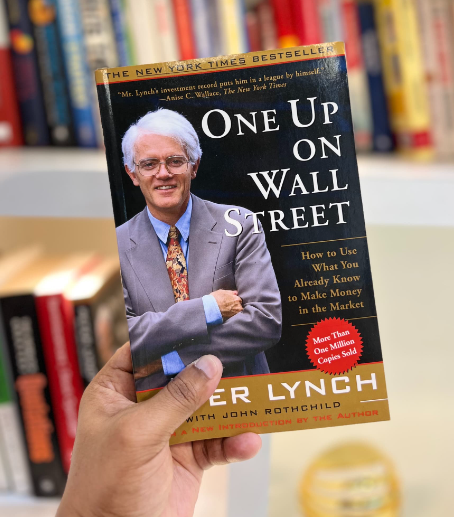
Here are 13 valuable Lessons from Peter Lynch's One Up on Wall Street:
1. Things are never clear until it's too late. Performance always comes with uncertainty.
2. The stock price is the least useful information you can track, and it’s the most widely tracked.
3. When you sell in desperation or fear, you always sell too cheap.
4. The big money can't invest where the big profits are.
One advantage of the individual investor is that he can invest in situations too small for institutions.
5. The best ideas often take the most time to play out.
That's why Good Ideas AND patience are the formula to success.
6. For small and profitable companies, the critical part is being able to scale the business.
7. If you find a stock with little or no institutional ownership, you’ve found a potential winner.
8. Do not think you are right because the stock goes up. Compare reality to your thesis.
9. There are five basic ways a company can increase earnings:
(1) reduce costs, (2) raise prices, (3) expand into new markets, (4) sell more in old markets, (5) revitalize, close, or otherwise dispose of a losing operation.
10. Long shots almost never play out.
11. The real problem with long shots isn't the (likely) failure of the upside, but the drastic downside.
12. Most investors don't struggle with the market or the companies, but with themselves.
13. It helps to manage expectations to categorize companies into these six:
Sluggards: Growth between 2%-4%
Stalwarts: Growth between 8%-12%
Fast Growers: Growth between 15%-25%
Cyclicals: Expand and contact with market cycles.
Turnarounds: Beaten down companies that get back on track
Asset Plays: Overlooked companies selling below asset value.
I have an MBA an am working as a professional investor.
Over the years, I've learned way more on Youtube than I did in school.
Here are the 7 best Youtube videos I've ever seen about investing: