Research Coordinator for @citizensclimate, environmental scientist, climate journalist for @CC_Yale. Previous account (@dana1981) hacked & lost. Views my own.
I wish the coverage of the gas buildout for data centers said anything about *why* it's happening. Readers are left w the impression that it's a conspiracy & not bc of a) broken systems for planning, permitting, & connecting new power; & b) lack of affordable clean firm power.
Part 1 of our Carbon Pricing Education Series kicks off Sept. 3! Everyone is welcome: https://t.co/bK253nqkSJ
This session will cover carbon pricing basics & explore how researchers talk about it. We will also examine key design elements to consider when crafting new policy.
In May 2026, 85% of California's energy came from clean sources, and more than half came from solar power. We love to see it!
National permitting reform will help this trend continue and ramp up clean energy power nationwide.
NEW: I sat down w/EPW Chair Capito to discuss the future of Senate permitting talks after latest delay. She's confident Dems are as committed as she is to getting a deal done after Aug recess & before the election. She also made a hard pitch to Trump https://t.co/ZqSFN467Rn
SCOOP: Senate negotiators are punting their target — again — on reaching a permitting reform deal. Capito, Whitehouse, Lee, Heinrich quietly met yesterday and emerged aligned on a new timeline, aiming to strike an accord in September after summer recess https://t.co/VlxtjtbBUx
@SenTinaSmith@brianschatz Smith told me Manchin was right to emphasize permitting reform to ensure projects funded by the IRA would be built, even as the two sparred on some of her priorities like the jettisoned “clean electricity payment program," a modified clean electricity standard (RIP)
This year's Summer Conference kicks off TOMORROW! Even if you can't make it to D.C. this year, you can still join us on the livestream. Livestream ticket holders get access to a full day of main stage programming July 27.
🎟️ Get your tickets now ⬇
https://t.co/3t1Ck96HJR
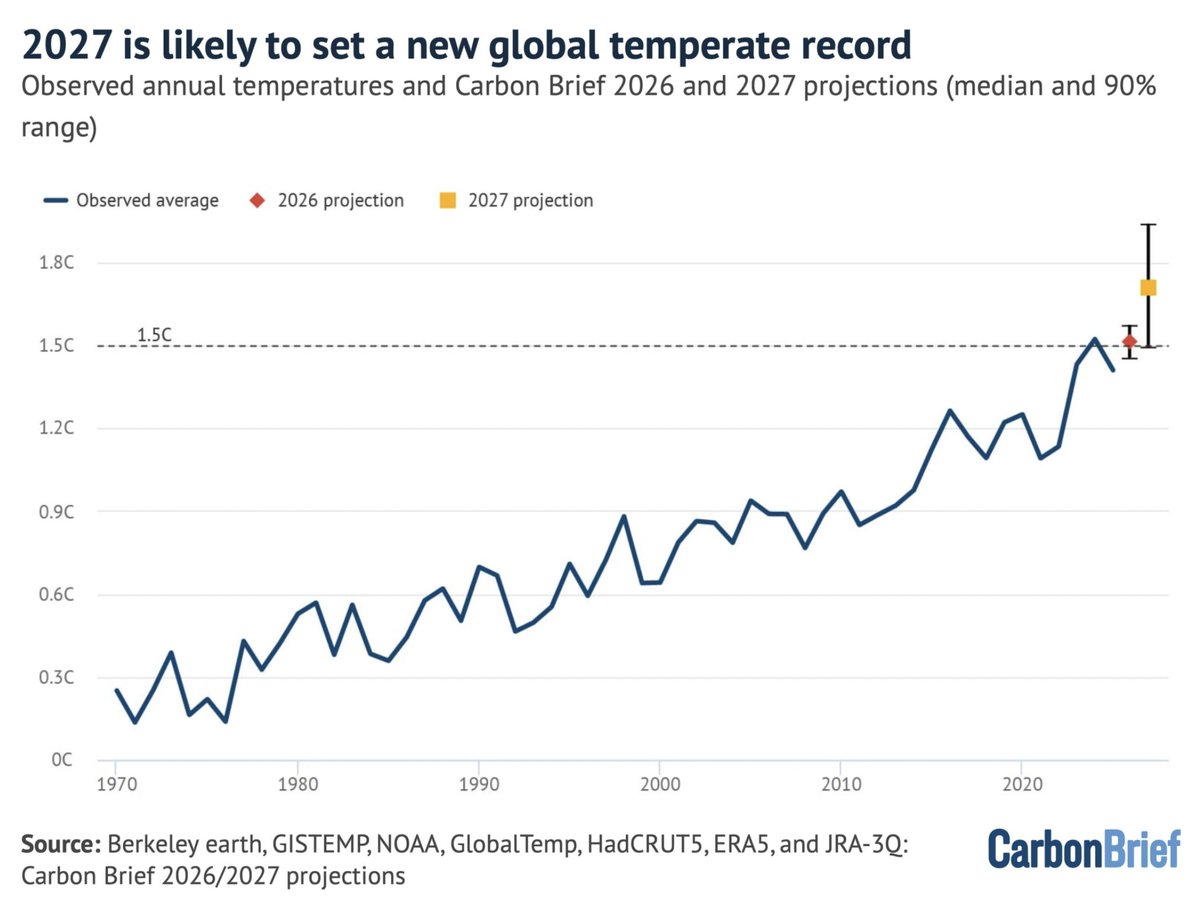
2026 is on track to be the warmest (~35% chance) or second warmest (~63%) year on record, while 2027 is very likely (92% chance) to be the warmest on the back of a growing super El Niño event. For more, check out my new Carbon Brief State of the Climate Q2 update (link below).
On July 27, we're working toward a big goal: 2,500 calls to Congress in a single day. We're letting our reps know we stand with the CCLers they'll meet with the next day.
Mark your calendar and visit https://t.co/OI43ifG59J to learn more.
An astonishing fact that most policymakers working on energy permitting reform don’t realize:
Clean energy & transmission projects have National Historic Preservation Act (NHPA) review areas about 10 times larger than fossil fuel projects and are more than 8 times as likely to receive an "adverse effect" finding --triggering additional process, delay, and mitigation obligations.
Before joining @IFP, I spent 10 years litigating infrastructure and energy cases at DOJ and saw this firsthand.
Now, IFP has analyzed ~100 energy projects and built an interactive tool to explore the data so you can see this disparity for yourself: https://t.co/CSbWXPTFDe
The source of this discrepancy is the National Historic Preservation Act’s Section 106 process. Here’s how it works:
1. Every Section 106 review has an "Area of Potential Effects," or APE: the area where an agency determines that a project could affect historic properties.
2. The APE is not limited to the construction footprint. It can include every place from which a project might be visible.
3. Wind turbines and transmission towers are tall. Pipelines are generally buried. A facially neutral rule tying review to visibility therefore produces much larger APEs for the infrastructure needed to build a clean grid.
4. The differences are striking: The median visual APE for offshore wind was 40 miles from the project. The median indirect APE for gas and LNG projects was 0.5 miles.
5. A 40-mile-radius circle encompasses about 5,000 square miles. A half-mile-radius circle encompasses about 0.8 square miles -- a 6,400-fold difference.
6. Larger APEs mean more land to survey, more potentially eligible historic properties to evaluate, more parties to consult, and more effects to document. They also make adverse effect findings and mitigation obligations more likely.
7. The current rules create a structural clean energy disadvantage -- one that Congress can address while leaving the Tribal consultation portion of NHPA *entirely unchanged.*
8. Congress could establish reasonable limits on visual APEs, require visual changes to materially impair the characteristics that make a property historically significant, and prevent the designation of an entire landscape from automatically expanding review to every acre and every view.
The APE Explorer lets users compare projects, filter by energy source, and trace the findings back to the underlying federal documents.
If you'd like to learn more, our broader report explains how Section 106 works and presents a more comprehensive reform agenda:
https://t.co/SuzNOPcqHj
States have passed almost no measures restricting clean energy permitting in 2026, a big change from 2025. In fact, more states are pushing to streamline solar, wind and battery projects as the best (only?) near-term way to meet booming energy demand:
https://t.co/SXARDvdE22
We are severely underestimating the costs of the wildfire crisis. Post-fire flooding is usually a higher cost than the fire itself, compounding costs. Congress needs to pass the Fix Our Forests Act to give agencies authority to rapidly complete wildfire resilience projects.
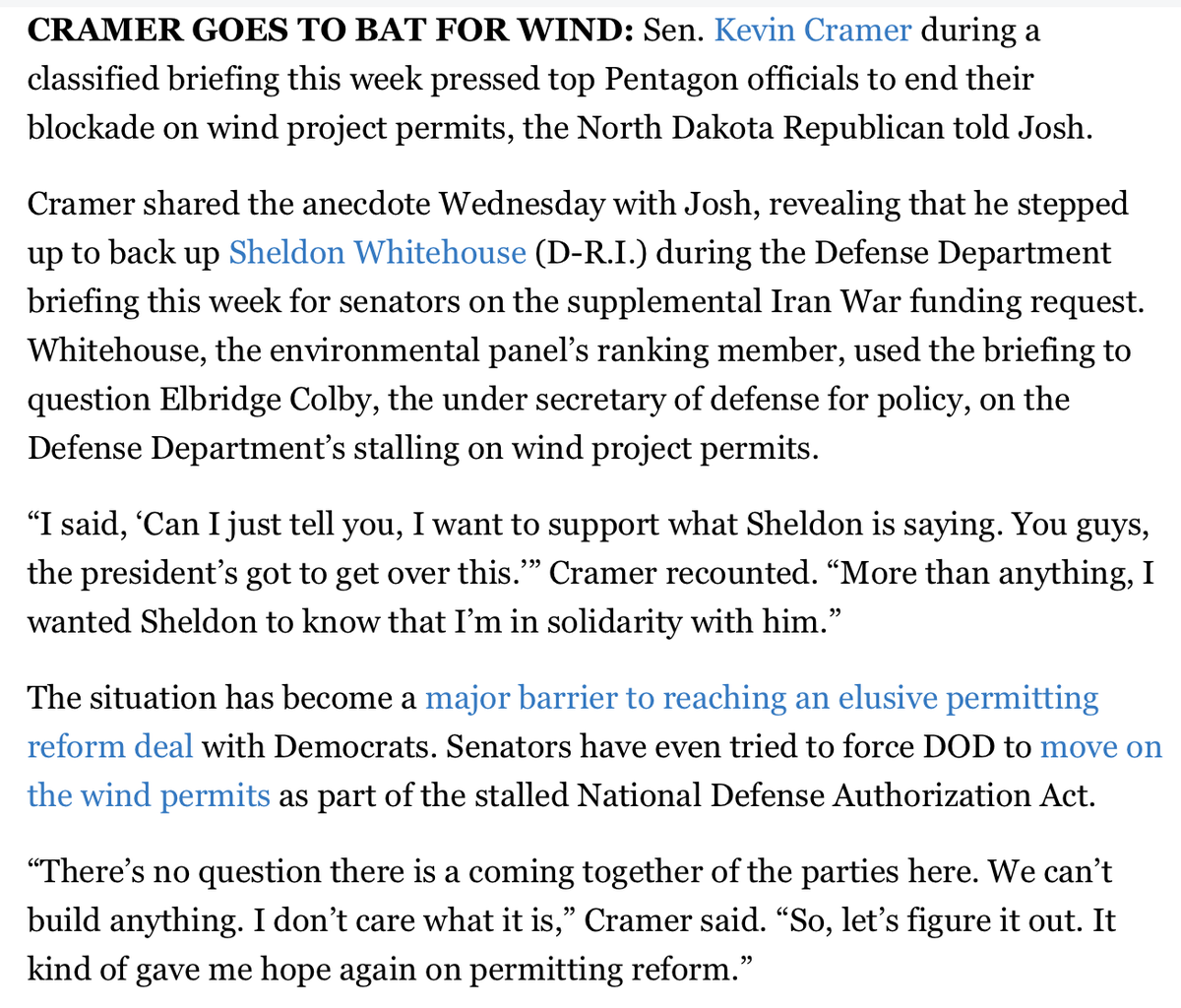
Fun lil anecdote in ME. Sen. Kevin Cramer (R-N.D.) told me during a classified briefing Tues on the admin's Iran War funding request he pressed top Pentagon officials to end their blockade on wind project permits, backing up EPW ranker Sheldon Whitehouse, who was asking about it
NEW: Permitting talks are facing another hurdle, this time because of a Trump proposal to ease requirements under a historical site protection law. Top negotiator Sen. Martin Heinrich told me pending action to weaken NHPA is “not helpful in negotiations" https://t.co/paqu10fg7a
Heinrich's bill to fix interconnection is a necessary intervention, but it's only one piece of the puzzle.
We also need to fix how we plan and build the grid that new energy sources interconnect *with.*
*Really* interesting bill from @SenatorHeinrich yesterday.
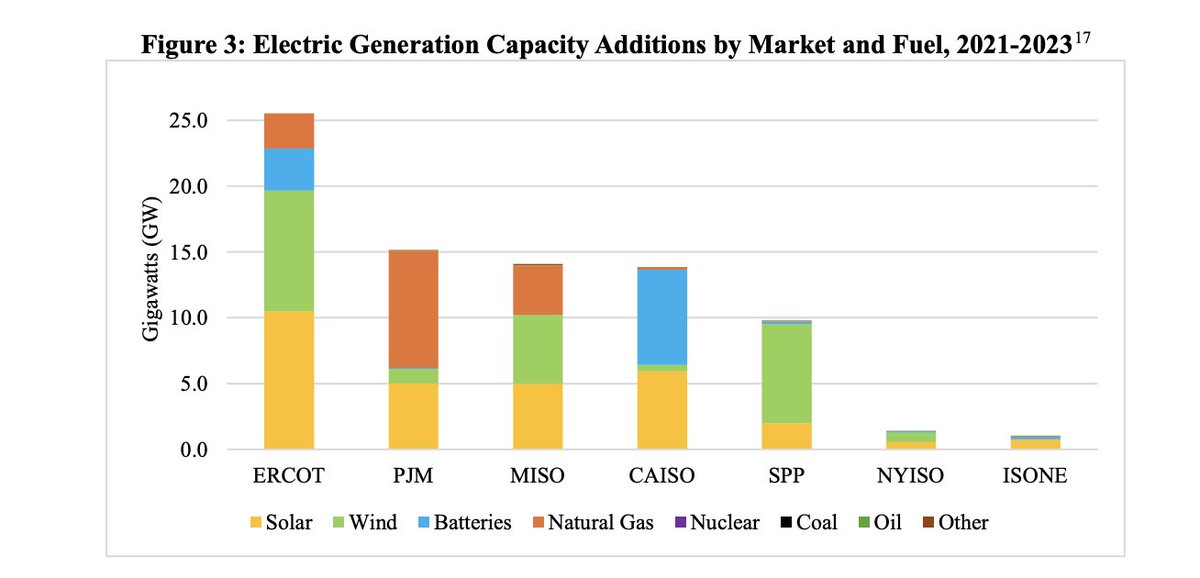
Over the past few years, only one power market in the US has been able to rapidly connect new generation to its grid while keeping costs low. That grid — Texas’ — also added more new generation than anyone else.
This new proposal would require every other power market in the country to adopt a similar (but optional) way for power plants to hook up. We’ve got the exclusive on this “BASED” bill at @heatmap_news: https://t.co/dm7WwAXXGB
Another brutal smoke day with severely bad exposure across a broad swath of the US midwest and east coast, now drifting south. Public advice has been: stay at home with windows and doors closed, if you can. Is that working?
See plot at right, of indoor monitors. Short answer: no. Many indoor pollution levels are at or near outdoor levels. Lesson: for most households, just closing windows and doors is not sufficient. You need active filtration from portable filters or filters on a central air system.
NEW: Permitting deal remains elusive. It's looking like an uphill climb for negotiators to meet their August recess target. Democrats are still hung up on Trump solar/wind attacks, and senators involved are acknowledging reality of time. My latest update https://t.co/pQ7C8ALWam