I miss taking on field batting practice and shagging in the outfield.
There should be some place in every city where we can pay a monthly membership to take live BP after getting off work.
I don’t want a gym membership, I want an open field where I can hawk down flyballs
🚨 Cameron Maybin - Taking Leads from 2nd
• 0 outs : take your lead directly in the baseline
• 1 out : 2 steps back, looking to creep in & time the pitcher
• 2 outs : take your lead 3-4 step back from the baseline
⭐️ Full Explanations of "Why?" Below ⬇️
@CameronMaybin
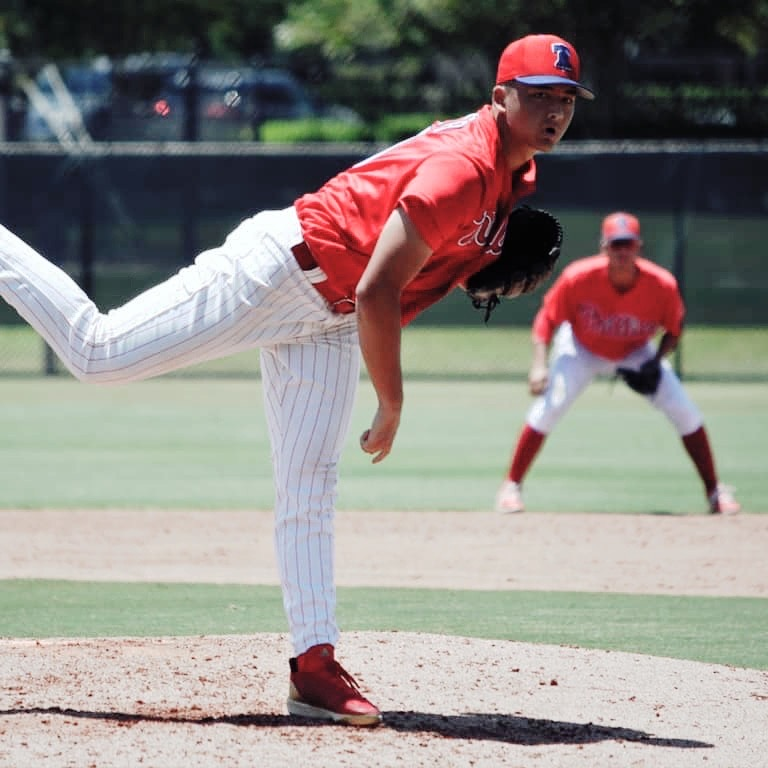
In 2019, I signed a contract with the Philadelphia Phillies.
5 years later, I haven't played in a single MLB game.
Here's how the Minor Leagues work (and what it's like to be one):
One of the funniest quotes from ‘The Dynasty’. Matt Cassel on Belichick in the film room:
“One time I don’t see a corner blitz and I get absolutely annihilated.
Belichick comes in and he says, ‘Cassel, can we figure out the corner blitz? Because I don’t wanna have to write your mother a letter that says: Dear Mrs. Cassel, We’re sorry to inform you that your son is dead – because he’s a dumbass and didn’t see the corner blitz.’”
Madison Bumgarner had more grand slams than Prince Fielder, who had more inside-the-park home runs than Rickey Henderson, who had fewer steals of home than Babe Ruth, who had as many shutouts as Pedro Martinez.
How a book written in 1910 could teach you calculus better than several books of today
[Calculus Made Easy, by Silvanus P. Thompson, 1910: https://t.co/HJDxFqZNJf]
What's the Difference Between a HS Player & a College Commit/College Player? (Background: I started at a DI school, got drafted, now own & operate a HS/college/pro facility>Thread 🧵)
1. Everybody goes to practice, the commits/college players do more on their own. They come before or after team practice, lift, etc. The extra work adds up.
2. They don't count gym class lift, school lift, as their work for the day. They do more.
3. After a good day, they don't take the next day off, after a bad day, they don't take the next day off. They build on the good ones & are eager to fix what was wrong on the bad days.
4. They challenge themselves. They'll workout with the older guys, go in the cage and crank up the machine like the college players/pros, they aren't afraid to get embarrassed because they know being embarrassed is a choice.
5. They don't only work with an instructor/coach. They'll work on things or identify what they need to fix, then put in hours on it, then revisit it with the coach. Their coach to solo work is about 1 to 5 ratio. (Again, lots of time honing their craft on their own.)
6. They obsess over the fundamentals. The little mechanical drills, the one handed drills, the warm ups, are treated like game reps.
7. They don't talk about how good they are because they know who they are chasing, a better version of themselves.
8. They are eager to help others because they know what it's like to be in their shoes.
9. They are able to praise others' abilities and work ethic. They aren't jealous little babies.
10. They know the path to paradise runs through the hard things. If it's difficult, not everyone will do it & that makes it worthwhile.
11. They don't make excuses why they can't train, they find ways to make it happen, this is probably one of the biggest outliers for successful players.
12. They set clear goals & don't let the ups & downs deter them.
13. They usually communicate with coaches at a very high level.
14. They have a lotta feel & self-awareness.







![Rainmaker1973's tweet photo. How a book written in 1910 could teach you calculus better than several books of today
[Calculus Made Easy, by Silvanus P. Thompson, 1910: https://t.co/HJDxFqZNJf]](https://pbs.twimg.com/media/GGDrwvrXoAArxYm.jpg)


