We're seeing a lot of decommitments in college baseball. I think it's important to understand WHY.
This didn't happen overnight.
Follow the dominoes. 👇
2020: COVID.
The NCAA grants spring athletes an additional year of eligibility. Players stay in college longer. Rosters get older. Opportunities for incoming freshmen become more competitive.
Then the professional pipeline changes.
MLB cuts its draft from 40 rounds to 20.
Affiliated minor league teams shrink from 162 to 120.
Fewer traditional opportunities to enter professional baseball.
Now look at the roster math.
Before COVID, D1 baseball operated with a 35-man roster limit.
During the eligibility crunch, temporary allowances eventually expanded rosters to 40 players.
Beginning in 2025-26, programs participating in the House settlement moved to a 34-man roster limit, with exceptions for certain players.
That's SIX fewer standard roster spots compared to the temporary 40-man allowance.
Now add the transfer portal.
Nearly 2,700 D1 baseball players entered the portal during the June 2026 window alone.
Programs have access to thousands of experienced college players competing for opportunities.
Throw in NIL, revenue sharing, and the shift from the old 11.7-scholarship model to the possibility of funding scholarships across all 34 roster spots at participating programs.
And now the NCAA's new age-based eligibility model can allow qualifying athletes up to FIVE years of competition within a continuous five-year window, replacing the traditional four-seasons-in-five-years model.
Think about what all of this means.
A college coach can genuinely believe in a high school prospect when he commits. But by the time that player arrives on campus, the roster, budget, available transfer talent, and immediate needs of the program could look completely different.
College baseball has become an increasingly competitive roster-management business.
And the pressure to WIN NOW is real.
Does that excuse every decommitment? Absolutely not.
But I also don't believe every decommitment represents a lack of loyalty.
Here's what concerns me most.
We're asking teenagers and their families to make decisions about their futures in a system that can change dramatically before they ever step foot on campus.
The rules changed. The economics changed. The roster math changed.
But the hopes and dreams of those kids haven't.
And somewhere in the middle of all this change, we cannot lose sight of the people affected by it.
@prepbaseball
One of my favorite things about evaluating high school baseball players is seeing how much a kid can change in a single offseason.
I've seen players go from 83 to 90 mph. Average bat speed become elite. Undersized freshmen develop into legitimate professional prospects.
Physical development, improved movement patterns, quality instruction and consistent work can dramatically change a player's trajectory.
It's what makes continued evaluation so important and projecting young talent so fascinating.
Young players, never underestimate what four months of intentional work can do for your baseball career.
Give us a reason to see a different player this spring. 💪⚾️
One thing sports will teach you that life eventually confirms:
The world doesn't owe you an opportunity.
Not because you work hard.
Not because you're talented.
Not because you've been overlooked.
Not because you think you deserve one.
You can do everything right and still get passed over.
That's life.
But here's what you CAN control.
Your attitude. Your preparation. Your consistency. Your response to adversity.
And when that opportunity finally comes?
Make it damn hard for them to overlook you again.
Happy Monday. Go earn something. 💪
Credit to McDevitt. Tremendous talent.
Pretty proud of those blue-collar Cedar Crest boys, too. A group of kids representing the community they grew up in, making one heck of a run deep into November.
Different ways to build a football program. There's something special about the way ours was built. 🦅
I don't think most people truly understand just how GOOD you have to be to play college baseball.
And I'm not just talking about Division I.
I'm talking about D2. D3. NAIA. Junior College.
...And I wish more young players and families understood...
There are some REALLY good baseball players at EVERY level of college baseball.
Consider a few examples.
⚾ J.D. Martinez - NCAA Division II
Played at Nova Southeastern University before becoming a six-time MLB All-Star and World Series champion.
⚾ Jordan Zimmermann - NCAA Division III
Pitched at Wisconsin-Stevens Point. Became a second-round MLB Draft pick, two-time All-Star, and threw a Major League no-hitter.
⚾ Ben Zobrist - NAIA
Played at Olivet Nazarene before transferring to Dallas Baptist. Went on to become a three-time MLB All-Star, two-time World Series champion, and 2016 World Series MVP.
⚾ Albert Pujols - Junior College
Played at Maple Woods Community College before becoming one of the greatest hitters in baseball history.
⚾ Bryce Harper - Junior College
Hit .443 with 31 home runs at the College of Southern Nevada before becoming the No. 1 overall pick in the MLB Draft.
Now, I'm not suggesting every level of college baseball is equal.
It's not.
There are significant differences in roster depth, resources, competition, and the concentration of high-end talent.
But I think we've reached a point where too many people associate the VALUE of a college baseball opportunity with the division attached to it.
And that's unfortunate.
Think about this.
The Division III shortstop might have been the best player in his high school conference.
The Division II pitcher might have been an All-State selection who dominated his competition.
The NAIA roster might be loaded with experienced, physically mature players who can flat-out play.
And that junior college team? It might have multiple arms throwing 90+ mph, future Division I transfers, and legitimate professional prospects.
I've spent enough time evaluating players to know that talent doesn't always follow the labels we attach to it.
Some players develop earlier. Others develop later.
Some are overlooked. Some choose a smaller school for academics, finances, opportunity, or simply because it's the right fit.
And some become significantly better baseball players AFTER they arrive on campus.
Here's what I want young players and their families to understand.
Playing college baseball at ANY level is an accomplishment.
You don't have to play in the SEC to be an outstanding baseball player.
You don't have to wear a Power Four uniform to have a meaningful college career.
And you certainly don't have to play Division I to prove that you belong in this game.
If you have an opportunity to continue your education, develop as a player, compete alongside teammates, and represent a college baseball program, that's something worth being proud of.
Because the truth is, the overwhelming majority of high school baseball players will never get that opportunity.
And one final thought.
Never confuse the level someone plays at with the limits of what they can become. ⚾️
Thanks Shooter for taking the time and inviting me on. Prep Baseball has done so much for the recruiting landscape. Really appreciate the chance to share a little bit about how we handle business in Binghamton! @prepbaseball@PrepBaseballNY@ShooterHunt@DanCevette@JC_NY_PA
Coach @hurba19 is one of the best in the business.
He's a tremendous baseball mind, even better person, and someone I'm fortunate to call a close friend.
A lot of respect for this guy and the way he goes about his business.
Outstanding listen! 👇⚾️
Every November, I find myself thinking a little more about my grandfather.
We lost him in November 2022, and four years later, this time of year still brings back so many memories.
He was my hero growing up.
A left-handed pitcher who played professional baseball in the late 1950s. A blue-collar man who spent 30 years working in a factory. And someone who never forgot where he came from.
We hunted together. Fished together. Threw more bullpens than I could ever count.
I can still remember sitting beside him watching Penn State football, MLB games, and NFL games. Those were some of my favorite days.
When I was a little boy, he used to tell me I was "marked."
I didn't fully understand what he meant at the time. But he believed there was something special ahead of me.
He taught me that growing up in a small town didn't mean I had to have small dreams.
He taught me to work hard. To be tough. And to compete in everything I did.
When Cleveland drafted me in 2002, nobody was prouder than my grandfather.
The little boy he believed in had become a professional baseball player, just like him.
As I've gotten older, I've realized that the greatest gifts he gave me weren't necessarily the lessons he spoke about.
They were the lessons he lived.
Hard work. Loyalty. Humility. Competitiveness. Family.
I miss him. Especially this time of year.
But I also realize how fortunate I was to have someone who believed in me long before the rest of the world had any reason to.
Never underestimate the impact you can have on a young person's life.
Sometimes all they need is someone who believes in them.
My grandfather was that person for me. ⚾️
Photo: My grandfather (blue) and his brother Bobby (red), 2004.
𝟮𝟬𝟮𝟵 𝗥𝗮𝗻𝗸𝗶𝗻𝗴𝘀 𝗨𝗽𝗱𝗮𝘁𝗲: 𝗣𝗼𝘀𝘁 𝗙𝗮𝗹𝗹 📊
🔋: @1stPhorm
The 2029 class continues to build depth. Fall evaluations expanded the rankings to 400 players, with movement throughout the list, including a new No. 1. 👀📈 @ShooterHunt
🔗: https://t.co/2QHQCaG4dM
I spent 11 seasons in professional baseball.
But the hardest I ever threw (94-97) came AFTER spending a year working in the oilfields, swinging sledgehammers.
I still shake my head thinking about it.
Here's the story.
In 2002, Cleveland drafted me in the 3rd round out of high school.
The first two seasons were an education. Professional hitters have a way of exposing every weakness.
By 2004, things were starting to click.
2004: 5-0 | 1.92 ERA | 80 K
2005: 5-4 | 2.73 ERA | 85 K
10-4.
2.33 ERA.
165 strikeouts.
By age 20, I had reached Triple-A.
Then came labrum surgery.
I fought my way back. From 2006-2009, I was throwing 90-94 mph.
But there was one thing I couldn't outrun.... Biceps fatigue.
I'd have stretches where everything clicked. My stuff was there. My confidence was there. I felt like I could compete with anybody.
Then the fatigue would return.
Two weeks on the disabled list. Back to building myself up again.
Over and over.
The most frustrating part wasn't wondering if I was good enough. It was wondering how long my body would let me be.
Eventually, I stepped away from the game.
I coached college baseball. Then I went to work in the oilfields.
Long days. Physical labor. Swinging sledgehammers.
And somehow, when I got another opportunity at an MLB Scouting Bureau tryout in 2012, I was throwing harder than ever.
94-97 mph.
I signed with Pittsburgh and returned to professional baseball.
My playing career ended in 2013.
I've spent the years since evaluating and developing young players, and my experiences have shaped how I see the game.
We talk a lot about velocity, spin rates, mechanics, and projection.
And we should.
But there's another part of development that deserves just as much attention.
Durability.
Because having the talent to reach the highest levels of baseball and having the physical ability to consistently compete there are two very different things.
For years, I was chasing the next level.
Looking back, I would've given anything just to stay on the mound. ⚾️
These 7 things often separate young baseball players who continue developing from those who eventually plateau.
Neither guarantees success. But after 20+ years as a professional player, college coach, and evaluator, I've seen just how much they can influence a player's journey.
Here are seven patterns I've noticed. 👇
1. EARLY SUCCESS CAN BECOME A TRAP.
Some players dominate at 14 because they're bigger, stronger, or more physically mature.
But eventually, the competition catches up.
If success came without needing to refine skills or overcome adversity, that transition can be difficult.
Early success is an advantage. It shouldn't become a substitute for development.
2. MAKING ADJUSTMENTS IS A SKILL.
Eventually, every player reaches a level where what worked before stops working.
The fastball gets hit. The hitter faces better secondary stuff.
Can he recognize the problem, accept feedback, and make changes, even when results aren't immediate?
Talent gets you noticed. The ability to adjust helps you stay.
3. PHYSICAL MATURITY ISN'T THE SAME AS PROJECTION.
I've seen 15-year-olds who looked like grown men and 17-year-olds who were nowhere near physically mature.
Present ability matters. So does future potential.
Being ahead physically doesn't guarantee the highest ceiling. Being behind doesn't mean a player lacks one.
4. FLASHES ARE GOOD. CONSISTENCY IS BETTER.
Touching 90 once matters. So does a big exit velocity or an outstanding weekend.
But can you repeat it?
Can a pitcher maintain his stuff? Can a hitter produce quality at-bats against better arms?
The higher the level, the more repeatable performance matters.
5. COACHABILITY GETS TESTED WHEN THINGS GO WRONG.
It's easy to say you're coachable when you're playing well.
What happens when a coach identifies a weakness, your role changes, or your playing time drops?
Can you listen, evaluate feedback, take ownership, and act?
Being coachable isn't blindly agreeing. It's being willing to learn.
6. MORE GAMES DON'T AUTOMATICALLY MEAN MORE DEVELOPMENT.
Competition is essential. But playing 80 games doesn't guarantee improvement.
Sometimes the biggest gains come from strength training, skill work, recovery, or fixing a weakness between games.
The best development plan isn't necessarily the busiest.
It's the one that addresses what the player needs.
7. THE PLAYER HAS TO TAKE OWNERSHIP.
Parents can provide instruction, opportunities, transportation, and support.
Those sacrifices matter.
But eventually, the player has to want to improve, confront weaknesses, and keep working when progress gets difficult.
That motivation develops at different ages.
Parents can provide opportunity. They can't manufacture desire.
ONE FINAL THOUGHT:
I've watched gifted players fall short of expectations and overlooked players build remarkable careers.
Injuries, opportunity, maturity, coaching, and circumstances all play a role. There are no guarantees.
But remember this:
Being the best player at 15 is an accomplishment, not a prediction of who you'll be at 20.
And being overlooked at 15 doesn't mean your story is written.
Celebrate the successes. Learn from the struggles. Enjoy the journey.
The goal isn't to peak at 15.
It's to keep growing long enough to discover how good you can become. ⚾️
PARENTS OF YOUNG BASEBALL PLAYERS: 👇
After more than two decades in this game as a professional player, college coach, and evaluator, there are six things I want every family to understand about player development and recruiting.
Here they are.
1. INVEST IN PHYSICAL DEVELOPMENT.
Find a quality strength and conditioning program that understands developing athletes.
Strength. Explosiveness. Mobility. Coordination. Durability.
The game has evolved dramatically. The physical demands of college baseball are significant, and players are entering that environment more prepared than ever.
Build a foundation through consistent, age-appropriate training. Think long-term development, not short-term results.
2. MAKE SKILL DEVELOPMENT INTENTIONAL.
There's tremendous value in playing games, facing quality competition, and testing your abilities.
But development also requires purposeful work between those opportunities.
Identify weaknesses. Establish a plan. Find quality instruction. Put in meaningful repetitions.
Competition reveals where you are. Training helps determine where you're going.
3. UNDERSTAND EXPOSURE VS. RECRUITMENT.
These are two different things.
Exposure allows college coaches to discover, evaluate, and track players.
Recruitment develops as coaches identify athletes who fit their programs.
One event or performance doesn't define a player's recruiting journey.
Ability, projection, consistency, academics, and program fit all matter.
Continue developing while creating opportunities for coaches to evaluate your progress.
4. BUILD YOUR ONLINE RECRUITING PRESENCE THE RIGHT WAY.
Make it easy for college coaches to find you, follow your development, and evaluate your abilities.
Quality video. Verified metrics. Academic information. Updated schedules. Accurate contact information.
Share meaningful updates. Demonstrate progress. Communicate professionally.
You don't need to become a social media personality.
You need to make yourself easy to evaluate.
5. KNOW YOUR RECRUITING LANDSCAPE.
Understand the college baseball opportunities within three or four hours of home.
Division I. Division II. Division III. Junior college.
Study rosters. Understand competition levels. Learn what types of players programs recruit.
Be realistic about where your son currently fits while remaining open to where his development might take him.
Regional and national opportunities both have value. Understand how each fits into your son's journey.
The more informed you are, the better decisions you'll make.
6. KEEP YOUR INNER CIRCLE SMALL.
Everybody will have an opinion about your son.
What team he should play for. What events he should attend. What position he should play. What colleges should recruit him.
Be selective about whose advice carries weight.
Surround yourself with people who understand development, genuinely care about your child, and will tell you the truth, even when it's uncomfortable.
Most importantly, allow your son to take ownership of his journey.
You can provide resources, guidance, and opportunities.
But you cannot provide the desire.
ONE FINAL THOUGHT:
I've watched incredibly talented young players fall short of expectations. I've also watched overlooked players develop into outstanding college athletes and professionals.
There isn't one perfect roadmap.
Every athlete develops differently. Every family has different circumstances. Every recruiting journey has its own timeline.
Don't build your son's plan around what another family is doing.
Build it around who YOUR son is, where he is today, and who he has the potential to become.
Development creates the foundation.
Competition tests it.
Exposure creates opportunities.
Recruiting connects talent with opportunity.
The goal isn't simply to help your son get recruited.
It's to help him become the kind of player, teammate, and young man who's prepared to succeed when his opportunity arrives. ⚾️
I've been waiting months for this announcement.
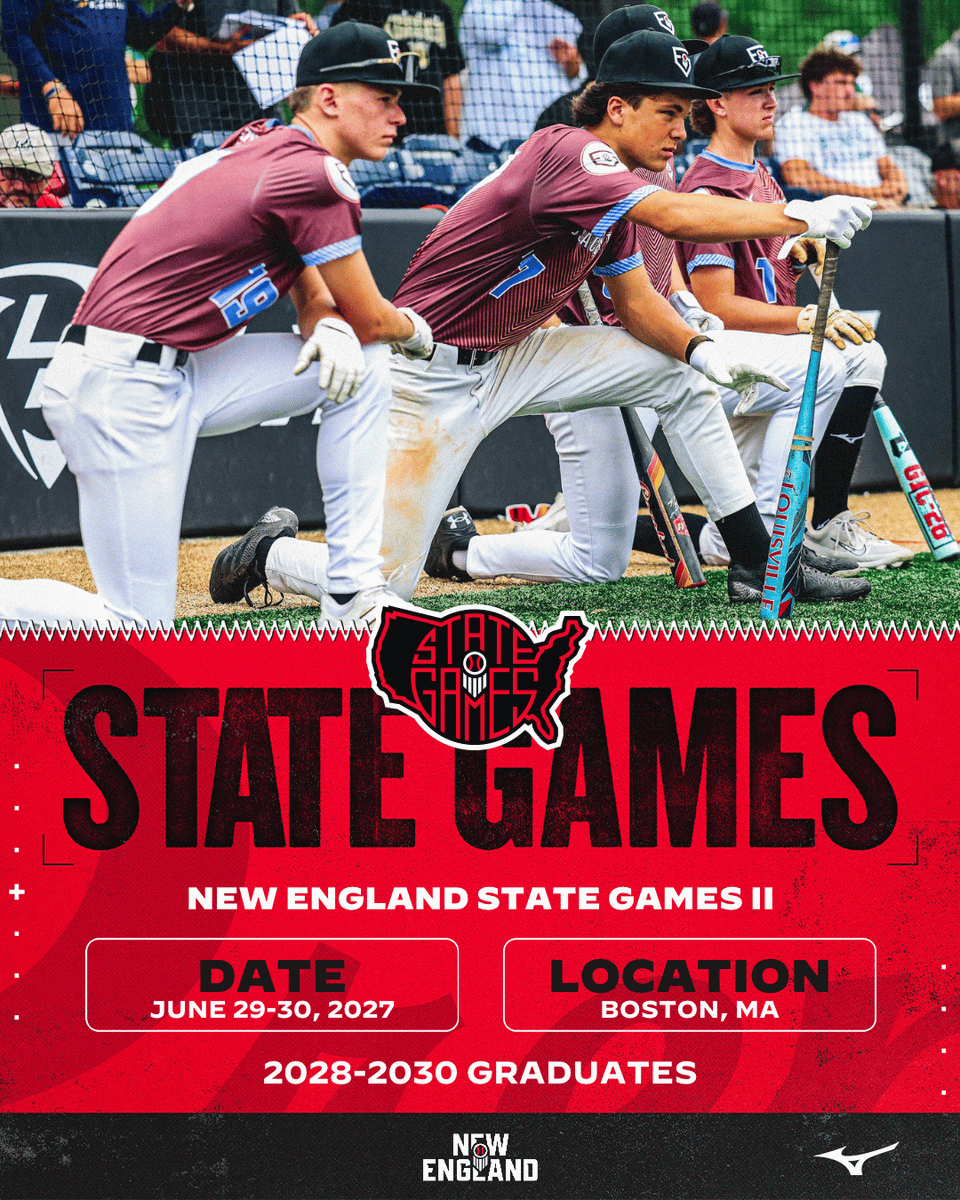
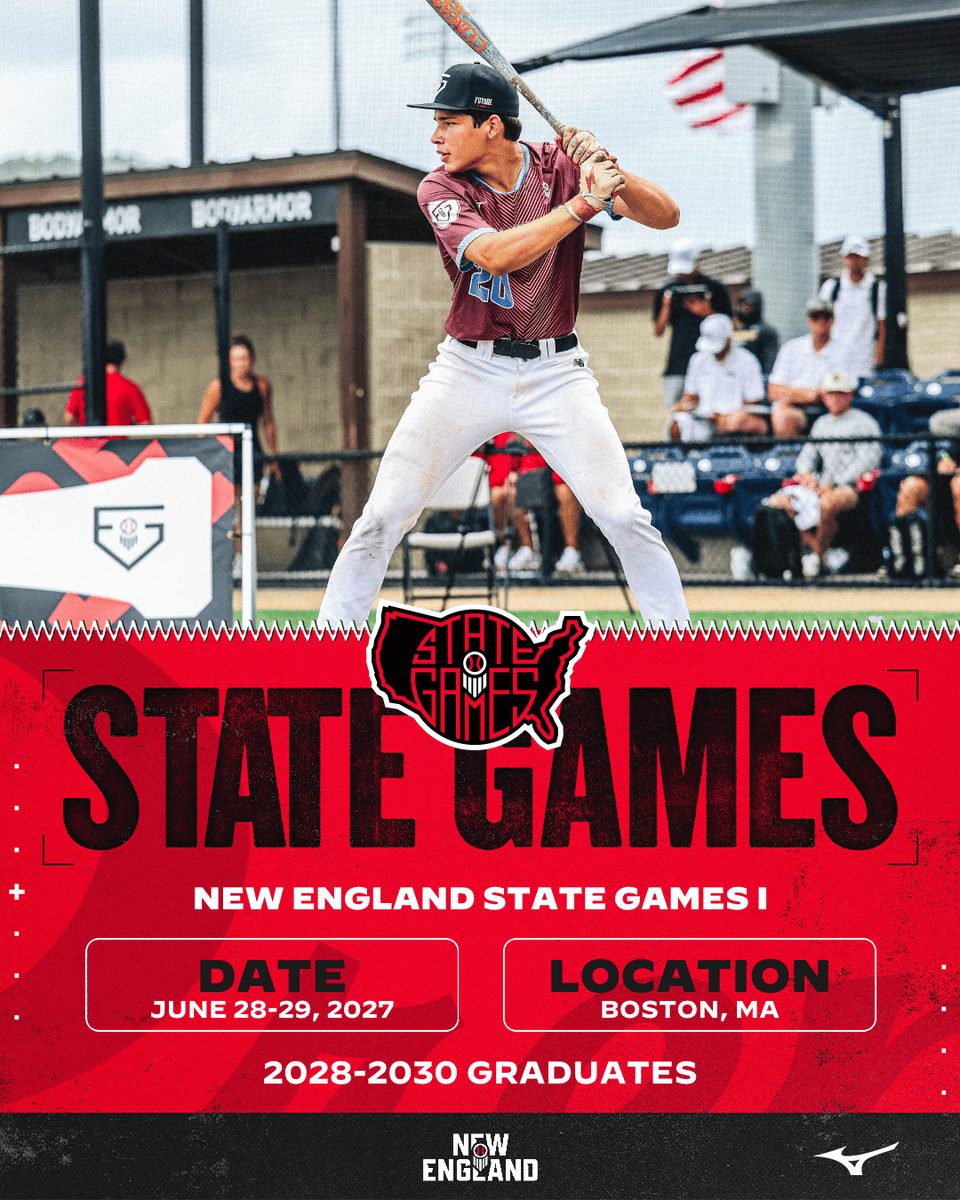
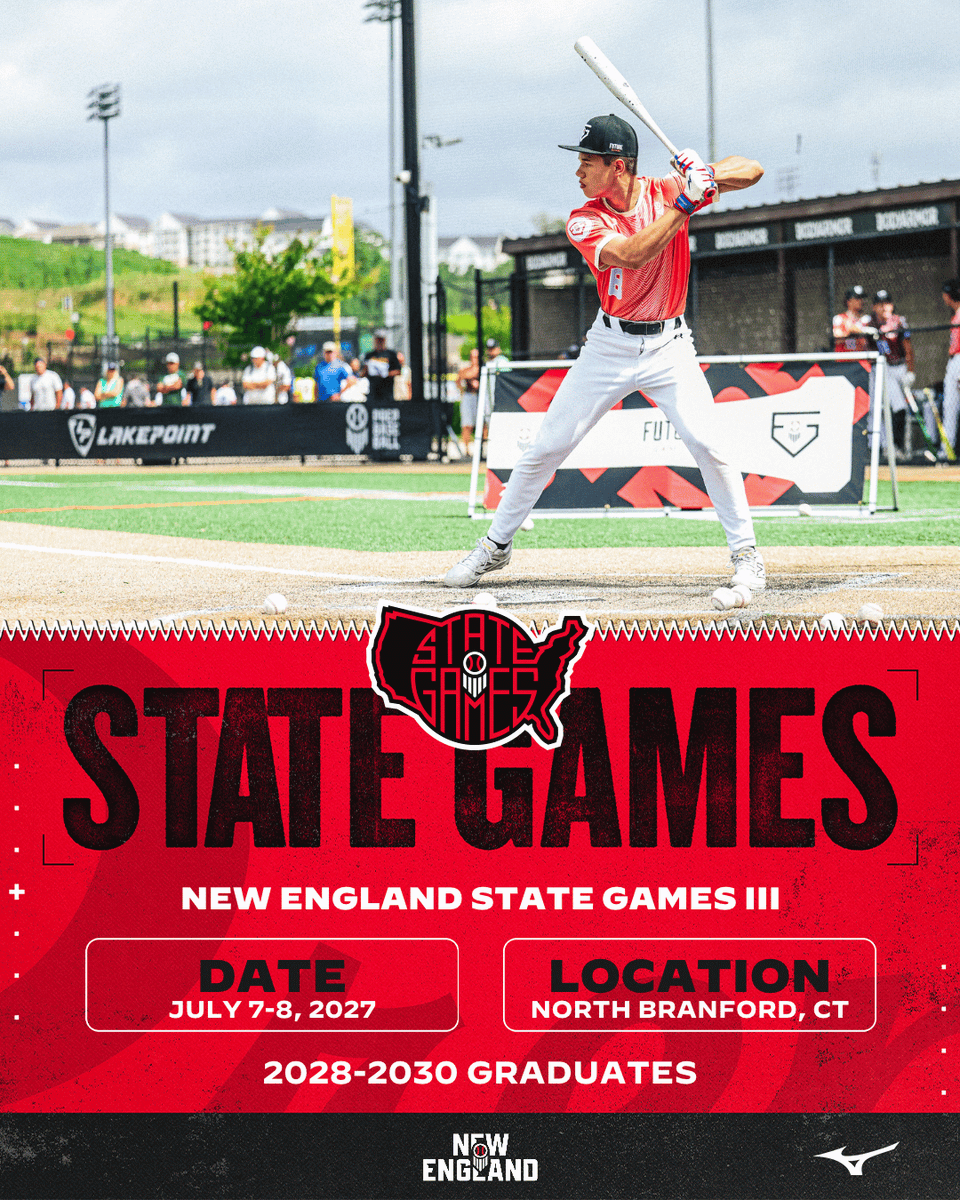
The 2027 New England State Games are officially here, and we're building something special.
Our goal is simple: Deliver the BEST baseball event in the region.
The best talent. The most comprehensive scouting coverage.
The greatest exposure to college recruiters.
And for the top performers, an opportunity to earn something even bigger.
An invitation to represent New England at the 2027 @prepbaseball Future Games.
This isn't just another showcase. We're building a platform where the region's best players compete, separate themselves, and earn opportunities on a national stage.
New England baseball deserves this. And we're going to deliver. ⚾️👇
The 𝟐𝟎𝟐𝟕 𝐍𝐞𝐰 𝐄𝐧𝐠𝐥𝐚𝐧𝐝 𝐒𝐭𝐚𝐭𝐞 𝐆𝐚𝐦𝐞𝐬 schedule is officially here ‼️
Mark. Your. Calendars. 🗓️
📌 𝗦𝗲𝘀𝘀𝗶𝗼𝗻 𝟭: 𝟲/𝟮𝟴 & 𝟲/𝟮𝟵 𝗶𝗻 𝗕𝗼𝘀𝘁𝗼𝗻, 𝗠𝗔
📌 𝗦𝗲𝘀𝘀𝗶𝗼𝗻 𝟮: 𝟲/𝟮𝟵 & 𝟲/𝟯𝟬 𝗶𝗻 𝗕𝗼𝘀𝘁𝗼𝗻, 𝗠𝗔
📌 𝗦𝗲𝘀𝘀𝗶𝗼𝗻 𝟯: 𝟳/𝟳 & 𝟳/𝟴 𝗶𝗻 𝗡𝗼𝗿𝘁𝗵 𝗕𝗿𝗮𝗻𝗳𝗼𝗿𝗱, 𝗖𝗧
📋 All Tier 1 invites for this 𝙉𝙖𝙩𝙞𝙤𝙣𝙖𝙡 𝙀𝙫𝙚𝙣𝙩 𝙌𝙪𝙖𝙡𝙞𝙛𝙞𝙚𝙧 will come in March following the completion of the 𝟮𝟬𝟮𝟳 𝗣𝗿𝗲𝘀𝗲𝗮𝘀𝗼𝗻 𝗦𝗰𝗵𝗲𝗱𝘂𝗹𝗲.
Want to build a stronger, more explosive baseball player? Don't overlook the BACK.
We spend a lot of time talking about velocity, bat speed, and arm strength. And rightfully so.
But the muscles supporting those movements deserve just as much attention.
A strong back plays a major role in shoulder stability, rotational power, posture, and controlling the arm through deceleration.
Something I've come to appreciate more over the years:
Developing power is important. Developing the strength to control that power is just as important.
Build the entire athlete. ⚾️💪
If your kid wants to play multiple sports… LET THEM.
Don't let people outside your inner circle dictate what your child's athletic journey should look like.
There's something special about competing in different seasons. Different teammates. Different coaches. Different expectations.
Learning new roles. Building friendships. Being challenged in different ways. Sometimes being the best player on the field. Sometimes not even being close.
There's tremendous value in ALL of it.
Player development matters. Opportunities matter. Preparing for the next level matters.
But so does the experience of being a kid who simply loves to compete.
And sometimes, the lessons learned playing a second or third sport are just as valuable as anything learned in your primary sport.
The Friday night lights. The bus rides. The locker rooms. The friendships. The opportunity to compete alongside kids you've grown up with.
And here's something I've learned after spending most of my life around athletics…
Not every athletic experience needs to be an investment in the next level.
Sometimes the experience itself IS the reward.
There will come a day when your kid puts on a uniform for the last time. And I promise you, that day comes faster than you think.
Let them compete. Let them experience different sports. Let them make memories.
They have the rest of their lives to specialize in something. They only get one childhood. 🙌