In 1973, eight perfectly healthy people walked into different psychiatric hospitals across the United States. They were not ill. Yet no one inside those walls was able to see it.
It was an experiment. One of the most disturbing experiments in the history of psychiatry. Designed by psychologist David Rosenhan, it began with a simple yet unsettling question: is it really possible to reliably distinguish mental health from mental illness?
To find out, Rosenhan recruited eight pseudopatients. They were ordinary people: a painter, a housewife, a pediatrician, a graduate student. They lied about only one thing—they claimed to hear voices. Nothing more. No bizarre behavior, no crises, just three words heard in their minds: “empty,” “hollow,” “thud.”
All of them were admitted. And immediately afterward, they stopped pretending. They behaved normally. They cooperated. They asked to be discharged. It wasn’t possible.
The staff no longer saw people, but diagnoses. Every action was reinterpreted through the lens of illness: writing notes? Obsessive behavior. Standing in the hallway? Pathological attention-seeking. Being polite? Controlled behavior consistent with the disorder.
Seven of them were labeled schizophrenic. One was diagnosed as manic-depressive. Not a single one was recognized as healthy. Not one.
But the real patients noticed. Some approached and whispered, “You’re not like the others. You don’t belong here.” They saw what the experts could not recognize.
The average length of hospitalization was 19 days. One person remained hospitalized for 52 days. Each passing day confirmed the same truth: the label was more powerful than reality.
When Rosenhan published his study—On Being Sane in Insane Places—it caused an earthquake. The psychiatric community erupted in outrage. One hospital challenged Rosenhan to send new pseudopatients, confident they would expose them. He accepted. In the following months, the hospital identified 41 supposed impostors. But Rosenhan had sent no one. No one at all.
The truth was now undeniable: diagnoses were not always based on facts, but on context. Once labeled, a person became a prisoner of that narrative. Even if they were sane. Even if they protested the truth.
This experiment shattered blind trust in clinical labels. It led to major reforms in the diagnosis and treatment of mental illness. But above all, it left a haunting and still relevant lesson:
Perception can distort reality more than madness itself.
And often, the most dangerous illusion is not that of those considered insane, but of those who believe they are always right.
Eight healthy people entered psychiatric hospitals in 1973. They came out carrying a truth the world could no longer ignore.
Así se alimenta una cría de ballena azul🐳. Recibe hasta 600 litros de leche al día y engorda unos 90 kilogramos cada 24 horas. la leche de ballena azul contiene entre UN 35 y un 50% de grasa, comparado con el 4% de la leche humana. Su consistencia se acerca a la pasta de dientes. Si fuera leche líquida se disolvería en el océano antes de llegar a la boca.
La maravillosa naturaleza.
Kingxity TV
An absolutely phenomenal read about the causes of the current epidemic of female personality disorders, and how to prevent your daughters from being infected.
Have no respect whatsoever for authority; forget who said it and instead look what he starts with, where he ends up, and ask yourself, "Is it reasonable?"
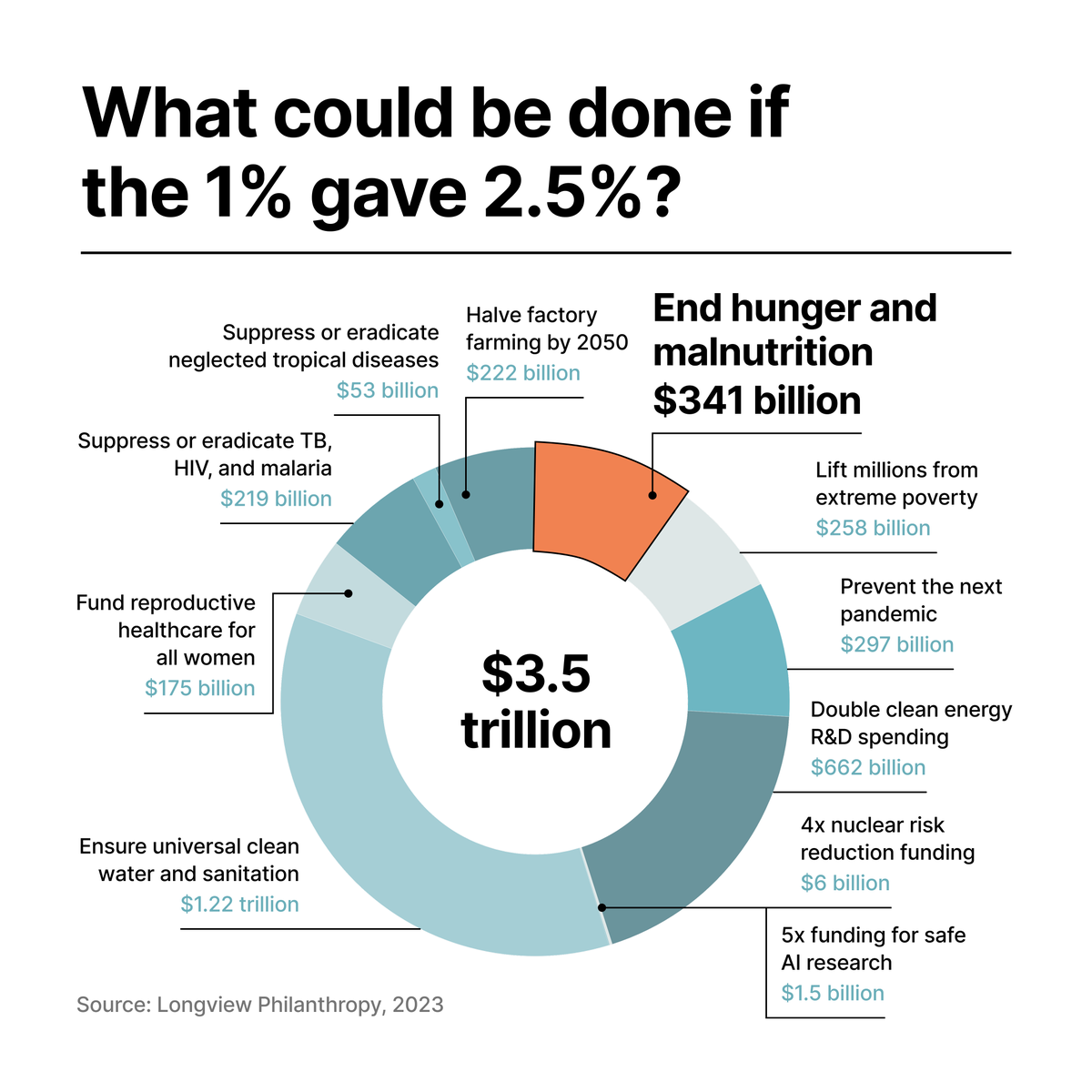
What would it take to actually end world hunger?
About $341 billion, according to Longview Philanthropy.
That sounds enormous — until you realize that the global top 1% giving just 2.5% of their net worth, once, would generate an additional $3.5 trillion.
My Grandparents Were Married For 60 Years.
One Day I Asked My Grandfather:
“What’s The Secret To Loving The Same Woman For A Lifetime?”
He didn’t laugh.
He didn’t say “communication.”
He didn’t say “date nights.”
He looked at my grandmother, who was in the kitchen, and said:
“You don’t love the same woman.”
That confused me.
He said, “She changes every few years. And if you don’t update the way you love her, you lose her.”
He told me the girl he married at 22 wasn’t the same woman at 30.
Motherhood changed her.
Loss changed her.
Time changed her.
“At 40,” he said, “she needed respect more than romance.
At 50, she needed partnership more than passion.
At 60, she needed presence more than promises.”
And every time she changed, he had a choice:
Complain that she’s “not like she used to be.”
Or learn her again.
He said the biggest mistake men make is this:
They fall in love once.
Then stop paying attention.
“Loving a woman for a lifetime,” he told me,
“is deciding to stay curious about her.”
Not assuming you know her.
Not freezing her in the version you met.
He leaned back and said something I’ll never forget:
“If you stop studying her, someone else eventually will.”
Sixty years.
Not because it was easy.
Because he kept relearning her.
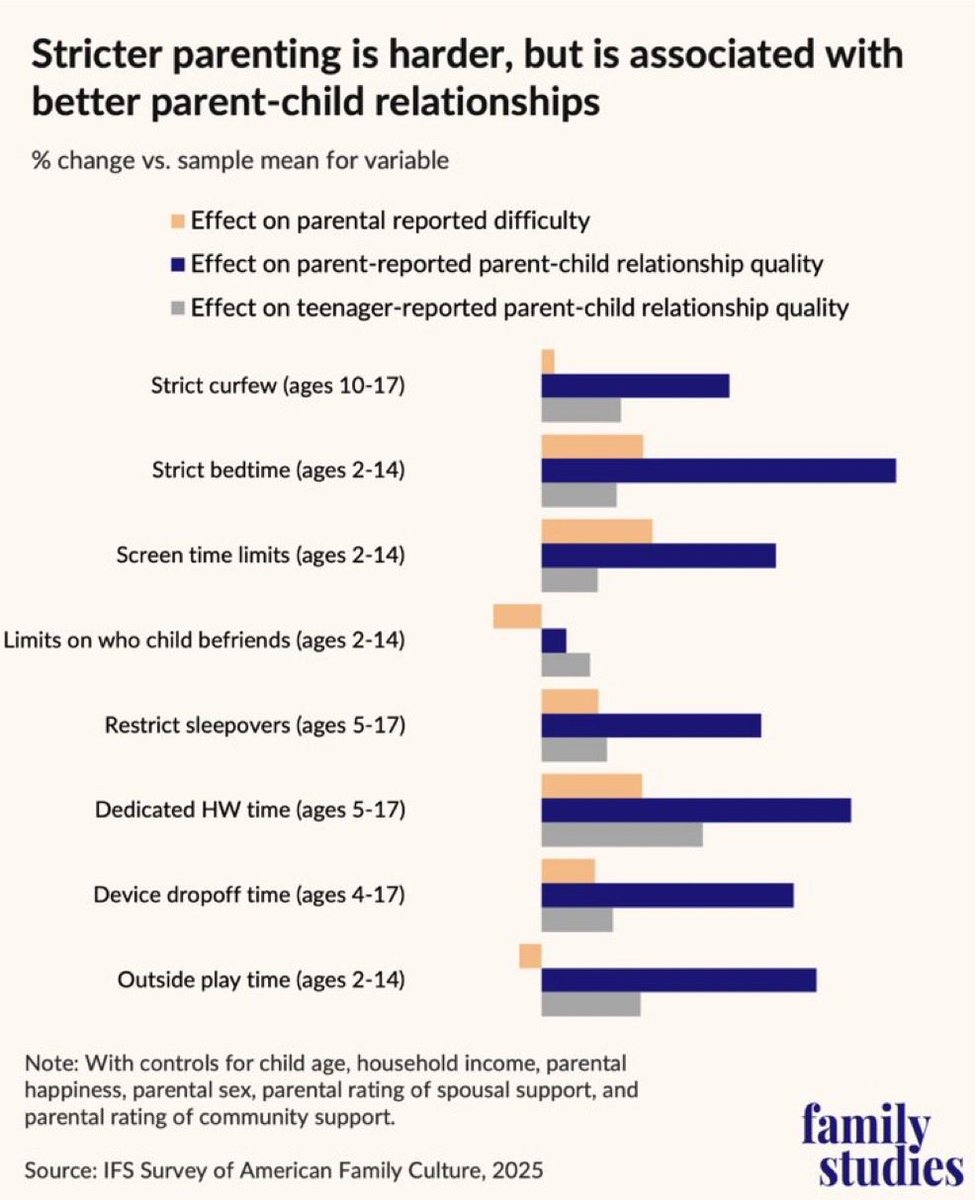
We now have evidence that gentle parenting doesn’t work.
Here’s an uncomfortable truth about parenting no one wants to say out loud:
The data is not kind to gentle parenting.
According to teenagers, strict curfews. strict bedtimes, screen limits, device drop off times, dedicated homework blocks, and sleepover restrictions IMPROVE higher relationship quality.
And yes, parenting difficulty goes up.
Of course it does. Leadership is harder than appeasement.
For the past decade we have been sold a watered down, Instagram friendly version of “gentle parenting” that often collapses into boundary avoidance, endless negotiation and emotional processing without enforcement. Parents terrified of saying no because they do not want to rupture connection.
But connection without authority is not connection. It is dependency.
When parents impose structure, the relationship improves.
Teenagers report better parent child relationship quality in homes with curfews and rules. Younger kids report better relationships in homes with screen limits and bedtimes. Even device drop off times correlate positively.
Why?
Because structure is not cruelty. Structure is love made visible.
A bedtime says: your brain matters more than your entertainment.
A screen limit says: your dopamine system is not fully developed and I will guard it until it is.
A curfew says: your safety matters more than your social standing.
That is not authoritarianism. That is caring.
Boundaries create friction. Friction creates growth. The parent absorbs the short term discomfort so the child does not pay the long term cost.
Children do not experience well calibrated limits as rejection. They experience them as stability. The human brain craves predictability. Predictability reduces anxiety. Reduced anxiety strengthens attachment.
That is why relationship quality goes up.
Notice something else in the data. The strongest effects are around time structure. Bedtime. Homework. Devices. Outside play. These are environmental constraints. They scaffold executive function.
The winning formula is not tyranny.
It is high warmth plus high structure.
The modern failure mode is high warmth plus low structure. That is just abdication of responsibility wrapped in empathy.
Children need leadership, not negotiation. They need adults who can tolerate their anger. They need boundaries that do not move every time emotions spike. They need someone whose prefrontal cortex is fully myelinated.
The harder path produces the stronger bond.
Because when a child feels that someone is strong enough to hold the line, they relax. And relaxed nervous systems build durable relationships.
The BBC just released a new adaptation of Lord of the Flies, the classic novel by William Golding. It's beautifully made, but it's still telling the wrong story.
A few years ago, I went looking for the *real* Lord of the Flies. I wanted to know: has it ever actually happened? Have kids ever been shipwrecked on a deserted island?
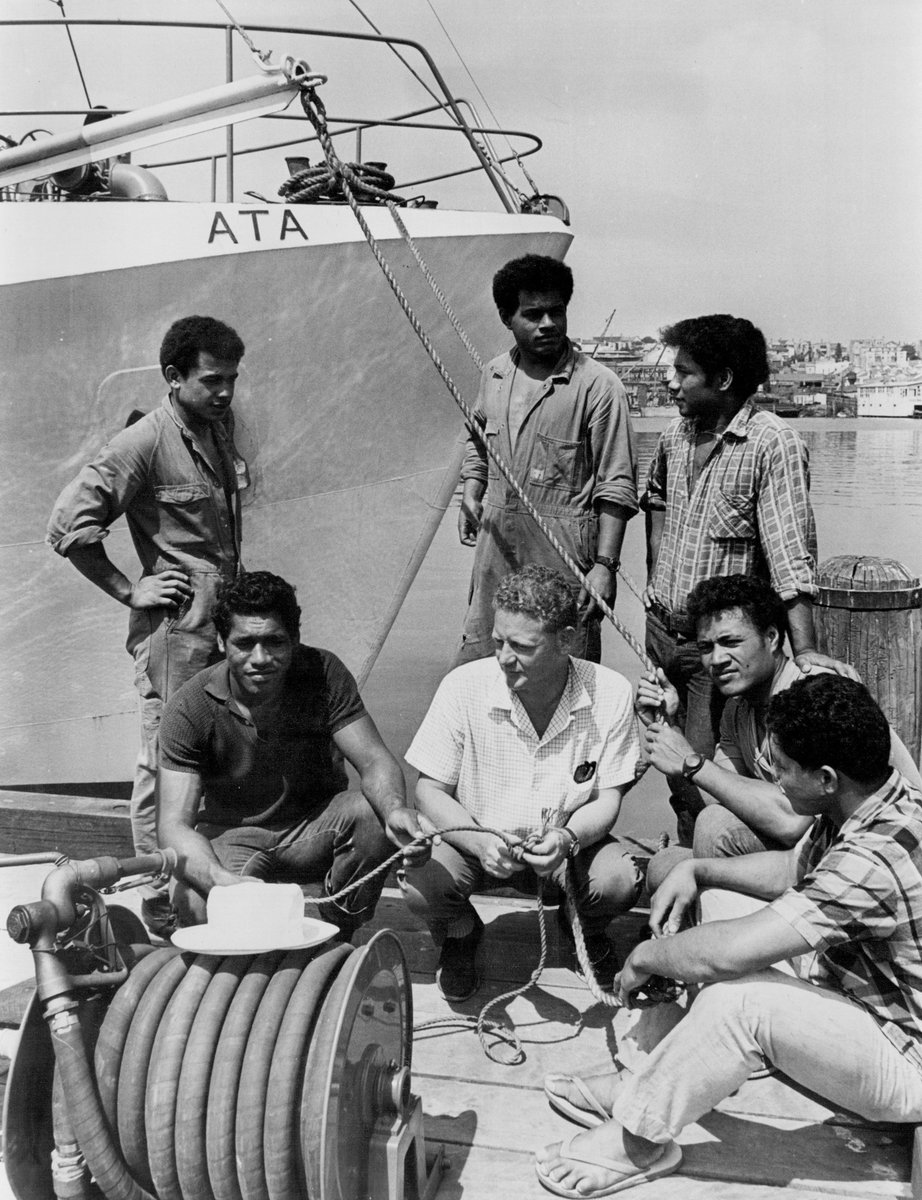
It took me a year of research, but I found it. In 1965, six boys from a boarding school in Tonga stole a boat, got caught in a storm, and drifted for eight days without food or water. They washed up on 'Ata, a remote, uninhabited island in the Pacific. They stayed there for 15 months, and what happened on that island was the exact opposite of William Golding's novel.
These boys set up a small commune. They built a food garden, stored rainwater in hollowed-out tree trunks, created a gym with improvised weights, and built a badminton court. One of them, Stephen (who would later become an engineer) managed to start a fire using two sticks. They kept it burning the entire time.
Of course they fought too. But then they argued, they had a rule: go to opposite ends of the island, cool down, then come back and apologize. As one of them told me: ‘That's how we stayed friends.’
Back home, everyone assumed that the boys – Luke, Stephen, Sione, David, Kolo and Mano — were dead. When they were finally discovered by an Australian captain named Peter Warner, he radioed their names to Tonga. After twenty minutes, a tearful response came back: ‘You found them! These boys have been given up for dead. Funerals have been held. If it's them, this is a miracle!’
Peter commissioned a new ship, hired all six boys as his crew, and named the boat the Ata, after the island where he found them. They remained friends for the rest of their lives – Peter and Mano even became soulmates. I tracked them down, and it became one of the central chapters of my book Humankind.
Here's what struck me most: William Golding (the author of Lord of the Flies) was a troubled man, an alcoholic who once said ‘I have always understood the Nazis, because I am of that sort by nature.’ I think he was projecting his own darkness onto children. And we turned it into a lesson about human nature that we teach to millions of kids around the world.
I think the real lesson is the opposite. When real children found themselves alone on a real island, they didn't descend into savagery. They cooperated, they took care of each other, they survived.
I'm not saying that the Tongan castaways were representative of all kids everywhere. But I am saying that every kid who has to read or watch the fictional Lord of the Flies also deserves to know what actually happened when it played out in real life.
Stories are never just stories. We become the stories that we tell ourselves.
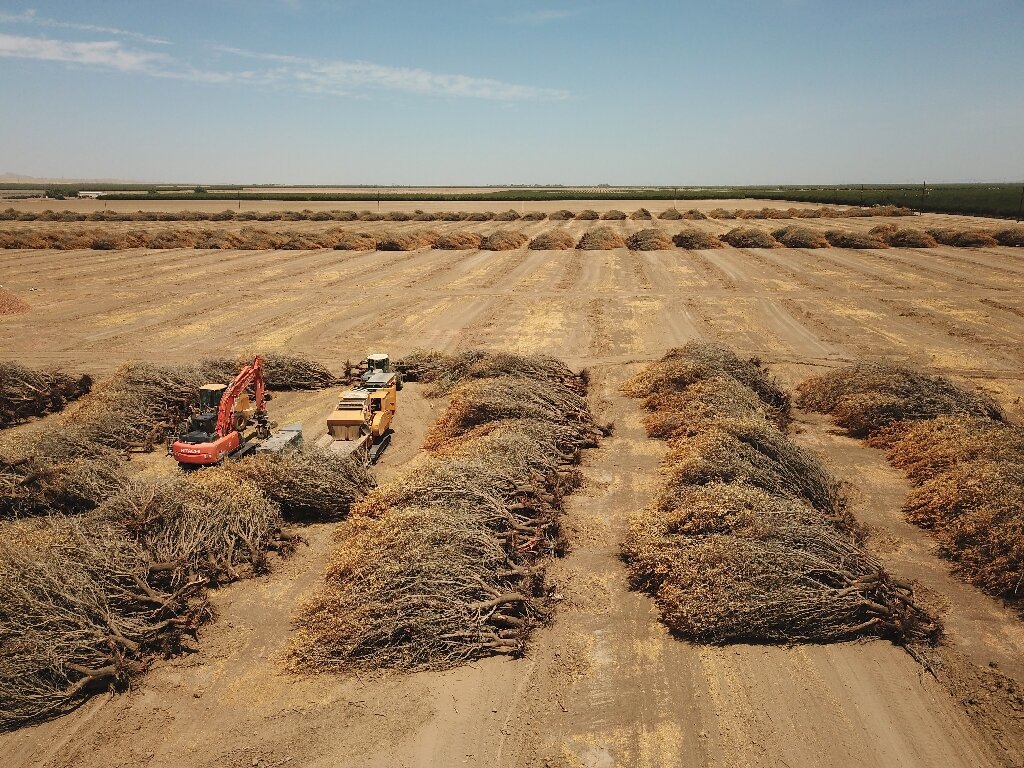
California's Central Valley produces 80% of the world's almonds. Each almond requires 3.2 gallons of actual irrigation water to grow. Not rainfall. Actual tap water pumped from aquifers.
One gallon of almond milk requires 162 gallons of irrigation water. Compare that to dairy milk at 8 gallons of tap water per gallon, with the rest being rainfall that falls on pasture anyway.
But here's where it gets properly grim. Almonds bloom for exactly three weeks in February. During those three weeks, California needs every pollinating bee in North America transported to the Central Valley or the crop fails entirely.
Commercial beekeepers truck in 31 billion honeybees. That's two-thirds of America's entire managed bee population, all concentrated in one valley for three weeks. The bees are packed into trucks, driven across the country, dumped into almond groves drenched in pesticides, worked to exhaustion, then packed up and shipped to the next crop.
The mortality rate is catastrophic. Beekeepers report losing 30 to 50% of their hives annually. That's billions of bees dead. Not from natural causes. From being used as disposable pollination machines for your almond milk.
The pesticides don't help. Almond groves are sprayed with neonicotinoids which scramble bee navigation systems, fungicides which weaken their immune systems, and herbicides which eliminate the wildflowers they'd normally forage on between almond blooms.
Meanwhile the aquifer depletion is permanent. The Central Valley has sunk 28 feet in some areas from groundwater extraction. That water took 10,000 years to accumulate. It's being drained in decades for almond milk.
Your vegan latte killed more bees and used more water than a year's worth of dairy milk. But it's got "plant-based" on the label so you're definitely saving the planet.
@newstart_2024 Lack of deep purpose and meaning in society. Can we create for its own sake? Being and connection becomes what we forage. Eastern philosophy is the answer.
The BBC has extensively quoted an X account of a ‘journalist in Gaza’ as an eyewitness.
But a new feature on X means we can see that this ‘journalist in Gaza’ appears to be in…Poland.
"My name's Raymond. I'm 73. I work the parking lot at St. Joseph's Hospital. Minimum wage, orange vest, a whistle I barely use. Most people don't even look at me. I'm just the old man waving cars into spaces.
But I see everything.
Like the black sedan that circled the lot every morning at 6 a.m. for three weeks. Young man driving, grandmother in the passenger seat. Chemotherapy, I figured. He'd drop her at the entrance, then spend 20 minutes hunting for parking, missing her appointments.
One morning, I stopped him. "What time tomorrow?"
"6:15," he said, confused.
"Space A-7 will be empty. I'll save it."
He blinked. "You... you can do that?"
"I can now," I said.
Next morning, I stood in A-7, holding my ground as cars circled angrily. When his sedan pulled up, I moved. He rolled down his window, speechless. "Why?"
"Because she needs you in there with her," I said. "Not out here stressing."
He cried. Right there in the parking lot.
Word spread quietly. A father with a sick baby asked if I could help. A woman visiting her dying husband. I started arriving at 5 a.m., notebook in hand, tracking who needed what. Saved spots became sacred. People stopped honking. They waited. Because they knew someone else was fighting something bigger than traffic.
But here's what changed everything, A businessman in a Mercedes screamed at me one morning. "I'm not sick! I need that spot for a meeting!"
"Then walk," I said calmly. "That space is for someone whose hands are shaking too hard to grip a steering wheel."
He sped off, furious. But a woman behind him got out of her car and hugged me. "My son has leukemia," she sobbed. "Thank you for seeing us."
The hospital tried to stop me. "Liability issues," they said. But then families started writing letters. Dozens. "Raymond made the worst days bearable." "He gave us one less thing to break over."
Last month, they made it official. "Reserved Parking for Families in Crisis." Ten spots, marked with blue signs. And they asked me to manage it.
But the best part? A man I'd helped two years ago, his mother survived, came back. He's a carpenter. Built a small wooden box, mounted it by the reserved spaces. Inside? Prayer cards, tissues, breath mints, and a note,
"Take what you need. You're not alone. -Raymond & Friends"
People leave things now. Granola bars. Phone chargers. Yesterday, someone left a hand-knitted blanket.
I'm 73. I direct traffic in a hospital parking lot. But I've learned this: Healing doesn't just happen in operating rooms. Sometimes it starts in a parking space. When someone says, "I see your crisis. Let me carry this one small piece."
So pay attention. At the grocery checkout, the coffee line, wherever you are. Someone's drowning in the little things while fighting the big ones.
Hold a door. Save a spot. Carry the weight no one else sees.
It's not glamorous. But it's everything."
Let this story reach more hearts....
Credit: Mary Nelson
Eddie Murphy pulled up to Saturday Night Live after over thirty years & absolutely fucking crushed it. This episode became an instant classic the second it aired in December ‘19. Murphy’s humor is effortless. He makes it look so easy. The man’s been doing it for four decades.
The prepared remarks of my Oxford Union debate held on November 13, 2025, on the proposition that “Israel is a greater threat to regional stability than the Islamic Republic of Iran.”
Mr. President, I confess that I hesitated before agreeing to debate this evening. To do so risks dignifying a proposition so disconnected from basic facts that it verges on the satirical: that Israel, of all states, poses a greater threat to regional stability than the Islamic Republic of Iran.
But we now live in an age where people will believe almost anything. Nearly one in four people in thie country aged 18 to 34 believe that the 7/7 terrorist attacks were “probably a hoax.”
And here in this Oxford Union, we saw just three weeks ago that no less than 501 members believe it is right to vote in support of the incoming president, after he had publicly celebrated the killing of Charlie Kirk.
So I decided it was necessary to attend and lay out a few essential facts proving that tonight’s proposition is not merely wrong, but the inversion of reality.
Regional stability is measured by who starts wars, not by who stops them. Israel not arm terror proxies in five Arab countries; Iran does. The entire Middle East knows this, which is why Arab states quietly depend on Israel for their own survival.
Fact: The moderate Sunni Arab countries are part of a strategic alliance with Israel, going back decades. Egypt signed a peace treaty with Israel in 1979. Jordan did so in 1994. In 2020, under the historic Abraham Accords, the United Arab Emirates, Bahrain, Morocco, and Sudan signed peace and normalization agreements with Israel. The accords recognize that the Arab and Jewish peoples are descendants of a common ancestor, Abraham — indigenous to the region — and they articulate a vision of advancing a culture of peace, security and prosperity.
Fact: Saudi Arabia, custodian of the two holy mosques, has also developed a significant rappochement with Israel. Indeed, captured minutes of Hamas leadership meetings show that this was a key factor in their decision to invade Israel and launch the war and massacre on October 7, 2023. Hamas wrote: “There is no doubt that the Saudi-Zionist normalization agreement is progressing significantly.” So they decided on “an extraordinary action” to try and torpedo it.
Fact: this regional alliance between Israel and the moderate Arab countries was resilient enough to survive the war of the past two years. Last year, neighboring Egypt and Jordan imported a record amount of natural gas from Israel. Israel provides parched Jordan with 100 million cubic meters a year. How is Israel “a threat to regional stability”? The opposite is true.
One of the most powerful illustrations of this regional alliance came last year, on April 13, 2024, when the Islamic regime in Iran launched an unprecedented attack on the people of Israel — with 170 drones, over 30 cruise missiles, and more than 120 ballistic missiles.
Those who helped shoot down the incoming weapons included the air forces of the US, the UK, France, and Jordan, while Gulf states such as Saudi Arabia and the United Arab Emirates contributed intelligence, including radar tracking information.
This wasn’t a one-off. When Iran attacked Israel again in June 2025, Jordan shot down Iranian missiles and drones crossing overhead, and Saudi Arabia reportedly allowed Israel to use its airspace to do so.
The fact that Sunni Arab states provided a combination of air force interceptions, radar and intelligence is a a real-world vote on tonight’s motion. They know that for their people, Israel is a partner in survival; and the Islamic Regime in Iran is an existential threat.
You don’t intercept missiles heading toward a ‘threat to regional stability’. You intercept missiles from one.
The Islamic Republic of Iran
Now let us address the true driver of instability: the Islamic Regime in Iran. Revolutionary Jihad is their raison d’etre.
Compare and contrast. Israel, at the very moment of its birth on May 14, 1948, in its Declaration of Independence, reached out to its neighbors with a simple message: “We extend our hand to all neighboring states and their peoples in an offer of peace.”
With the Islamic Regime in Iran, it was the exact opposite. On the first anniversary of his regime, February 11, 1980, Ayatollah Khomeini declared: “We shall export our revolution to the whole world. Until the cry, ‘There is no God but Allah’ resounds over the whole world, there will be struggle.”
And that is what they do — in the region and beyond. Iran, through its Islamic Revolutionary Guard Corps, exports terrorism and war.
Look at Yemen. They armed and trained the Houthis, a group whose slogan is “Death to America, Death to Israel, Damn the Jews.”
The Houthis destroyed Yemen: collapsing state institutions, crippling hospitals and basic services, diverting aid, and deepening famine and economic freefall. Backed by Iran, they turned the country into a battlefield for regional power struggles. Their own people are starving, yet unprovoked, from a thousand miles away, the Houthis have used Yemen’s resources to attack Israeli cities with more than 400 ballistic missiles and drones. All sponsored by Iran. Is this stability?
Look at Lebanon. Iran’s proxy Hezbollah hollowed out every institution that once made the country function, turning in into a failed state. They built an Iranian-funded parallel military stronger than the Lebanese army, seized control of border crossings and ports, and converted entire regions into fortified enclaves beyond the reach of the state. They assassinated critics, toppled governments that tried to assert sovereignty, and dragged Lebanon into wars its people never chose. Hezbollah’s capture of the economy—fuel smuggling, customs evasion, protection rackets—bled the treasury dry and helped trigger Lebanon’s financial collapse. Its veto power over politics turned parliament into paralysis. Its domination of security services allowed corruption and impunity to flourish.
And by launching attacks on Israel from civilian neighborhoods, it ensured that Lebanon would live permanently on the brink of war, scaring off investment, tourism, and any hope of recovery. In short: Hezbollah replaced the Lebanese state with an Iranian proxy empire, and the result was national ruin.
Look at Syria. When Syrians protested peacefully in 2011, the Assad regime was on the brink of collapse. Iran intervened to save its client. It deployed IRGC commanders, imported thousands of Shia militiamen from Iraq, Afghanistan, and Lebanon, and oversaw sectarian cleansing in key corridors linking Damascus to the coast. Tehran funded and directed a campaign of mass atrocities — from starvation sieges to chemical attacks — that killed hundreds of thousands, and displaced millions, half the country. It entrenched militias across Syrian territory, built missile factories on Syrian soil, and used the country as a forward base to attack Israel and threaten Jordan. Iran did not stabilize Syria; it shattered it.
Look at Iraq. Iran filled the post-Saddam vacuum by building militias stronger than the state. Through the IRGC and its Popular Mobilization Forces, Tehran created armed factions that answer to Iran, not Baghdad. They seized border crossings, looted state revenues, and assassinated activists who demanded Iraqi sovereignty. These militias toppled governments, paralyzed parliament, and turned Iraq into a launchpad for Iranian rocket and drone attacks. Iran didn’t stabilize Iraq; it captured it, replacing national institutions with a network of loyalist armed groups.
Look at Gaza. Iran transformed Hamas into a mini-army. Tehran funded rockets, tunnels, and drone programs, while Hamas diverted aid from civilians to weapons. Instead of building a future for Palestinians, Hamas — with Iranian training — built an underground fortress beneath homes, hospitals, and schools. The result was October 7th: the deadliest massacre of Jews since the Holocaust. Gaza is beautiful beachfront property. It could have been prosperous. But Iran made it a military outpost for its war on Israel, condemning Palestinians to endless conflict.
And let’s look worldwide. In Australia, the Iranian regime hired criminals to terrorize the Jewish community, firebombing a synagogue, and burning a kosher café, prompting Australia to break its relations with Iran. In Argentina, Iran and Hezbollah bombed the Jewish community building in Buenos Aires, murdering 85 people and injuring over 300.
The regime targets dissidents worldwide. Here in the UK, on March 29th, 2024, assailants hired by Iran stabbed journalist Pouria Zeraati outside his London residence.
Earlier this week, I was at the World Liberty Congress with my friend Masih Alinejad, who now lives in New York. The Islamic regime tried to kidnap or kill her three times. They sent a hitman with an AK-47 to her home in New York.
In the Netherlands, the regime assassinated Iranian dissidents: Ali Motamed in 2015, and two years later, Ahmad Nissi. Dutch, Swedish, French and UK Intelligence have all confirmed that Iran is hiring criminal gangs to target dissidents in Europe.
Assassinating dissidents worldwide is why Iran is a terrorist regime. That is why the IRGC is designated as a terrorist organization by Australia, Bahrain, Canada, Ecuador, Paraguay, Saudi Arabia, Sweden and the United States.
My opponent Ataollah Mohajerani was complicit with Iranian regime crimes
Mr. President, in this regard, I would be remiss not to mention that a human rights lawyer from this university, from Oxford, has filed a complaint and legal dossier with the police against my opponent in this debate, Mr. Ataollah Mohajerani, for his role in the assassination of disdidents.
As described in The Guardian, on January 30, 2023, the founder of the Oxford University Public Interest Law program, Kaveh Moussavi, has alleged complicity by Mr. Mohajerani, who was a senior Iranian regime official between 1989 and 1997, “during a period when hundreds of assassinations of dissidents in Europe were attempted and committed on the orders of the Iranian regime.”
Moreover, the complaint points to Mr. Mohajerani’s 1989 book, “A Critique of the Satanic Verses Conspiracy,” in which he endorses and justifies the fatwa issued by Ayatollah Khomeini in 1999 against the famed novelist Salman Rushdie, who was stabbed 15 times in 2022 — as a result, presumably, of this Fatwa. And in the book, Mr. Mohajani writes in his book that Rushdie is, “an absolute apostate, and the punishment of an apostate is execution.”
And so, Mr. Mohajarani, tonight you say you stand for regional stability, but you have once blessed the idea that an author, a citizen of this country, should be killed for writing a book. So please tell this house: Do you still believe that writers deserve death, or will you finally retract and renounce your support for that Fatwa?
[Though he spoke after, Ataollah Mohajerani never answered the question.]
Stability includes women’s rights
But stability isn’t just military or geopolitical. In the words of the British Department for International Development: “Open, inclusive societies reduce the risk of the spread of instability.”
Indeed, a society is stable where a woman can walk on the street without being attacked for defending her rights. In Israel, women have served as pilots, Chief Justice of the Supreme Court, opposition leader, and Prime Minister. They are visible and vocal in public life — leading companies, commanding army units, shaping law and policy, and freely expressing their opinions in the press and on the streets, in the tens and even hundreds of thousands. By contrast, in the Islamic Republic of Iran, women get banned from sports stadiums, imprisoned for singing in public, or beaten to death for wearing improper Hijab, like Jinna Mahsa Amini. In Iran, women are made punished simply for wanting to be seen, heard, or free.
And make no mistake. What happens in Iran doesn’t stay in Iran. They export the repression. In Yemen, the Iran-backed Houthis have banned women from traveling without a male guardian. Female aid workers can’t even move freely to deliver desperately-needed humanitarian assistance. In Lebanon, in July 2023, the leader of Iran-backed Hezbollah called to kill gays and lesbians, sparking terror among LGBT people.
Rights for minorities
Stability for a society means also means basic human rights for minorities. In Israel, Arabs vote in the only free and fair elections in the entire Middle East. In the Islamic Republic of Iran, ethnic minorities are subject to discrimination, including Ahwazi Arabs, Azeris, Baluchis, Kurds and Turks.
And the regime targets religious minorities, including Christians — particularly those who converted from Islam — as well as Sufi Muslims, Sunni Muslims, Gonabadi Dervishes, Jews, Yarsanis, Zoroastrians, and, in particular, Baha’is, who face systemic persecution, including mass arrest and lengthy prison sentences.
Even the UN, which is often soft on Iran, has recognized these gross and systematic abuses. On December 17th, In Resolution 79/183, the UN condemned the Islamic Republic of Iran for restrictions on freedom of thought and religion, attacks on places of worship and burial, and harassment, intimidation, persecution, arbitrary arrest, detention of persons belonging to these minorities – as well as its incitement to hatred leading to violence — in violation of Iran’s obligations under the International Covenant on Civil and Political Rights.
Right to protest
Stability for a society also means the right to protest. In Israel, it’s a national pastime to lambaste the government. In Tel Aviv, Saturday-evening protests have often drawn tens of thousands, and even hundreds of thousands of demonstrators.
In Iran, they beat, blind, rape, torture and kill women who protest. During the Woman Life Freedom protests of 2022, the regime arrested 20,000 people, across 130 cities. At least 551 people—including dozens of children—were killed. For protesting.
Conclusion
In the final analysis, Mr. President, the greatest threat to regional stability is a regime that murders its own people, hunts its critics across Europe and America, arms terror proxie, and exports terror on four continents.
The Islamic Regime in Iran has killed hundreds of thousands in Syria, shattered Yemen through the Houthis, bankrupted Lebanon through Hezbollah, hijacked Iraq through militias, and turned Gaza into a launching pad for the worst massacre of Jews since the Holocaust.
At home, they shoots women in the streets, blind teenagers, torture dissidents, and execute protesters. Abroad, they sends terrorists and assassins to murder innocents in New York, London, and Buenos Aires.
This is not a government seeking stability; it is a revolutionary engine of hate, terror, and chaos. Israel, by contrast, is the firewall that prevents Iran’s imperial project from engulfing the region.
To claim Israel is the greater threat to stability is not merely wrong — it is an inversion of reality itself.








![HillelNeuer's tweet photo. The prepared remarks of my Oxford Union debate held on November 13, 2025, on the proposition that “Israel is a greater threat to regional stability than the Islamic Republic of Iran.”
Mr. President, I confess that I hesitated before agreeing to debate this evening. To do so risks dignifying a proposition so disconnected from basic facts that it verges on the satirical: that Israel, of all states, poses a greater threat to regional stability than the Islamic Republic of Iran.
But we now live in an age where people will believe almost anything. Nearly one in four people in thie country aged 18 to 34 believe that the 7/7 terrorist attacks were “probably a hoax.”
And here in this Oxford Union, we saw just three weeks ago that no less than 501 members believe it is right to vote in support of the incoming president, after he had publicly celebrated the killing of Charlie Kirk.
So I decided it was necessary to attend and lay out a few essential facts proving that tonight’s proposition is not merely wrong, but the inversion of reality.
Regional stability is measured by who starts wars, not by who stops them. Israel not arm terror proxies in five Arab countries; Iran does. The entire Middle East knows this, which is why Arab states quietly depend on Israel for their own survival.
Fact: The moderate Sunni Arab countries are part of a strategic alliance with Israel, going back decades. Egypt signed a peace treaty with Israel in 1979. Jordan did so in 1994. In 2020, under the historic Abraham Accords, the United Arab Emirates, Bahrain, Morocco, and Sudan signed peace and normalization agreements with Israel. The accords recognize that the Arab and Jewish peoples are descendants of a common ancestor, Abraham — indigenous to the region — and they articulate a vision of advancing a culture of peace, security and prosperity.
Fact: Saudi Arabia, custodian of the two holy mosques, has also developed a significant rappochement with Israel. Indeed, captured minutes of Hamas leadership meetings show that this was a key factor in their decision to invade Israel and launch the war and massacre on October 7, 2023. Hamas wrote: “There is no doubt that the Saudi-Zionist normalization agreement is progressing significantly.” So they decided on “an extraordinary action” to try and torpedo it.
Fact: this regional alliance between Israel and the moderate Arab countries was resilient enough to survive the war of the past two years. Last year, neighboring Egypt and Jordan imported a record amount of natural gas from Israel. Israel provides parched Jordan with 100 million cubic meters a year. How is Israel “a threat to regional stability”? The opposite is true.
One of the most powerful illustrations of this regional alliance came last year, on April 13, 2024, when the Islamic regime in Iran launched an unprecedented attack on the people of Israel — with 170 drones, over 30 cruise missiles, and more than 120 ballistic missiles.
Those who helped shoot down the incoming weapons included the air forces of the US, the UK, France, and Jordan, while Gulf states such as Saudi Arabia and the United Arab Emirates contributed intelligence, including radar tracking information.
This wasn’t a one-off. When Iran attacked Israel again in June 2025, Jordan shot down Iranian missiles and drones crossing overhead, and Saudi Arabia reportedly allowed Israel to use its airspace to do so.
The fact that Sunni Arab states provided a combination of air force interceptions, radar and intelligence is a a real-world vote on tonight’s motion. They know that for their people, Israel is a partner in survival; and the Islamic Regime in Iran is an existential threat.
You don’t intercept missiles heading toward a ‘threat to regional stability’. You intercept missiles from one.
The Islamic Republic of Iran
Now let us address the true driver of instability: the Islamic Regime in Iran. Revolutionary Jihad is their raison d’etre.
Compare and contrast. Israel, at the very moment of its birth on May 14, 1948, in its Declaration of Independence, reached out to its neighbors with a simple message: “We extend our hand to all neighboring states and their peoples in an offer of peace.”
With the Islamic Regime in Iran, it was the exact opposite. On the first anniversary of his regime, February 11, 1980, Ayatollah Khomeini declared: “We shall export our revolution to the whole world. Until the cry, ‘There is no God but Allah’ resounds over the whole world, there will be struggle.”
And that is what they do — in the region and beyond. Iran, through its Islamic Revolutionary Guard Corps, exports terrorism and war.
Look at Yemen. They armed and trained the Houthis, a group whose slogan is “Death to America, Death to Israel, Damn the Jews.”
The Houthis destroyed Yemen: collapsing state institutions, crippling hospitals and basic services, diverting aid, and deepening famine and economic freefall. Backed by Iran, they turned the country into a battlefield for regional power struggles. Their own people are starving, yet unprovoked, from a thousand miles away, the Houthis have used Yemen’s resources to attack Israeli cities with more than 400 ballistic missiles and drones. All sponsored by Iran. Is this stability?
Look at Lebanon. Iran’s proxy Hezbollah hollowed out every institution that once made the country function, turning in into a failed state. They built an Iranian-funded parallel military stronger than the Lebanese army, seized control of border crossings and ports, and converted entire regions into fortified enclaves beyond the reach of the state. They assassinated critics, toppled governments that tried to assert sovereignty, and dragged Lebanon into wars its people never chose. Hezbollah’s capture of the economy—fuel smuggling, customs evasion, protection rackets—bled the treasury dry and helped trigger Lebanon’s financial collapse. Its veto power over politics turned parliament into paralysis. Its domination of security services allowed corruption and impunity to flourish.
And by launching attacks on Israel from civilian neighborhoods, it ensured that Lebanon would live permanently on the brink of war, scaring off investment, tourism, and any hope of recovery. In short: Hezbollah replaced the Lebanese state with an Iranian proxy empire, and the result was national ruin.
Look at Syria. When Syrians protested peacefully in 2011, the Assad regime was on the brink of collapse. Iran intervened to save its client. It deployed IRGC commanders, imported thousands of Shia militiamen from Iraq, Afghanistan, and Lebanon, and oversaw sectarian cleansing in key corridors linking Damascus to the coast. Tehran funded and directed a campaign of mass atrocities — from starvation sieges to chemical attacks — that killed hundreds of thousands, and displaced millions, half the country. It entrenched militias across Syrian territory, built missile factories on Syrian soil, and used the country as a forward base to attack Israel and threaten Jordan. Iran did not stabilize Syria; it shattered it.
Look at Iraq. Iran filled the post-Saddam vacuum by building militias stronger than the state. Through the IRGC and its Popular Mobilization Forces, Tehran created armed factions that answer to Iran, not Baghdad. They seized border crossings, looted state revenues, and assassinated activists who demanded Iraqi sovereignty. These militias toppled governments, paralyzed parliament, and turned Iraq into a launchpad for Iranian rocket and drone attacks. Iran didn’t stabilize Iraq; it captured it, replacing national institutions with a network of loyalist armed groups.
Look at Gaza. Iran transformed Hamas into a mini-army. Tehran funded rockets, tunnels, and drone programs, while Hamas diverted aid from civilians to weapons. Instead of building a future for Palestinians, Hamas — with Iranian training — built an underground fortress beneath homes, hospitals, and schools. The result was October 7th: the deadliest massacre of Jews since the Holocaust. Gaza is beautiful beachfront property. It could have been prosperous. But Iran made it a military outpost for its war on Israel, condemning Palestinians to endless conflict.
And let’s look worldwide. In Australia, the Iranian regime hired criminals to terrorize the Jewish community, firebombing a synagogue, and burning a kosher café, prompting Australia to break its relations with Iran. In Argentina, Iran and Hezbollah bombed the Jewish community building in Buenos Aires, murdering 85 people and injuring over 300.
The regime targets dissidents worldwide. Here in the UK, on March 29th, 2024, assailants hired by Iran stabbed journalist Pouria Zeraati outside his London residence.
Earlier this week, I was at the World Liberty Congress with my friend Masih Alinejad, who now lives in New York. The Islamic regime tried to kidnap or kill her three times. They sent a hitman with an AK-47 to her home in New York.
In the Netherlands, the regime assassinated Iranian dissidents: Ali Motamed in 2015, and two years later, Ahmad Nissi. Dutch, Swedish, French and UK Intelligence have all confirmed that Iran is hiring criminal gangs to target dissidents in Europe.
Assassinating dissidents worldwide is why Iran is a terrorist regime. That is why the IRGC is designated as a terrorist organization by Australia, Bahrain, Canada, Ecuador, Paraguay, Saudi Arabia, Sweden and the United States.
My opponent Ataollah Mohajerani was complicit with Iranian regime crimes
Mr. President, in this regard, I would be remiss not to mention that a human rights lawyer from this university, from Oxford, has filed a complaint and legal dossier with the police against my opponent in this debate, Mr. Ataollah Mohajerani, for his role in the assassination of disdidents.
As described in The Guardian, on January 30, 2023, the founder of the Oxford University Public Interest Law program, Kaveh Moussavi, has alleged complicity by Mr. Mohajerani, who was a senior Iranian regime official between 1989 and 1997, “during a period when hundreds of assassinations of dissidents in Europe were attempted and committed on the orders of the Iranian regime.”
Moreover, the complaint points to Mr. Mohajerani’s 1989 book, “A Critique of the Satanic Verses Conspiracy,” in which he endorses and justifies the fatwa issued by Ayatollah Khomeini in 1999 against the famed novelist Salman Rushdie, who was stabbed 15 times in 2022 — as a result, presumably, of this Fatwa. And in the book, Mr. Mohajani writes in his book that Rushdie is, “an absolute apostate, and the punishment of an apostate is execution.”
And so, Mr. Mohajarani, tonight you say you stand for regional stability, but you have once blessed the idea that an author, a citizen of this country, should be killed for writing a book. So please tell this house: Do you still believe that writers deserve death, or will you finally retract and renounce your support for that Fatwa?
[Though he spoke after, Ataollah Mohajerani never answered the question.]
Stability includes women’s rights
But stability isn’t just military or geopolitical. In the words of the British Department for International Development: “Open, inclusive societies reduce the risk of the spread of instability.”
Indeed, a society is stable where a woman can walk on the street without being attacked for defending her rights. In Israel, women have served as pilots, Chief Justice of the Supreme Court, opposition leader, and Prime Minister. They are visible and vocal in public life — leading companies, commanding army units, shaping law and policy, and freely expressing their opinions in the press and on the streets, in the tens and even hundreds of thousands. By contrast, in the Islamic Republic of Iran, women get banned from sports stadiums, imprisoned for singing in public, or beaten to death for wearing improper Hijab, like Jinna Mahsa Amini. In Iran, women are made punished simply for wanting to be seen, heard, or free.
And make no mistake. What happens in Iran doesn’t stay in Iran. They export the repression. In Yemen, the Iran-backed Houthis have banned women from traveling without a male guardian. Female aid workers can’t even move freely to deliver desperately-needed humanitarian assistance. In Lebanon, in July 2023, the leader of Iran-backed Hezbollah called to kill gays and lesbians, sparking terror among LGBT people.
Rights for minorities
Stability for a society means also means basic human rights for minorities. In Israel, Arabs vote in the only free and fair elections in the entire Middle East. In the Islamic Republic of Iran, ethnic minorities are subject to discrimination, including Ahwazi Arabs, Azeris, Baluchis, Kurds and Turks.
And the regime targets religious minorities, including Christians — particularly those who converted from Islam — as well as Sufi Muslims, Sunni Muslims, Gonabadi Dervishes, Jews, Yarsanis, Zoroastrians, and, in particular, Baha’is, who face systemic persecution, including mass arrest and lengthy prison sentences.
Even the UN, which is often soft on Iran, has recognized these gross and systematic abuses. On December 17th, In Resolution 79/183, the UN condemned the Islamic Republic of Iran for restrictions on freedom of thought and religion, attacks on places of worship and burial, and harassment, intimidation, persecution, arbitrary arrest, detention of persons belonging to these minorities – as well as its incitement to hatred leading to violence — in violation of Iran’s obligations under the International Covenant on Civil and Political Rights.
Right to protest
Stability for a society also means the right to protest. In Israel, it’s a national pastime to lambaste the government. In Tel Aviv, Saturday-evening protests have often drawn tens of thousands, and even hundreds of thousands of demonstrators.
In Iran, they beat, blind, rape, torture and kill women who protest. During the Woman Life Freedom protests of 2022, the regime arrested 20,000 people, across 130 cities. At least 551 people—including dozens of children—were killed. For protesting.
Conclusion
In the final analysis, Mr. President, the greatest threat to regional stability is a regime that murders its own people, hunts its critics across Europe and America, arms terror proxie, and exports terror on four continents.
The Islamic Regime in Iran has killed hundreds of thousands in Syria, shattered Yemen through the Houthis, bankrupted Lebanon through Hezbollah, hijacked Iraq through militias, and turned Gaza into a launching pad for the worst massacre of Jews since the Holocaust.
At home, they shoots women in the streets, blind teenagers, torture dissidents, and execute protesters. Abroad, they sends terrorists and assassins to murder innocents in New York, London, and Buenos Aires.
This is not a government seeking stability; it is a revolutionary engine of hate, terror, and chaos. Israel, by contrast, is the firewall that prevents Iran’s imperial project from engulfing the region.
To claim Israel is the greater threat to stability is not merely wrong — it is an inversion of reality itself.](https://pbs.twimg.com/media/G56SGImXIAAWrRF.jpg)


