I have counseled and pastored for many years, and one of the things that has impressed me over and over again is how self-deluded people can be. Including me.
It's amazingly difficult to see ourselves with accuracy. We see other people with a fairly high degree of accuracy, but we don't seem to see ourselves with the same precision.
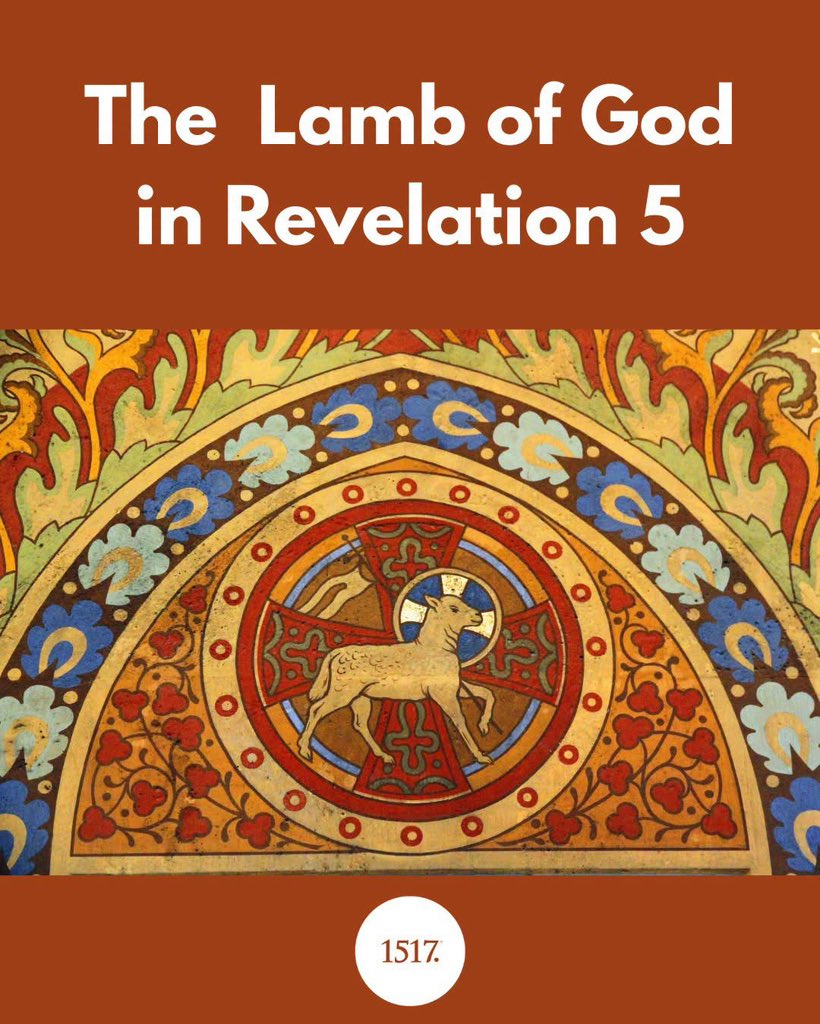
“Who is worthy to open the scroll and break its seals?” (Rev. 5:2) John tells us this question echoes through heaven itself as a mighty angel issues the challenge.
A hush falls over the celestial courts. No one in heaven or on earth or under the earth is able to step forward. No one is worthy to take the scroll from the hand of the One seated on the throne.
The future of the world remains sealed, its purposes unreadable. The weight of that moment is more than John can bear.
But then, just as all hope seems gone, an elder leans toward John and speaks the words all creation needs to hear: “Weep no more. Behold, the Lion of the tribe of Judah, the Root of David, has conquered” (Rev. 5:5).
John turns to see a Lion, but instead he beholds a Lamb standing, bearing the marks of sacrifice, perfect in power and perfect in sight.
The Lion conquers by being the Lamb who was slain.
"Behold the Lamb of God who takes away the sin of the world!" (John 1:29). Behold the Lamb who steps forward and takes the scroll from the right hand of the One seated on the throne.
Heaven erupts in worship: “Worthy are you…for you were slain, and by your blood you ransomed people for God from every tribe and language and people and nation” (Rev. 5:9).
The largest concert you have ever attended, the loudest stadium you have ever heard, is but a whisper compared to that heavenly chorus as myriads of angels lift their voices: “Worthy is the Lamb who was slain!” (Rev. 5:12).
Who is worthy? The Lamb whose blood alone could accomplish what centuries of offerings could never achieve.
A better blood was needed, and it came in the better Lamb of God.
It is that blood which ignites the worship of heaven and earth: “To him who sits on the throne and to the Lamb be blessing and honor and glory and might forever and ever” (Rev. 5:13).
In that blood is life, and in him we have atonement and peace and unending hope.
Cleansed by the blood of the Lamb, we join the choir whose song will never fade.
_____
We read Revelation 5 today in Bible in One Year: https://t.co/XxNvEtNH7e
Worship is central to Christian living. Actually, it's central to all human life: "without worship you shrink," wrote the play-wright. "It's as brutal as that." This is a general truth: human flourishing depends on looking up, looking beyond, looking deeper, and responding with gratitude, admiration, and aspiration to the vision one has glimpsed. By itself, however, this wide meaning of "worship" can lead in many different directions, some of them dangerous or even destructive. Humans are designed, after all, to reflect the true creator God into the world. But if humans worship idols, the god-reflecting vocation is not canceled. It is distorted, so that we reflect into the world some aspect of, or some force within, the created order. The classic ones are money, sex, and power. We become like what we worship. Instead of shrinking, we are shaped by it: into monsters, if we are worshipping idols, or into truly human beings, if we are worshipping the true creator God. We grow into the likeness of who or what we worship, and we display that likeness to the world.
-God's Homecoming
The Hebrew verb for sanctify is קדשׁ (qadash), which means “to make holy or remove from common use." Sanctification is often misunderstood merely as moral improvement or good works. While good works are important, they do not make us holy; God does.
Holiness belongs exclusively to God (Rev. 15:4; Isa. 6:3). Humans cannot sanctify themselves any more than they can make themselves divine. Holiness is a 100% God thing and a 0% human thing.
We can exercise ourselves into physical shape or study ourselves into mental shape, but we cannot sanctify ourselves into holy shape. So when the Bible speaks of people “consecrating” or “sanctifying” themselves (Lev. 11:44; Exod. 19:22), it does not mean they make themselves holy. Rather, they are to remain in the holiness God has already given them.
Holiness is always received from God, never self-generated.
In the Old Testament, holiness was about proximity to God. The closer something was to his presence, the holier it was, whether people, places, or objects. God's holiness rippled outward from the inner sanctum of the temple, the Holy of Holies, to the Holy Place, the holy courts, holy city, and holy land.
In the New Testament, holiness is no longer tied to the Jerusalem temple but to Jesus Christ, the embodied temple. He is the true Holy of Holies (John 1:14; 2:21), the one who sanctifies us through his sacrifice (Heb. 10:10). His blood makes us holy (Heb. 13:12), and we are sanctified in him (1 Cor. 6:11).
Even ongoing sanctification is God’s work, not ours. Paul prays, “May the God of peace himself sanctify you completely” (1 Thess. 5:23). Jesus prays, “Sanctify them in the truth; your word is truth” (John 17:17). The Holy Spirit draws us into Christ’s presence, "holying" us through Baptism, the Word, and the Lord’s Supper.
Good works naturally flow from sanctification, but they are not its cause but its effect. Because God sanctifies us, good works result.
Holiness is not what we do but what God does in us and for us through Jesus Christ.
ADDITIONAL RESOURCES ON THIS TOPIC:
-Article: "What is Sanctification? Revisiting the Old Testament for the Answer" https://t.co/NKcxhbqRhl
-Video: "Sanctification: A Matter of Proximity" : https://t.co/WEIsNRV39d
_________
Join our online community of Bible readers and students! For more information and to sign up, visit https://t.co/XxNvEtNH7e
I'm honestly SHOCKED at how the general public has NO IDEA Artemis II is taking humans out to the moon and will be the furthest humans have ever flown. Every non-space nerd I've talked to has no idea. WE GOTTA GET PEOPLE STOKED!!!! THESE FOUR HUMANS ARE FLYING TO THE MOON!!!
"So I take pleasure in weaknesses, insults, hardships, persecutions, and in difficulties, for the sake of Christ. For when I am weak, then I am strong." - 2 Cor 12:10 @CSBible
Whoever you are, and whatever God has called you to, move forward with courage and faith, because the whole fullness of deity dwells bodily. You don't have to live in timidity as a believer.
I so enjoyed hearing Al Engler’s story. We have worked together in the Navs. He was a regular guy who was pulled into bigger and bigger roles. https://t.co/dEo9BByWfQ
What we consider to be failures are often God's successes in disguise.
Think of the two Emmaus disciples, who did not know their traveling companion was the resurrected Jesus. They told him, "We were hoping [Jesus] was going to redeem Israel," (Luke 24:21).
Oh, the irony! To them, the death of Jesus was the death of their hopes. His mission, from their perspective, had turned out to be an embarrassing, faith-crushing failure. Nothing had gone according to their plans and hopes.
How wrong they were. And how wrong we so often are.
What they grieved over as failure was in reality the success they had desired. He did redeem Israel in the very death they were now lamenting.
What they thought was the end of hope was precisely the beginning of it.
We all have our "hopes" for God. What we want him to do in our lives and in the lives of others. We were hoping he'd redeem us from a bad year, hoping he had grand plans for us, hoping he'd work some miracle to save our relationships or dream or job. And, in the end, it doesn't happen the way we had planned.
If we know anything about God, however, it's that his version of success often looks like our version of failure.
He works in upside-down, backward ways. We might never know the exact reasons why our "hopes" didn't work out the way we had planned, but we do know this: in our failures, God is at work to empty us that he might fill us with Christ, kill us to make us alive in him, strip away our self-made identities to unite us more fully with our Lord.
In that, his good and gracious will is always done.
Our Father has created us to be dependent on one another. This runs against our stubborn will to stand alone. “I can handle this. I don’t need your help. I’m a do-it-yourself kind of person.”
Such independent sentiments, while very American-sounding, could not be more anti-biblical.
The very first thing God declared “not good” was man’s isolation: “It is not good that the man should be alone” (Gen 2:18). Adam needed a woman to whom he could give himself in love. Eve, too, was not created to dwell in her own private Eden. Humanity was created for community.
We need each other. In our vocations we give and receive the gifts of God. A radical claim of independence is an affront to our created reality. He made us to be children dependent upon him and upon one another—giving and receiving love, help, and service in the places God has set us.
This mutual dependence is displayed in the early church. After Pentecost, the believers in Jerusalem “were together and had all things in common. And they were selling their possessions and distributing the proceeds to all, as any had need” (Acts 2:44–45).
Later, when those same believers were in need, Gentile Christians in Macedonia and Achaia were pleased “to make some contribution for the poor among the saints at Jerusalem” (Rom 15:26).
Paul urged the Corinthians to do likewise: “Your abundance at the present time should supply their need, so that their abundance may supply your need, that there may be fairness” (2 Cor 8:14). He reminds them that “each one must give as he has made up his mind, not reluctantly or under compulsion, for God loves a cheerful giver” (9:7; we read this chapter today in Bible in One Year).
In all this, the Father manifests his love by caring for those in need through the gifts of others. There is no shame in dependence, just as there is no boasting in generosity.
Christ himself is the hand that gives and the hand that receives, for “as you did it to one of the least of these my brothers, you did it to me” (Matt 25:40).
—Excerpt from my booklet on stewardship, My Cup Runneth Over: Giving and Generosity, available at https://t.co/cZmxx5L4fy
One of life’s ironies is that the things we want most are often the very things that destroy us. When I was younger, Career Success became the god on whose altar I sacrificed everything. That blood-stained altar became the grave of my hopes, dreams, and loves.
Do not be surprised, friends, when the idol whose head you are stroking suddenly bares his teeth and sinks them into your throat. That’s just an idol being an idol. They exist only to destroy.
I thought of this when studying Psalm 73. The psalmist’s complaint is that unbelievers seem to have it easier than Yahweh’s followers. In modern terms: “Why, O Lord, do the wicked have the biggest homes, the highest paying jobs, the finest vacations, all while defying you—while I try to be pure and faithful and get nothing in return?”
He confesses, “I was envious of the arrogant” (73:3). Why envy? Because he wants what they have. Envy desires what another possesses, and here the psalmist shows his hand: the very goals of the wicked are the things he longs for—the very things that would destroy him.
Thankfully, God brings him to repentance. He admits, “I was brutish and ignorant; I was like a beast toward you” (v. 22). He was not thinking like one made in God’s image, who seeks first the kingdom, but like an animal.
Having confessed, he says, “There is nothing on earth that I desire besides you” (v. 25). In those ten words is the heart we pray for:
Lord, grant me a heart that loves you above all.
Lord, fire in me desire for you—your presence, your love.
Jesus, make seeking you and your kingdom my chief goal.
Lord, fill me with your Spirit so that greed, envy, and worldliness die.
Do not misunderstand: setting and striving for goals is good. Scripture praises diligent work. But true contentment is not in career success, prosperity, or health.
True contentment is in Jesus, who brings us into communion with the Father and Spirit. When he is our goal, life’s pains and pleasures, successes and failures, yachts or sinking ships, fall into perspective.
“Little children, keep yourselves from idols” (1 John 5:21).
__
Want to learn how to pray the Psalms? Check out my forthcoming book, Untamed Prayers: 365 Daily Devotions on Christ in the Book of Psalms. Preorder your copy at https://t.co/zU9d46Pdah
Every difficult experience of life—and David had many of them—is an opportunity to have a ‘pity party’ or attend a rehearsal for singing in the choirs of heaven! We have a lifetime of grace (v. 5) to prepare us for an eternity of glory. — Warren Wiersbe










![birdchadlouis's tweet photo. What we consider to be failures are often God's successes in disguise.
Think of the two Emmaus disciples, who did not know their traveling companion was the resurrected Jesus. They told him, "We were hoping [Jesus] was going to redeem Israel," (Luke 24:21).
Oh, the irony! To them, the death of Jesus was the death of their hopes. His mission, from their perspective, had turned out to be an embarrassing, faith-crushing failure. Nothing had gone according to their plans and hopes.
How wrong they were. And how wrong we so often are.
What they grieved over as failure was in reality the success they had desired. He did redeem Israel in the very death they were now lamenting.
What they thought was the end of hope was precisely the beginning of it.
We all have our "hopes" for God. What we want him to do in our lives and in the lives of others. We were hoping he'd redeem us from a bad year, hoping he had grand plans for us, hoping he'd work some miracle to save our relationships or dream or job. And, in the end, it doesn't happen the way we had planned.
If we know anything about God, however, it's that his version of success often looks like our version of failure.
He works in upside-down, backward ways. We might never know the exact reasons why our "hopes" didn't work out the way we had planned, but we do know this: in our failures, God is at work to empty us that he might fill us with Christ, kill us to make us alive in him, strip away our self-made identities to unite us more fully with our Lord.
In that, his good and gracious will is always done.](https://pbs.twimg.com/media/G299II9XsAAfQi2.jpg)