Managing Partner and Co-founder @GroundForceCap
Co-Founder @HealthWarrior. PE and Stock Market Junkie. 2X Dad.
Anything and everything Health and Fitness.
If you’ve driven through Toronto recently, you’ve likely had that moment: Gridlock on the Gardiner Expressway.
The sun beating through the windshield.
And you’re crawling along, counting the seconds until you’re at your destination… ideally, with something cold in hand.
That’s the exact moment Partake Brewing leaned into.
Our portfolio company just launched a bold, brilliantly placed billboard that reads: “𝘛𝘳𝘢𝘧𝘧𝘪𝘤’𝘴 𝘩𝘦𝘢𝘷𝘺. 𝘗𝘢𝘳𝘵𝘢𝘬𝘦’𝘴 𝘯𝘰𝘯-𝘢𝘭𝘤 𝘣𝘦𝘦𝘳 𝘪𝘴𝘯’𝘵.”
It’s smart. It’s sharp. And perfectly on brand.
Partake was built on a belief that better choices shouldn’t come at the cost of enjoyment.
For too long, non-alc beer meant settling… less flavor, less satisfaction, and often, a silent signal that you were sitting out the fun.
Partake flipped that script.
→ Real beer taste
→ 10–30 calories
→ No alcohol. No guilt. No compromise.
What’s one billboard you’ve seen that you’re still thinking about?
𝐀 𝐬𝐭𝐚𝐧𝐝𝐨𝐮𝐭 𝐇𝐞𝐚𝐝 𝐨𝐟 𝐇𝐑 𝐨𝐩𝐩𝐨𝐫𝐭𝐮𝐧𝐢𝐭𝐲 𝐟𝐨𝐫 𝐬𝐨𝐦𝐞𝐨𝐧𝐞 𝐰𝐡𝐨 𝐰𝐚𝐧𝐭𝐬 𝐭𝐨 𝐡𝐞𝐥𝐩 𝐛𝐮𝐢𝐥𝐝 𝐦𝐨𝐫𝐞 𝐭𝐡𝐚𝐧 𝐣𝐮𝐬𝐭 𝐚 𝐛𝐮𝐬𝐢𝐧𝐞𝐬𝐬.
One of the best parts of my job is meeting founders and teams who care deeply—not just about what they’re building, but about how they build it and who they’re building it for.
@gggiata is a fast-growing, fine-casual food brand inspired by traditional East Coast delis. Think real ingredients, bold flavors, standout branding, and a serious commitment to hospitality.
What started as a neighborhood spot in LA—founded by three lifelong friends—is quickly growing into something much bigger: a brand with soul, and a culture that puts people first.
They’re now looking for a Director of People Operations to help shape and scale that culture. This role is about more than HR systems—it’s about stewarding values, nurturing talent, and creating an environment where people thrive.
Someone who believes HR should be as human as it is strategic. Someone willing to roll up their sleeves and lead from within.
If this sounds like you, or someone great comes to mind, my DMs are open.
𝐂𝐡𝐞𝐜𝐤 𝐨𝐮𝐭 𝐭𝐡𝐞 𝐫𝐨𝐥𝐞 𝐡𝐞𝐫𝐞: https://t.co/MdYs6MpIfH
I’m excited to share that our portfolio company, @zico , is a founding member of The Good Food Collective. This is a bold new coalition working to reshape the food system from the inside out. 🌱
This coalition unites mission-driven brands, policy experts, and design thinkers to do what the industry has too often avoided: rebuild trust, raise the bar, and give power back to consumers.
Their mission centers on three key goals:
1. 𝐂𝐥𝐞𝐚𝐫, 𝐡𝐨𝐧𝐞𝐬𝐭 𝐟𝐨𝐨𝐝 𝐥𝐚𝐛𝐞𝐥𝐢𝐧𝐠: They submitted smart, design-forward recommendations to the FDA to make front-of-pack labels actually useful to grocery shoppers.
2. 𝐇𝐢𝐠𝐡𝐞𝐫 𝐬𝐭𝐚𝐧𝐝𝐚𝐫𝐝𝐬: Not just for health and sustainability, but for transparency. No more greenwashing. No more clean-washing. Just the truth.
3. 𝐄𝐦𝐩𝐨𝐰𝐞𝐫𝐞𝐝 𝐜𝐨𝐧𝐬𝐮𝐦𝐞𝐫𝐬: Especially the busy parents, professionals, and everyday shoppers who want food choices that align with their values.
𝐙𝐈𝐂𝐎 𝐢𝐬 𝐡𝐞𝐥𝐩𝐢𝐧𝐠 𝐥𝐞𝐚𝐝 𝐭𝐡𝐢𝐬 𝐜𝐡𝐚𝐫𝐠𝐞 𝐛𝐲:
✓ Advocating for ingredient transparency
✓ Communicating with clarity, not marketing spin
✓ Helping set new expectations for what “better food” really means
This isn’t just a marketing campaign... it’s a reimagining of what the food industry can and should be. And we’re proud to stand with ZICO and this coalition as they push toward a healthier, more honest future.
Learn more about The Good Food Collective and its vision here → https://t.co/OmrK8qeTSO
𝐑𝐞𝐝𝐞𝐟𝐢𝐧𝐢𝐧𝐠 “𝐠𝐨 𝐛𝐢𝐠 𝐨𝐫 𝐠𝐨 𝐡𝐨𝐦𝐞.”
24,000 bottles. One store.
One unforgettable wall of @zico.
At a single @jewelosco in Chicago, our portfolio company delivered one of the boldest, most energizing retail displays I’ve ever seen.
🥥 Nearly 2,000 cases
🥥 The largest coconut water display in the world
🥥 175 units sold in the first 6 hours
But it wasn’t just about scale.
It was about belief, teamwork, and what happens when great partners come together around a shared vision.
This is the kind of execution that reminds me why I love what I do... and why we back brands like ZICO.
To the ZICO team, Jewel-Osco, PSI, Christopher Gallant, Kyle Stoner, Thomas Hicks, Lydia Kumaran, Wyatt Lisch, and everyone who made this possible: You crushed it.
For five years, @gregscheinman tried to connect—but I was unknowingly elusive.
Then one night in Utah, competing in my first @29029Everesting Challenge…
There he was.
Greg walked up, smiled, and said, “𝘛𝘩𝘢𝘯𝘬𝘴 𝘧𝘰𝘳 𝘯𝘦𝘷𝘦𝘳 𝘤𝘢𝘭𝘭𝘪𝘯𝘨 𝘮𝘦 𝘣𝘢𝘤𝘬.”
No pitch. No agenda. Just shared respect—and a challenge to climb a mountain together.
That night, we ascended side by side. A bond forged not through business, but through 𝘴𝘶𝘧𝘧𝘦𝘳𝘪𝘯𝘨.
Fast forward to today: Greg invited me to join his Midlife Male series and share “How I See It”—my take on endurance, fatherhood, partnership, discomfort, and growth.
Some excerpts:
→ 𝐎𝐧 𝐃𝐢𝐬𝐜𝐨𝐦𝐟𝐨𝐫𝐭: I seek it out. That’s where growth happens.
→ 𝐎𝐧 𝐂𝐨𝐧𝐬𝐢𝐬𝐭𝐞𝐧𝐜𝐲: Physical and mental health aren’t trends—they’re rituals.
→ 𝐎𝐧 𝐏𝐫𝐞𝐬𝐞𝐧𝐜𝐞: I play in my zone of genius so I can stay energized.
→ 𝐎𝐧 𝐅𝐚𝐦𝐢𝐥𝐲: They are my number one priority.
→ 𝐎𝐧 𝐑𝐢𝐬𝐤: The bigger the vision, the clearer your values need to be.
Midlife isn’t a crisis—it’s a chance to double down on what matters.
It is wonderful we finally made the connection. I’m glad the mountain finally brought us together.
→ Full article here: https://t.co/lOa4g7YsSP
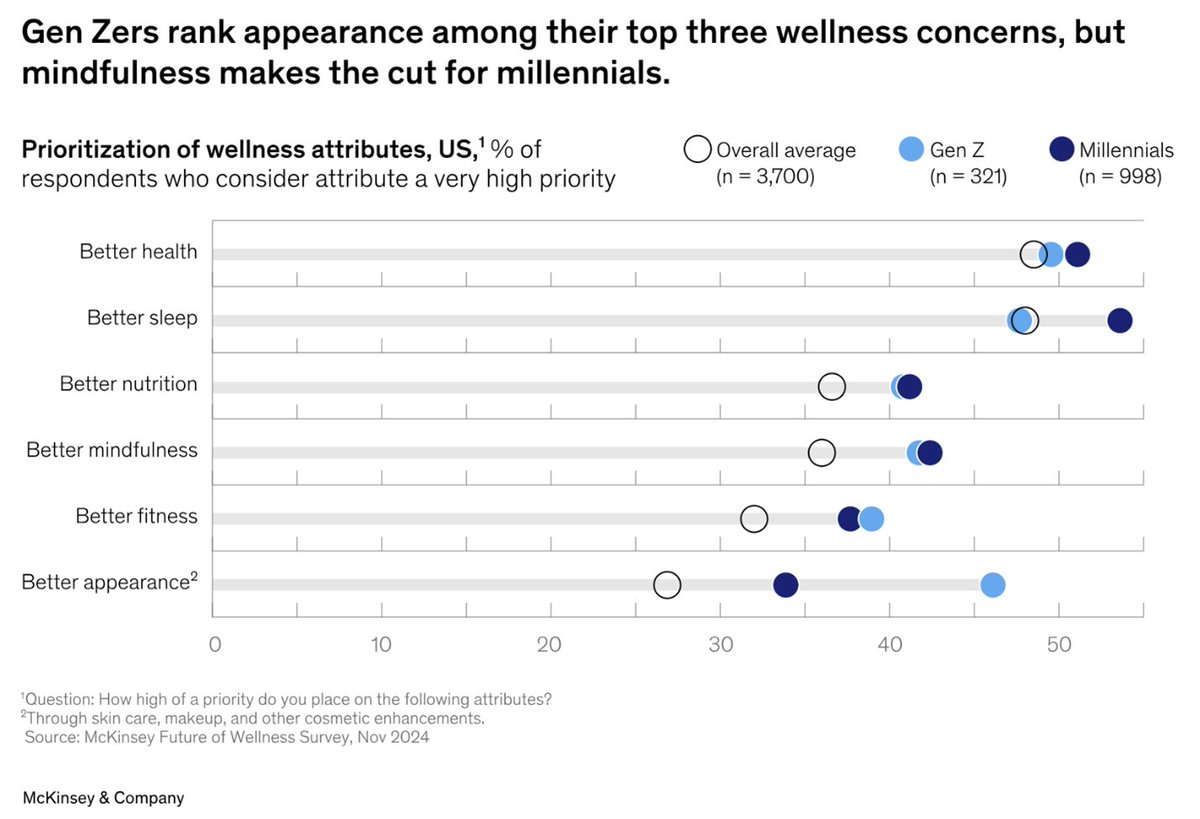
𝐍𝐨𝐭 𝐚𝐥𝐥 𝐰𝐞𝐥𝐥𝐧𝐞𝐬𝐬 𝐜𝐨𝐧𝐬𝐮𝐦𝐞𝐫𝐬 𝐚𝐫𝐞 𝐜𝐫𝐞𝐚𝐭𝐞𝐝 𝐞𝐪𝐮𝐚𝐥.
That’s one of the most overlooked — and most important — takeaways from @McKinsey's latest wellness report.
We often talk about what’s growing in wellness: functional nutrition, mindfulness, longevity, aesthetics, etc. But we rarely talk about who is driving that growth — and how their mindsets are radically different.
According to McKinsey, today’s wellness market is made up of five distinct consumer personas:
➀ 𝐌𝐚𝐱𝐢𝐦𝐚𝐥𝐢𝐬𝐭 𝐎𝐩𝐭𝐢𝐦𝐢𝐳𝐞𝐫𝐬 – Data-driven, digitally native, willing to try everything if it works
➁ 𝐂𝐨𝐧𝐟𝐢𝐝𝐞𝐧𝐭 𝐄𝐧𝐭𝐡𝐮𝐬𝐢𝐚𝐬𝐭𝐬 – Fitness-forward, loyal once they find their go-to routine
➂ 𝐇𝐞𝐚𝐥𝐭𝐡 𝐓𝐫𝐚𝐝𝐢𝐭𝐢𝐨𝐧𝐚𝐥𝐢𝐬𝐭𝐬 – Older consumers focused on foundational health and ingredient labels
➃ 𝐇𝐞𝐚𝐥𝐭𝐡 𝐒𝐭𝐫𝐮𝐠𝐠𝐥𝐞𝐫𝐬 – Motivated, but overwhelmed and unsure where to start
➄ 𝐖𝐞𝐥𝐥𝐧𝐞𝐬𝐬 𝐒𝐡𝐫𝐢𝐧𝐤𝐞𝐫𝐬 – Price-sensitive, minimally engaged unless absolutely necessary
Each group engages with wellness 𝘥𝘪𝘧𝘧𝘦𝘳𝘦𝘯𝘵𝘭𝘺.
What speaks to a Maximalist Optimizer (biohacking, clean label innovation, health wearables) may never resonate with a Traditionalist who is scanning nutrition labels at CVS Health.
But here’s the opportunity — and the challenge — for founders and investors:
𝐖𝐞'𝐫𝐞 𝐧𝐨𝐭 𝐣𝐮𝐬𝐭 𝐛𝐮𝐢𝐥𝐝𝐢𝐧𝐠 "𝐰𝐞𝐥𝐥𝐧𝐞𝐬𝐬 𝐛𝐫𝐚𝐧𝐝𝐬." 𝐖𝐞'𝐫𝐞 𝐛𝐮𝐢𝐥𝐝𝐢𝐧𝐠 𝐟𝐨𝐫 𝐝𝐢𝐯𝐞𝐫𝐬𝐞 𝐦𝐢𝐧𝐝𝐬𝐞𝐭𝐬.
Take functional nutrition. The image below says it all. Consumers want more than just protein and vitamins — they’re seeking targeted outcomes: energy, gut health, immunity, cognition, calm, hormone support.
And yet, many of these needs are still unmet.
This is where innovation matters.
Brands that deliver specific, science-backed solutions for distinct need states — and tailor messaging to the right consumer mindset — will lead.
Whether you’re a CPG founder, health-tech builder, or investor like us at @GroundForceCap, this matters:
→ Match product to psychology
→ Back clarity over complexity
→ And never forget: the wellness category isn’t monolithic — it’s deeply personal
The future of this space won’t be won by who can yell the loudest — but by who can listen best.
Full report here: https://t.co/S1B1uZOvIf
Found this gem tucked away at my parents' house — a business card from my first venture:
𝐂��𝐨𝐬𝐬 𝐒𝐭𝐫𝐢𝐧𝐠𝐬
“𝘘𝘶𝘢𝘭𝘪𝘵𝘺 𝘴𝘵𝘳𝘪𝘯𝘨𝘪𝘯𝘨 𝘢𝘵 𝘥𝘪𝘴𝘤𝘰𝘶𝘯𝘵 𝘱𝘳𝘪𝘤𝘦𝘴.”
I was 14, a high school tennis player with a racquet stringing machine and a willingness to hustle.
It started with friends and family. Then I posted flyers at the local public courts. Eventually, I picked up clients from nearby country clubs… and somehow, I ended up as the official stringer for the Yale University Women’s Tennis Team.
At 14, I didn’t know what a “business strategy” was. I just knew I loved tennis, and I had an opportunity to deliver something useful.
𝐋𝐨𝐨𝐤𝐢𝐧𝐠 𝐛𝐚𝐜𝐤 𝐧𝐨𝐰, 𝐭𝐡𝐢𝐬 𝐥𝐢𝐭𝐭𝐥𝐞 𝐜𝐚𝐫𝐝 𝐫𝐞𝐦𝐢𝐧𝐝𝐬 𝐦𝐞 𝐨𝐟 𝐚 𝐟𝐞𝐰 𝐭𝐡𝐢𝐧𝐠𝐬:
→ Entrepreneurship isn’t about age or funding. It’s about solving a problem and being willing to show up.
→ Word-of-mouth still matters. Do good work, and people talk.
→ The seed of what we become is often planted early — we just don’t always realize it at the time.
I didn’t know this back then, but Cross Strings was my first lesson in customer service, quality control, pricing, and brand positioning — even if I called it “stringing racquets for $10 less than the pro shop.”
Everyone starts somewhere. This was my start.
What was yours?
The $2 trillion wellness industry isn’t just growing — it’s undergoing a transformation.
@McKinsey's latest “Future of Wellness” report puts numbers behind what we’ve long seen on the ground:
→ Gen Z and millennials aren’t just interested in wellness. They’re redefining it.
For these generations, wellness is no longer a product you buy — it’s a lifestyle you design.
It’s personalized. Daily. Holistic. And, most importantly, it's non-negotiable.
Despite accounting for just 36% of the adult population, Gen Z and millennials are driving over 41% of all wellness spend in the U.S. — and not just on protein powders or gym memberships.
They're investing in:
• Mental health and mindfulness apps
• Functional nutrition and gut health
• Beauty with a wellness twist (like ingestibles and red-light therapy)
• Longevity protocols that go way beyond “anti-aging”
• Retreats and immersive wellness travel
• Digital tools that turn tracking into transformation
At @GroundForceCap, we believe that the future of consumer health is experiential, measurable, and rooted in science. And this next generation of wellness consumers is proving it.
They don’t just want better-for-you products — they want better-outcomes-for-me platforms.
They seek personalization. Transparency. Real results.
This isn’t a fleeting trend — it’s a cultural shift.
As investors, entrepreneurs, and leaders, we need to meet consumers where they are — and where they’re headed.
That means:
→ Blurring the lines between food, medicine, and self-care
→ Backing brands that think in platforms, not silos
→ Prioritizing data, biofeedback, and scientific rigor
→ Designing for a consumer who values quality over price — and values over marketing
We’re living through a generational moment in wellness.
And those who understand it — and act on it — will shape not just an industry, but a healthier future.
Would love to hear how others are seeing this trend play out.
What companies are standing out to you in the wellness space?
Full report here: https://t.co/S1B1uZNXSH
𝐌𝐢𝐝-𝐲𝐞𝐚𝐫 𝐢𝐬𝐧'𝐭 𝐣𝐮𝐬𝐭 𝐚 𝐜𝐡𝐞𝐜𝐤𝐩𝐨𝐢𝐧𝐭. 𝐈𝐭'𝐬 𝐚 𝐫𝐞𝐜𝐚𝐥𝐢𝐛𝐫𝐚𝐭𝐢𝐨𝐧.
Last month, we brought the entire @GroundForceCap team together at our Mill Valley office for our annual mid-year check-in.
With teams based in both SF Bay Area and LA, in-person time isn’t something we take for granted. These moments of connection go beyond culture — they create alignment, sharpen priorities, and reinforce the shared mission that guides everything we do.
Half the year is behind us. Just under half is still ahead.
That makes now the perfect time to pause, reflect, and ask the hard questions:
➜ How are we tracking relative to our annual OKRs?
➜ Are we adapting fast enough to what’s emerging?
➜ Where do we need to double down — or pivot?
To help us level up, we invited our execitove coaches from The Conscious Leadership Group to guide us through this process.
A special thank you to Jim Fallon and Sierra Larson for joining us in person and for everything you’ve poured into our team over the past six months. Your impact is real.
We believe strong performance isn’t accidental — it’s built.
It’s built through intention. Through honest reflection. Through focus and follow-through.
Here’s to making the rest of 2025 our sharpest and strongest yet.
“𝑰 𝒘𝒊𝒔𝒉 𝑰 𝒘𝒐𝒓𝒌𝒆𝒅 𝒎𝒐𝒓𝒆.”
Said no one, ever.
It’s a truth we all 𝘬𝘯𝘰𝘸 — but one that’s easy to forget in the pursuit of success.
I’ve spent years going full throttle — early mornings, late nights, pushing through races, building companies from scratch, pouring everything I had into the work.
That kind of drive helped shape my career. But it’s not the full story.
Because when people reflect at the end of their lives, they don’t regret the hours they didn’t spend in meetings or hitting inbox zero.
They say this: “𝑰 𝒘𝒊𝒔𝒉 𝑰 𝒉𝒂𝒅 𝒔𝒑𝒆𝒏𝒕 𝒎𝒐𝒓𝒆 𝒕𝒊𝒎𝒆 𝒘𝒊𝒕𝒉 𝒎𝒚 𝒇𝒂𝒎𝒊𝒍𝒚 𝒂𝒏𝒅 𝒇𝒓𝒊𝒆𝒏𝒅𝒔.”
That line hits me hard — not just as a founder, but as a husband, a father, a friend.
The people who matter most aren’t on your cap table or in your email threads. They’re the ones who show up when it counts. The ones who know who you are — not just what you do.
Earlier this week, I was on a run and sent a short video message to my wife’s uncle, who’s sick, just to say I was thinking about him. He responded to let me know how much it meant.
It took 45 seconds. But it meant more than anything I checked off my to-do list that day.
So here’s my challenge to you:
𝐖𝐢𝐭𝐡𝐢𝐧 𝐭𝐡𝐞 𝐧𝐞𝐱𝐭 24 𝐡𝐨𝐮𝐫𝐬, 𝐭𝐚𝐤𝐞 𝐨𝐧𝐞 𝐦𝐢𝐧𝐮𝐭𝐞 𝐭𝐨 𝐜𝐚𝐥𝐥, 𝐭𝐞𝐱𝐭, 𝐨𝐫 𝐬𝐞𝐧𝐝 𝐚 𝐯𝐢𝐝𝐞𝐨 𝐦𝐞𝐬𝐬𝐚𝐠𝐞 𝐭𝐨 𝐬𝐨𝐦𝐞𝐨𝐧𝐞 𝐲𝐨𝐮 𝐥𝐨𝐯𝐞.
Tell them why you’re grateful for them. It doesn’t need to be polished. It just needs to be real.
Because at the end of the day, it’s not the hours we log at work that define our lives.
It’s the people we choose to show up for — and the moments we create with them.
Let’s not wait until we’re “less busy” to do what matters most.
—
This is Part 8 of a series based on a recent talk I gave at @Stanford University — reflections from a career that’s not just been about success but meaning.
𝐅𝐢𝐧𝐝 𝐘𝐨𝐮𝐫 𝐍𝐨𝐫𝐭𝐡 𝐒𝐭𝐚𝐫 🌟
In 2014, from the outside, it looked like I had it all.
Thirteen years into my career at Weiss. Partner. Executive Committee. Managing a $500M portfolio.
@HealthWarrior was thriving—we had just brought on a high-profile PE firm and were three years away from a successful exit.
But internally? I wasn’t fulfilled.
I was tired. Not just physically, but spiritually. Tired of the Bloomberg terminal. Tired of the grind. I was running a race I no longer wanted to win.
My wife and I had just gotten married. And she turned to me one day, and asked a simple question:
“𝐖𝐡𝐲 𝐝𝐨𝐧’𝐭 𝐲𝐨𝐮 𝐣𝐮𝐬𝐭 𝐥𝐞𝐚𝐯𝐞?”
That question sent me on a journey.
I started working with an executive coach, and in one of our first sessions, he asked:
“𝐖𝐡𝐚𝐭’𝐬 𝐲𝐨𝐮𝐫 𝐍𝐨𝐫𝐭𝐡 𝐒𝐭𝐚𝐫?”
I didn’t have an answer.
So, we dove in. Through deep reflection and honest conversations, I uncovered what truly mattered to me.
Eventually, I made the hardest professional decision of my life: I walked away.
I took a year to reset—traveling, reflecting, recalibrating.
And from that process, @GroundForceCap was born.
Not just an investment firm—but a mission-driven platform committed to improving human and planetary health.
We built the firm around our North Star: 𝐁𝐚𝐜𝐤𝐢𝐧𝐠 𝐜𝐨𝐦𝐩𝐚𝐧𝐢𝐞𝐬 𝐭𝐡𝐚𝐭 𝐦𝐚𝐤𝐞 𝐭𝐡𝐞 𝐰𝐨𝐫𝐥𝐝 𝐡𝐞𝐚𝐥𝐭𝐡𝐢𝐞𝐫—𝐟𝐨𝐫 𝐩𝐞𝐨𝐩𝐥𝐞 𝐚𝐧𝐝 𝐭𝐡𝐞 𝐩𝐥𝐚𝐧��𝐭.
So, here’s my challenge to you:
𝐖𝐡𝐚𝐭’𝐬 𝐲𝐨𝐮𝐫 𝐍𝐨𝐫𝐭𝐡 𝐒𝐭𝐚𝐫?
𝐇𝐚𝐯𝐞 𝐲𝐨𝐮 𝐰𝐫𝐢𝐭𝐭𝐞𝐧 𝐝𝐨𝐰𝐧 𝐲𝐨𝐮𝐫 𝐜𝐚𝐫𝐞𝐞𝐫 𝐦𝐢𝐬𝐬𝐢𝐨𝐧, 𝐯𝐢𝐬𝐢𝐨𝐧, 𝐚𝐧𝐝 𝐯𝐚𝐥𝐮𝐞𝐬?
When you know where you’re headed, you gain the courage to leave “good” in pursuit of great.
—
This is Part 6 of a series from a talk I gave at @Stanford—a collection of lessons I’ve learned (and earned) while building a career that’s not just successful, but meaningful.
𝐖𝐚𝐥𝐤 𝐭𝐡𝐞 𝐰𝐚𝐥𝐤 — 𝐨𝐫 𝐢𝐧 𝐭𝐡𝐢𝐬 𝐜𝐚𝐬𝐞, 𝐫𝐮𝐧 𝐭𝐡𝐞 𝐫𝐮𝐧.
Back when I was training for Ironmans and working full-time at a hedge fund, I made one of my first angel investments: @zico, founded by my now-partner Mark Rampolla.
ZICO was early. Clean-label. Naturally hydrating. Built on a mission. But this was pre-Instagram. Pre-TikTok. Before “viral” was even a thing.
There was no media budget. No playbook. Just belief in the product — and a whole lot of hustle.
As early investors, we made a promise:
We wouldn’t just 𝘣𝘢𝘤𝘬 the brand. We’d 𝘭𝘪𝘷𝘦 it.
So @JesseItzler and I ran the NYC Marathon dressed as giant ZICO bottles.
The idea? Guerrilla marketing at its finest. Get in front of hundreds of thousands of people. For the price of a race bib, become a human billboard.
But let me tell you — building a ZICO costume is not as easy as it sounds. We cobbled it together at the last minute. No rehearsals. No trial run. Just duct tape, hope, and a lot of adrenaline.
By mile 3, the streets were packed — and the magic kicked in.
The crowd erupted. People were cheering, laughing, taking photos. We were high-fiving strangers, posing mid-stride, and soaking it all in. We weren’t just repping the brand. We were the brand.
The payoff?
Photos of us ended up in magazines and online race recaps. People remembered ZICO. Not because of a billboard or a commercial — but because we 𝘴𝘩𝘰𝘸𝘦𝘥 𝘶𝘱 and did something no one else was willing to do.
𝐅𝐚𝐬𝐭-𝐟𝐨𝐫𝐰𝐚𝐫𝐝 𝐭𝐨 𝐣𝐮𝐬𝐭 𝐚 𝐟𝐞𝐰 𝐰𝐞��𝐤𝐬 𝐚𝐠𝐨:
I ran Bay to Breakers in San Francisco — again in a ZICO costume. This time, I was joined by Mark Rampolla, Christopher Gallant, and Adam King — all decked out in our ZICO Pure Organic suits.
Different race. Different city. Same ethos:
𝐃𝐨𝐧’𝐭 𝐣𝐮𝐬𝐭 𝐭𝐚𝐥𝐤 𝐚𝐛𝐨𝐮𝐭 𝐭𝐡𝐞 𝐛𝐫𝐚𝐧𝐝. 𝐁𝐞 𝐭𝐡𝐞 𝐛𝐫𝐚𝐧𝐝.
So here’s the takeaway:
Whether you're building a business, raising capital, or training for your first big challenge — people don’t just buy what you’re selling.
𝐓𝐡𝐞𝐲 𝐛𝐮𝐲 𝐲𝐨𝐮𝐫 𝒄𝒐𝒏𝒗𝒊𝒄𝒕𝒊𝒐𝒏.
So the next time you feel like playing it safe, ask yourself:
𝐀𝐫𝐞 𝐲𝐨𝐮 𝐰𝐢𝐥𝐥𝐢𝐧𝐠 𝐭𝐨 𝐫𝐮𝐧 𝐭𝐡𝐞 𝐫𝐮𝐧?
—
This is Post 5 in a series I’ve been sharing, based on a talk I gave at @Stanford University — stories and lessons I’ve learned (and lived) through building brands, making bets, and getting my hands dirty along the way.
𝐓𝐡𝐞 𝐩𝐨𝐰𝐞𝐫 𝐨𝐟 𝐚 𝐫𝐞𝐛𝐫𝐚𝐧𝐝 𝐢𝐬𝐧’𝐭 𝐢𝐧 𝐫𝐞𝐢𝐧𝐯𝐞𝐧𝐭𝐢𝐨𝐧—𝐢𝐭’𝐬 𝐢𝐧 𝐚𝐥𝐢𝐠𝐧𝐦𝐞𝐧𝐭.
A rebrand doesn’t mean tossing out what’s working. It’s about evolving with intention: sharpening what isn’t, clarifying your story, and setting your business up for what’s next.
We’ve seen this play out across the GroundForce Capital portfolio—brands staying true to their core while stepping confidently into their next chapter.
@coconutcollab (Jan. '25)
As the UK’s leading dairy-free dessert brand, The Coconut Collab has built a loyal following by balancing indulgence with clean, plant-based ingredients. Their brand refresh elevated that foundation with:
● Bold new packaging that commands shelf space
● Cleaner communication of product benefits
● A refreshed website highlighting their full portfolio
The result? A stronger, clearer expression of the brand’s mission—without losing what made it beloved in the first place.
Thistle (Jan. '24)
After a decade of prioritizing ingredients and operations, Thistle—a leader in plant-forward, ready-to-eat meals—decided it was time to invest in brand identity. The result was a rebrand 10 years in the making:
● A vibrant new logo and earthy color palette
● Updated packaging and website
● A visual language that matches the company’s nutritional mission
𝐓𝐡𝐞 𝐭𝐢𝐦𝐢𝐧𝐠 𝐰𝐚𝐬 𝐢𝐧𝐭𝐞𝐧𝐭𝐢𝐨𝐧𝐚𝐥.
Thistle chose to build the foundation first—prioritizing sourcing, recipes, and customer experience—before evolving how the brand shows up in the
world. The rebrand wasn’t rushed. It was earned.
@DrinkPartake (June '23)
With a new packaging system and a modern visual identity, Partake now reflects the multifaceted, modern drinker—people who, quite literally, “partake in it all.” It’s fresh, inclusive, and built for a new era.
𝐒𝐨… 𝐰𝐡𝐞𝐧 𝐢𝐬 𝐢𝐭 𝐭𝐢𝐦𝐞 𝐭𝐨 𝐫𝐞𝐛𝐫𝐚𝐧𝐝?
If your business has evolved, your brand should reflect that evolution.
In Aug. '23, we rebranded ourselves—from PowerPlant Partners to @GroundForceCap—because the old name no longer captured our broader investment focus across branded consumer and brand enablement businesses. The shift was about realigning our identity with who we were becoming.
A great brand should:
✔️ Communicate who you are—instantly
✔️ Build trust with the right audience
✔️ Set you apart in a crowded market
And a thoughtful rebrand can:
● Clarify your story and purpose
● Create consistency across every channel
● Strengthen emotional connection with your audience
● Position you for growth—with authenticity
This isn’t just about logos and color palettes. It’s about building a brand that reflects your ambition—and connects with the people you’re here to serve.
If something feels off, if your message is landing flat, or your look no longer fits the business you’re building… it might be time to take a closer look.
We’re learning alongside our founders and operators—and we’ll be sharing more soon on branding in today’s CPG landscape.
𝐓𝐡𝐞 𝐌𝐀𝐇𝐀 𝐂𝐨𝐦����𝐢𝐬𝐬𝐢𝐨𝐧 𝐫𝐞𝐥𝐞𝐚𝐬𝐞𝐝 𝐢𝐭𝐬 𝐢𝐧𝐚𝐮𝐠𝐮𝐫𝐚𝐥 𝐫𝐞𝐩𝐨𝐫𝐭 — 𝐚𝐧𝐝 𝐢𝐭 𝐝𝐨𝐞𝐬𝐧’𝐭 𝐬𝐮𝐠𝐚𝐫𝐜𝐨𝐚𝐭 𝐚 𝐭𝐡𝐢𝐧𝐠.
Ultraprocessed foods. Environmental toxins. Systemic neglect.
The MAHA report pulls no punches — and it shouldn’t.
While some critics dismiss it as alarmist, I see it for what it is: a necessary wake-up call. One that validates what many of us in health, wellness, and investing have seen coming for years.
It’s not perfect. But its message is urgent.
𝐅𝐨𝐨𝐝 𝐢𝐬 𝐟𝐨𝐮𝐧𝐝𝐚𝐭𝐢𝐨𝐧𝐚𝐥.
Consider the data:
● 70% of the U.S. food supply is ultraprocessed
● Up to 70% of kids’ daily calories come from these foods
● These diets strip away fiber, deplete micronutrients, and spike sugar intake
● Synthetic dyes, sweeteners, and emulsifiers raise serious concerns about long-term cognitive and developmental health
And this goes beyond the plate.
𝐓𝐨𝐱𝐢𝐧𝐬 𝐥𝐢𝐤𝐞 𝐠𝐥𝐲𝐩𝐡𝐨𝐬𝐚𝐭𝐞, 𝐏𝐅𝐀𝐒, 𝐚𝐧𝐝 𝐦𝐢𝐜𝐫𝐨𝐩𝐥𝐚𝐬𝐭𝐢𝐜𝐬 𝐚𝐫𝐞 ��𝐨𝐰 𝐟𝐨𝐮𝐧𝐝 𝐢𝐧 𝐭𝐡𝐞 𝐛𝐥𝐨𝐨𝐝𝐬𝐭𝐫𝐞𝐚𝐦𝐬 𝐨𝐟 𝐩𝐫𝐞𝐠𝐧𝐚𝐧𝐭 𝐰𝐨𝐦𝐞𝐧 𝐚𝐧𝐝 𝐜𝐡𝐢𝐥𝐝𝐫𝐞𝐧. We don’t yet know the full implications — but we do know this: chronic disease risk begins far earlier than most people realize.
At @GroundForceCap, we’ve been sounding the alarm for years. And more importantly, we’ve been putting our money where our mission is — backing brands that lead with transparency, integrity, and a commitment to human health.
This isn’t just a food problem. It’s a system problem.
And like any system under pressure, change starts at the edges — with the entrepreneurs, the operators, the innovators bold enough to build something better.
𝐒𝐨 𝐭𝐡𝐞 𝐫𝐞𝐚𝐥 𝐪𝐮𝐞𝐬𝐭𝐢𝐨𝐧 𝐢𝐬: 𝐖𝐡𝐚𝐭 𝐝𝐨 𝐰𝐞 𝐝𝐨 𝐧𝐨𝐰?
➟ Do we wait for the red tape to clear and the science to become “conclusive”?
➟ Or do we invest in cleaner food systems, push for stricter standards, and build brands that actually nourish people?
For founders, investors, and policymakers — the time for half-measures is over.
Let’s stop thinking in silos. Let’s start thinking in systems.
The future of health will be shaped by how we feed our bodies, our children, and our planet.
Let’s be bold enough to lead that transformation.
—
I’d love to hear your thoughts: Is the MAHA Commission getting it right? What should the CPG industry do in response?
Link to the report here: https://t.co/cLHDKsCXab
𝐅𝐨𝐫𝐭𝐮𝐧𝐞 𝐅𝐚𝐯𝐨𝐫𝐬 𝐭𝐡𝐞 𝐁𝐨𝐥𝐝.
If you wait until you're “ready,” you’ll never do the hard things.
That was certainly the case when I co-founded @HealthWarrior.
I was working full-time in a demanding hedge fund role. I had zero experience in CPG. No operational team. No extra time. No playbook. Just conviction — and a burning belief that more people deserved access to clean, functional food.
On paper, starting a company made no sense.
But I did it anyway.
I did this with two close friends. We found early advisors. We partnered with a branding agency. And somehow, we pulled off a national launch at Whole Foods Market.
The early traction was real. The product resonated. We started to scale.
But let me be clear — it wasn’t some straight shot to the finish line.
We faced every challenge imaginable:
→ A product recall.
→ Internal disputes.
→ Difficult conversations with our private equity partner.
→ A sexual harassment case that forced tough, immediate decisions.
→ Layoffs.
→ Turnover.
→ Lost shipments.
→ Mistakes that cost us dearly.
There were moments that tested every ounce of resolve we had.
But we kept building.
We stayed focused. We hired better. We learned. We adapted. And through all of it, we grew.
Seven years after we launched, Health Warrior was acquired by @PepsiCo. Not because we had the cleanest path — but because we had the courage to take the path.
That’s what boldness looks like. It doesn’t mean recklessness. It means taking the leap before the net appears — and doing everything in your power to build the net on the way down.
If there’s something tugging at you — a startup idea, a career move, a risk you can’t shake — don’t wait until everything’s perfect.
It never will be.
𝐅𝐨𝐫𝐭𝐮𝐧𝐞 𝐝𝐨𝐞𝐬𝐧’𝐭 ����𝐞𝐰𝐚𝐫𝐝 𝐭𝐡𝐞 𝐦𝐨𝐬𝐭 𝐜𝐚𝐮𝐭𝐢𝐨𝐮𝐬.
𝐈𝐭 𝐫𝐞𝐰𝐚𝐫𝐝𝐬 𝐭𝐡𝐞 𝐦𝐨𝐬𝐭 𝐜𝐨𝐦𝐦𝐢𝐭𝐭𝐞𝐝.
—
This is Post 4 in a series based on a talk I gave at Stanford University — stories and lessons from building businesses, backing founders, and betting on bold ideas with conviction.
𝐆𝐥𝐨𝐛𝐚𝐥 𝐞𝐦𝐩𝐥𝐨𝐲𝐞𝐞 𝐞𝐧𝐠𝐚𝐠𝐞𝐦𝐞𝐧𝐭 𝐣𝐮𝐬𝐭 𝐝𝐫𝐨𝐩𝐩𝐞𝐝 𝐟𝐨𝐫 𝐭𝐡𝐞 𝐟𝐢𝐫𝐬𝐭 𝐭𝐢𝐦𝐞 𝐢𝐧 𝐟𝐨𝐮𝐫 𝐲𝐞𝐚𝐫𝐬 — 𝐚𝐧𝐝 𝐦𝐚𝐧𝐚𝐠𝐞𝐫𝐬 𝐚��𝐞 𝐟𝐞𝐞𝐥𝐢𝐧𝐠 𝐢𝐭 𝐭𝐡𝐞 𝐦𝐨𝐬𝐭.
According to @Gallup's State of the Global Workplace: 2025 Report, only 21% of employees were engaged at work in 2024. That marks just the second decline in the past 12 years — a stark signal for leaders navigating burnout, turnover, and cultural drift.
The message is clear: 𝐭𝐡𝐞 𝐠𝐥𝐨𝐛𝐚𝐥 𝐰𝐨𝐫𝐤𝐩𝐥𝐚𝐜𝐞 𝐢𝐬 𝐚𝐭 𝐚 𝐭𝐮𝐫𝐧𝐢𝐧𝐠 𝐩𝐨𝐢𝐧𝐭.
So what’s driving the disengagement?
While every team is unique, the root causes are often strikingly consistent:
● Lack of autonomy and purpose
● Misalignment between personal values and company mission
● Stagnant growth opportunities
● Poor leadership, limited feedback, and toxic culture
● Overload from unrealistic demands or unclear expectations
● Rigid return-to-office policies with little added benefit
Disengagement doesn’t happen overnight. It’s the slow erosion of meaning, energy, and trust.
At @GroundForceCap, we’ve taken this seriously — not just for our own team, but for the founders we support. Engagement isn’t a perk. It’s a priority.
Here are a few tools that have helped me — and the teams I work with — re-engage in meaningful, measurable ways:
● 𝐂𝐨𝐧𝐝𝐮𝐜𝐭 𝐚𝐧 𝐄𝐧𝐞𝐫𝐠𝐲 𝐀𝐮𝐝𝐢𝐭
Where are you energized during the day? Where are you drained? Mapping this helps pinpoint what lights you up — and what’s dragging you down.
● 𝐄𝐱𝐩𝐥𝐨𝐫𝐞 𝐘𝐨𝐮𝐫 𝐙𝐨𝐧𝐞 𝐨𝐟 𝐆𝐞𝐧𝐢𝐮𝐬
We’ve used Enneagram assessments and other personal development tools to understand each team member’s unique strengths. When people operate in their sweet spot, everything changes — performance, fulfillment, and connection.
● 𝐈𝐧𝐯𝐢𝐭𝐞 𝐅𝐞𝐞𝐝𝐛𝐚��𝐤 + 𝐄𝐱𝐩𝐞𝐫𝐢𝐦𝐞𝐧𝐭
Try asking your team: “What would need to change for you to be excited about work again?” Then be willing to experiment — and measure results.
● 𝐎𝐟𝐟𝐞𝐫 𝐆𝐫𝐨𝐰𝐭𝐡-𝐃𝐫𝐢𝐯𝐞𝐧 𝐀𝐮𝐭𝐨𝐧𝐨𝐦𝐲
Let your team own projects that inspire them. Encourage learning. Foster independence. Provide structure without micromanagement.
If Gallup’s report is a wake-up call, then it’s on all of us — founders, investors, and leaders — to answer it with bold, human-centered action.
Because engagement doesn’t just fuel productivity. It fuels purpose.
—
What strategies have worked for you in keeping your team engaged and inspired?
Read more about Gallup’s State of the Global Workplace: 2025 Report here:
https://t.co/cpBWhfnirz
𝐁𝐞 𝐚𝐧 𝐚𝐝𝐯𝐨𝐜𝐚𝐭𝐞 𝐟𝐨𝐫 𝐲𝐨𝐮𝐫𝐬𝐞𝐥𝐟.
Early in my career, I landed a job at a hedge fund.
The grind was relentless — long days, intense pressure, lots of travel. But I was thriving. I was earning trust, gaining responsibility, delivering results.
Still, I wanted more.
I didn’t want to just collect a paycheck and bonus. I wanted a seat at the
table. I wanted to build. To decide. To own.
But there was no playbook for how to become a partner. It felt... taboo. Do you just ask?
I mentioned it to my cousin. He didn’t hesitate:
“𝒀𝒐𝒖 𝒅𝒐𝒏’𝒕 𝒈𝒆𝒕 𝒘𝒉𝒂𝒕 𝒚𝒐𝒖 𝒅𝒐𝒏’𝒕 𝒂𝒔𝒌 𝒇𝒐𝒓.”
That was the spark I needed.
I built up the courage and booked time with my boss, the founder of the firm. His office was every bit the Wall Street cliché — 20th floor on Park Ave, cigar on the desk, expensive art on the walls, Wall Street Journals stacked like wallpaper.
I sat across from him and told him:
"𝑰 𝒘𝒐𝒖𝒍𝒅 𝒍𝒊𝒌𝒆 𝒕𝒐 𝒃𝒆𝒄𝒐𝒎𝒆 𝒂 𝑷𝒂𝒓𝒕𝒏𝒆𝒓."
He paused. Looked at me and said:
“𝑵𝒐 𝒐𝒏𝒆 𝒉𝒂𝒔 𝒆𝒗𝒆𝒓 𝒂𝒔𝒌𝒆𝒅 𝒃���𝒇𝒐𝒓𝒆.”
Then… silence.
Weeks passed. No follow-up. No response. Just crickets. I second-guessed myself. Was I out of line? Too eager? I even started avoiding eye contact with him.
Until one day, his assistant pulled me aside:
“𝑮𝒆𝒐𝒓𝒈𝒆 𝒘𝒂𝒏𝒕𝒔 𝒕𝒐 𝒔𝒆𝒆 𝒚𝒐𝒖.”
I walked into his office, unsure of what to expect.
He looked at me and said,
“𝑰 𝒘𝒂𝒏𝒕 𝒕𝒐 𝒘𝒆𝒍𝒄𝒐𝒎𝒆 𝒚𝒐𝒖 𝒕𝒐 𝒕𝒉𝒆 𝒑𝒂𝒓𝒕𝒏𝒆𝒓𝒔𝒉𝒊𝒑.”
That conversation changed the trajectory of my career.
Not because it was handed to me — but because I asked for it.
Here’s the truth: 𝐧𝐨 𝐨𝐧𝐞 𝐰𝐢𝐥𝐥 𝐜𝐡𝐚𝐦𝐩𝐢𝐨𝐧 𝐲𝐨𝐮𝐫 𝐚𝐦𝐛𝐢𝐭𝐢𝐨𝐧 𝐦𝐨𝐫𝐞 𝐭𝐡𝐚𝐧 𝐲𝐨𝐮.
Not your manager. Not your mentor. Not even your closest colleagues.
If you don’t ask — clearly, respectfully, boldly — you’re betting on someone else to see your vision for you.
𝐒𝐨 𝐡𝐞𝐫𝐞’𝐬 𝐦𝐲 𝐜𝐡𝐚𝐥𝐥𝐞𝐧𝐠𝐞:
Where in your life or career do you need to speak up for yourself?
What’s the ask you’ve been avoiding?
Because sometimes, the difference between where you are and where you want to be… is one conversation.
----
This is the third post in a series I’ve been sharing, based on a class I recently spoke at @Stanford University — lessons I’ve learned (and earned) while building a career that’s both meaningful and high-impact.
𝐁𝐞 𝐭𝐡𝐞 𝐟𝐢𝐫𝐬𝐭 𝐭𝐨 𝐚𝐫𝐫𝐢𝐯𝐞 𝐚𝐧𝐝 𝐭𝐡𝐞 𝐥𝐚𝐬𝐭 𝐭𝐨 𝐥𝐞𝐚𝐯𝐞.
My dad wasn’t a man of many words. But when he spoke, I paid attention.
A week before I started my first consulting job out of college, he gave me a single piece of advice: “𝘉𝘦 𝘵𝘩𝘦 𝘧𝘪𝘳𝘴𝘵 𝘵𝘰 𝘢𝘳𝘳𝘪𝘷𝘦 𝘢𝘯𝘥 𝘵𝘩𝘦 𝘭𝘢𝘴𝘵 𝘵𝘰 𝘭𝘦𝘢𝘷𝘦.”
That was it. No long speech. No follow-up explanation. Just that.
So I listened.
I showed up early. I stayed late. I put my head down and worked harder than I ever had in my life.
It wasn’t easy. Not even close.
I sacrificed a lot. I remember sprinting to the gym when it opened at 5 a.m. — or squeezing in a workout just before it closed at night. My meals? Delivery. Three times a day. I said no to many parties, missed out on trips. At times, I questioned whether it was worth it — even thought about packing it up and moving to Colorado to reset.
But deep down, I believed it was leading somewhere. Even if I didn’t know where. I knew the job I had wasn’t the end goal — but the effort I was putting in was the currency for something greater.
Then, one day, it happened.
My manager, Tom, got a call about a hedge fund analyst role. He wasn’t interested because he was on his way to Business School — but he passed it to me. I took the interview. Poured everything into it. And I got the offer.
When I gave notice to the head of the group — she looked stunned.
She said, “𝘉𝘶𝘵 𝘺𝘰𝘶’𝘳𝘦 𝘢𝘭𝘸𝘢𝘺𝘴 𝘵𝘩𝘦 𝘧𝘪𝘳𝘴𝘵 𝘵𝘰 𝘢𝘳𝘳𝘪𝘷𝘦 𝘢𝘯𝘥 𝘵𝘩𝘦 𝘭𝘢𝘴𝘵 𝘵𝘰 𝘭𝘦𝘢𝘷𝘦.”
Then, she realized, it was because of that very reason that I got this amazing opportunity.
That moment stuck with me.
It validated every early morning, every late night, every decision to go all-in when it would’ve been easier not to.
That job became the launching pad for my career. It set everything in motion — from hedge fund investor to Founder of @HealthWarrior, to Co-Founder and Managing Partner of @GroundForceCap. All from a lesson that started with a simple sentence from my dad.
Effort compounds. Discipline builds identity. And sometimes, the smallest pieces of advice leave the biggest marks.
Thanks, Dad.
—
This is Part 2 of a series based on a recent talk I gave at @Stanford University — lessons I’ve learned (and earned) while building a career that’s not only successful, but meaningful.