Today we're announcing ESMFold2, an open scientific engine to power prediction, design, and discovery across protein biology.
The new model delivers state of the art performance on protein interactions, especially antibodies, a critical modality for therapeutics.
We have designed and validated miniprotein binders and single chain antibodies across five therapeutic targets that are important in cancer and immunology. We are seeing very high success rates, and affinities at levels consistent with therapeutic activity.
We’re also releasing an atlas of 6.8 billion proteins, and 1.1 billion predicted structures.
ESMFold2 is built on a state of the art language model that has been trained on billions of protein sequences.
A world model of protein biology emerges through language modeling.
We’ve used the techniques of mechanistic interpretability developed to understand large language models to understand the concepts ESM uses to represent proteins.
The model’s representation space has a compositional organization of features across scales, levels of complexity, and abstraction, that reflects and mirrors the understanding of protein biology developed through a century of empirical science.
This understanding emerges without prior knowledge, just from language modeling of protein sequences.
Language models are becoming a powerful substrate to understand and program biology.
The design of protein interactions is one of the most fundamental problems in biophysics, and has critical implications for the discovery of new medicines. A simple gradient based search with the model was able to discover high-affinity protein binders.
I'm excited by the potential this has to accelerate basic science and the understanding of proteins. And especially for the new avenues it opens up for therapeutic design and medicine.
~20% of Muslims in the West are radical
Their beliefs in 🇬🇧🇺🇸🇫🇷🇩🇰🇦🇹🇩🇪🇪🇺:
🇬🇧UK
63%: burning the Quran should be a crime
57%: compulsory halal in schools
52%: illegal to show a picture of Muhammad
39%: Hamas didn't rape & murder on Oct 7
32%: sharia law
32%: men & women should not be together in public
27%: outlaw homosexuality
27%: dogs should be banned from public spaces
25%: support Hamas
21%: support Jihad
17%: support Hezbollah
15%: support Al Qaeda
14%: Support the Taliban
9%: support ISIS
🇫🇷 France
46%: Sharia should be applied in France
44%: Islam rules are more important than French law
38%; approve some Islamist positions
24%: support the Muslim brotherhood
20%: Muslims can't leave Islam
15%: full Sharia in all countries
8%: approve of ALL Islamist positions
🇩🇰 Denmark
11%: the Quran should determine ALL legislation in 🇩🇰
7%: drawing the Prophet Muhammad deserves death
🇦🇹 Austria
35%: the man should make all decisions
🇺🇸US
80%: concerned about Muslim extremism
31%: only 1 way to interpret Islam
17%: great deal of support for extremism
🇩🇪Germany
45%: Western morality is depraved
43%: only Islam can solve our problems
40%: open or manifest Islamist
28%: Jews can't be trusted
25%: Quran rules more important than 🇩🇪 law
24%: an Islamic theocracy is the best form of government
10%: Islamic rules should shape society more
10%: manifest islamist
8%: prefer a Muslim council to rule 🇩🇪 (vs democracy)
🇪🇺6 EU countries
70%: only 1 true interpretation of Islam
65%: religious rules more important than secular ones
55%: don't want homosexual friends
53%: the West is out to destroy Islam
43%: Jews can't be trusted
And this is in the West, where they're selected for being more open to Western thought
So no, radical Muslims are not 1% of Islam
That doesn't mean most Muslims are radical!
20-30% are quite moderate
10-50% are conservative but tolerant
But trying to hide the radical minority abets it and makes the problem fester. It should be exposed and fought, not hidden, for the benefit of the majority of Muslims, who are not radical
On the data: some surveys are more reliable than others. None should be trusted standalone. But the picture that emerges across all surveys is pretty consistent.
All the sources, more data, and details here
https://t.co/iC4AGENNJI
we're making @blocks smaller today. here's my note to the company.
####
today we're making one of the hardest decisions in the history of our company: we're reducing our organization by nearly half, from over 10,000 people to just under 6,000. that means over 4,000 of you are being asked to leave or entering into consultation. i'll be straight about what's happening, why, and what it means for everyone.
first off, if you're one of the people affected, you'll receive your salary for 20 weeks + 1 week per year of tenure, equity vested through the end of may, 6 months of health care, your corporate devices, and $5,000 to put toward whatever you need to help you in this transition (if you’re outside the U.S. you’ll receive similar support but exact details are going to vary based on local requirements). i want you to know that before anything else. everyone will be notified today, whether you're being asked to leave, entering consultation, or asked to stay.
we're not making this decision because we're in trouble. our business is strong. gross profit continues to grow, we continue to serve more and more customers, and profitability is improving. but something has changed. we're already seeing that the intelligence tools we’re creating and using, paired with smaller and flatter teams, are enabling a new way of working which fundamentally changes what it means to build and run a company. and that's accelerating rapidly.
i had two options: cut gradually over months or years as this shift plays out, or be honest about where we are and act on it now. i chose the latter. repeated rounds of cuts are destructive to morale, to focus, and to the trust that customers and shareholders place in our ability to lead. i'd rather take a hard, clear action now and build from a position we believe in than manage a slow reduction of people toward the same outcome. a smaller company also gives us the space to grow our business the right way, on our own terms, instead of constantly reacting to market pressures.
a decision at this scale carries risk. but so does standing still. we've done a full review to determine the roles and people we require to reliably grow the business from here, and we've pressure-tested those decisions from multiple angles. i accept that we may have gotten some of them wrong, and we've built in flexibility to account for that, and do the right thing for our customers.
we're not going to just disappear people from slack and email and pretend they were never here. communication channels will stay open through thursday evening (pacific) so everyone can say goodbye properly, and share whatever you wish. i'll also be hosting a live video session to thank everyone at 3:35pm pacific. i know doing it this way might feel awkward. i'd rather it feel awkward and human than efficient and cold.
to those of you leaving…i’m grateful for you, and i’m sorry to put you through this. you built what this company is today. that's a fact that i'll honor forever. this decision is not a reflection of what you contributed. you will be a great contributor to any organization going forward.
to those staying…i made this decision, and i'll own it. what i'm asking of you is to build with me. we're going to build this company with intelligence at the core of everything we do. how we work, how we create, how we serve our customers. our customers will feel this shift too, and we're going to help them navigate it: towards a future where they can build their own features directly, composed of our capabilities and served through our interfaces. that's what i'm focused on now. expect a note from me tomorrow.
jack
We can now watch psilocybin grow new brain connections in real time.
Not metaphorically. Not "neuroplasticity" as a vague buzzword. Actual, physical structures — dendritic spines — sprouting from cortical neurons within 24 hours of a single dose.
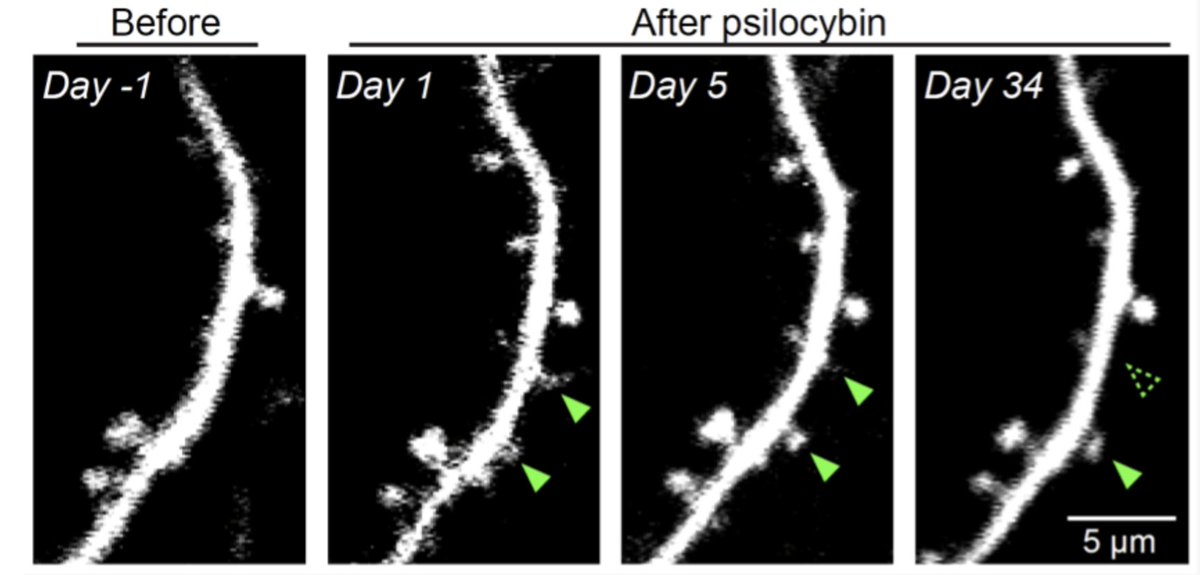
A team at Yale used chronic two-photon microscopy to image individual dendritic spines on layer 5 pyramidal neurons in the medial frontal cortex of living mice.
Before psilocybin. After psilocybin. Same neurons. Same spines. Day after day.
And here's what they found:
A single dose of psilocybin produced a ~10% increase in spine density and spine size. New spines began forming within 24 hours. Most of these new connections were still there a month later.
That last part matters most.
Psilocybin has a half-life of about 3 hours. The molecule is gone by dinner. But the structural changes it triggers persist for at least 34 days (and likely far longer).
This is the biological explanation for something clinicians have observed for years: a single psilocybin session producing therapeutic benefits that last months. The drug disappears, but the architecture it built does not.
There's a critical mechanistic detail. When researchers pre-treated with ketanserin — a 5-HT2A receptor antagonist — the spine growth was completely blocked. This confirms that structural remodeling depends on activation of the serotonin 2A receptor. The same receptor responsible for the psychedelic experience itself.
A 2025 follow-up from the same lab went further. Using rabies tracing to map brain-wide inputs to these new spines, they discovered psilocybin's rewiring is network-specific. It selectively strengthens inputs from perceptual and default mode network regions, the same networks implicated in self-referential processing, rumination, and depression.
It doesn't just grow connections randomly. It grows the RIGHT ones.
Here's what this means for practitioners:
The window after a psychedelic experience isn't just psychological. It's structural. New dendritic spines form and stabilize in the days and weeks following a session.
Integration practices — therapy, journaling, somatic work, meditation, breathwork — aren't just processing insights. They may be reinforcing which of these new physical connections survive.
You're not just supporting someone's mental model. You're supporting their neural architecture.
Think about what that reframes. The integration period isn't a nice-to-have. It's a biological imperative. Those new spines either stabilize into lasting connections or get pruned. The environment, practices, and support during that window may determine which.
We're not just learning that psilocybin works. We're watching exactly how it works, at the level of individual synapses.
The implications for how we design protocols, structure integration, and time follow-up sessions are enormous.
What do you make of this research? Is psilocybin the miracle drug that science makes it out to be?
🧵Super excited to share our new paper in @NatureGenet ⭐️
We apply a new multiple traits and ancestry approach to improve genetic discovery and polygenic prediction in lung diseases and traits 🫁
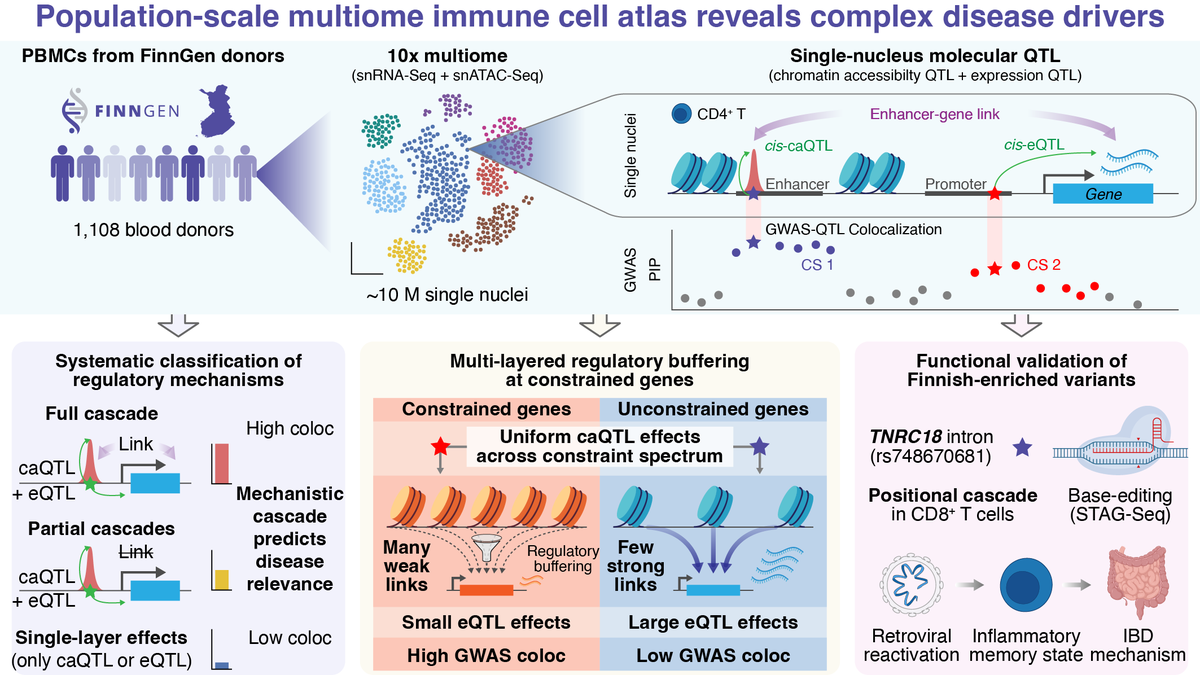
Excited to share our new FinnGen single-nucleus multiome preprint! 🧬
We profiled ~10M PBMCs (snRNA-seq + snATAC-seq) from 1,108 Finnish donors to map how genetic variants drive complex disease through chromatin and gene regulation 🧵👇
🔗 Link: https://t.co/A0LDn0jAKP
Here is our new preprint (https://t.co/dbRy3KLs27). We report heritability estimates for multiple traits using a within-family design in 500,000 sibling pairs of diverse ancestries! Fantastic collaboration with @23andMeResearch! Thanks to their participants and research team.
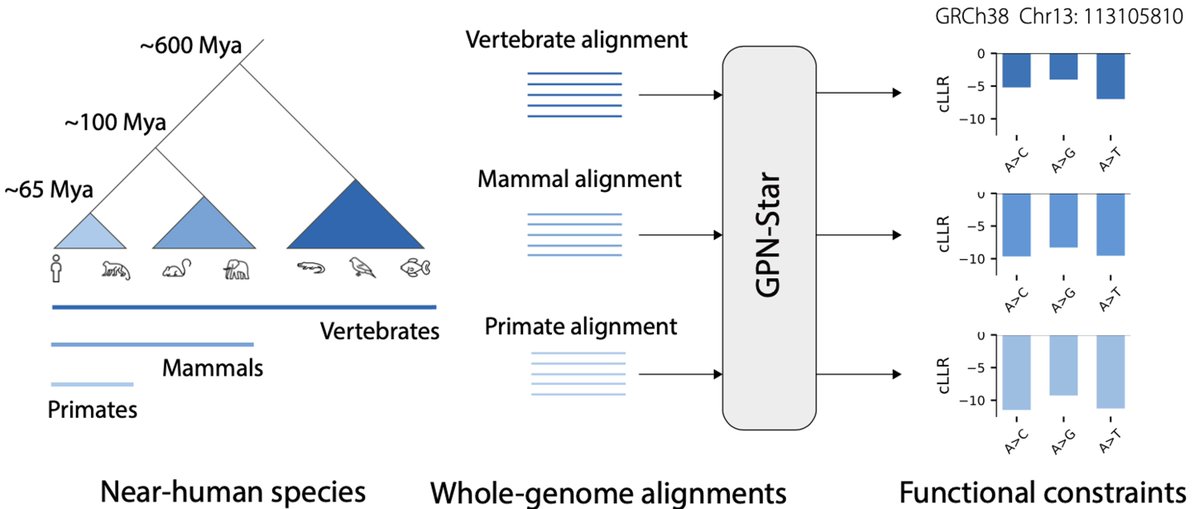
We are excited to share GPN-Star, a cost-effective, biologically grounded genomic language modeling framework that achieves state-of-the-art performance across a wide range of variant effect prediction tasks relevant to human genetics.
https://t.co/FTm3byYp67
(1/n)
There’s a huge wide lane for Normie Health Thought, which is that healthy diets are v powerful, exercise is genuinely amazing, building muscle as you get older is awesome …. and also, drugs are great, GLP1s are a miracle, mRNA is cool, vaccines work, and supplements are mostly bullshit (except for creatine and a few others)
But for a variety of reasons, the online breakdown of health politics pits these two sides against each other, as if it makes any sense to have to choose between “lifting weights is good” and “the COVID vaccines worked”
UNPRECEDENTED
The singularity is near. We're 1-6 years away from AGI according to:
1. Prediction markets
2. Insider insights
3. Benchmarks
4. Lack of barriers to growth
5. Current progress
This breakneck speed of AI progress is illustrated by OpenAI's o3 and DeepSeek🧵
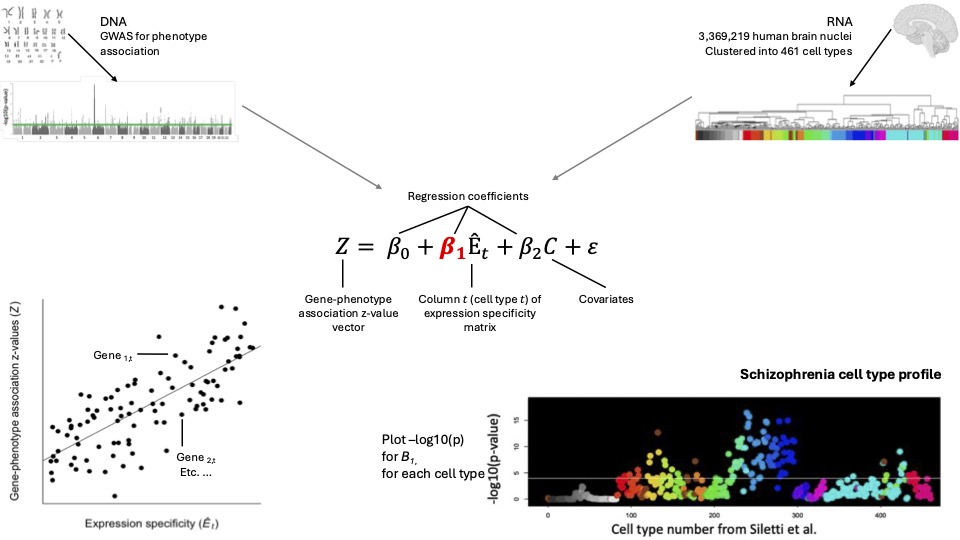
We are thrilled to share this work linking specific human brain cell types to psychiatric and neurological disorders, out now in @NatureNeuro https://t.co/mKe356T3cB See below for an overview and thanks to the amazing Tayden Li, @willgiardino, @deissero, and so many others!
2024's top 10 advances in medicine (🧵)
1. The numerous benefits of GLP1R agonists
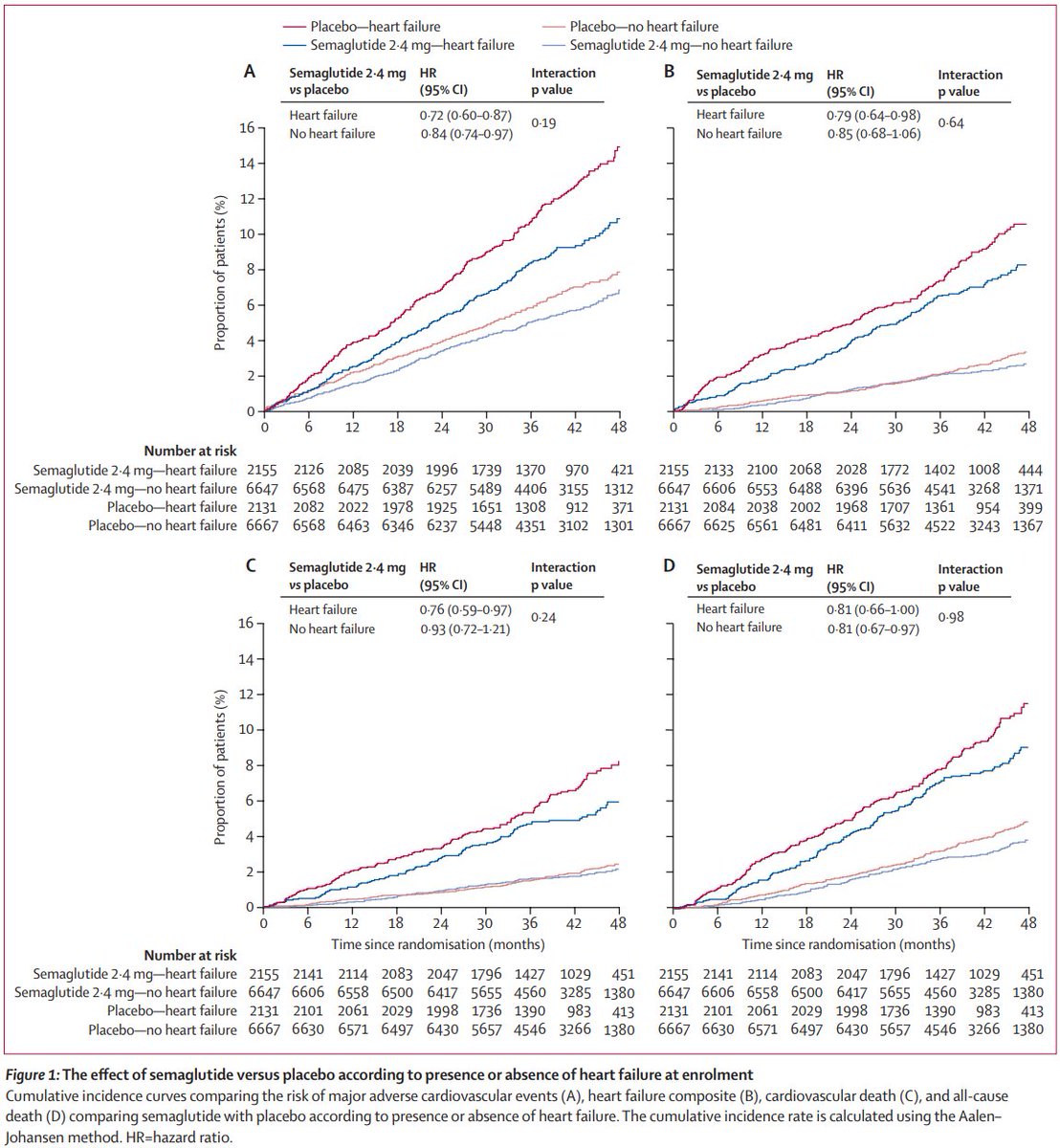
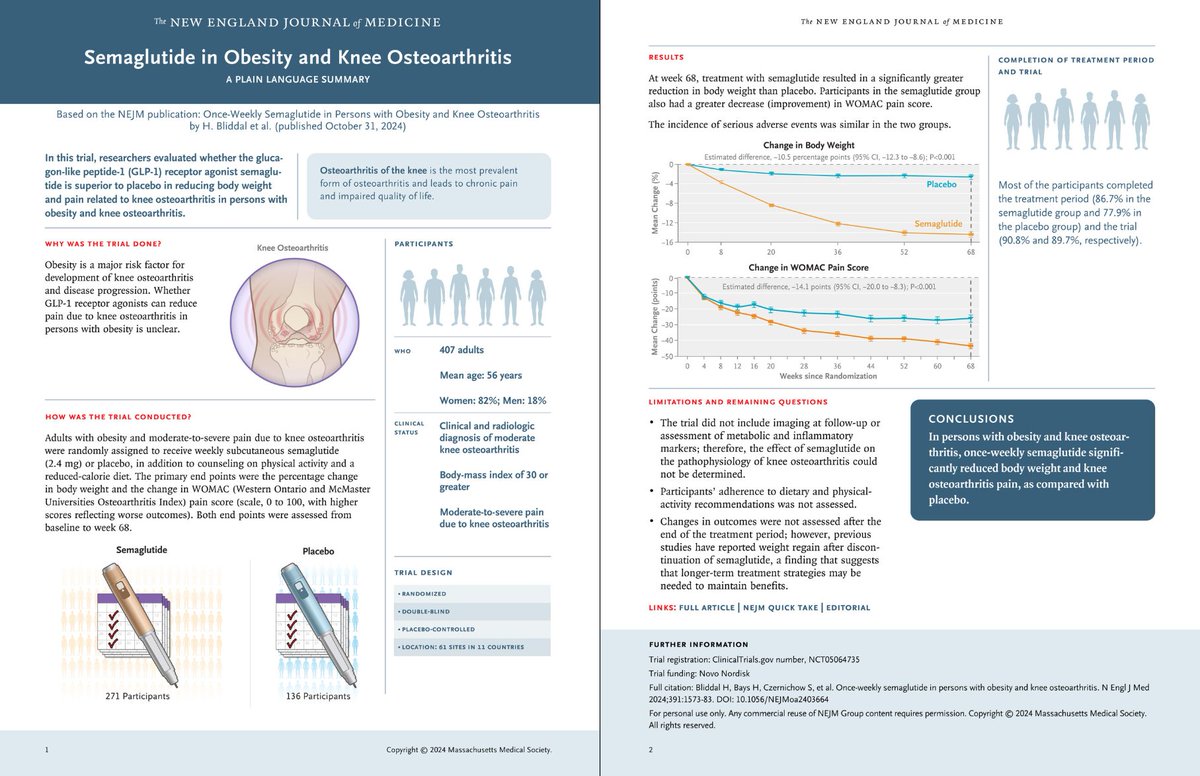
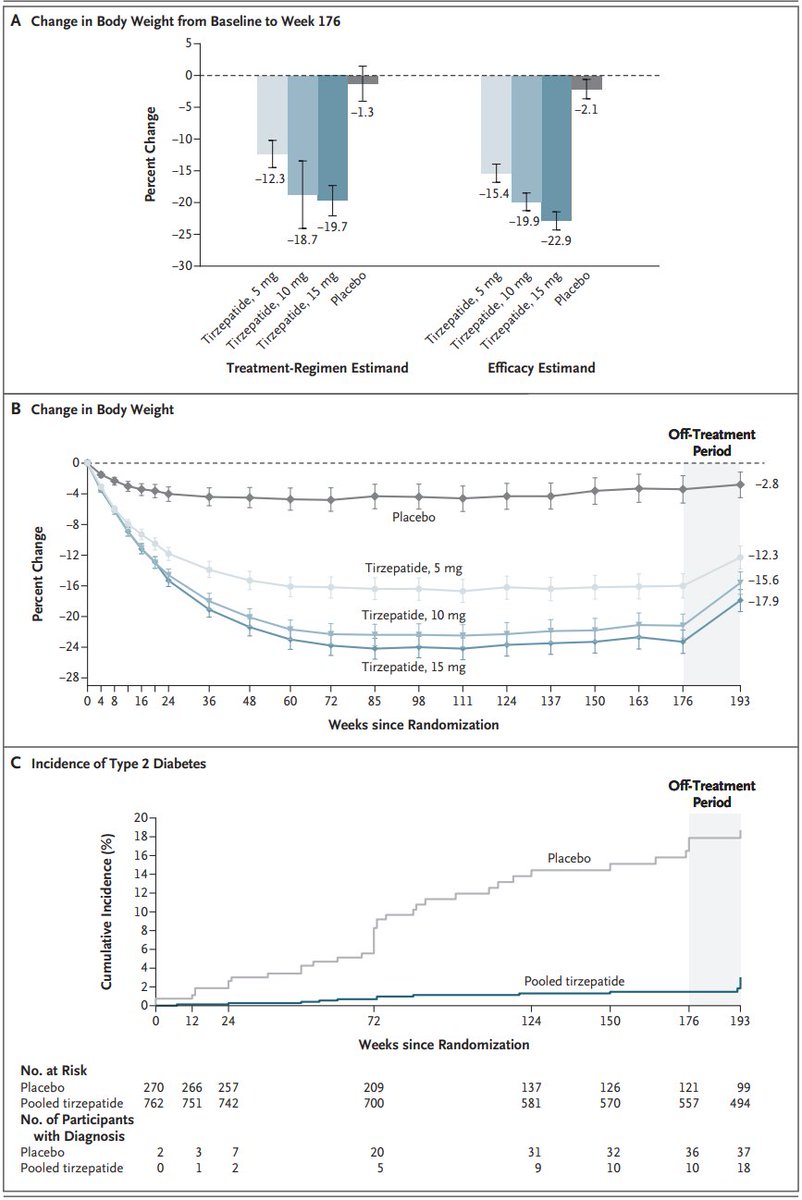
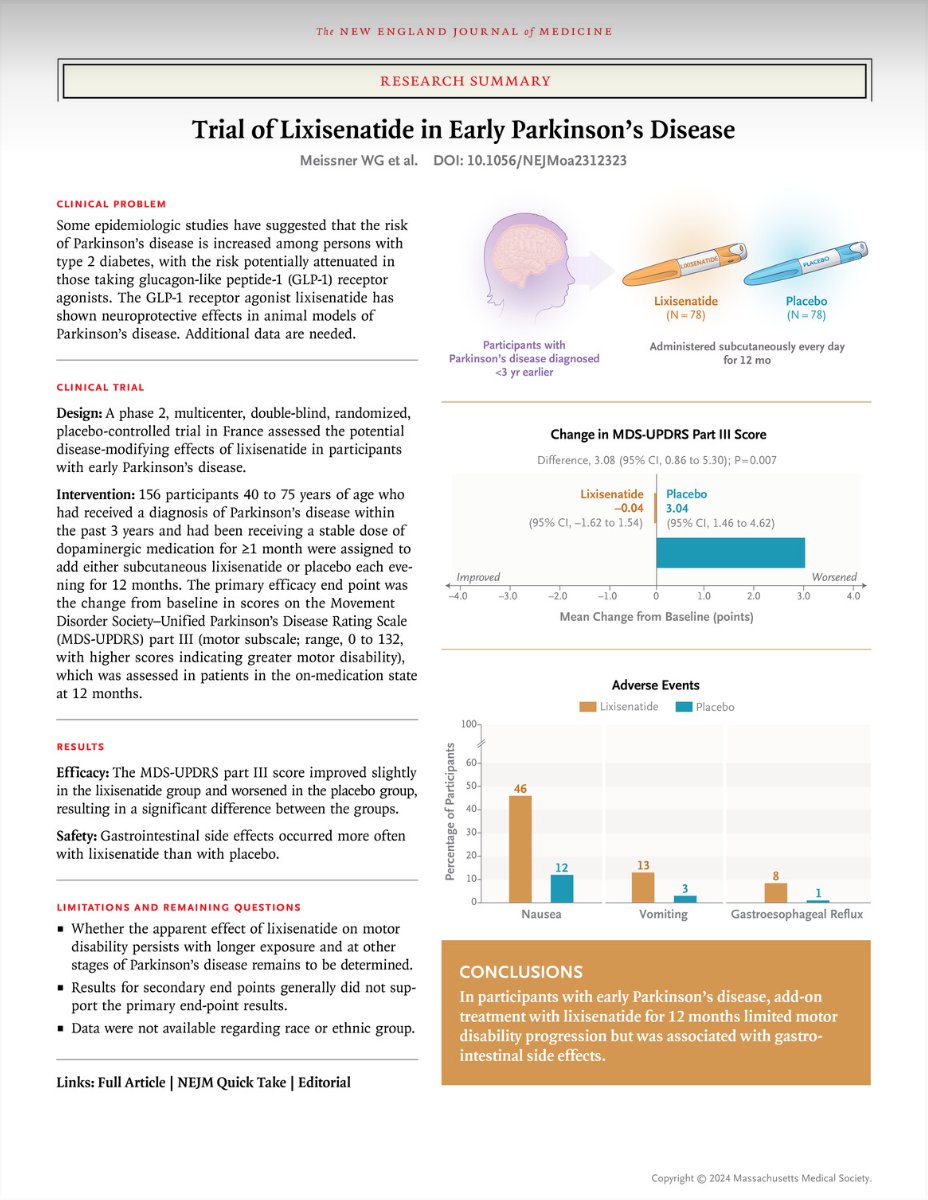
As well as causing weight loss, GLP1s can prevent complications of obesity (diabetes, liver fibrosis, kidney disease, osteoarthritis), treat heart failure, and even slow down Parkinson's:
Latest paper out in @Nature this week: an atlas integrating 36 single-cell transcriptomic datasets spanning 26 protocols for making neural hashtag#organoids
Effort led by @TreutleinLab@fabian_theis and @GrayCampLab
In Figure 4 you can also find the pojection of the neural organoid morphogen screen developed by Neal @neal_amin and Kevin @kevinwkelley in the lab
Here is an alternative to BioRender that is TRULY FREE and actively maintained. Over 1500 vectorized images sorted by license type (all creative commons or MIT). Fully editable icons and soon they will launch an Inkscape library. Please RT.
https://t.co/8GFCa5p3A0
New preprint just dropped! 🧬🦠
For this project, we looked at the genetic relationships between psychiatric disorders and immune-mediated diseases.
Check out the preprint here: https://t.co/8RWbig9jrL
TL;DR below🧶