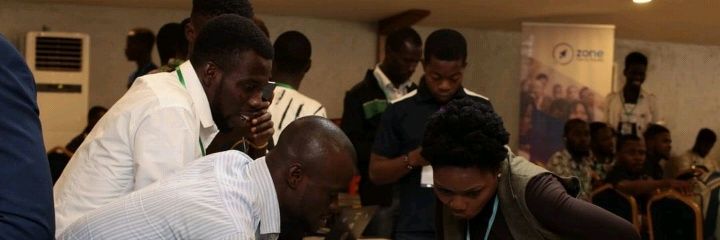
The Semifinal is hereeee! 💃
The phenomenal @etimeffiong_ and @layiwasabi will be sitting alongside our EP @ibquake to evaluate the performances of your favourite contestants.
Ger your tickets via the link in our Instagram bio! 🔥
#micdroplive#spokenwordpoetry
The death you deserve, another beautiful piece by @lulu_dainty at @micdropglobal.
She spoke as a mother, a father and a witness.
"A society that saw a bleeding child but ran to bandage reputation"
May Nigeria Never Happen To You.
Beautiful piece by Rahma at @micdropglobal
"We do not rush to save lives anymore; we rush to go live"
"Not every moment are meant to be posted; some are meant to be prevented"
May Nigeria Never Happen To You.
Beautiful piece by Rahma at @micdropglobal
"We do not rush to save lives anymore; we rush to go live"
"Not every moment are meant to be posted; some are meant to be prevented"
The book, Man's Search for Meaning by Viktor Frankl, kept me grounded when I was going through one of the most depressive episodes of my life.
He recounted being transported to a concentration camp in Poland under Nazi Germany, and being ushered in along with several other prisoners.
While they stood in line, a fellow prisoner who was a professor began to appeal to the soldiers about his qualifications and achievements in the outside world, perhaps as a bargaining chip for more favourable conditions in the camp.
After listening to him talk for a few minutes, the soldiers took all the documents this Professor presented, cast them aside, then told him, "now you are nothing."
Gloomily, the Professor resigned to fate and was among the first to die as a result of not just the stark conditions of the camp but his loss of value and self worth.
Whenever I'm at my lowest, I recount that incident as a reminder that achievements for the sake of achievements is meaningless. Being grounded in your life's purpose is infinitely more relevant than material or immaterial acquisitions.
A man who has lived a meaningful life is a man who has understood this.
Happy New Week, friends!
This is the ideal.
But here's the gap, given our current reality: you can't find what doesn't exist.
The Nigeria Association of Sports Medicine itself admits the country faces a shortage of qualified sports medicine personnel. Club cannot hire practitioners that aren't there.
That's where the old players come in. Many retired footballers struggle financially, often broke within a decade of retirement despite earning well. Then there are those around us, old and jobless who did't even get to go pro. Yet they know the game's physical toll better than most.
A former player who completes a basic sports physio certification costs far less than a full fledged sports medicine doctor. And more importantly, they're available.
Victor Ighedosa went back to school to become a physiotherapist and now treats players. That's the model. Take struggling ex-players, fund their training in basic sports medicine, and deploy them across NPFL clubs. You solve two problems: retired players get dignified income, and clubs get affordable medical coverage overnight.
The ideal is a specialist. The affordable is an ex-player with a certificate and lived experience.
In Nigeria's reality, that bridge may be the only one that holds.
This is hilarious! It reminds me of the Late Dr. Emmanuel Ijewere in 2004. We were trying to buy a company selling telco airtime where he was Chairman and the numbers didn’t look good. He liked me for some reason (maybe because we always met in church at Falomo) and decided to discourage us from buying.
After some talking, he told us to forget the business and took us to the back of his house in Ikoyi. He got a bowl, dipped his hand and threw some food into the concrete ponds they created behind and fish came swarming up to eat.
He said - “This is 4 million Naira from my backyard each harvest. This is how I pay for the school fees of my kids. This is the business you should be into.”
I once again remembered what Chief Ibru told me. “Go and sell fish, everyone eats fish.” Dr. Ijewere later expanded his pond into a large and profitable farm that still exists today in the Lagos/Epe axis.
Very few people in Nigeria tell you the true source of their wealth. Even those her friends selling wine would have their own secrets they hide from her.
If you died tomorrow your family could not access a single thing you own digitally.
Bank accounts. Crypto. Passwords. Cloud storage. All of it locked permanently.
Here is how to fix that in 30 minutes:
EASY PLACES ARE FULL: What my Lebanese friend taught me about business in Nigeria
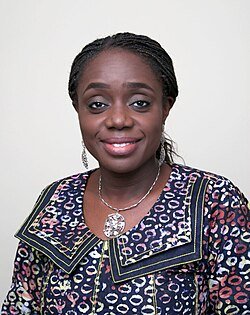
By Kemi Adeosun
Before you scroll off in anger: calm down. He is real. He has been in Nigeria longer than some of you reading this have been alive. His children go to school here. His grandchildren may well be buried here. The Lebanese community in Nigerian business is not a rumour, not a colonial hangover awaiting apology, and not going anywhere. They are woven into the fabric of commerce in this country. So pour yourself something cold and read on.
I will not name him — that was the price of the conversation, and I paid it gladly. As part of my work on Nidacity, I put together a board of advisers and concluded it would not be honest or representative without input from the Lebanese business community. So I assured him he would only ever be identified as ‘my Lebanese friend,’ and in exchange he gave me something rare: the kind of unhurried candour that only becomes available when a man is not managing his reputation. I had expected the usual litany: the generators, the customs officials, the phone calls from people whose names you never quite catch. I thought I knew what he was going to say. I was wrong.
Intentionality
His family did not end up in Nigeria by accident or desperation. They chose it. After careful study conducted over generations — cousins sent ahead like scouts, findings reported back, sectors analysed for structural need. The question was never “Is Nigeria easy?”
“We don’t come to easy places. Have you been to Lebanon?” he said. “Easy places are full. We look for places where there is need and where many are too fearful to take on.”
A conscious decision, renewed deliberately, to believe in the upside of a place that some investors treat as a risk footnote. Compare that to the Nigerian entrepreneurs I have encountered who entered sectors because they fell into them — because an official had briefly left a door open. Circumstantial businesses, built not on a view but on an accident. There is nothing wrong with opportunism. But it is not the same as intentionality, and in a market as volatile as Nigeria’s, the difference reveals itself quickly.
Preparation and Optimism — Held Together
I have watched enough foreign investors arrive in Nigeria with optimism, survive the first six months on momentum, and then — somewhere around the fourteenth week a container sat in Apapa, or a promised approval went quiet — curdle into bitterness. Undone not by a single disaster but by the accumulated weight of friction.
My friend’s answer was almost offhand. Before any member of his network opens a business in Nigeria, there is a period of what he called “mental loading” — an acceptance, in advance, of the specific costs Nigeria will impose. The generator will fail. The duty will change. The official will need to be managed. These are not surprises to be absorbed; they are variables to be budgeted.
“When it happens,” he said, “we are not shocked. Shocked people make bad decisions.”
But here is where it gets interesting. You might assume that a community which prepares for friction would develop a siege mentality. The opposite is true. The mental preparation does not produce pessimism — it liberates optimism. Because the difficulties have already been priced in, he is free to focus entirely on the upside.
“The problems here are the opportunities. Every broken thing is a business waiting to be built. We just have to decide we are staying long enough to build it.”
Two hundred million people with needs the formal economy has consistently failed to meet is not a crisis. It is an unserved market. Most people who fail in Nigeria fail not because Nigeria defeated them, but because they were surprised by the Nigeria that actually exists. Pre-acceptance of the cost is what turns friction from a shock into a schedule.
Nigeria Is Not Lebanon
Lebanon’s economy has contracted by more than 38 per cent since 2019. The pound has lost over 98 per cent of its value. Banks are effectively insolvent, having accumulated losses north of $72 billion, with depositors locked out of their own savings for years. The country defaulted on its sovereign debt in 2020 — the first time in its history. The economy that was $54 billion in 2018 was worth around $28 billion in 2024.
I asked him, as carefully as I could: is the loyalty to Nigeria strategic, or is it simply that going home is no longer an option?
“Nigeria is not our consolation prize. Lebanon happened to Lebanon because Lebanon had no size to absorb the shocks. Nigeria can always absorb the shock. That is the asset you people keep undervaluing.”
Lebanon’s commercial model depended on openness — the banking sector, tourism, remittances, regional transit. When those foundations cracked together, there was nothing structural underneath. Nigeria’s famous problems — its infrastructure gaps, its institutional friction — are also, viewed from the right angle, the moat. They keep out the faint-hearted and make the businesses built here difficult to displace. “Lebanon has no moat,” he said. “Anybody can come in and anybody can leave. That is why everybody left.”
The Money Never Goes to the Bank
Then I made the mistake of mentioning banks. His expression shifted in a way that only good manners prevented from becoming a laugh.
His community does not put its money in banks. Not as a cultural quirk but as a lesson paid for by people they knew personally — depositors who worked forty years and could not withdraw their own savings from a machine on the street. So they use banks as transaction rails, nothing more. The actual capital circulates within the network.
“We lend to each other. If my cousin needs capital, I give it to him. If I need to bridge a gap, someone gives it to me. We know each other. We know who is good for it.”
I told him Nigerians would recognise that — ajo, esusu, the thousand small arrangements by which money moves between people who trust each other more than they trust institutions. He shook his head gently. Correctively.
“You call it helping. We don’t see it that way. Helping is emotional. What we do is structural. If I put my money in a bank and the bank fails, I have nothing. If I put my money in my nephew and his business fails, I know where he lives. I know his father. That relationship is the security. The bank was never the security — it was just the place we pretended the security lived.”
The $72 billion locked behind Lebanese bank counters belonged largely to people who trusted the institution over the network. The people who kept their capital in the family, in the cousin’s trading account and the nephew’s warehouse, lost far less. Not because they were lucky. Because they had decided, long before the crisis, that trust was the only bank that does not fail.
This is not a piece about why foreigners understand Nigeria better than Nigerians do. Indeed my work interviewing Nigerian entrepreneurs suggests otherwise. There are Nigerians putting serious capital to work in Nigeria and making money. The Lebanese community did not invent discipline or patience or long-term thinking. What they have done is systematise it — intentionality over accident, preparation over surprise, the network over the institution, and a generational commitment that outlasts any single political weather change.
The good news is that what is transmitted can be learned. It is the decision, made in advance and renewed daily, to stay.
-Adeosun is a former Minister of Finance of the Federal Republic of Nigeria and former Commissioner for Finance of Ogun State. She is the founder of https://t.co/11EREMkIXS.
#KemKem
“This is Uwani General Hospital in Enugu. There is no light here to attend to patients, and we are the nurses on night duty, even water we don't have.”
— Nurses in Enugu raise alarm, calling on the attention of the Enugu State Government.
My stay in Lagos has been extended so want to make the most of my time here and meet people building interesting things!
Considering hosting an informal brunch with early-stage technical founders, no pitches, would just love to hear what you're working on. If this sounds interesting to you, let me know here: https://t.co/wJPRFxTp3D
Will see interest and set something up!
Your competitor has 47 reviews. You have 230.
They still outrank you on Google Maps.
I see this every single week and it's the most frustrating thing for business owners to understand.
Here's what's actually going on:
Total review count is only one piece of the puzzle. Google weighs several other factors just as heavily, and sometimes more.
First thing I'd check is proximity. If their GBP address is physically closer to where the searcher is located, Google gives them an advantage. This is one of the biggest ranking factors and you can't do much about it other than getting a physical location closer to the center of your target market (which I highly recommend).
Second is review velocity. If they're getting 15 new reviews a month and you're getting 2, Google sees them as more actively trusted by customers right now. Your 230 total reviews don't matter as much if they're mostly from 2 to 3 years ago.
Third is their business name. If their GBP name includes the exact service people are searching for and yours is just your brand name, they have an automatic advantage. This is one of the most impactful ranking factors on Google Maps.
Fourth is categories. If their primary GBP category is more specific to the service being searched, they'll rank higher for that query even with fewer reviews.
Ex: let's say you're an HVAC company and someone searches for "ac repair near me." if your category is "HVAC contractor" but your competitor's is "Air conditioning repair service," they have the advantage.
Reviews matter a lot. But if you're confused about why someone with fewer reviews outranks you... it's almost always one of these four things.
Any founders interested in pitching my friends at Plain Sight Capital tomorrow?
They back founders who build products that change how industries, businesses, and communities work.
💰 Check Size: $250K - $500K Pre-Seed
Comment "DM" below. Happy to get you connected.
call me annoying but..I will keep repeating this…
Claude + SEO is going to create a bunch of business “millionaires” this year.
don’t bookmark this if it crosses your timeline.
Just paste this entire thing into Claude.
thank me later.