After I lit up the @TexasLottery like a 🎄about potential money laundering and other members asking similar questions about courier services, we were “shocked, shocked”, that all of a sudden we got a complete reversal by the lotto commission right before Chairman @SenBryanHughes State Affairs hearing on @SenatorBobHall SB 28 - eliminating courier services.
WELL… Maybe not so shocked after Lt. Gov. @DanPatrick’s excellent “gum-shoe” detective work a week ago on a 83 million dollar payout via a courier service. Obviously, the commission has changed their tune and has reversed years of Texas Senate testimony and believes now, out of the blue, they have the authority to stop courier services - which could be conduits for money laundering. Expect fireworks at today’s #txlege hearing!
Here’s a copy of my Facebook post where I grilled the executive director and the three commissioners about potential for money laundering at Chairman @joanhuffman’s Senate Finance hearing on 2/7 that sparked this discussion (https://t.co/27JlQhECKu) with over 172k views!
Tune in to the Senate hearing today at 2 PM: https://t.co/wGFIyWjBmo
Those complaining about Elon being unelected are hypocrites.
They said nothing about unelected Fauci destroying our lives.
They said nothing about unelected Lois Learner using the IRS to target conservatives.
They said nothing about federal reserve policies stoking inflation.
The unelected federal reserve maintained that inflation was transitory and allowed very low interest rates to remain in place for such a long time that it increased inflation, impacting the pocketbooks of all Americans.
We must choose one:
There are some who would force Ukraine to give up large parts of its sovereign territory. They are proposals for surrender -Kamala
You can never replace those cities, the dead people. Any deal, even the worst deal, would have been better. -Trump
First Swine Flu then Covid?
"Unintentional release of extinct human-adapted viruses—"bio bungling"—arguably poses as serious a threat to global health as bioterrorism or a natural outbreak"
See:
https://t.co/KFyalqx3mx
At the last race my engine lost power. They towed me to the pits. I asked the crew to check the oil before I fired the engine to see what broke. Richard pulled the dip stick and it had a disturbing kink in it. I yelled "it's a dip stick failure go find a spare" I was wrong!
People need to stop overreacting about Kamala’s plan to reduce food inflation, as if it would lead to communism, mass starvation, and the end of America.
I worked in M&A in the food industry. Here’s a step-by-step summary of what would actually happen:
1. The government announces that grocery retailers aren’t allowed to raise prices.
2. Grocery stores, which operate on 1-2% net margins, can’t survive if their suppliers raise prices. So the government announces that food producers (Kraft Heinz, ConAgra, Tyson, Hormel, et. al.) also aren’t allowed to raise prices.
3. Not all grocery stores are created equal. Stores in lower-income areas make less money than those in higher-income areas, as the former disproportionately sell lower-margin prepackaged foods (“center of the store”) instead of higher-margin fresh products like meat (“perimeter of the store”). Because stores in lower-income areas aren’t able to cover overhead (remember, even if their wholesale costs are fixed, their labor, utilities, insurance, and other operating expenses aren’t fixed… yet), grocery chains start to shut them down. Food deserts in rural areas and in low-income urban areas alike become worse.
4. Meanwhile, margins for food producers are also quickly eroding. Their primary costs (ingredients, energy, and labor) aren’t fixed, and their shrinking gross profits leave less cash flow available to cover overhead, maintain facilities, and reinvest in additional production capacity.
5. Grocery chains, which have finite shelf space, start to repurpose their stores (those they didn’t have to shut down, I should say) to sell more non-price-controlled items—everything from nutrition supplements to kitchenware to apparel—and less price-controlled food products. Your local Kroger or Safeway starts to look and feel more like a Walmart.
6. Food producers stop making products with lower margins. Grocery chain start competing with each other to secure inventory. Since they can’t compete by offering stronger prices (remember, producers aren’t allowed to raise prices here, and, even if they could, grocery chains no longer have the gross profit to bear price increases), they compete on things like payment terms.
7. Small grocery chains start to shut down entirely, or get sold to larger chains like Kroger. In addition to not being able to cover fixed costs, a major reason for this is because they can no longer reliably secure delivery of products, due to producers prioritizing sales to larger customers, which are able to leverage their stronger balance sheets to offer superior payment terms.
8. Smaller food producers—which typically sell via distributors, rather than directly to grocery chains—start to go out of business. Because these producers have an additional step their value chains, and because they have lower volumes over which to spread their fixed costs, their cost structure is inherently disadvantaged compared to major food producers. When grocery stores aren’t able to raise prices, cutting product costs becomes all the more important, and deprioritizing purchases from smaller producers is an easy way to do so.
9. As supply chains break down, lines start to form outside grocery stores every morning. Cities assign police officers to patrol store parking lots, and food producers draft contingency plans to assign armed escorts to delivery trucks.
10. The federal government announces a program to issue block grants for states to purchase and operate shuttered grocery stores. The USDA also seizes closed-down production facilities.
11. The government announces that prices for all key food costs—corn, wheat, cattle, energy, etc.—are also now fixed, to stop “profiteers” from gouging the now-government-operated food industry.
12. Shockingly, the government struggles to operate one of the most complex industries on the planet. The entire food supply chain starts imploding.
13. Communism, mass starvation, and the end of America quickly ensue.
Hey wait a second
I believe in an America that maximizes individual freedom and merit.
That used to be the Democratic Party, but now the pendulum has swung to the Republican Party.
I'm sitting in Hobby airport having lunch. It ain't good. I gotta say I MISS having the Pappas restaurants at Houston airports. They were booted out by mayor Turner. But now we have a new Houston mayor ! Hey Mayor Whitmire can we have our Pappas back?
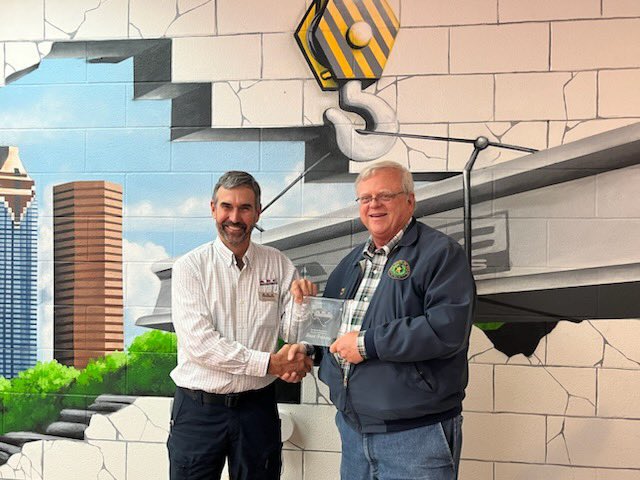
Back on the factory floor at @ARCSpecialties with my friend Dan Alford who was an officer with me in the original Houston Chapter of SME Robotics International, RI, Chapter #310 when both of us started our careers in the industry. I went on to Process Control Systems, DCS, then property taxes, while Dan still builds the only US made welding robots!
Told an audience of around 100 people to vote FOR Prop. FOUR, and Prop. 7, too! Lots of questions about border policy, energy policy, and property taxes of course. Listen to the KSEV 700AM Three Amigos for more today from 4:00 to 6:00 PM on https://t.co/Rcmmbalpy0!
P.S. Got a new pocket protector and safety glasses so I felt right at home! @SME_MFG
@TeamBettencourt@ARCSpecialties Senator Paul;
You received great reviews from the crowd. Thanks for speaking, you are welcome back anytime. Once a roboticist, always a roboticist!
Dan Allford
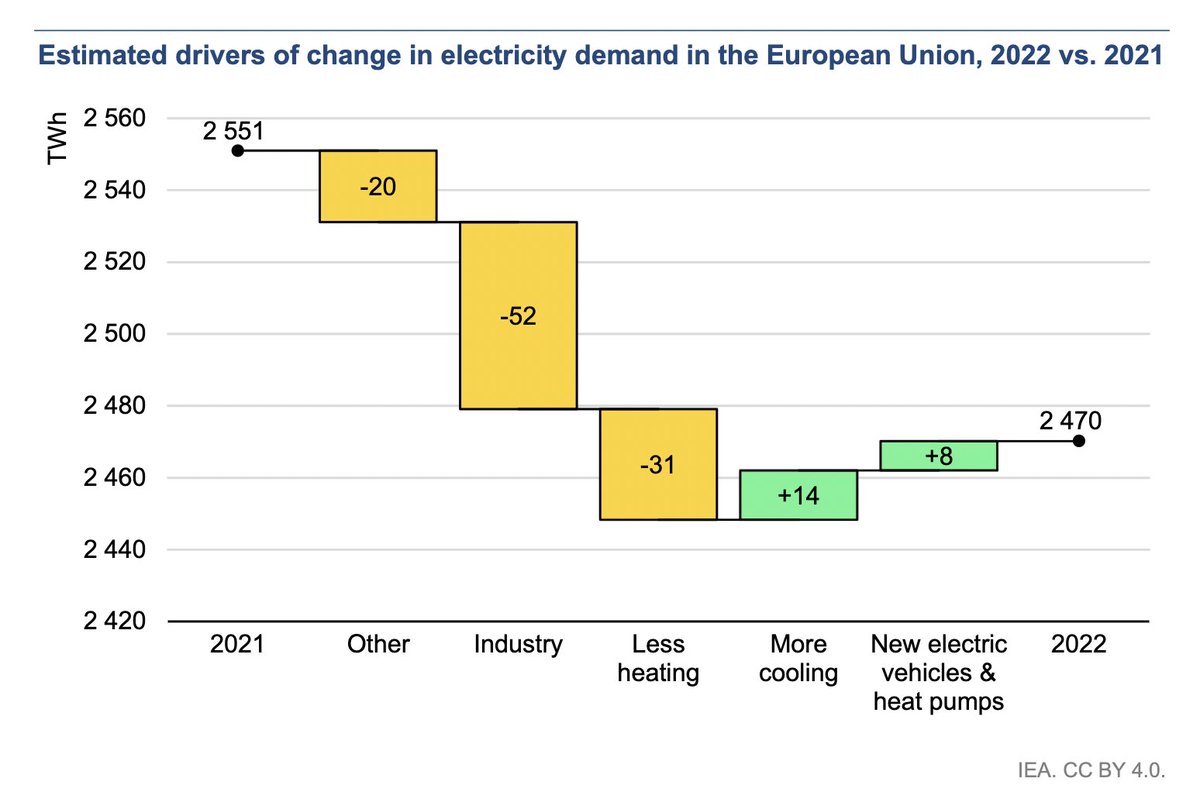
Bad energy policies have consequences.
European industry is in a doom spiral.
Many energy-intensive industries reduced or ceased
production in 2022:
Aluminum (-12%)
Steel (-10%)
Paper (-6%)
Chemicals (-5%)
The media is not telling the truth about Ukraine.
If the intelligence agents that are on the ground were allowed to tell the truth we'd pack out bags, get out and make peace.
The killing needs to end, it's accomplishing nothing.