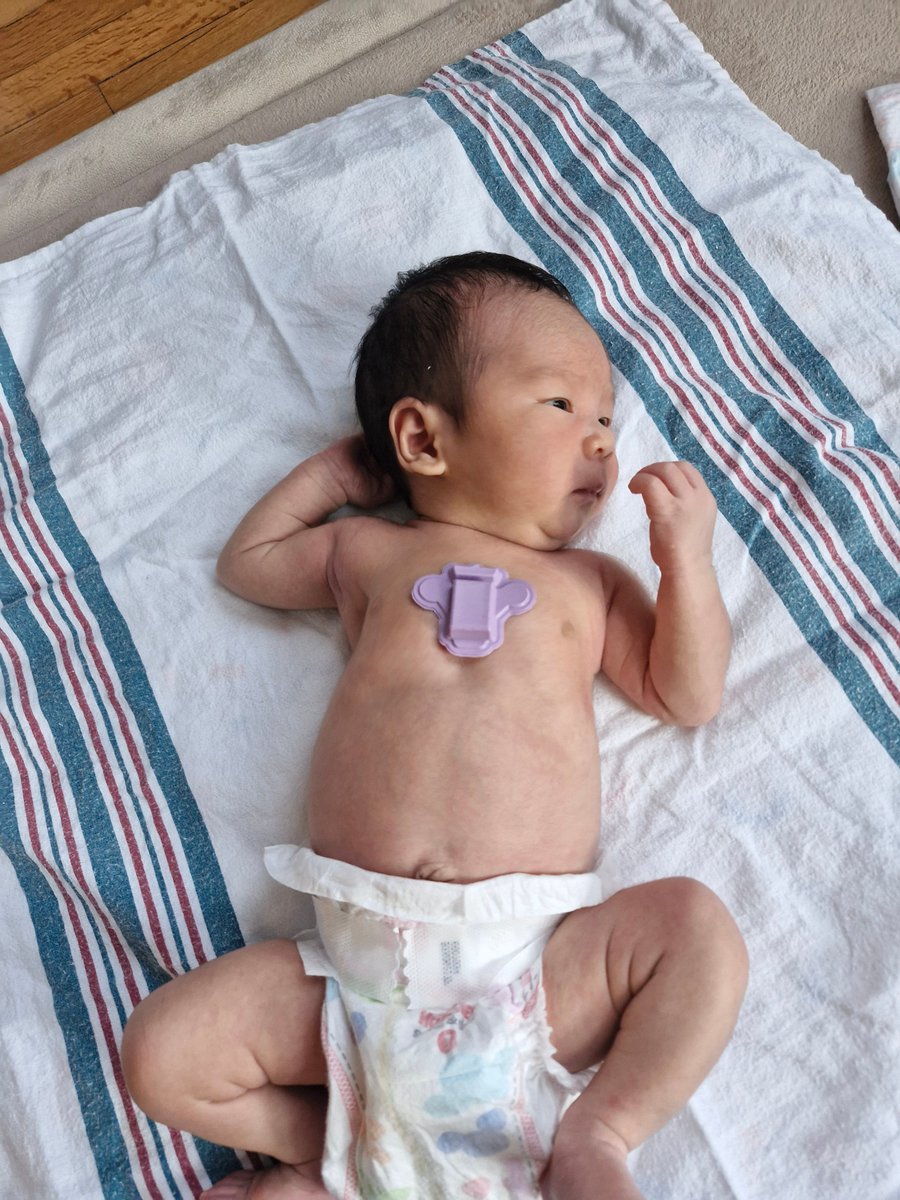
A wearable lie detector? – well, somebody had to build it! Our paper, titled ‘Wireless, skin-interfaced multimodal sensing system for continuous psychophysiological monitoring—A wearable polygraph device,’ published in Science Advances (https://t.co/TbShE9iVxJ), and highlighted in this press release from @NorthwesternU (https://t.co/C1IGOXJNzW), introduces a device capable of precisely measuring the full suite of parameters (and beyond!) captured by state-of-the-art polygraph systems, but in a soft, wireless wearable form that mounts on the chest. Our emphasis is not on lies specifically, but instead on stress in general, and particularly for its relevance to medical care, as demonstrated in various representative cases – from pain experienced by infants, to sleep disruptions in babies with Down syndrome, to confusion in adults with hearing impairments, to strains experienced by medical students in training for emergency room care. The devices leverage the concepts of hybrid soft electronics for continuous measurements of body sounds, body movements, skin impedance, temperature and thermal transport. The results yield heart rate, heart rate variability, respiration rate, variability and depth, sweat gland activation, cardiac amplitude (as a rough surrogate for blood pressure), near-surface blood flow and skin temperature. Machine learning algorithms rely on these data streams to determine stress. The paper presents not only a broad range of uses, as mentioned above, but also validations – from correlations to commercial polygraph instruments, to tools for pupillometry, to nurse scoring sheets, to polysomnography systems. Fun project, with many additional applications in sports, worker safety, etc – complementing previously published work from our group and impressive papers from others that consider stress biomarkers in sweat, but without the cumbersome process of collecting and chemically analyzing this class of biofluid. In fact, the platform introduced here involves only biophysical sensors, bypassing the need for disposable components and avoiding the various confounds (hysteresis, drift, lack of specificity, inadequate sensitivity and others) associated with biochemical measurements. Thanks to former postdoctoral fellows in the group – Prof. Sun Hong Kim (University of Seoul), Prof. Jaeyoung Yoo (SKKU), Prof. Tianyu Yang (ASU), Prof. Seonggwang Yoo (Inje University) and Dr. Seunghee Cho (Samsung) – for their leadership and to many current group members – Dr. Taewan Park and others -- for their contributions. Also grateful to our collaborators across the medical school, specifically Prof. Debbie Weese-Mayer, Dr. Khaytin Ilya and Dr. Jana Jaffe, and in the Department of Communication Sciences and Disorders. Finally, thanks to @amanda_mo for the nice writeup and press package for the Northwestern release.
The NIH is stepping back from 'top-down' science.
Funding calls have plummeted by 90%, funneling billions into broad, 'investigator-initiated' ideas, rather than targeted, agency-driven ones.
A massive shift for the American biomedical enterprise.
https://t.co/er8SMcSHPY
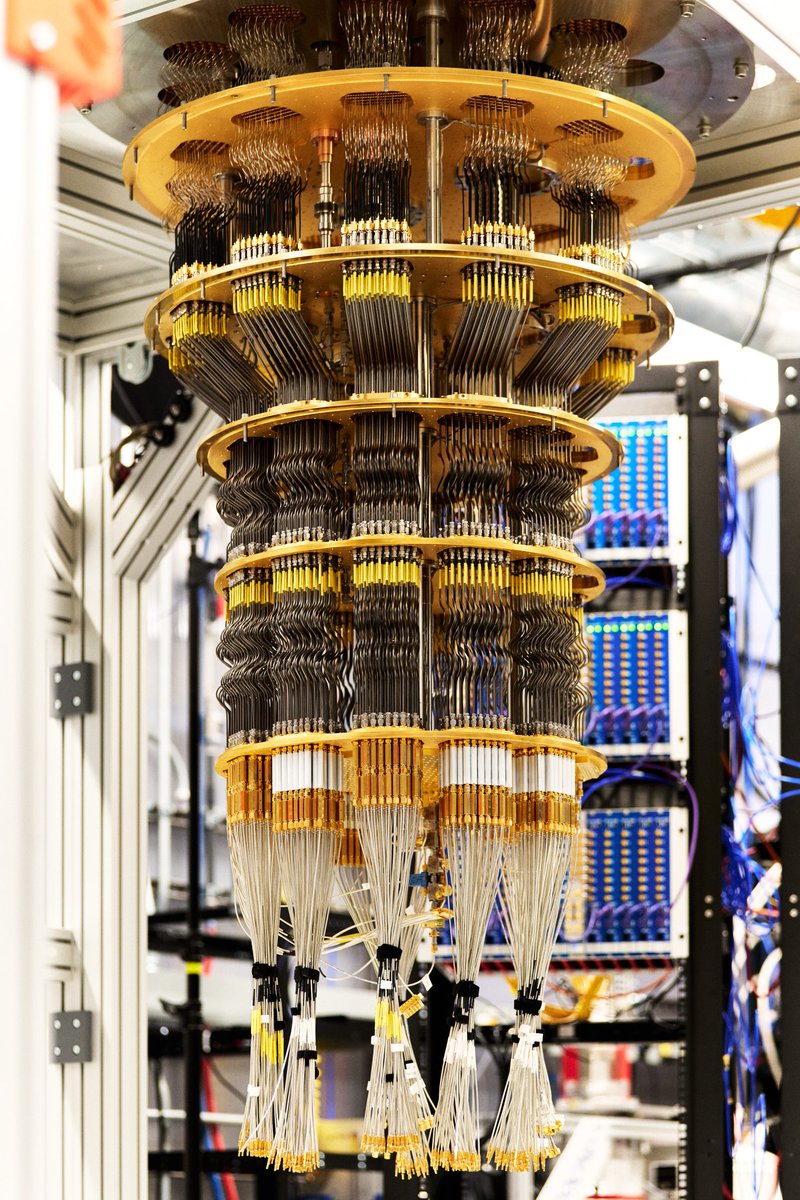
New breakthrough quantum algorithm published in @Nature today: Our Willow chip has achieved the first-ever verifiable quantum advantage.
Willow ran the algorithm - which we’ve named Quantum Echoes - 13,000x faster than the best classical algorithm on one of the world's fastest supercomputers. This new algorithm can explain interactions between atoms in a molecule using nuclear magnetic resonance, paving a path towards potential future uses in drug discovery and materials science.
And the result is verifiable, meaning its outcome can be repeated by other quantum computers or confirmed by experiments.
This breakthrough is a significant step toward the first real-world application of quantum computing, and we're excited to see where it leads.
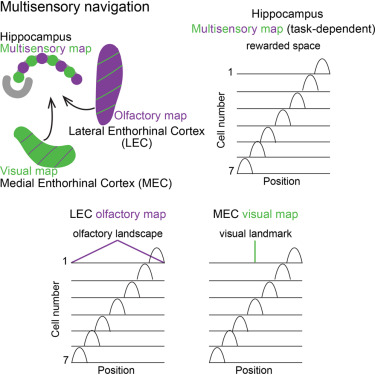
Your Brain Maps the Same Path Differently Every Time
A new study has found that the brain’s internal GPS rewrites itself each time we navigate the same space.
Even when mice walked through an identical virtual maze with precisely controlled sights, smells, and speed, different hippocampal neurons lit up each time.
This shows that spatial memories are inherently dynamic, not fixed as previously thought.
The researchers suggest this flexibility might help the brain encode when an event happened, not just where.
Interestingly, the most excitable neurons were better at holding stable memories, hinting at how aging may weaken memory stability.
These findings could reshape how we think about memory, learning, and age-related decline.
Excited to share my co-first paper at @Nature! I would like to thank my co-first authors Jason and Heydar and Prof. Dan Dombeck for his amazing mentorship. I hope that this work can open up future investigations of the underlying neural mechanisms of representation drift!
Excited to share my co-first paper in @Nature with Jason Climer and @daniel_jun_oh, under the amazing supervision of Prof. Daniel Dombeck:
https://t.co/sL31UnDyNZ
[1/10] I summarize our key findings in this thread.🧵
We released our new conversational speech-llm. Fully multimodal (inputting/outputting text&audio tokens). Ability to adopt any voice, modulate speech, and generate language.
In this period of uncertainty, the University will fund research that is subject to stop-work orders or the federal funding freeze, President Schill and Board of Trustees Chair Peter Barris announced today.
▶️ https://t.co/MMHkb4b5Bp
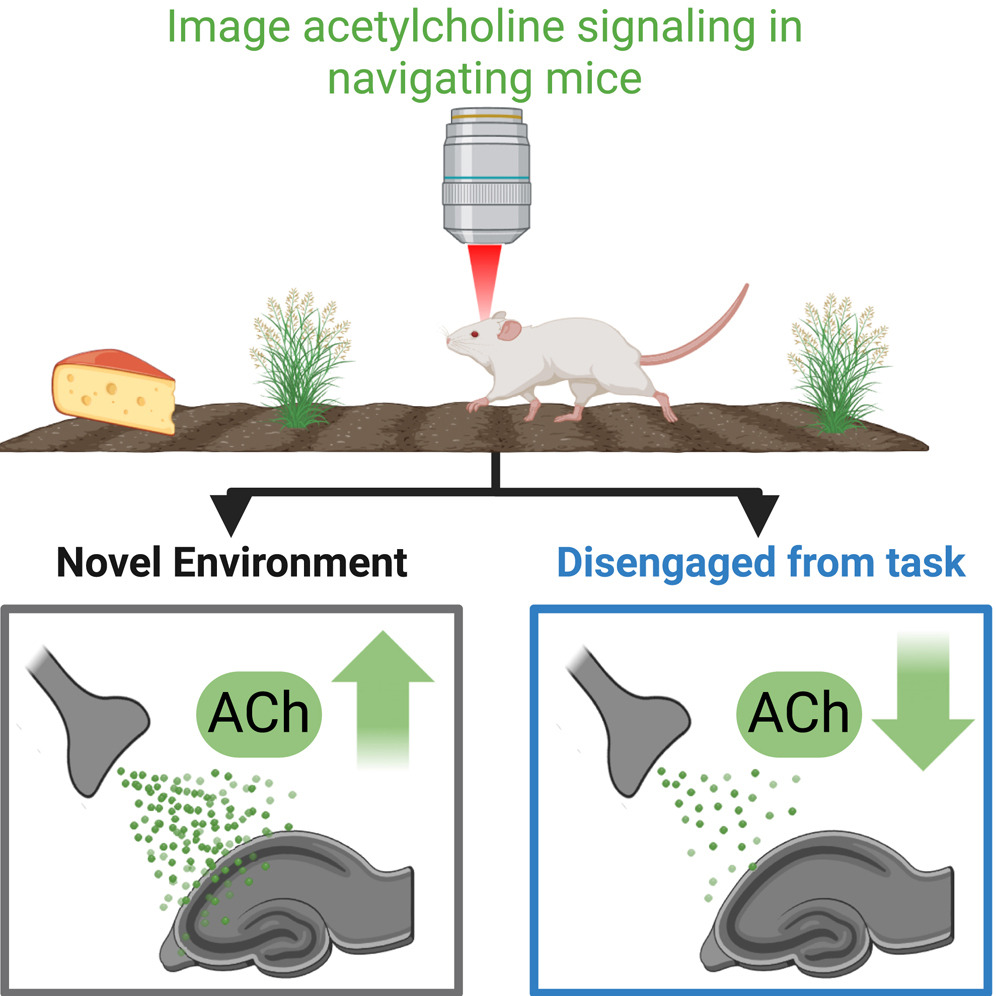
Our latest research, led by @AntoineMadar, on what #SynapticPlasticity rules shape CA1 and CA3 representations in the hippocampus during familiarization has just been published in @NatureNeuro! Read here: https://t.co/eWT3j3wVSU
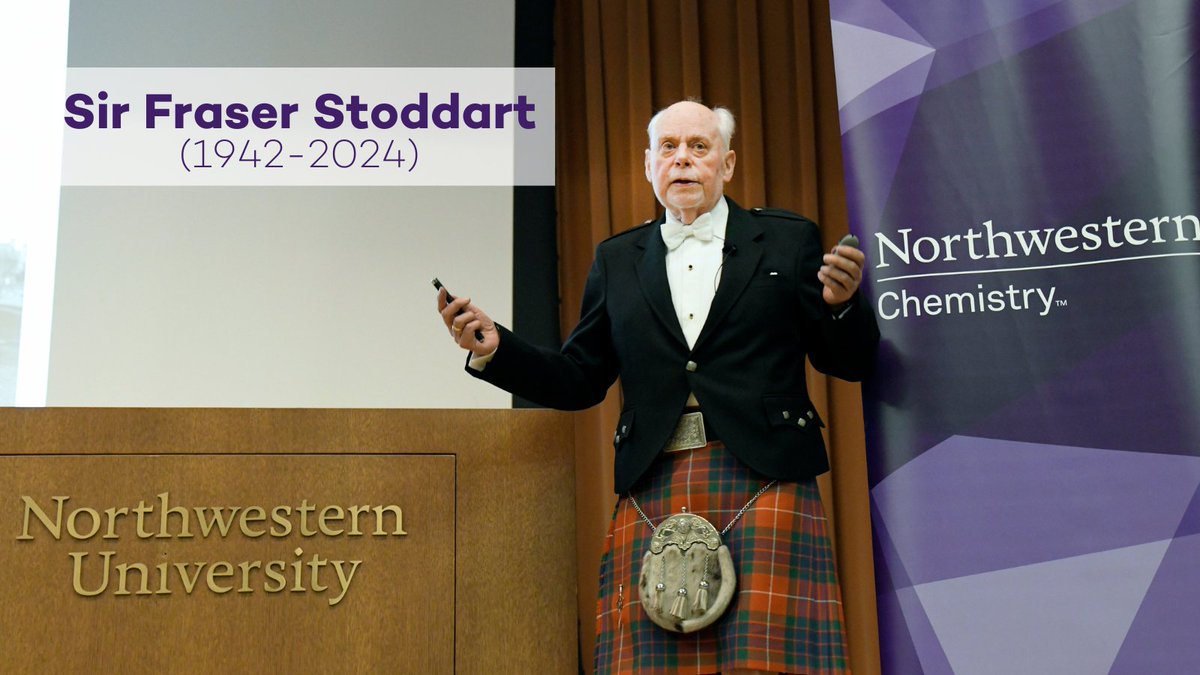
With profound sadness, we announce the passing of Sir Fraser Stoddart, Nobel Laureate and cherished member of @NorthwesternU. His groundbreaking contributions transformed the field of #chemistry and inspired countless scientists worldwide.
➡️ https://t.co/S7e0nwfruD
Introducing OCTAVE, a next-generation speech-language model.
OCTAVE has new emergent capabilities, like on-the-fly voice and personality creation and much more 👇
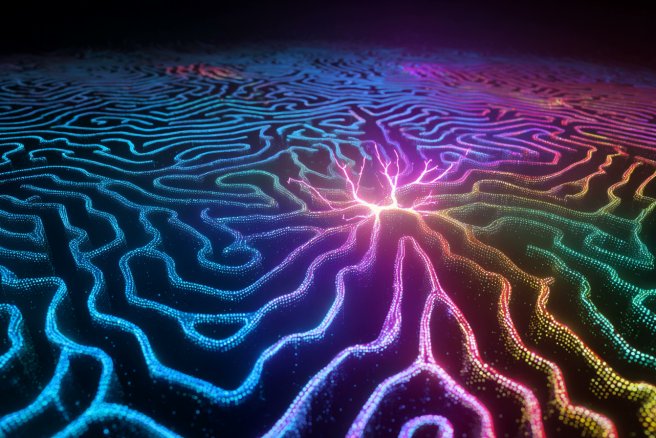
📢 #Rastermap paper out now, easily explore and visualize your neural recordings 🐭🐒🐟 and ANNs 🤖 https://t.co/UIzHDiGt5I. Updates from preprint include analyses of primate data and IBL task data.
Video tutorial: https://t.co/6AyXSch52l #Neuroscience#MachineLearning