Microsoft is moving some teams to 12 engineers per manager. I lead 12.
Honest question for other EMs: what's your number, and what broke when you went past it?
Most of my review time now is on agent-written PRs. I don't start with the diff. I start with the ticket: can I tell, without asking, what done looks like? If I can't, the review is already late.
@simonw This is the part I care about most as an EM. Our rule: no network and no credentials for an agent unless the task needs them. A sandbox turns that from a promise into something you can check. How do you handle package installs inside it?
@PawelHuryn Agents write a lot of our first drafts now, but I haven't dropped review. It changed shape. Less line by line, more: does it meet the acceptance conditions, and what breaks if it's wrong? If nobody reviews, nobody can explain the next incident either.
@kentcdodds We do a version of this with new joiners. In their first week they keep a list of everything that confused them. Agents hand you that list on every run, and they never get used to the mess. Most of what they flag is stuff we stopped seeing years ago.
@DurakTheRobot@neondatabase A reversing event that points back at the original by id. Nothing gets edited or deleted, so the history shows both the mistake and the fix. It costs a bit of storage and saves a lot of arguing later.
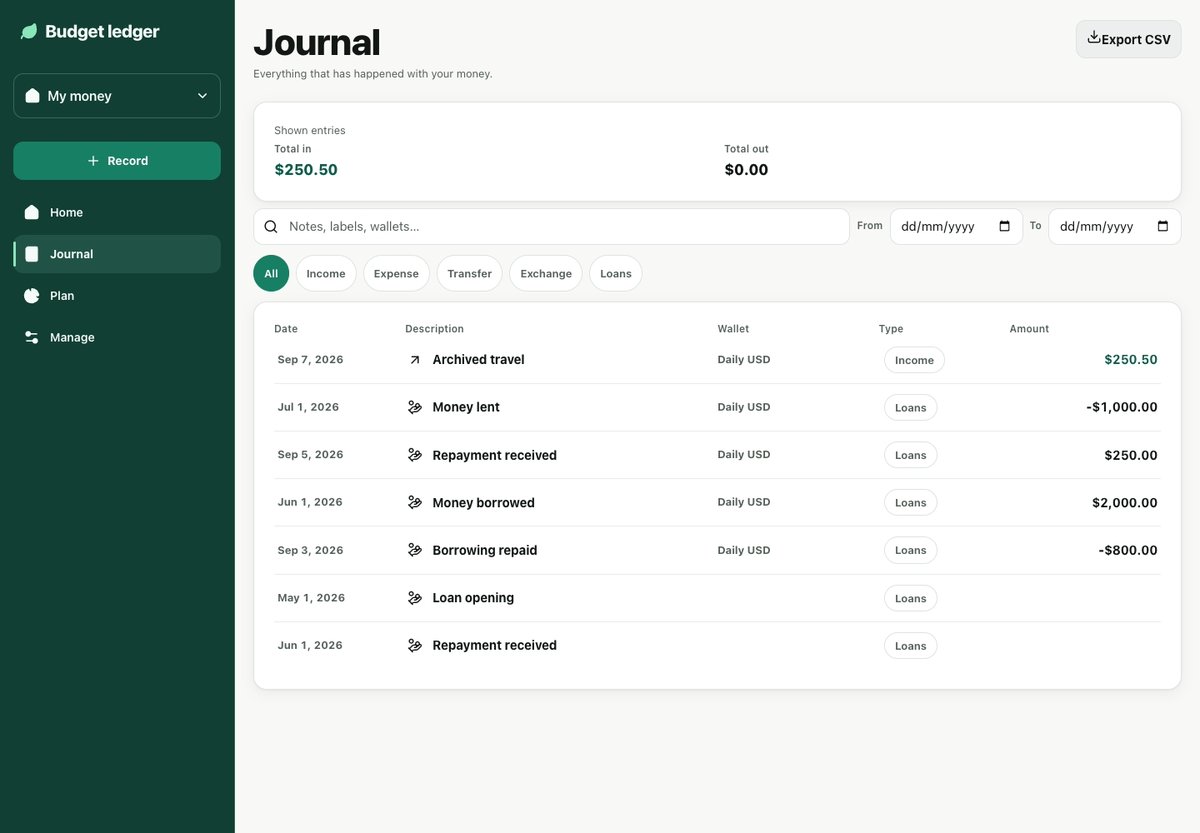
Neon gave me free credits for Open Budget Tracker, my open-source budget app.
It's a small project. Bilingual EN/AR, multi-currency, and every money change is an immutable event in Postgres. Balances are derived, never edited.
Thanks @neondatabase for backing side projects like this.
https://t.co/VR8V6m9HqL
The most useful line in an AI ticket is still the one that says what happens when the system is unsure. If that path isn't written down, you don't have an automation. You have a system that will guess.
@kentcdodds We already have a name for human slop. It's the 600-line PR with a one-word description. The review bar shouldn't care who wrote it: is done written down, are there tests, can someone else own it next month. AI just made the old problem louder.
@jasonlk A cap an agent can break isn't a cap, it's a default. I'd keep the override but make it loud: going over for a P0 should page a human with the reason and the spend so far. The agent can be right. Someone still needs to know it decided.
@GergelyOrosz When we review a service, I ask one question people rarely plan for: what happens when every instance comes back at once? Staggered starts and jittered retries feel like over-engineering right up until a day like this.
Before I let an agent run while I'm not watching:
- an observable definition of done
- a confidence cutoff, with a human path under it
- no network or credentials unless those are in scope
- a log I can actually audit
The model is the easy part.
A 4x jump in lines changed is not a delivery win. If agents are opening most of the PRs, the question is whether review got more careful or just quicker. Volume without an observable 'done' is just a faster way to ship confusion.
@GergelyOrosz From the hiring side, a cert tells me someone sat through the material. It doesn't tell me they can untangle a broken IAM policy. The part AI hasn't changed is knowing which service fits and what it will cost. I still ask about that, cert or not.
@GergelyOrosz Coding has a cheap judge. Tests, types, CI. When we put AI on ticket routing, the hard part wasn't the model. It was writing down what "correct" meant and where low confidence goes to a human. Most functions outside engineering have never written that down.
EMs using coding agents on the team: what's the first action you still refuse to let run unattended? For me it's anything that talks to the network or uses credentials. Curious where other people draw the line.
Gave Jev by @typesafeai 18 support tickets at once.1.02s later: 54 decisions (team, urgent?, mood)
16/16 routed correctly
~318ms per call from Beirut
$0.0004 totalBest part: on a vague ticket its confidence dropped to 0.54, so it went to a human instead of guessing.