Seizing the islands (Abu Musa, Greater/Lesser Tunbs, Larak, Hengam.) would likely be possible as well.
The U.S. could build escort corridors and have a pretext for internationalization.
However, continuous additional strikes on coastal positions are needed, and since Iran benefits the longer it holds out.
It doesn't seem efficient.
**the U.S. should lay mines in the waterways leading to Kharg island.**
Iran has established "tollgates." It operates a selective control system.
Iran is demanding permanent sovereignty. If this is successful, it creates a structure that generates billions of dollars in toll revenue annually.
So, what should the United States do? It must block this from happening.
Instead of landing on Kharg Island, the U.S. should lay mines in the waterways leading to the island. This would prevent Iranian oil tankers from loading crude oil at Kharg. Iran's oil exports physically blocked.
Executable solely by naval power without the deployment of ground forces.
Creation of a reciprocal negotiation framework stating, "If Iran clears the mines in Hormuz, we will clear the mines in Kargh"
A structure where Iran cannot claim, "We laid the mines first, so yours is also legal"
Furthermore
Long-distance naval blockade: Seizing "Shadow Tankers" and confiscating/selling cargo
Acceleration of Gulf bypass infrastructure: Actively underway.
**the U.S. should lay mines in the waterways leading to Kharg island.**
Iran has established "tollgates." It operates a selective control system.
Iran is demanding permanent sovereignty. If this is successful, it creates a structure that generates billions of dollars in toll revenue annually.
So, what should the United States do? It must block this from happening.
Instead of landing on Kharg Island, the U.S. should lay mines in the waterways leading to the island. This would prevent Iranian oil tankers from loading crude oil at Kharg. Iran's oil exports physically blocked.
Executable solely by naval power without the deployment of ground forces.
Creation of a reciprocal negotiation framework stating, "If Iran clears the mines in Hormuz, we will clear the mines in Kargh"
A structure where Iran cannot claim, "We laid the mines first, so yours is also legal"
Furthermore
Long-distance naval blockade: Seizing "Shadow Tankers" and confiscating/selling cargo
Acceleration of Gulf bypass infrastructure: Actively underway.
**Almost nothing to gain from occupying Kharg Island.**
Occupying Kharg Island leads to falling into a "mission creep" trap where the withdrawal of U.S. troops is perceived as a "defeat."
The structure is such that if stationed U.S. troops suffer casualties from firepower coming from the Iranian mainland (with a 15-mile firing range), the occupation area will inevitably expand to coastal regions under the pretext of troop protection.
Fixed missile positions → Destructible (already largely complete)
Naval vessels → Destructible (almost complete)
Mobile ASCM/ASBM → Nearly impossible
Drones → Cannot be deterred
Mines → Cannot prevent laying, only post-launch clearance possible.
The risk-benefit ratio is off.
**Almost nothing to gain from occupying Kharg Island.**
Occupying Kharg Island leads to falling into a "mission creep" trap where the withdrawal of U.S. troops is perceived as a "defeat."
The structure is such that if stationed U.S. troops suffer casualties from firepower coming from the Iranian mainland (with a 15-mile firing range), the occupation area will inevitably expand to coastal regions under the pretext of troop protection.
Fixed missile positions → Destructible (already largely complete)
Naval vessels → Destructible (almost complete)
Mobile ASCM/ASBM → Nearly impossible
Drones → Cannot be deterred
Mines → Cannot prevent laying, only post-launch clearance possible.
The risk-benefit ratio is off.
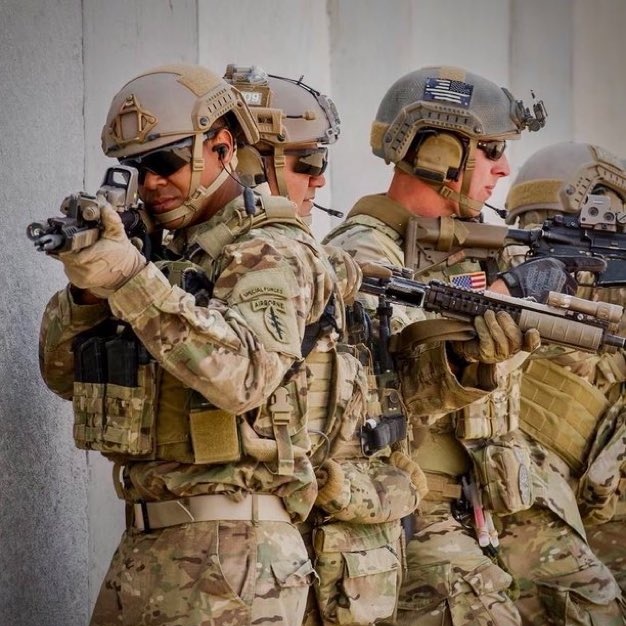
**A total of over 17,000 ground troops could be deployed to the Middle East.**
The Pentagon has ordered the deployment of approximately 2,000 personnel from the 82nd Airborne Division (stationed at Fort Bragg).
This includes the Division Commander and staff, as well as an Intended Response Force (IRF) battalion from the 1st Brigade Combat Team.
Additionally, two Marine Expeditionary Units (MEUs) are currently deployed in the region: the 31st MEU/Tripoli Amphibious Readiness Group and the 11th MEU/Boxer Amphibious Readiness Group, each comprising about 2,500 personnel, for a total of approximately 5,000 Marines.
Furthermore, the Pentagon is considering deploying up to 10,000 additional ground troops; if fully approved, a total of over 17,000 ground troops could be deployed to the Middle East.
**A total of over 17,000 ground troops could be deployed to the Middle East.**
The Pentagon has ordered the deployment of approximately 2,000 personnel from the 82nd Airborne Division (stationed at Fort Bragg).
This includes the Division Commander and staff, as well as an Intended Response Force (IRF) battalion from the 1st Brigade Combat Team.
Additionally, two Marine Expeditionary Units (MEUs) are currently deployed in the region: the 31st MEU/Tripoli Amphibious Readiness Group and the 11th MEU/Boxer Amphibious Readiness Group, each comprising about 2,500 personnel, for a total of approximately 5,000 Marines.
Furthermore, the Pentagon is considering deploying up to 10,000 additional ground troops; if fully approved, a total of over 17,000 ground troops could be deployed to the Middle East.
Neutralizing the nuclear threat is the key;
the more hardline Iran acts, the more justification there is, making it possible to render them even more incapacitated.
This would remove the Strait of Hormuz from the nuclear umbrella, protect Middle Eastern security, and prevent a nuclear domino effect.
It will probably take about 10 weeks.
4) Airdrops = Not Securities
• Cases where non-securities crypto assets are distributed for free without compensation (without money, goods, or services).
• An investment contract is not established because the first element of the Howey test, “investment of money,” is not satisfied.
1) March 17, 2026. SEC interpretive rules. Release No. 33-11412. Application of the Federal Securities Laws to Certain Types of Crypto Assets and Certain Transactions Involving Crypto Assets.
3) Wrapping (Redeemable Wrapped Tokens) = Not a Security
• Wrapped Tokens issued by depositing non-security crypto assets (e.g., digital products such as BTC, ETH, etc.) on a 1:1 basis are not securities.
• Conditions: They must be redeemable for the original assets at any time, and the deposited assets must not be used for lending, redeeming, or business purposes.
How was it exposed?
Around March 26–27, an unencrypted data cache was exposed to the public
due to a configuration error in Antropic’s internal Content Management System (CMS).
Approximately 3,000 assets were leaked, including
unpublished blog drafts, PDF documents, images, and technical details regarding the next-generation model, **'Claude Mythos'**.
It is reported that
cybersecurity researcher Alexandre Pauwels of the University of Cambridge and
Roy Paz of LayerX Security were among those who first discovered and reported this.
Fortune: Anthropic is testing “Claude Mythos,” an early-access model the company says is a “step change” and its most capable yet. A public data leak exposed nearly 3,000 internal assets, including docs warning the model poses significant cybersecurity risks.
I think this will reduce VRAM occupied by KV cache somewhat, this means the model's context length increases dramatically. However, VRAM required for model weights is still very large.
>>> Problem solved by "TurboQuant" :
The Key-Value (KV) cache is the main culprit behind memory bottlenecks during LLM inference.
This cache, which stores high-dimensional vectors, consumes memory as the context lengthens; meanwhile, existing vector quantization methods require storing quantization constants (scale, zero point, etc.) in full precision for each block, resulting in an additional overhead of 1 to 2 bits.
In other words, while quantization is performed for compression, the metadata inherent in the quantization itself negates the compression effect.
>>> Problem solved by "TurboQuant" :
The Key-Value (KV) cache is the main culprit behind memory bottlenecks during LLM inference.
This cache, which stores high-dimensional vectors, consumes memory as the context lengthens; meanwhile, existing vector quantization methods require storing quantization constants (scale, zero point, etc.) in full precision for each block, resulting in an additional overhead of 1 to 2 bits.
In other words, while quantization is performed for compression, the metadata inherent in the quantization itself negates the compression effect.
Introducing TurboQuant: Our new compression algorithm that reduces LLM key-value cache memory by at least 6x and delivers up to 8x speedup, all with zero accuracy loss, redefining AI efficiency. Read the blog to learn how it achieves these results: https://t.co/CDSQ8HpZoc
Probability is not randomness,
but rather the fact that perfect, reproducible conditions are not met exactly the same way.
This applies to information, energy, and time.
The greatness of human intelligence to date
lies in the ability to perceive even the slightest information regarding those minute differences and to create those tiny differences.
That's awesome.
Intelligence is not memory.
Dimensionality reduction and imagination are important.
This means acknowledging that we cannot perfectly control things and must entrust ourselves to probability.
In that sense, "Dream" is likely an essential condition for intelligence.
https://t.co/0ygi6Zxdv4
AI infrastructure has not yet adopted the patterns of signature authority delegation and scope restriction that Web3 has already solved.
However, the situation changes completely once agents start spending real money.
The moment Claude Code provisions AWS resources, calls payment APIs, and deploys the code to production the current structure, where all permissions are granted with a single API key becomes the same risk as when private keys were passed to dApps in the early days of Web3.
I believe that as the agent economy matures, things like ZK-based capability proofs or scoped delegation will naturally emerge.
API key methods or credentials always a worrying and risky aspect, just like in OpenClaw. We have already gone through a lot of trial and error when it came to Web3 wallets and signing.
API key methods or credentials always a worrying and risky aspect, just like in OpenClaw. We have already gone through a lot of trial and error when it came to Web3 wallets and signing.
<Child processes no longer inherit Anthropic or cloud-provider credentials, reducing accidental exposure risk>
When CLAUDE_CODE_SUBPROCESS_ENV_SCRUB=1 is set:
When passing environment variables to a subprocess, Anthropic-related keys and cloud provider credentials are stripped and passed. The main Claude Code body holds the keys, but the subprocesses cannot see them.
<Child processes no longer inherit Anthropic or cloud-provider credentials, reducing accidental exposure risk>
When CLAUDE_CODE_SUBPROCESS_ENV_SCRUB=1 is set:
When passing environment variables to a subprocess, Anthropic-related keys and cloud provider credentials are stripped and passed. The main Claude Code body holds the keys, but the subprocesses cannot see them.
Claude Code 2.1.83 has been released.
3 flag changes, 76 CLI changes, 7 system prompt changes
Highlights:
• Added managed-settings.d/ drop-in dir; policy fragments merge alphabetically, letting teams deploy separately
• Child processes no longer inherit Anthropic or cloud-provider credentials, reducing accidental exposure risk
• Ignore memory now treats MEMORY.md as empty, preventing stored memory lines from being included in context
Complete details in thread ↓