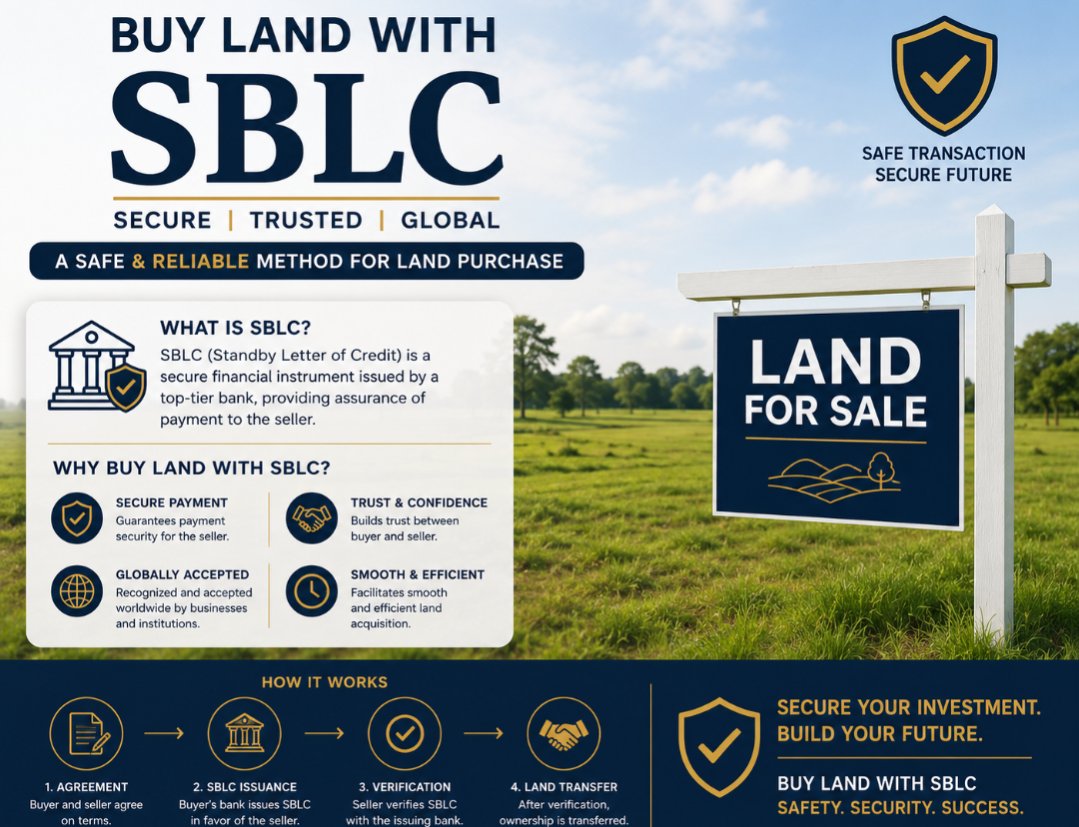
I help businesses to access banking products to get capital to become self-funded for life. For SBLC, BG, DLC, LC, Project Funding and Loans Send a DM I got you
Beyond the Messaging: Demystifying Euroclear’s Role in Global Capital Markets
When discussing international corporate finance and cross-border trade, the mechanisms powering secondary market liquidity often remain shrouded in jargon. A common point of confusion among market participants is distinguishing between communication protocols—like SWIFT—and post-trade settlement architecture.
While SWIFT provides the standardized secure messaging infrastructure for institutional instructions, Euroclear serves as the operational anchor: an International Central Securities Depository (ICSD) and clearing hub processing trillions in transactions annually.
The Institutional Backbone: Clearing, Settlement, and Custody
At its core, Euroclear fulfills three primary functions essential for sovereign and corporate debt markets:
1. Central Securities Depository (CSD) & Asset Servicing: Euroclear acts as a central repository for dematerialized securities—ranging from sovereign bonds and corporate debt to medium-term notes (MTNs) and structured instruments. By maintaining primary ownership ledgers, Euroclear facilitates corporate actions, interest/coupon payments, and redemption distributions.
2. Delivery-versus-Payment (DvP) Settlement: The defining feature of efficient clearinghouses is the mitigation of principal risk (Herstatt risk). Euroclear utilizes DvP mechanisms, ensuring the transfer of underlying securities occurs simultaneously with the credit/debit of settlement cash balances.
3. Collateral Management & Triparty Solutions: Beyond trade clearing, institutional treasuries and global banks utilize Euroclear's triparty collateral management framework to optimize capital allocation, back short-term liquidity needs, and manage exposure across diverse derivative portfolios.
Strategic Capital Mobility
For financial market participants, understanding Euroclear’s operational workflows—such as real-time settlement windows, bridge connections with domestic depots like Clearstream or DTC, and strict KYC/AML compliance parameters—is fundamental to optimizing treasury operations and ensuring seamless execution across European and global debt capital markets.
#CapitalMarkets #Finance #Euroclear #TradeFinance #Banking #FinancialServices #LiquidityManagement #DebtCapitalMarkets #Securities #CorporateTreasury
HOW THE RESERVE BANK OF INDIA NEW FOREIGN CURRENCY NON-RESIDENT BANK SBLC RULES IS GOING TO HELP INDIAN BORROWERS
For Indian corporate treasurers, project developers, and international traders, obtaining a Standby Letter of Credit (SBLC) from a top-tier Indian bank to back foreign loans, overseas joint ventures, or equipment imports has historically been an expensive, capital-heavy process.
However, the Reserve Bank of India’s (RBI) explicit clarification allowing banks to issue SBLCs and extend loans against Foreign Currency Non-Resident (Bank) [FCNR(B)] deposits under its concessional forex swap facility is a game-changer.
For Indian business entities that routinely rely on SBLCs for global credit enhancement, this regulatory adjustment delivers critical operational and financial advantages.
1. LOWER SBLC ISSUANCE & BORROWING COSTS
Under the RBI's swap framework, the central bank absorbs foreign exchange hedging costs for banks on qualifying 3-to-5-year foreign currency deposits. This allows domestic banks to raise low-cost USD liquidity from Non-Resident Indians (NRIs) and pass those savings directly to corporate clients.
By utilizing FCNR(B) foreign currency pools as underlying collateral, banks can issue SBLCs with substantially lower credit surcharges, reducing the total cost of capital for Indian firms seeking offshore lines of credit.
2. ELIMINATION OF CURRENCY MISMATCH RISK
A major risk for Indian companies issuing foreign currency SBLCs backed by Indian Rupee (INR) collateral is exchange rate volatility. If the Rupee depreciates significantly against the US Dollar, the bank demands additional margin call collateral from the borrower to maintain the SBLC's face value.
By securing an SBLC backed directly by USD-denominated FCNR(B) deposits, the underlying collateral matches the denomination of the foreign guarantee. This completely eliminates currency mismatch risk and protects domestic firms from sudden margin calls caused by Rupee fluctuations.
3. EASIER LEVERAGING OF NRI FAMILY CAPITAL
Many Indian enterprise owners and promoters have high-net-worth family members residing abroad. Under the revised framework, an NRI family member can deposit foreign currency into an FCNR(B) account with an Indian bank. The domestic business entity can then request the bank to place a lien on that deposit and issue an SBLC to back their trade credit lines or overseas project expansion.
4. FASTER APPROVALS & HIGHER LTV RATIOS
Because FCNR(B) deposits represent hard, liquid cash held directly within the bank’s balance sheet, issuing banks face near-zero recovery risk if an SBLC default occurs. As a result:
• Loan-to-Value (LTV) Ratios Increase: Banks can comfortably issue SBLCs up to 85–90% of the deposit's value.
#TradeFinance #RBI #SBLC #FCNR #CorporateTreasury #CrossBorderFinance #IndianEconomy #NRIInvestments #StructuredFinance #GlobalTrade
Anyone that tells you that they can easily and directly convert your SBLC to Cash, without any clear process, is a fraudster, report them to the FBI, interpol and police.
SBLC is not a trade able instrument, it is a means to get tradable instruments. Sblc can be used as a guarantee to secure tradable securities such as MTNs, Bonds etc, SBLC can be used as a collateral to get loans, SBLC can be used as a guarantee for commercial buying and selling transactions etc.
But sblc itself cannot be traded.
GLOBAL CAPITAL FLOWS: TOP SBLC ISSUING AND RECEIVING NATIONS IN THE ISO 20022 ERA
The migration of global banking to the ISO 20022 MX messaging standard fundamentally reshaped cross-border trade finance. By replacing unstructured legacy MT760 messages with granular, machine-readable XML schemas (such as fin.760 and auth.018), financial institutions gained unprecedented real-time visibility into cross-border Standby Letters of Credit (SBLCs).
Under ISO 20022’s structured data architecture, the geographic routing of SBLC issuances and receipts reflects clear macroeconomic patterns driven by corporate liquidity, industrial supply chains, and international capital frameworks like Basel III.
TOP SBLC ISSUING COUNTRIES (THE GUARANTORS)
The primary originators of SBLCs remain global financial hubs with deep institutional banking pools, strong credit ratings, and active trade finance desks:
1. United States
As the main hub for multinational treasury operations and US dollar-denominated trade, US financial institutions lead global SBLC issuances. SBLCs function natively as performance guarantees and financial credit enhancements under US law, making US banks primary issuers backing global energy procurements, corporate debt facilities, and commercial leases.
2. United Kingdom (London Hub)
London remains a central clearing node for international trade guarantees. British financial institutions issue high volumes of transferable SBLCs, primarily under ISP98 and UCP 600 rules, backing European corporate liquidity lines, commodity trades, and cross-border project finance.
3. Switzerland & Singapore
Both nations host major global commodity trading desks. Swiss and Singaporean banks routinely issue high-value SBLCs to secure bulk shipments—ranging from energy products and refined metals to agricultural goods—across major trade corridors.
4. United Arab Emirates (UAE)
Driven by Dubai’s expansion as a global trade finance capital, UAE-based institutions rank among the top regional issuers, particularly for trade corridors connecting Asia, the Middle East, and Africa.
TOP SBLC RECEIVING COUNTRIES (THE BENEFICIARIES)
SBLC receipt patterns concentrate where physical production occurs, where major project development requires performance backing, or where fiduciary desks structure secondary credit lines:
1. China & Southeast Asia (Manufacturing & Supply Chains)
As the primary manufacturing base for global trade, China, Vietnam, and India represent the largest destination hubs for incoming SBLCs. Exporters and state-owned suppliers require foreign buyers to present SBLCs issued by tier-1 global banks prior to initiating long-term manufacturing runs or raw material dispatches.
2. European Financial Centers (Frankfurt, Luxembourg, Zurich)
European receiving banks process substantial SBLC volumes for credit enhancement and monetization. Under ISO 20022's standardized data tags, European fiduciary desks accept incoming assignable SBLCs as secondary collateral to anchor commercial liquidity lines and structured debt acquisitions.
3. Middle East (Infrastructure & Capital Projects)
Nations undertaking large-scale infrastructure programs (such as Saudi Arabia) are major receivers of performance-based SBLCs. International EPC contractors must present bank guarantees to local project owners to secure advance payments and performance bonds.
THE BOTTOM LINE
ISO 20022 messaging confirms that cross-border SBLC flows follow a distinct structural loop: credit guarantees originate primarily from Western and Middle Eastern financial capitals and flow into Asian manufacturing hubs for trade execution, as well as European clearing centers for asset-backed credit structuring.
#TradeFinance #SBLC #ISO20022 #CrossBorderPayments #CorporateTreasury #StructuredFinance #GlobalTrade #SWIFT #BankingInfrastructure #CapitalMarkets
BRUSSELS, SWIFT, AND THE POST-ISO 20022 ERA: WHAT HAS CHANGED IN GLOBAL BANKING
Headquartered in La Hulpe, near Brussels, Belgium, SWIFT (Society for Worldwide Interbank Financial Telecommunication) serves as the primary communications backbone for the global financial system. For decades, the cooperative’s legacy MT (Message Type) framework—anchored by standards like the ubiquitous MT103—moved trillions of dollars across borders daily using simple, flat-text file structures.
However, following a multi-year migration roadmap, the global banking community crossed a critical threshold: the formal end of the MT/MX co-existence period for cross-border payment instructions.
With cross-border traffic executing natively in ISO 20022 MX (XML) format over SWIFT’s FIN+ network, the mechanics of international banking have fundamentally evolved. Here is an overview of what has changed.
1. FLAT TEXT GIVES WAY TO GRANULAR XML DATA
The legacy MT format relied on unstructured, line-constrained text blocks where essential information was routinely crammed into generic fields. Under ISO 20022, payments operate using standardized XML schemas.
Every detail—ranging from sender and receiver IDs to exact invoice numbers, purpose codes, and tax identifiers—is assigned an isolated, dedicated data tag. This structural clarity eliminates data truncation and ensures that payment context remains fully intact throughout the correspondent chain.
2. REDUCED COMPLIANCE FRICTION & FEWER FALSE POSITIVES
Historically, automated Anti-Money Laundering (AML) and sanctions screening systems routinely flagged legitimate payments due to ambiguous free-text formatting in MT messages, leading to manual reviews and multi-day delays.
Because ISO 20022 mandates distinct fields for "Ultimate Debtor," "Ultimate Creditor," and structured party addresses, screening algorithms can instantly validate entities without context confusion. This has drastically reduced false-positive flags and driven higher Straight-Through Processing (STP) rates globally.
3. THE SHIFT TO MANDATORY STRUCTURED ADDRESSING
A major operational adjustment following the initial ISO 20022 rollout is the enforcement of structured postal addressing. Unstructured, single-line address blocks are being systematically phased out across the network. Financial institutions must now populate dedicated XML elements for street names, building numbers, postal codes, town names, and country codes. Messages relying purely on unformatted text lines face automated network rejections (NAKs).
4. FINANCIAL PENALTIES FOR LEGACY CONTINGENCY CONVERSION
To enforce complete adoption, SWIFT implemented strict contingency rules and fee structures for institutions lingering on legacy formats. Any MT payment instruction attempting to traverse the network requires automated conversion into ISO 20022 XML, incurring translation fees and risk of validation failure.
THE BOTTOM LINE
From its headquarters in Brussels, SWIFT’s transition to ISO 20022 has upgraded cross-border messaging from simple administrative administrative instruction into rich financial data. For corporate treasurers and financial institutions, this upgrade delivers real-time visibility, automated reconciliation, and faster, more transparent cross-border settlement.
#SWIFT #ISO20022 #Brussels #CrossBorderPayments #FINPlus #CorporateTreasury #BankingInfrastructure #PACS008 #FinancialTechnology #PaymentsTransformation
The Arbitrage Playbook: How the Ultra-Wealthy Leverage US Treasuries
In high-net-worth wealth management, cash is rarely left idle. Instead, sophisticated family offices and institutional investors execute a disciplined strategy to extract capital without liquidating underlying assets: Buy US Treasury Notes, pledge them as collateral, and draw non-recourse or securities-based leverage to fund private projects.
Here is how this financial engine operates—and why it remains a cornerstone of modern portfolio strategy.
Step 1: Purchasing Marketable Treasuries
Rather than holding raw cash, investors allocate funds into short-to-medium-term US Treasury Notes (typically 2- to 5-year tenors) held inside a commercial institutional brokerage. This accomplishes two goals:
* Capital Preservation: Backed by the full faith and credit of the US government.
* Guaranteed Cash Flow: The notes yield fixed, semi-annual coupon payments.
Step 2: The Collateral Pledge
Because US Treasuries carry minimal credit risk, commercial banks and institutional lenders view them as gold-standard collateral. The investor transfers the notes into a pledged custodian account governed by a Tri-Party Control Agreement.
Because sovereign debt volatility is low, lenders offer exceptional Loan-to-Value (LTV) ratios—often 85% to 95%. A $10,000,000 Treasury position can instantly unlock $9,000,000 in liquid capital.
Step 3: Structuring the Facility (Securities-Based Lending)
The lender issues a Securities-Based Line of Credit (SBLC) or structured bank loan.
In private wealth deals, these facilities can be structured with non-recourse or limited-recourse provisions. This isolates the lender's recovery strictly to the pledged Treasury collateral in the event of default, shielding the investor’s other personal assets and operating entities.
Step 4: Deploying Capital Tax-Free
Instead of selling assets to generate liquidity—which triggers immediate federal and state capital gains taxes—the investor accesses project capital via debt.
Under US tax law, borrowed money is not taxable income. The investor can immediately deploy $9 million into high-yield commercial real estate, private equity acquisitions, or corporate expansions.
The Architecture:
[ Buy 2-5 Year Treasury Notes ] ➔ [ Pledge Collateral (85-95% LTV) ] ➔ [ Draw Liquidity (Tax-Free) ] ➔ [ Deploy Capital into Project ]
The Economic Math
The strategy relies on a positive yield spread:
Project Return > Borrowing Rate - Treasury Coupon Yield
While the Treasury note continues to pay semi-annual coupons directly to the investor, those earnings offset a portion of the loan’s interest expense. If the funded project generates a 12% Internal Rate of Return (IRR), the investor captures the arbitrage while keeping their core Treasury principal completely intact.
By using sovereign debt as a bridge, the wealthy turn safety into leverage—funding dynamic growth without sacrificing financial security or paying unnecessary taxes.
#PrivateWealth #TreasuryNotes #Leverage #SecuritiesBasedLending #FamilyOffice #TradeFinance #StructuredFinance #CapitalMarkets #TaxStrategy #AssetManagement #LinkedInFinance
FROM MT103 TO PACS.008: HOW ISO 20022 TRANSFORMED CROSS-BORDER PAYMENTS
For nearly half a century, the SWIFT MT103 message format reigned as the universal standard for single customer credit transfers. Whether settling international trade invoices, executing corporate treasury movements, or wiring cross-border funds, the MT103 was the back-office engine of global commerce.
However, as part of the global banking migration to ISO 20022, the legacy MT103 has officially been superseded by its modern counterpart: the pacs.008 message (Payments Clearing and Settlement).
This is not a mere renamer or superficial software patch. The transition from MT103 to pacs.008 marks a fundamental shift in how payment data is structured, validated, and processed across the global correspondent banking network.
WHAT HAS CHANGED WITH THE PACS.008 UPGRADE?
1. Structured XML Architecture vs. Unstructured Text
The legacy MT103 relied on flat, plain-text character strings with strict line limits. Crucial information was frequently compressed into unformatted "free-text" blocks (such as Field 70).
In contrast, pacs.008 is built entirely on Extensible Markup Language (XML). Every element—from the debtor’s legal entity identifier (LEI) to detailed remittance details—is isolated within dedicated, machine-readable data tags. This eliminates ambiguous text formatting and enables seamless, end-to-end automation.
2. Richer, Granular Data Capacity
The pacs.008 schema expands message data capacity exponentially compared to the legacy MT format:
• Ultimate Parties: Modern compliance protocols require transparency. Pacs.008 introduces distinct fields for "Ultimate Debtor" and "Ultimate Creditor," allowing banks to clearly identify originators and beneficiaries behind underlying corporate structures.
• Detailed Address Components: Instead of cramming an address into four line-constrained blocks, pacs.008 breaks down street names, building numbers, postal codes, and country codes into distinct, standardized tags.
3. Frictionless Compliance and Reduced False Positives
Under the old MT103 format, unstructured text routinely triggered false positives on automated Anti-Money Laundering (AML) and Sanctions screening filters, causing legitimate transactions to freeze for days while compliance desks manually reviewed free-text lines.
Because pacs.008 isolates data cleanly, compliance algorithms screen exact entity names and geographic codes without context confusion. This drastically reduces false-positive holds and accelerates cross-border clearing times.
4. True Straight-Through Processing (STP)
By operating over SWIFT's high-speed FIN+ network using standardized data dictionaries, pacs.008 enables true machine-to-machine validation. Intermediary banks along the correspondent chain no longer need to manually translate or re-format incoming instructions, unlocking unprecedented Straight-Through Processing (STP) rates and lower per-transaction processing fees.
THE STRATEGIC IMPACT FOR ENTERPRISES
The shift to pacs.008 turns global payment data from a back-office administrative detail into a strategic asset. For corporate treasurers, trade finance desks, and financial institutions, cleaner XML data means real-time cash visibility, instant reconciliation, and faster cross-border settlement. Modern enterprise systems must actively leverage this richer data layer to optimize liquidity and streamline global supply chains.
#ISO20022 #PACS008 #MT103 #SWIFT #CrossBorderPayments #CorporateTreasury #BankingInnovation #FINPlus #FinancialInfrastructure #PaymentsTransformation
DETERMINING CREDIT LINES: HOW BANKS CALCULATE LTV ON SBLC-BACKED FACILITIES
In structured project finance and corporate treasury management, leveraging a Standby Letter of Credit (SBLC) as collateral to secure a funded commercial credit line is a standard credit enhancement strategy.
The exact amount of liquidity extended by a receiving bank is governed by the Loan-to-Value (LTV) ratio—a precise metric reflecting the lender's risk exposure, regulatory capital requirements, and the structural integrity of the underlying instrument.
Understanding how financial desks calculate LTV on SBLC-backed credit facilities requires looking at the key variables involved.
1. THE ISSUING BANK’S CREDIT RATING & TIER
The primary anchor for any LTV calculation is the creditworthiness of the bank issuing the SBLC. Because the receiving bank relies on the issuing bank’s balance sheet as default protection, credit ratings from agencies like S&P, Moody's, or Fitch dictate the baseline LTV:
• Top-Tier / Investment Grade Banks (AA to AAA): Desks typically extend the highest baseline LTVs, often ranging between 75% and 90% of the SBLC’s face value.
• Mid-Tier Commercial Banks (A to BBB): Baselines generally compress to a range of 60% to 75%.
• Non-Rated or Lower-Tier Institutions: Desks may cap LTVs below 50% or decline to monetize the instrument without substantial secondary guarantees.
2. INSTRUMENT TENOR AND EXPIRATION RISKS
An SBLC is a time-bound instrument, usually issued for one year and one day (1Y1D). The receiving bank calculates the "tenor risk"—the time horizon over which the credit facility will remain active compared to the validity of the guarantee.
If a credit line is structured to run parallel to the SBLC's expiration date, the bank applies a haircut to cover potential delays, administrative friction, or legal disputes if a call on the SBLC becomes necessary near its maturity. Longer tenors or auto-renewing (revolving) provisions generally support higher, more stable LTV ratios.
3. JURISDICTIONAL & SOVEREIGN RISK
Even an SBLC issued by a strong regional bank can suffer an LTV discount if the issuing institution operates within a jurisdiction with strict capital controls, geopolitical instability, or volatile currency frameworks. Financial institutions apply sovereign risk adjustments to ensure that cross-border enforcement of the guarantee remains frictionless under legal frameworks like ISP98 or UCP 600.
4. USE OF PROCEEDS AND DEPLOYMENT RISK
Banks do not evaluate the collateral in a vacuum; they evaluate what the borrowed funds will do. The intended use of proceeds heavily influences the final LTV approval:
• High-Liquidity Asset Acquisition: If the credit facility is used to acquire primary-issuance, highly liquid debt instruments like bank-issued Medium-Term Notes (MTNs) or sovereign bonds, the bank retains a secondary claim on those assets, supporting a higher LTV.
• Illiquid Project Capital: If the proceeds are deployed into long-term infrastructure, real estate, or greenfield projects with high illiquidity, the bank takes a more conservative stance, reducing the LTV to cushion against operational default.
THE MATHEMATICAL BASELINE: A PRACTICAL EXAMPLE
Consider a corporate borrower presenting a $50,000,000 SBLC issued by a top-tier European bank (A+ rated) under ISP98, with proceeds earmarked for acquiring bank-issued debt securities:
• Base Face Value: $50,000,000
• Issuing Bank Credit Rating Adjustment: 85% baseline
• Jurisdictional / Tenor Haircut: -5%
• Asset-Backed Deployment Offset: +3%
• Approved LTV Ratio: 83%
Final Funded Credit Facility = $41,500,000
The remaining 17% ($8,500,000) represents the lender's risk buffer—protecting the financing institution against interest rate volatility, legal enforcement overhead, and market fluctuations over the life of the facility.
#TradeFinance #SBLC #CreditRisk #CorporateTreasury #StructuredFinance #CapitalMarkets #Banking #ProjectFinance
THE MONETIZATION PHASE: GENERATING REALISTIC RETURN FROM MEDIUM-TERM NOTES WITHIN ONE YEAR
Securing primary-issuance Medium-Term Notes (MTNs) inside an institutional clearing network like Euroclear using a Standby Letter of Credit (SBLC) facility is a significant structural milestone. However, holding the securities in a custody account is only the foundation. To extract tangible economic value and generate a realistic profit within a 12-month lifecycle, corporate treasurers and asset managers must execute specific, compliance-driven monetization strategies.
Because MTNs are funded, debt-backed securities with clean International Securities Identification Numbers (ISINs), they possess intrinsic secondary market value that a loose SBLC lacks. Here is how institutional operators realistically optimize these assets over a one-year horizon.
1. Arbitrage via Secondary Market Liquidation (The Spread Execution)
The most direct path to a rapid profit occurs if the MTNs were successfully acquired at a steep institutional discount during the primary issuance phase (e.g., purchased at 60% to 70% of face value). Over a 12-month window, the holder can execute a controlled liquidation of the notes on the secondary market to institutional buyers, such as pension funds or insurance companies, at a higher price closer to par value. The realistic net profit is derived entirely from the spread between the deeply discounted purchase price and the exit sale price, minus the costs of the initial SBLC issuance and bank-to-bank financing fees.
2. Fixed-Income Yield Collection
Standard, institutional-grade MTNs carry predetermined annual or semi-annual coupon payments. If the notes are held securely in custody, the issuer pays out this fixed interest directly to the clearing account. For an investor utilizing an SBLC-backed credit facility, the objective within year one is to ensure that the coupon rate yielded by the MTN comfortably outpaces the debt-service costs (the interest rate) of the underlying commercial line of credit used to buy it. This positive arbitrage creates a steady, predictable cash flow stream.
3. Structured Securities Lending and Repo Market Access
Within a one-year timeframe, an asset holder can leverage Euroclear or Clearstream to enter into a Tripartite Repurchase Agreement (Repo). By lending the high-quality MTNs to secondary financial institutions in exchange for immediate cash liquidity, the holder can secure ultra-low-cost capital. This liquidity can then be safely deployed into shorter-term, high-yield commercial projects, trade finance syndications, or low-risk asset classes that mature before the one-year repo agreement concludes, allowing the investor to pocket the yield differential.
A Critical Reminder on Market Guardrails
Realistic institutional finance operates under tight margins and total regulatory transparency. Legitimate secondary market transactions require a clean corporate history, verified asset documentation, and qualified institutional buyers (QIBs). Sophisticated entities completely avoid unregulated brokers promising "high-yield investment programs" or magical trading screens, focusing instead on traditional spread execution, bank-to-bank transactions, and structured yield optimization to ensure risk-managed corporate growth.
#TradeFinance #MediumTermNotes #SBLC #CorporateTreasury #CapitalMarkets #StructuredFinance #SecuritiesLending #ProjectFinance #AssetMonetization #Euroclear
THE REALITY OF STRUCTURAL LIQUIDITY: TRANSITIONING AN SBLC INTO TRADABLE SECURITIES
A persistent and dangerous misconception in global capital markets is that a Standby Letter of Credit (SBLC) can be bought, sold, or traded directly on commercial financial screens. In reality, regulatory bodies like the FBI and U.S. Treasury routinely warn that any platform promising to "trade" loose SBLCs or place them into high-yield investment programs is operating an advance-fee financial scam. Regulated central depositories do not clear loose bank guarantees because an SBLC is a contingent, non-funded credit instrument rather than a tradeable equity or debt asset.
However, there is a legitimate, compliance-driven framework for using an SBLC to secure structured, tradable institutional securities, such as Medium-Term Notes (MTNs) or sovereign bonds. This process relies on a rigorous workflow handled strictly by regulated banking institutions:
1. Collateral Enhancement Structuring: The applicant arranges an irrevocable SBLC through a highly rated global institution. To be viable for credit enhancement, the text must be issued under recognized rulebooks like ISP98 or UCP 600 and drafted as fully transferable and assignable.
2. SWIFT ISO 20022 Transmission: The issuing bank transmits the authenticated instrument to a receiving fiduciary institution using standardized, structured data tags over secure FIN+ networks, ensuring transparent compliance and automated anti-money laundering clearance.
3. Commercial Credit Line Facility: The receiving bank reviews the issuing bank’s creditworthiness and the structural integrity of the file. Instead of "selling" the instrument, they accept the SBLC strictly as secondary collateral to anchor a funded commercial line of credit or liquidity facility, applying a risk-adjusted Loan-to-Value (LTV) ratio.
4. Asset Procurement: The fiduciary desk immediately deploys the capital from this credit line to purchase institutional debt securities, such as primary-issuance bank MTNs or Eurobonds. These assets carry clean International Securities Identification Numbers (ISINs).
5. Settlement via ICSD: The newly acquired, funded notes are delivered directly to the investor's custody account inside an International Central Securities Depository like Euroclear or Clearstream using Delivery-Versus-Payment (DVP) protocols. Once settled inside the clearing network, these structured securities generate yield and can be legally traded, used for securities lending, or leveraged as secondary liquidity.
Sophisticated corporate treasurers and project sponsors navigate this process through formal underwriting channels, complete corporate transparency, and strict bank-to-bank SWIFT execution. By understanding that the SBLC acts exclusively as the security for asset procurement, enterprises safely transform static credit obligations into highly liquid, yield-bearing debt portfolios.
#TradeFinance #SBLC #MediumTermNotes #CorporateTreasury #StructuredFinance #CapitalMarkets #ProjectFinance #InstitutionalFinance #Euroclear #SWIFT
Standby Letter of credit commonly known as SBLC is not a get rich quick scheme. Having an SBLC does not automatically make you rich.
Scammer have exploited the term SBLC so much that so many people now think that getting an SBLC will automatically make you rich. This is not true
An SBLC is only a facilitator like it is a means to an end not the end itself.
How can you get funding using an SBLC
1. You must have a genuine functional business making a certain amount of profit and the business should be the type of business that will make more profit if more money is invested into the business. For example if you had started with a capital of $1m and you now make a profit of $1000 per week, you should make between $8,000-$10,000 per week, if you get an investment of $10m.
2. Look for a lender that is willing to give you the loan amount which you want using an SBLC as a collateral.
3. Look for a genuine SBLC provider and ask the SBLC provider to issue a financial SBLC with the lender as a beneficiary.
4. When the lender receives the SBLC, the lender will release the loan to you holding the SBLC as a collateral.
5. As your business goes on, you will meet up with the lender and change the collateral from the SBLC to your business ( this is if the SBLC provider wants to close the SBLC).
With this summary procedure above you can fund a $500m project without stressing too much, as long as you are sure that you will be able to pay back whatever loan you will be getting with the SBLC.
If you have a project that needs funding and you are sure that your project will generate good profits after getting the funding kindly contact us. We will use the procedure above to help you raise capital.
The only fee that you need to pay is 1% of the SBLC face value but if you are in the US you do not need to pay this fee upfront, you will pay the fee after your bank confirms that the SBLC has been received and confirmed, while if you are outside the USA you only need to pay a 0.1% fee and when the process is completed the 0.9% will be automatically deducted.
Contact:
[email protected]
+1 (302) 279-4162
#sblc #tradefinance #standbyletterofcredit #commodity #ProjectFunding #MT103 #tradefinance #swift



![danielgar_xe's tweet photo. HOW THE RESERVE BANK OF INDIA NEW FOREIGN CURRENCY NON-RESIDENT BANK SBLC RULES IS GOING TO HELP INDIAN BORROWERS
For Indian corporate treasurers, project developers, and international traders, obtaining a Standby Letter of Credit (SBLC) from a top-tier Indian bank to back foreign loans, overseas joint ventures, or equipment imports has historically been an expensive, capital-heavy process.
However, the Reserve Bank of India’s (RBI) explicit clarification allowing banks to issue SBLCs and extend loans against Foreign Currency Non-Resident (Bank) [FCNR(B)] deposits under its concessional forex swap facility is a game-changer.
For Indian business entities that routinely rely on SBLCs for global credit enhancement, this regulatory adjustment delivers critical operational and financial advantages.
1. LOWER SBLC ISSUANCE & BORROWING COSTS
Under the RBI's swap framework, the central bank absorbs foreign exchange hedging costs for banks on qualifying 3-to-5-year foreign currency deposits. This allows domestic banks to raise low-cost USD liquidity from Non-Resident Indians (NRIs) and pass those savings directly to corporate clients.
By utilizing FCNR(B) foreign currency pools as underlying collateral, banks can issue SBLCs with substantially lower credit surcharges, reducing the total cost of capital for Indian firms seeking offshore lines of credit.
2. ELIMINATION OF CURRENCY MISMATCH RISK
A major risk for Indian companies issuing foreign currency SBLCs backed by Indian Rupee (INR) collateral is exchange rate volatility. If the Rupee depreciates significantly against the US Dollar, the bank demands additional margin call collateral from the borrower to maintain the SBLC's face value.
By securing an SBLC backed directly by USD-denominated FCNR(B) deposits, the underlying collateral matches the denomination of the foreign guarantee. This completely eliminates currency mismatch risk and protects domestic firms from sudden margin calls caused by Rupee fluctuations.
3. EASIER LEVERAGING OF NRI FAMILY CAPITAL
Many Indian enterprise owners and promoters have high-net-worth family members residing abroad. Under the revised framework, an NRI family member can deposit foreign currency into an FCNR(B) account with an Indian bank. The domestic business entity can then request the bank to place a lien on that deposit and issue an SBLC to back their trade credit lines or overseas project expansion.
4. FASTER APPROVALS & HIGHER LTV RATIOS
Because FCNR(B) deposits represent hard, liquid cash held directly within the bank’s balance sheet, issuing banks face near-zero recovery risk if an SBLC default occurs. As a result:
• Loan-to-Value (LTV) Ratios Increase: Banks can comfortably issue SBLCs up to 85–90% of the deposit's value.
#TradeFinance #RBI #SBLC #FCNR #CorporateTreasury #CrossBorderFinance #IndianEconomy #NRIInvestments #StructuredFinance #GlobalTrade](https://pbs.twimg.com/media/HORjC67WgAAMzPK.jpg)


![danielgar_xe's tweet photo. The Arbitrage Playbook: How the Ultra-Wealthy Leverage US Treasuries
In high-net-worth wealth management, cash is rarely left idle. Instead, sophisticated family offices and institutional investors execute a disciplined strategy to extract capital without liquidating underlying assets: Buy US Treasury Notes, pledge them as collateral, and draw non-recourse or securities-based leverage to fund private projects.
Here is how this financial engine operates—and why it remains a cornerstone of modern portfolio strategy.
Step 1: Purchasing Marketable Treasuries
Rather than holding raw cash, investors allocate funds into short-to-medium-term US Treasury Notes (typically 2- to 5-year tenors) held inside a commercial institutional brokerage. This accomplishes two goals:
* Capital Preservation: Backed by the full faith and credit of the US government.
* Guaranteed Cash Flow: The notes yield fixed, semi-annual coupon payments.
Step 2: The Collateral Pledge
Because US Treasuries carry minimal credit risk, commercial banks and institutional lenders view them as gold-standard collateral. The investor transfers the notes into a pledged custodian account governed by a Tri-Party Control Agreement.
Because sovereign debt volatility is low, lenders offer exceptional Loan-to-Value (LTV) ratios—often 85% to 95%. A $10,000,000 Treasury position can instantly unlock $9,000,000 in liquid capital.
Step 3: Structuring the Facility (Securities-Based Lending)
The lender issues a Securities-Based Line of Credit (SBLC) or structured bank loan.
In private wealth deals, these facilities can be structured with non-recourse or limited-recourse provisions. This isolates the lender's recovery strictly to the pledged Treasury collateral in the event of default, shielding the investor’s other personal assets and operating entities.
Step 4: Deploying Capital Tax-Free
Instead of selling assets to generate liquidity—which triggers immediate federal and state capital gains taxes—the investor accesses project capital via debt.
Under US tax law, borrowed money is not taxable income. The investor can immediately deploy $9 million into high-yield commercial real estate, private equity acquisitions, or corporate expansions.
The Architecture:
[ Buy 2-5 Year Treasury Notes ] ➔ [ Pledge Collateral (85-95% LTV) ] ➔ [ Draw Liquidity (Tax-Free) ] ➔ [ Deploy Capital into Project ]
The Economic Math
The strategy relies on a positive yield spread:
Project Return > Borrowing Rate - Treasury Coupon Yield
While the Treasury note continues to pay semi-annual coupons directly to the investor, those earnings offset a portion of the loan’s interest expense. If the funded project generates a 12% Internal Rate of Return (IRR), the investor captures the arbitrage while keeping their core Treasury principal completely intact.
By using sovereign debt as a bridge, the wealthy turn safety into leverage—funding dynamic growth without sacrificing financial security or paying unnecessary taxes.
#PrivateWealth #TreasuryNotes #Leverage #SecuritiesBasedLending #FamilyOffice #TradeFinance #StructuredFinance #CapitalMarkets #TaxStrategy #AssetManagement #LinkedInFinance](https://pbs.twimg.com/media/HN4RrN2X0AANAIQ.jpg)