Director of the Lumen Center (Madison, WI). Historian of US religion and diplo. Author of The Rise and Fall of Dispensationalism. Editor of @the_raised_hand.
A cool new venture: 3 historians talk about American evangelical history for hours! It's been fun to hang with @JohnFea1 and Maggie in the recording studio. This is the type of stuff I'm so excited to be able to do as part of the Lumen Center.
https://t.co/OunfFcJdJH
We're hoping to convene a more methodological and disciplinary conversation in November--each and every historian has methods, theories, practices that drive their work. We want to discuss and learn together about them. Consider joining and please share widely.
I'm excited to be co-chairing the next Society for U.S. Intellectual History (S-USIH) conference in Madison, Nov 12-14, 2026. The Call for Papers just went out this morning. https://t.co/kOr4fVEhjE
@p_emory Good stuff--worth a future panel at a conference maybe? I'm making the argument in my next book that evangelicals were also driving it. Some of that is highlighting understudied aspects of their history, other is reiterpreting the founding of AA, spiritual but not religious, etc.
@p_emory Of course, Hedtstrom, Leigh Eric Schmidt, etc. are right but I don't think that's the only way you can tell the story. I also think the "personal relationship" aspect is not exactly what liberal religion (from Transcendentalism to New Thought, etc.) emphasizes.
Thanks to @mereorthodoxy for letting me make this argument. Each side of the Protestant "two parties" (fundamentalist/evangelical and modernist/mainline) enjoyed vast if partial cultural victories in the 20th century. A recounting of that story helps explain our landscape today.
Just followed @TheKingsBiz (really @FredFredSanders), reading through old issues of The King's Business (Biola University's magazine from 1910-1970) and highlighting spots of interest. Historians of US religion should follow.
Come work with us at the Lumen Center in Madison, WI! Our newest full-time position is for a Resident Fellow in Theology. Share or apply as you see fit, and feel free to ask questions.
See listing: https://t.co/zNYrQZPzYl
This was a great conversation about the prospect of AI in the classroom and unique perspectives, rooted in humanistic values, for appreciating what human educators can uniquely offer and lean into in the coming years. Listen here: https://t.co/TUKgOV3nHU
👋It's me! I'm the first most pessimistic person in this podcast episode about generative AI!
Do give it a listen 👇
Thanks @cmnelson71 & Susan Swanke for the great convo and @danielghummel for inviting our essays.
NEW: For decade or more, the the majority of U.S. political support for Israel has come from the right. Now there are serious signs that support may be crumbling. Featuring
@CurtMills, @JacksonLahmeyer, @danielghummel, @ShibleyTelhami and more.
https://t.co/MAbGLMsL0c
@p_emory Agreed. I have a short chapter on Frank Buchmann in my current manuscript, as well as tracings here and there of the official daily devotional, 24 Hours a Day, and later mentions of AA like Dallas Willard comparing spiritual formation to the 12-step program.
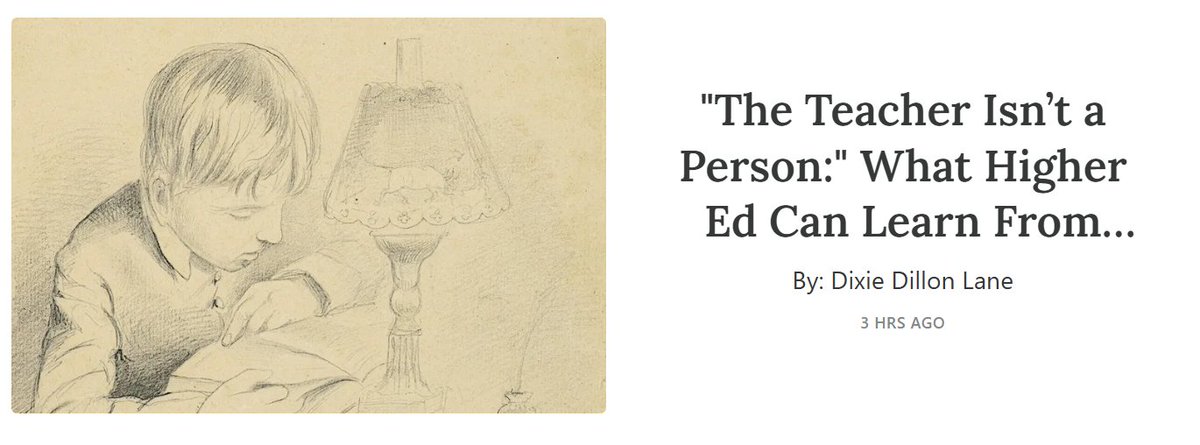
What does it mean when the teacher isn't a person?
At the Raised Hand today, I share about homeschooling and AI and how this may affect higher ed classrooms.
Thanks to @danielghummel for the opportunity!
@jwilson1812two@cmnelson71@NadyaWilliams81 My pitch: if we're talking about what evangelicals consume as an insight into who they are, it's in the devotional/Christian living section of the book store/video library more than in politics, theology, or any other. The numbers are clear. That said, I think it all connects.