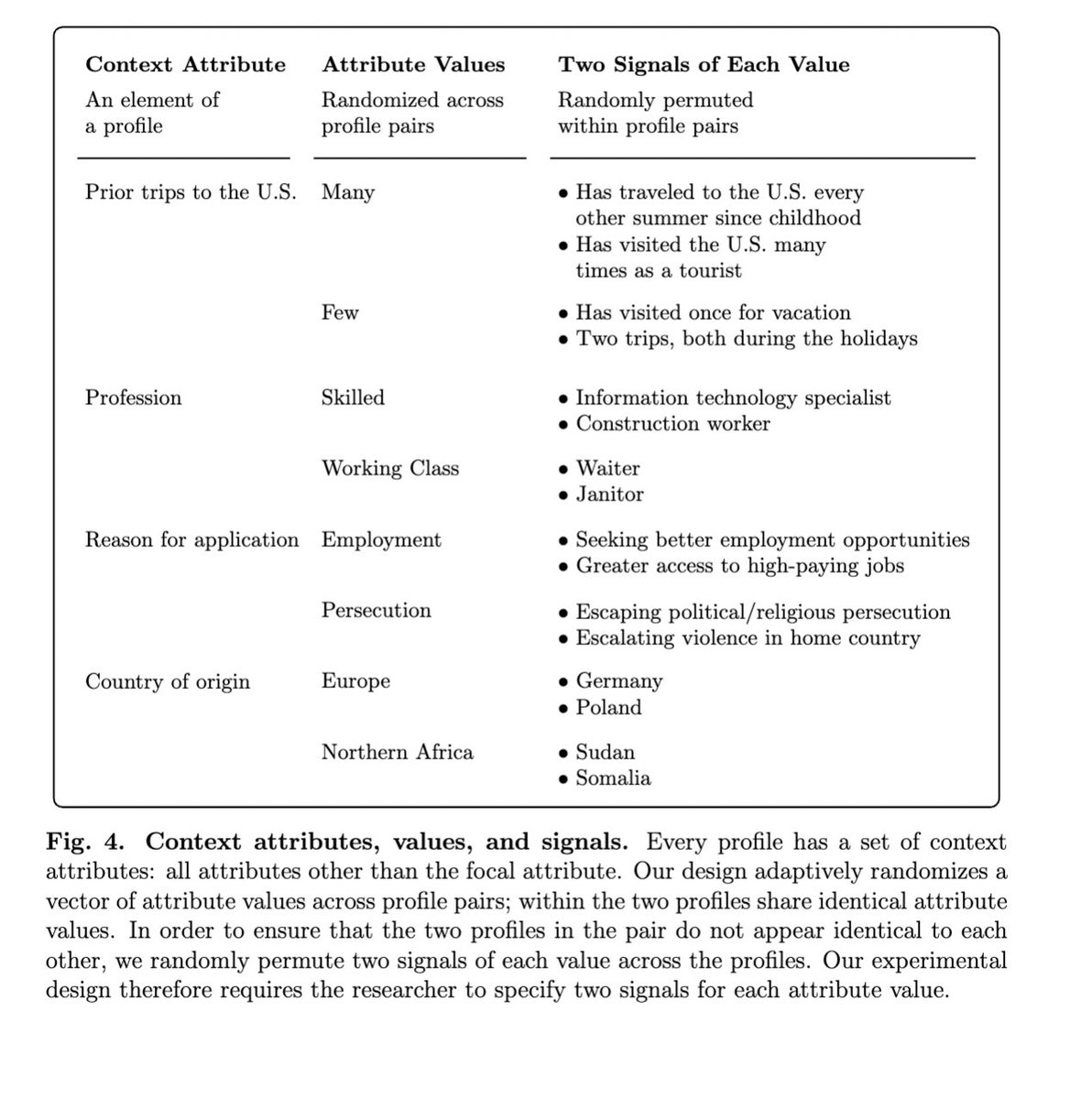
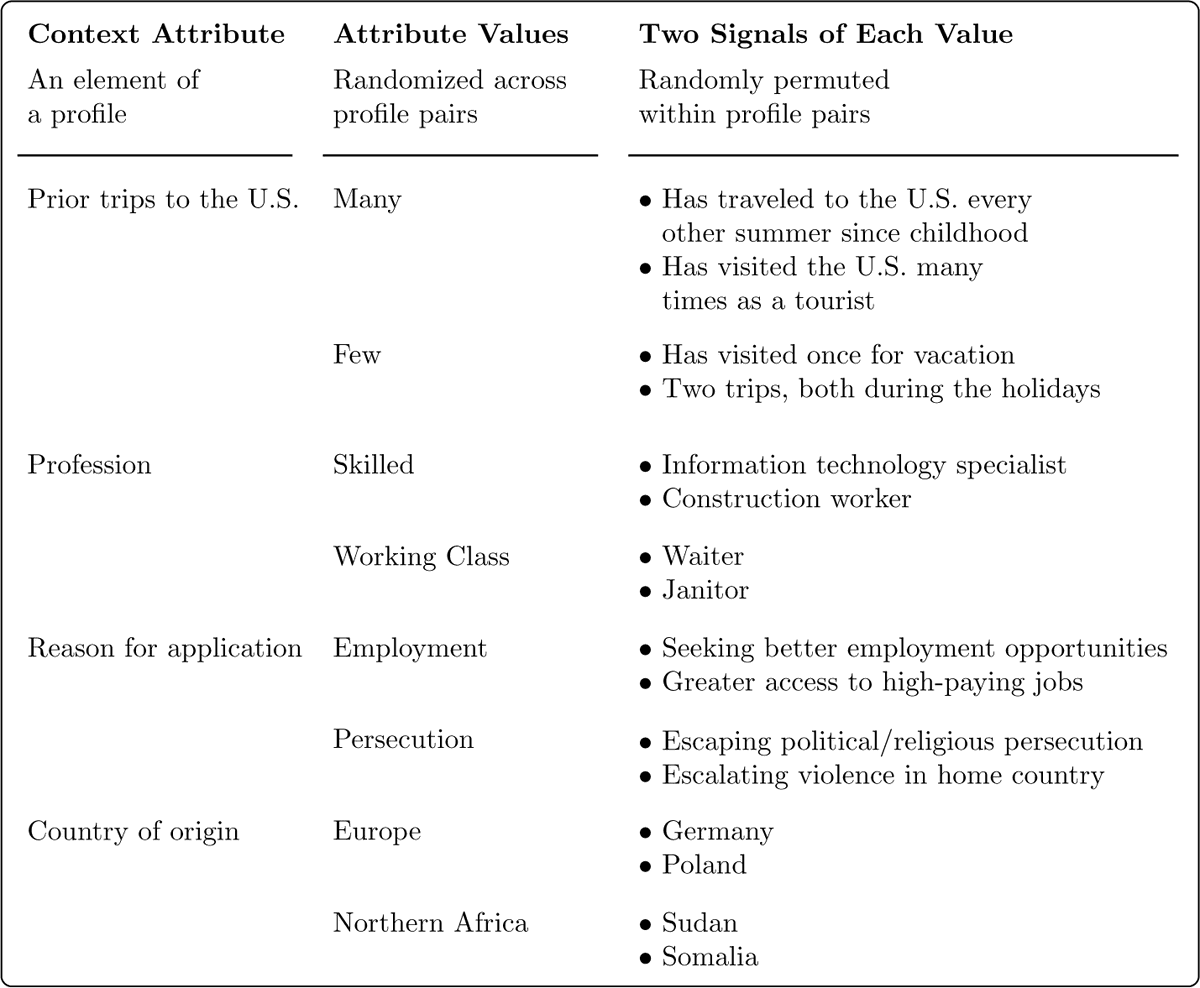
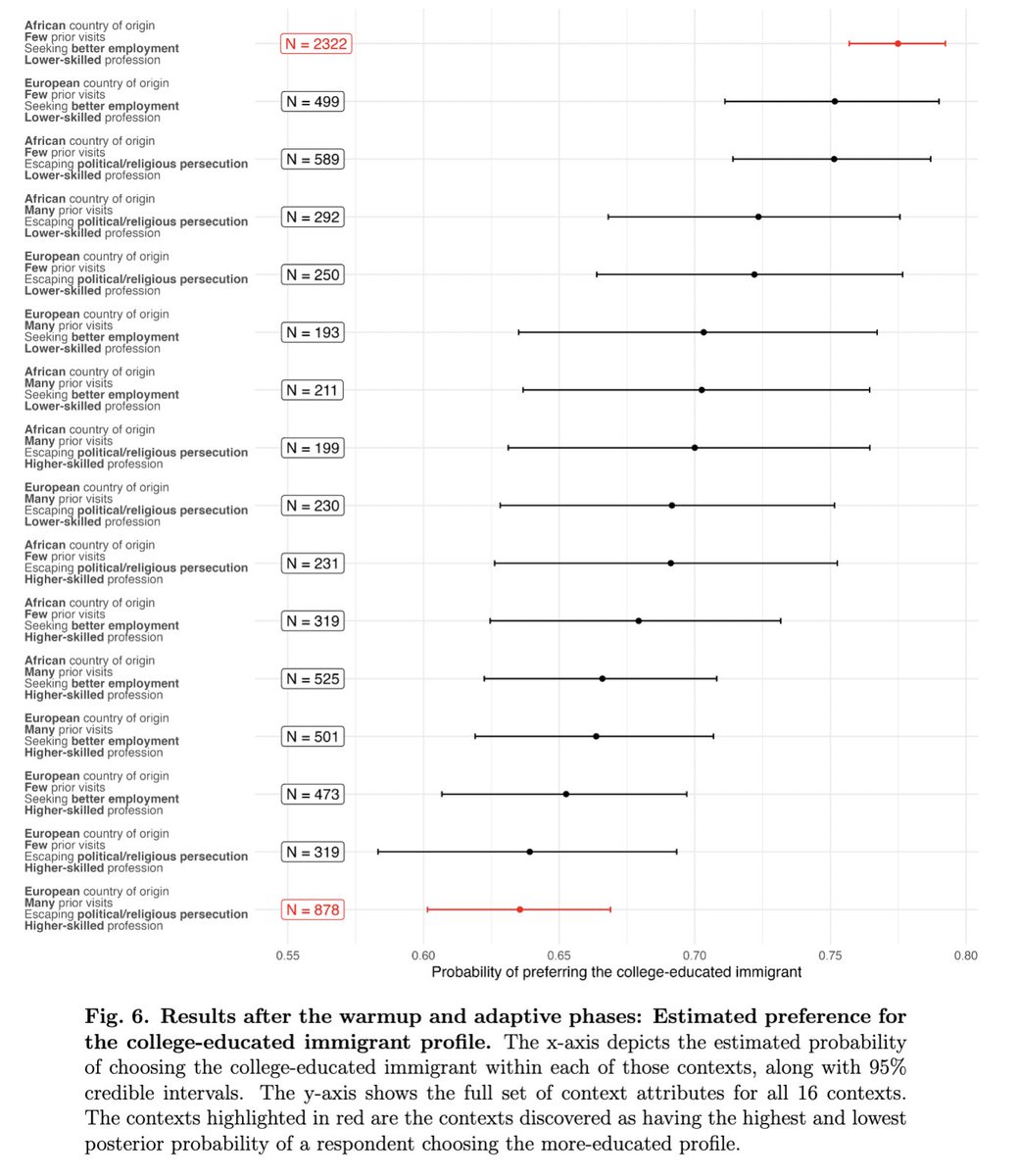
Currently in FirstView: In “Adaptive Randomization in Conjoint Survey Experiments,” @jennahgosciak, @danieljmolitor, and @IanLundberg1 develop a response-adaptive design for conjoint experiments that summarizes the range of effects of one attribute as a function of all others.
If you run conjoint experiments, you need to read this.
Most conjoints estimate average effects for each attribute.
But what if the effect of one attribute depends on the others?
This new paper introduces a data-adaptive conjoint design that hunts for heterogeneity:
Where does a focal attribute matter most (or least)—depending on context?
The authors show that U.S. adults weigh immigrants’ education very differently depending on background—sometimes it matters a lot, sometimes not at all.
I’ve only run a few conjoints, but I’ve always wondered:
Why don’t more designs try to surface this kind of interaction?
Very cool. Very important.
This is largely inspired by the callr package. I'm wondering, am I re-creating the wheel here? The closest I could find was this issue on the callr repo where they said this was out of scope for them: https://t.co/Ug9uM0BuxC.
#rstats I just cranked out a (still quite rough-shod) package with the goal of executing R functions/code blocks in an R sub-process within a Docker container and returning the results to the main R process. https://t.co/AIopulAg3Q
Daniel Molitor, a doctoral student in information science, studies how causal inference can be used to evaluate the impact of policies under the guidance of Ian Lundberg at @CornellInfoSci.
Read more in this @CornellGrad profile: https://t.co/sV7hURB9jq
Recently wrote up a quick function to configure #RStudio projects to automatically activate project-local #JuliaLang environments. Use a non-RStudio IDE for Julia? Couldn't be me...
Function code: https://t.co/AEwAt7HJmK
#RStats