While abortion is a very important & polarizing issue, will it be the deciding factor in the US presidential race across the swing states? My @LSEUSAblog piece analyzes the complex landscape of abortion bans and ballot measures. @ucl@uclspp@uclconflict
https://t.co/ZsqurY5aSu
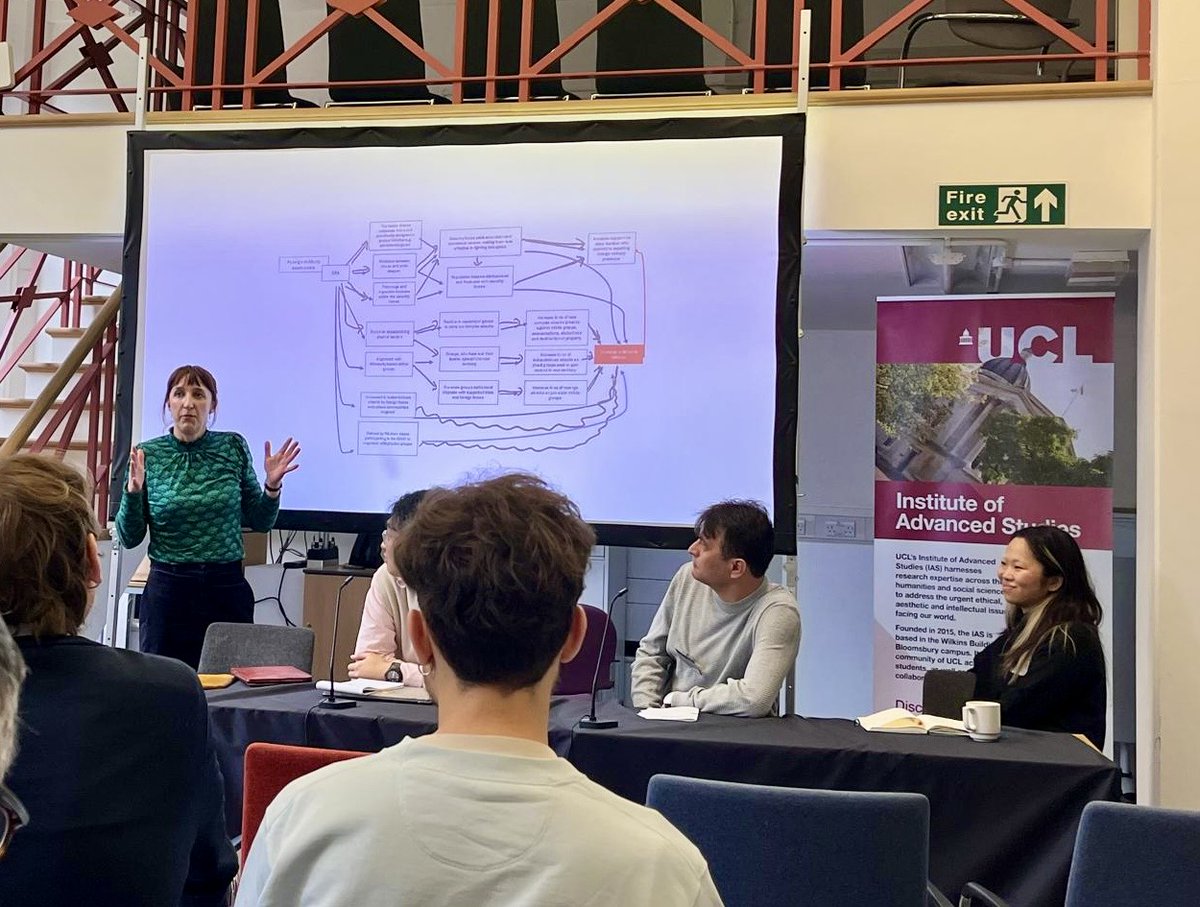
It looks like a diagram from hell. But apparently political scientists like this sort of thing.🤷♀️ Huge thanks to the organisers of the Conflict & Change workshop at UCL. Special thanks to @danieljschulte who tolerated reviewing a paper without a methods section🙊 @uclconflict
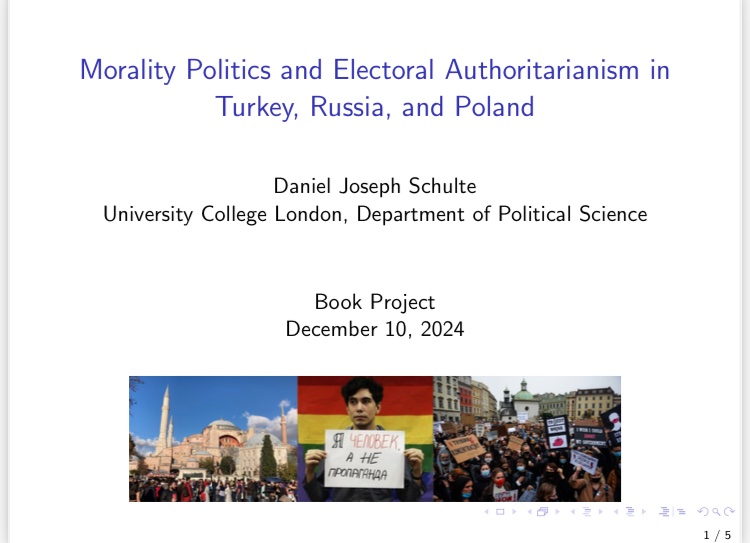
Happy to report that I presented my proposal for my first book project entitled “Morality politics and electoral authoritarianism in Turkey, Russia, and Poland” at Contemporary Turkish Studies (LSE European Institute). Thanks for the helpful comments from the participants!
It's that time of year again... The call for our @uclconflict PhD Workshop is out!🙂We invite ECR working on IR, conflict, contentious politics to apply by 8 December. We look forward to having you in London @uclspp 24-25 February, 2025. Apply here: https://t.co/rMWGimGtlw
The Call for Papers, Panels and Data Presentations for #COMPTEXT2025 is now out; please feel free to circulate https://t.co/Cd9pSAahIA! Deadline: January 15! We look forward to meeting you at the University of Vienna and @CompCommLab@IPKW_univie on 24-26 April 2025!
As a comparativist, I really enjoy @danieljschulte's work on how attitudes to abortion affect political outcomes around the world - nice to see that knowledge applied to the upcoming US election and how abortion might, or might not, affect swing states
💡#ECNInsights 🖋️
Read the opinion article by our ECN member @danieljschulte on the role of abortion policies in the US swing states. 🗳️
What is the political landscape like in these states and how could their policies influence the presidential race?📊
https://t.co/z6t6W3qQ5Y
📃Are you curious about how #abortion policies are playing out in the #USElection2024 swing states?
For @LSEUSAblog, @danieljschulte analyses abortion-related ballot initiatives and policies facing voters across the #US.
🔗https://t.co/TVOISLOgaJ
As the 2024 presidential election approaches @danieljschulte of @uclspp looks at how abortion policies are playing out in swing states https://t.co/HA7D1ahjZa
Check out an opportunity to attend the presentation of
@llschenoni's amazing new book "Bringing War Back In. Victory, Defeat, and the State in Nineteenth-Century Latin America" on October 16th from 6pm to 8pm at Bentham House! Book your attendance here: https://t.co/JMXDqotSCs
Democratic Erosion Consortium is hosting a virtual roundtable on the US presidential election w Rick Hasen
@RickHasen, Steve Levitsky
@Levitsky2, & Lily Mason
@LilyMasonPhD. Free and open to the public. Register here: https://t.co/149lKwsa6v
@DemErosionDEC Join us!
Interested in learning more about how and why Viktor Orbán's Hungary inspires populists abroad? Read my new article with Igor Macedo Piovezan here:
https://t.co/JWj8tiyOhw
In #FirstView by Sofia Vidotto, Rebecca Weitz-Shapiro, and @MSWinters1: "Political Knowledge in the Context of Changing Institutions" https://t.co/HbRORakboG
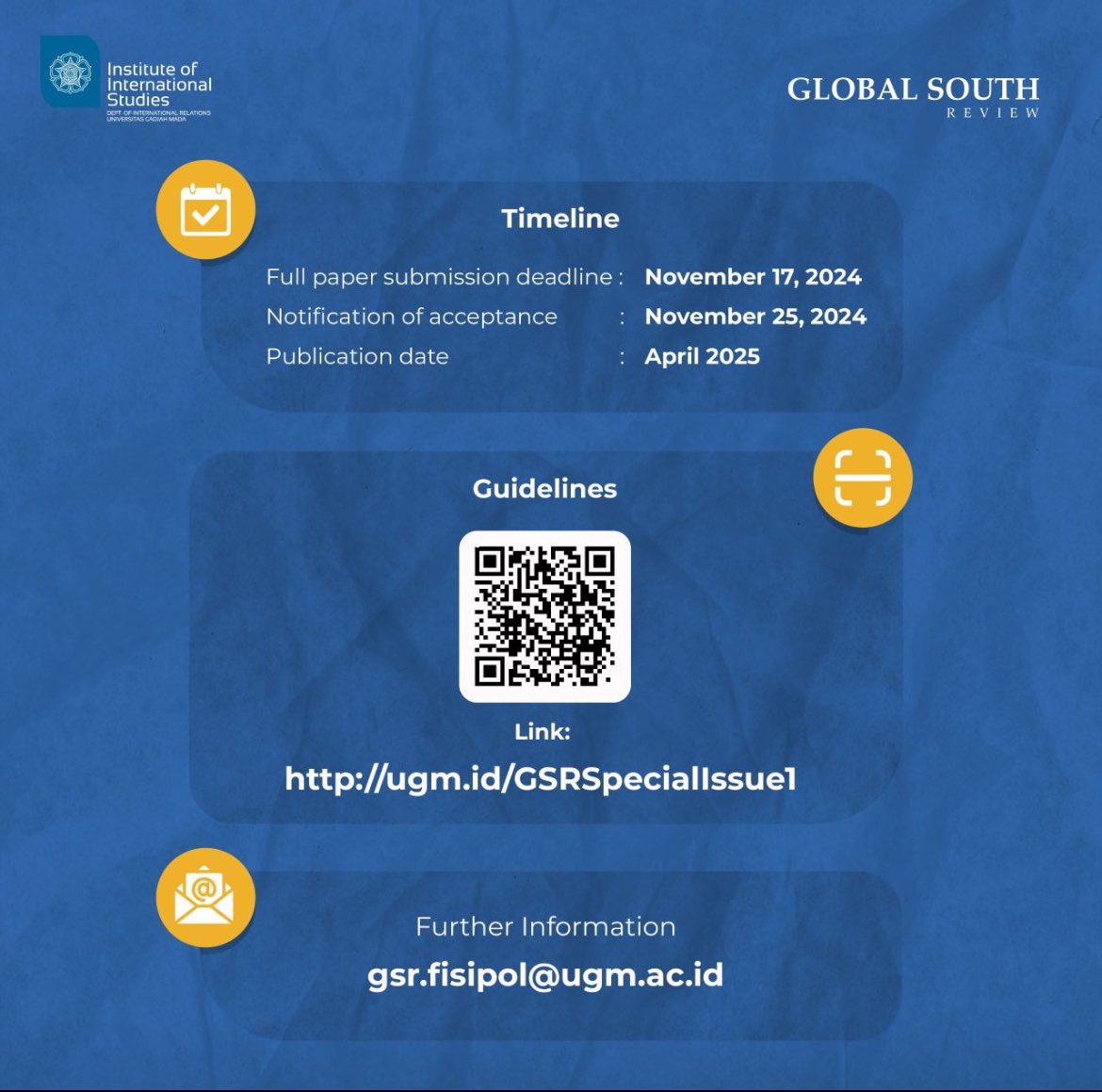
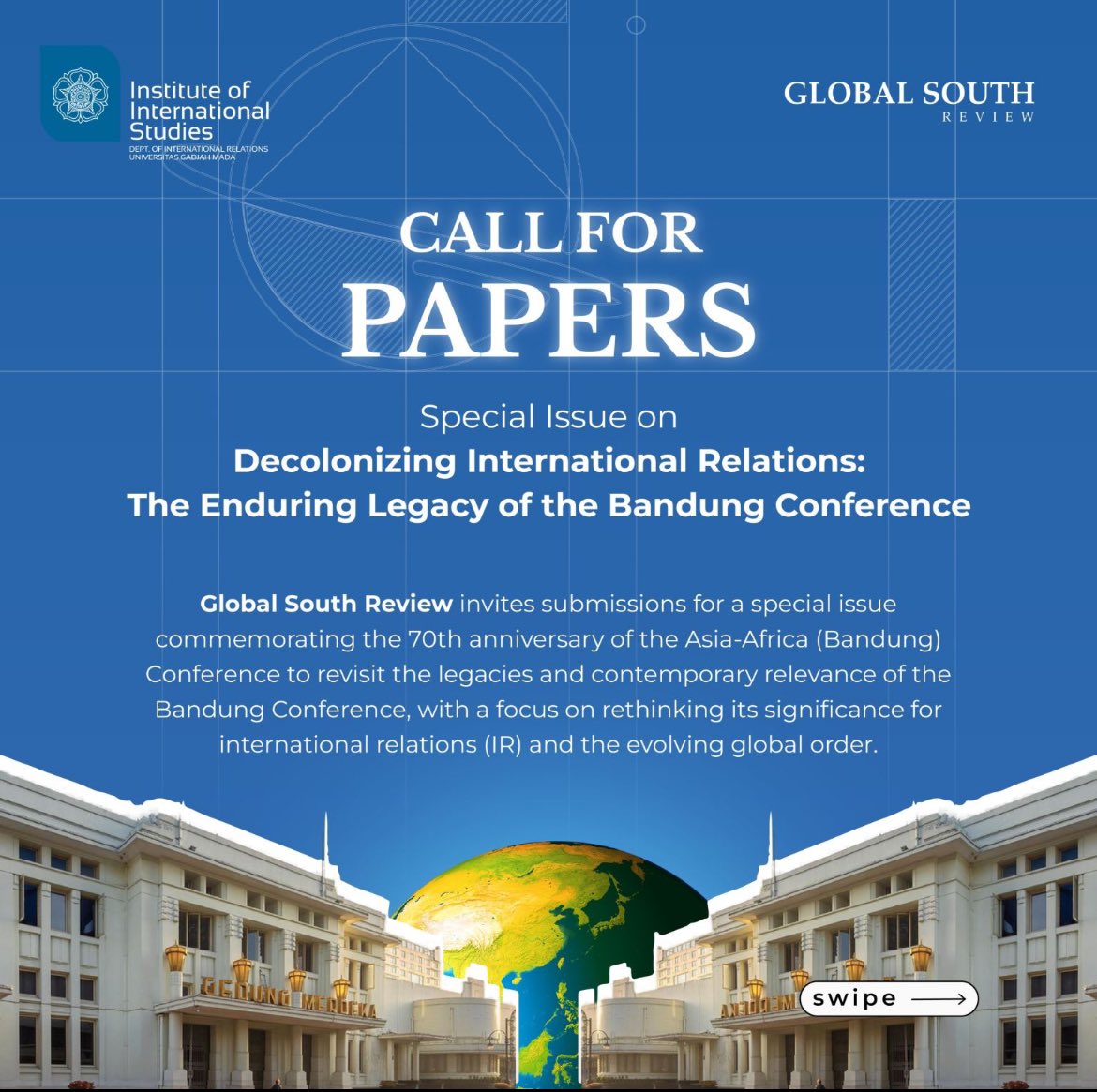
📢 Call for Papers 2024: Special Issue on Decolonizing International Relations: The Enduring Legacy of the Bandung Conference 📢
📑 Submission guidelines: https://t.co/5n79yCQ879
Looking forward to your submissions!
https://t.co/iK4fxleJk3
#decolonizingIR#BandungConference
Popper used to begin his lecture course on the philosophy of science by asking the students simply to ‘observe’. Then he would wait in silence for one of them to ask what they were supposed to observe. This was his way of demonstrating one of many flaws in the empiricism that is still part of common sense today. So he would explain to them that scientific observation is impossible without pre-existing knowledge about what to look at, what to look for, how to look, and how to interpret what one sees. And he would explain that, therefore, theory has to come first. It has to be conjectured, not derived.
@DavidDeutschOxf
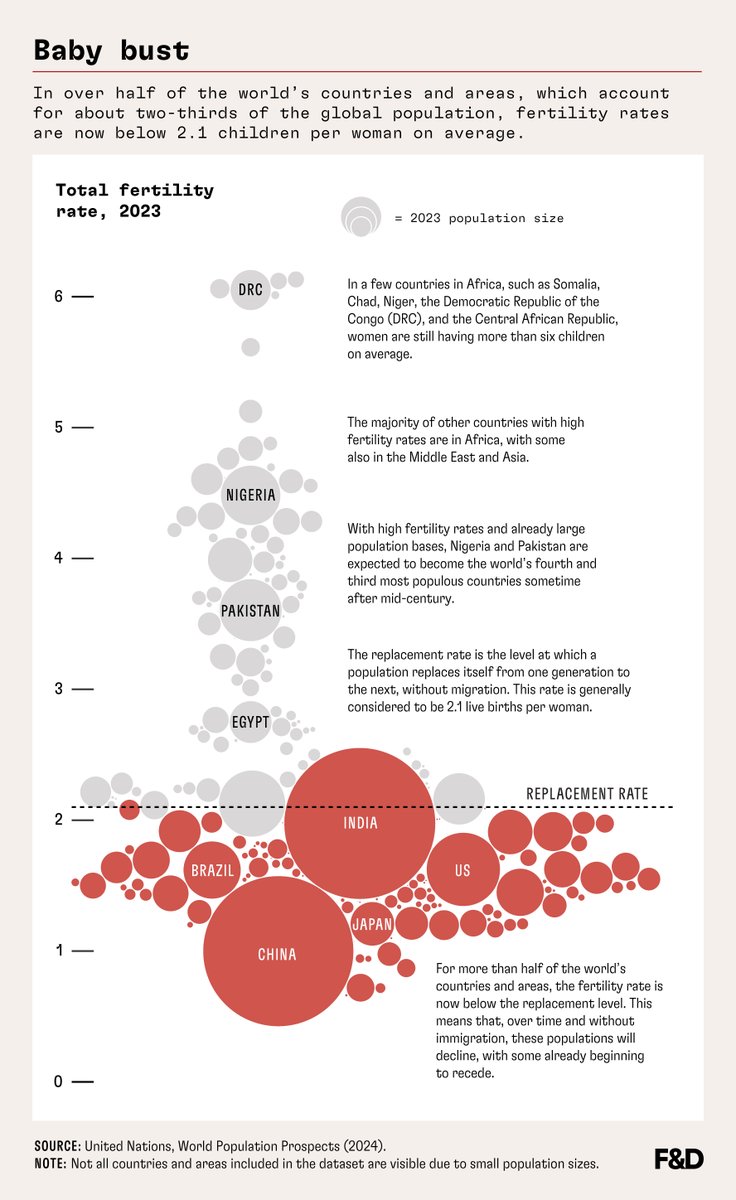
Over half of countries now have fertility rates below replacement level of 2.1 children per woman. This global fertility decline affects two-thirds of the world's population. Our visual article explores the implications for the future and economic impacts. https://t.co/y7KBVDuNU1
📢Apply to the course in Mixed Methods in Ethnic and Migration Research @liu_universitet (11 November–13 December)
➡️Application Deadline: 11 October 2024
👁️Details here: https://t.co/nHwSlDswfZ
🚨CFP - DEADLINE OCT 11!🚨
Apply to present at the Fall/Winter 2024-25 Series of our monthly online East European Politics Workshop for grad students!
Submit your abstract BEFORE OCT 11:
https://t.co/OyFXiZSoyx… & sign up to our mailing list: https://t.co/Bq1vYNOiWH