Dear Rippling,
Charging for API access is criminal. Please don't do this.
You may not have heard, but there are these things called agents. And they make life better for everyone. But they do better with APIs than with UI.
I know they should just use the UI. I know they are being stubborn. I know there are other ways. Yes, you spent a lot of time on your UI. But it's hard for them. They are doing their best.
Please don't make us pay a per employee fee to use the API.
Love,
Danny
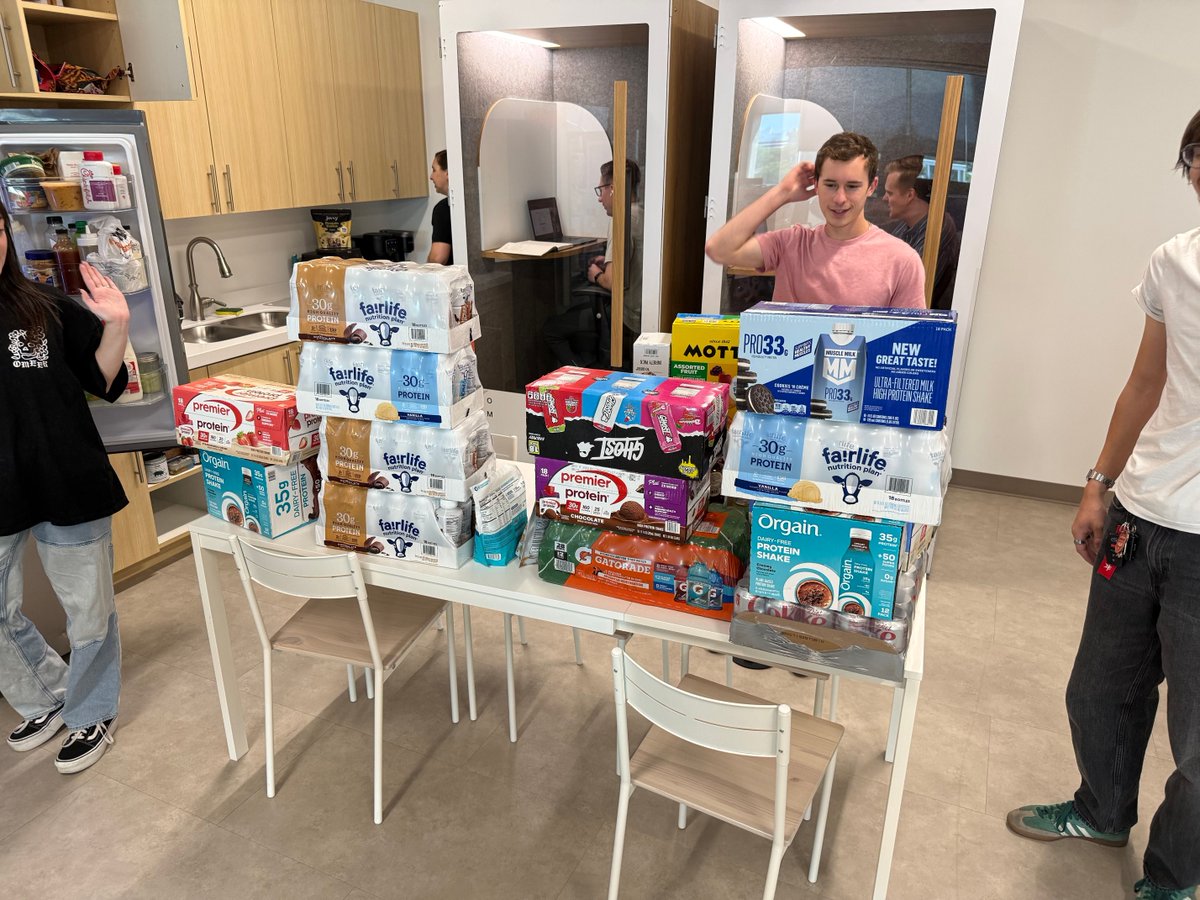
Guess how much Zaymo spent on office snacks this month. Closest guess in the comments gets a box of Fairlife.
Hint: It's been increasing by about 8% month over month
We spent the first year and half of @Zaymo building exclusively for brands on @Klaviyo.
Klaviyo has the lion's share of the market. Some awesome partners made building with them easy. Focusing there let us build a product that our customers love to use.
But as we keep working with larger and larger e-com brands, we had to branch out eventually.
Excited to announce that as of last week, Zaymo now supports brands on @Iterable as well.
And we have design partners working with us on multiple other integrations already.
If you've wanted to try Zaymo, but aren't on Klaviyo, now is your chance to give it a go.
@Navyay100 We have seen delays meaningfully reduce subscription churn. Only 5-10% of delays cancel before their next order is placed, most of them just needed a little more time
Been thinking a lot recently about "Old SaaS" vs "New SaaS" and I'm curious what people think.
I'm thinking of "Old SaaS" as software that a user:
Logs into often
Configures to do what they want it to do
Hopefully gets some value out of
Adding new workflows means increasingly complicated settings and configurations
If you don't log in every few days and check on things, it stops being valuable
"New SaaS" feels more like:
Log in once
Personalized onboarding flow that feels simple and adapts to my workflow
Basically just click "turn on"
The value is very high and self apparent
I'm automatically notified of results but might not log in for months at a time
Feels like when you higher an agency
Examples: Code review tools, Infra tools
Another way to think about it is "prompted" software vs "un-prompted/autonomous" software.
Curious what others think about this? What am I missing?
Welcome to your daily dose of email data.
Today's topic: Should you let subscribers delay their orders?
I understand the concern. If someone delays their order, that probably means they hate the product right? They will get out of the habit. They're probably going to cancel next month anyway. Might as well send them one more order. Let's put all of the cross sells at the top of the portal and hide the delay way down the bottom.
So I looked into it. Analysis done on 10 large health and wellness brands. I wanted to know, what actually happens after a subscriber hits delay?
Here are the results:
Over a 3 month period, subscribers who delay their next order are 11% MORE LIKELY to eventually place that order than subscribers who never delayed.
It's not a churn signal at all.
Fun side note: if they delay in an email (without ever even visiting the portal) they are 15% more likely to place that next order.
What's the take away? Let your subscribers delay. And make it easy. The easier it is to delay when they want to, the less likely they are to cancel instead.
I used to think paying for marketing was basically a scam.
I didn't grow up with a background in business. In my family, everyone does research or engineering. I almost studied piano in college.
My instinct was always: "Let's just build a great product, and then people will show up".
And honestly, it kind of worked. We did build a great product. And a lot of people have shown up.
But "build it and they'll come" misses the fact that sometimes you have to spend money now to make more money later. Ads, conference sponsorships? Maybe worth doing. Even if the payback period is, brace yourself, three whole months. 😬
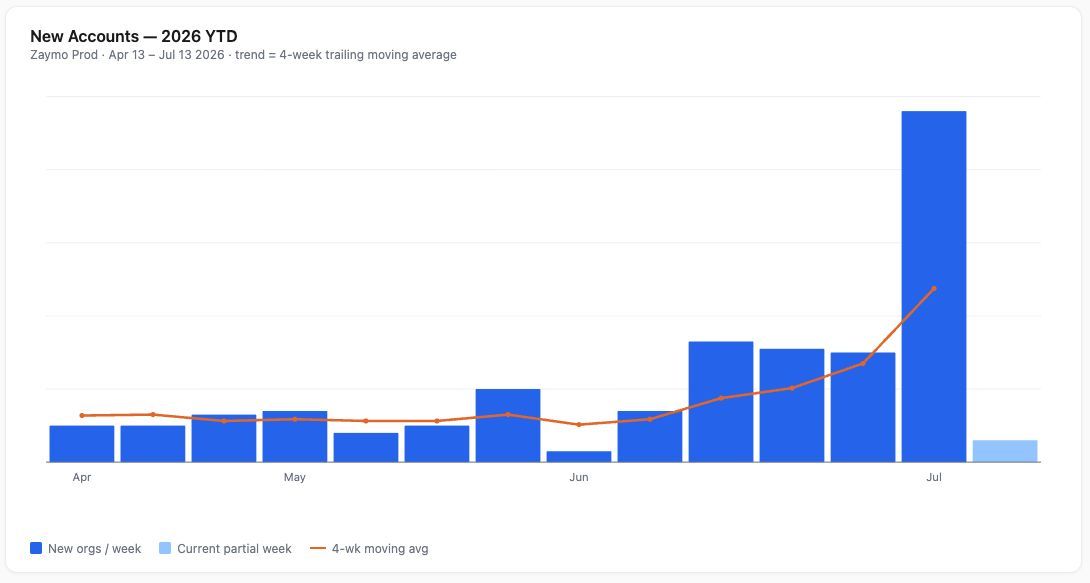
Last month we hired our first full-time marketer. Here's new Zaymo accounts created by week.
Correlation, not necessarily causation (That last feature release was a banger for sure). But we'll give him some credit.
Turns out it pays to invest. Who knew. (Everyone. Everyone knew.)
We're hiring across eng, product, design, and gtm. Dm me
Can anyone tell what's wrong with this image?
Cancellations down from 4.6% to 0.9%. Looks like a win for email 1.
It isn't. The answer: Selection Bias
That 0.9% isn't the cancellation rate for everyone who got the email. Because of Klaviyo's default 5-day attribution window, it only counts people who opened the email. And only if they cancelled within 5 days of opening.
Selection bias is one of the classic mistakes in stats. When the data you measure doesn't represent the population you care about. If the sample is skewed, the answer will be skewed, even if the truth is totally different.
Here's the catch. Email 1 (left) had a lower open rate (53.5% vs 68.1%). Fewer opens means fewer cancellations get attributed to it. Not because it prevented cancellations, but because Klaviyo never counted the ones from people who didn't open.
What's crazy is if you look at everyone who received the email, email 1 actually has a slightly higher cancellation rate.
@Klaviyo, I love you, but please fix attribution
Zaymo does content. Come check out our first ever webinar.
Katie Cooper will be teaching tips and tricks from the best subscription brands in the business.
https://t.co/PHur2DsMa3
I spend most of every Monday defining what we are building next. And there is more than we can keep up with.
I'm hiring engineers and a product/design hybrid who are opinionated and move fast. (Also sales, but that's a separate post)
DM me or tag someone who would be a good fit
Have you ever wondered how the best subscription brands in the world do Billing Reminder emails?
We have answers for you.
Next Wednesday at 11am MTN.
Sign up here: https://t.co/PHur2DsMa3
And if you haven't spent time with Katie Cooper before, you're missing out.
Call me crazy but...
This is peak morning.
Gym + 4 agents running fable. I just check in between sets.
One personal project, 3 works projects.
Literally nothing better.
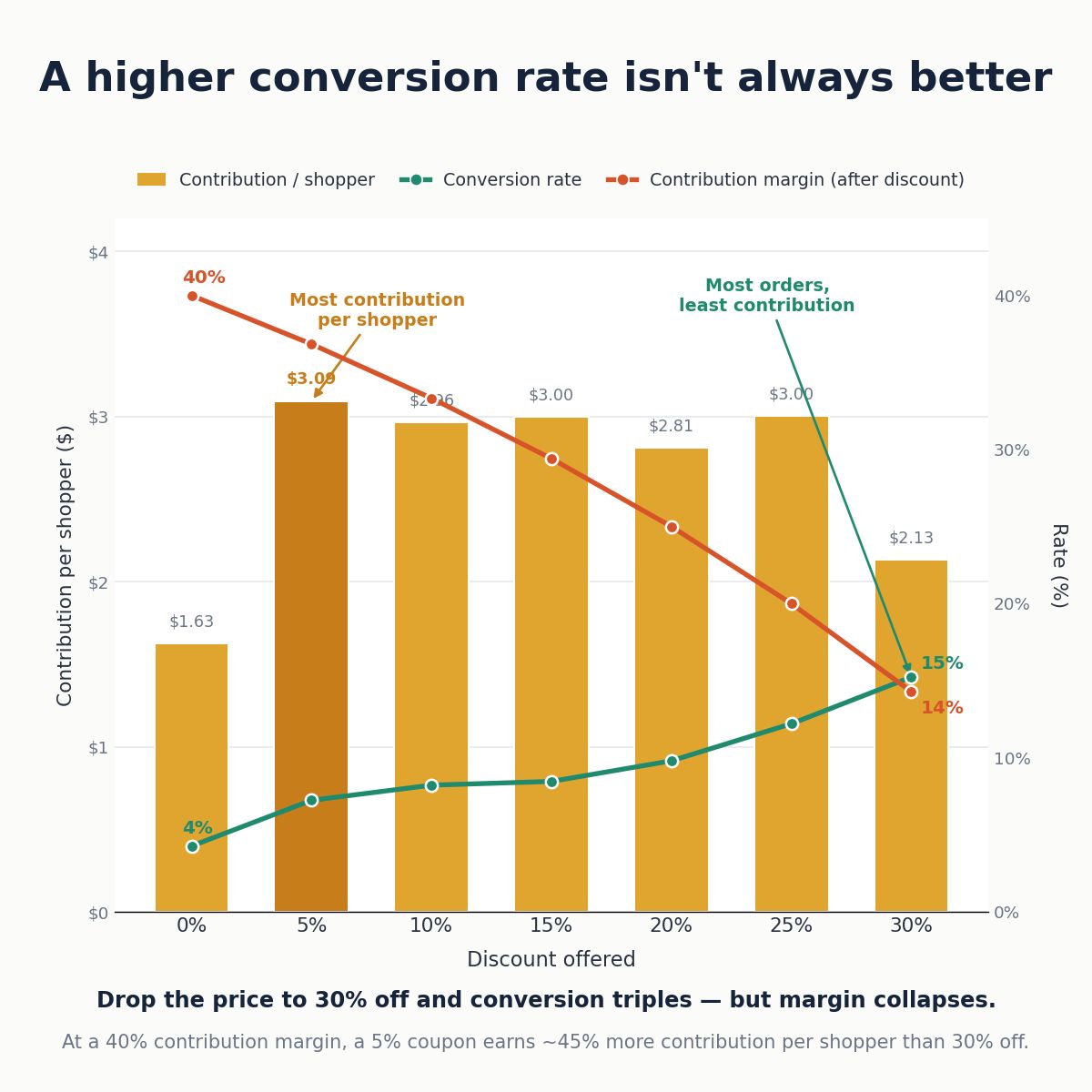
Factor in margin, and that 30% discount is barely more profitable than offering no discount at all.
The real winner? 5%. Less conversions, but each one is worth more.
Happy to share the test setup. Comment or DM me if you want to run this on your brand.
Ready for some cool data? Look at this test we ran with a big Utah brand. I was surprised by the result.
This is for a classic Abandoned Cart flow. The goal: Find the discount that actually makes the most money.
Here are the results:
- Conversions go up with discount as you would expect, with 30% getting 3x more conversions than 5%.
- A 15% percent conversion rate on the 30% discount, enough to make any email marketer drool.
But smart marketers look one level deeper.
This weekend I was on pace through two-thirds of the race, and then cramped and came in just under 3 hours. Not the day I trained for.
So we're going to a 4th attempt.
I'm picking my next race and starting training this week.
Hit me up if you live in Utah and want to run.
I've been trying to qualify for the Boston Marathon for over a year now. Saturday was my third attempt.
Since my first marathon, I've cut an hour off my time. And I still haven't made it in.
I trained all summer and ran another race last September. I missed by 30 seconds. And then they added a time penalty for downhill races (basically every race in Utah).