@soumitrashukla9@mean_field_zane At that point, the work itself must be the reward. They’ve already reached the very top of academia, but they still seem genuinely driven by the ideas.
China’s export surge is not just about volume. It is now about higher complexity manufacturing. The first China shock hit lower-cost goods. This time it is EV batteries, sensors, and wind turbines. That is why China Shock 2.0 is different. https://t.co/pLIUHFAK4U via @ft
Terence Tao spent a year at the Institute for Advanced Study - no teaching, no random events of committees, just unlimited time to think. But after a few months, he ran out of ideas.
Terence thinks that mathematicians and scientists need a certain level of randomness and inefficiency to come up with new ideas.
@IgorLetina Similar here. I had to get Claude’s $100 plan because of the usage limits. It’s good, but pricey. GPT feels more generous, and I prefer step-by-step collaboration so I can give feedback along the way instead of redoing everything later.
@alz_zyd_ Totally agree. AI makes technical textbooks much more approachable because you can ask it to explain difficult parts, unpack the logic, and fill in missing steps. With improved PDF-reading, people now have access to an on-demand tutor while they work through the material.
@mean_field_zane I’ve noticed I do better when I have the physical book—not because paper is special, but because it’s my little ritual of committing to the class.
@alz_zyd_@RefineInk My guess is it’s domain-tuned—trained/evaluated on academic papers and set up to look for internal consistency (numbers, definitions, references) instead of just rewriting sentences.
What I’ve found helpful is to treat AI output as a starting point—push back on it, check assumptions, and compare responses from at least two models. The differences are often where the real thinking happens.
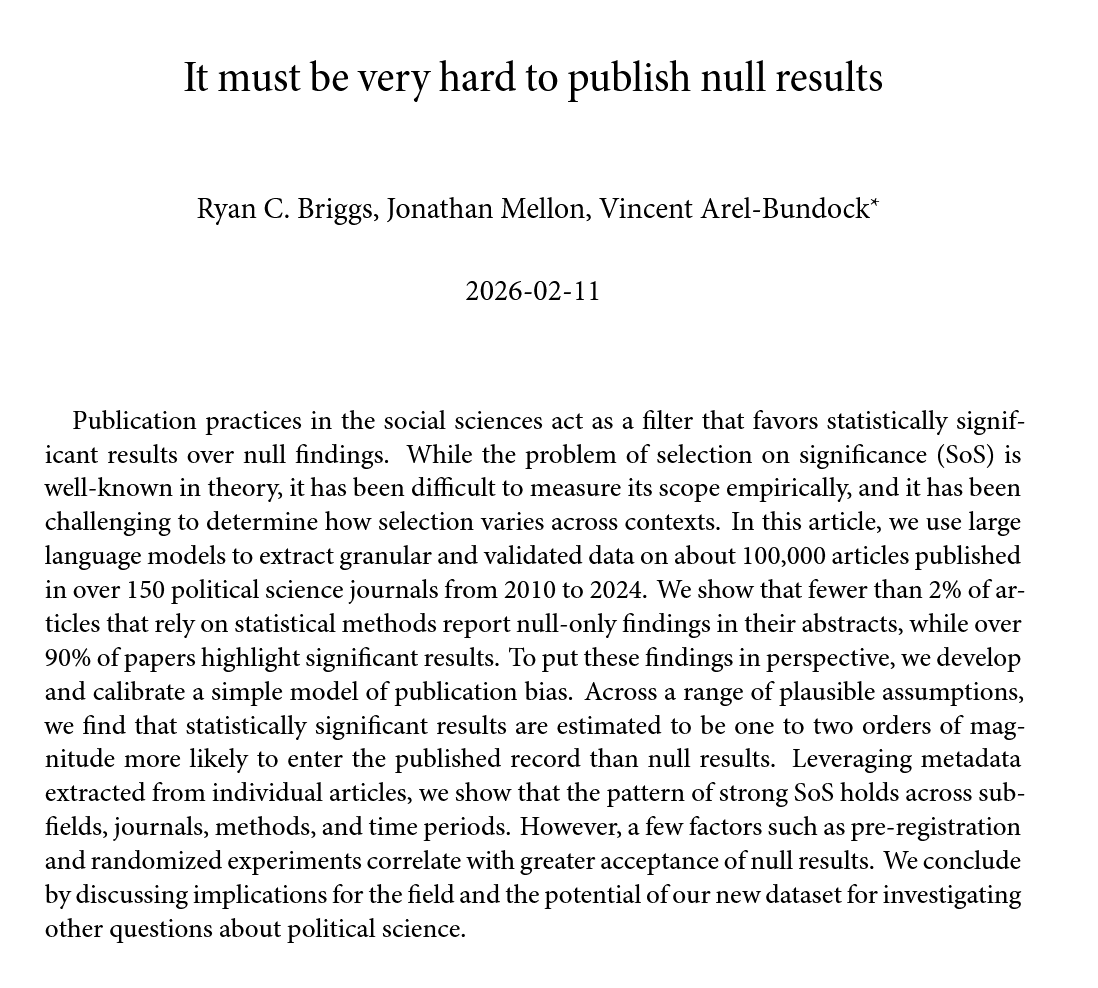
If we don’t want “statistical significance” to drive what gets highlighted, should publication hinge on whether the question (and design) is important—regardless of whether the estimate is precise enough to reject the null? What role should significance play?
@sc_cath Agreed. I still focus on teaching Excel to undergraduates as it's the common language in most roles, but I'm planning to layer in Python gradually to prepare students for the shift toward more robust modeling.
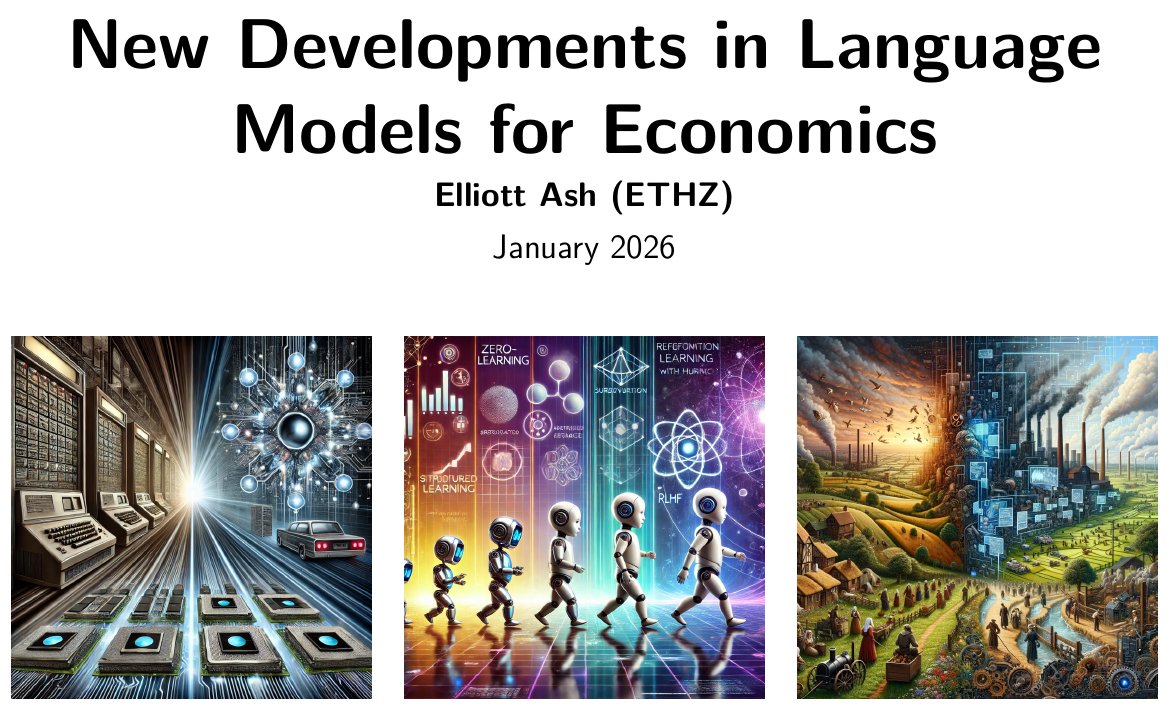
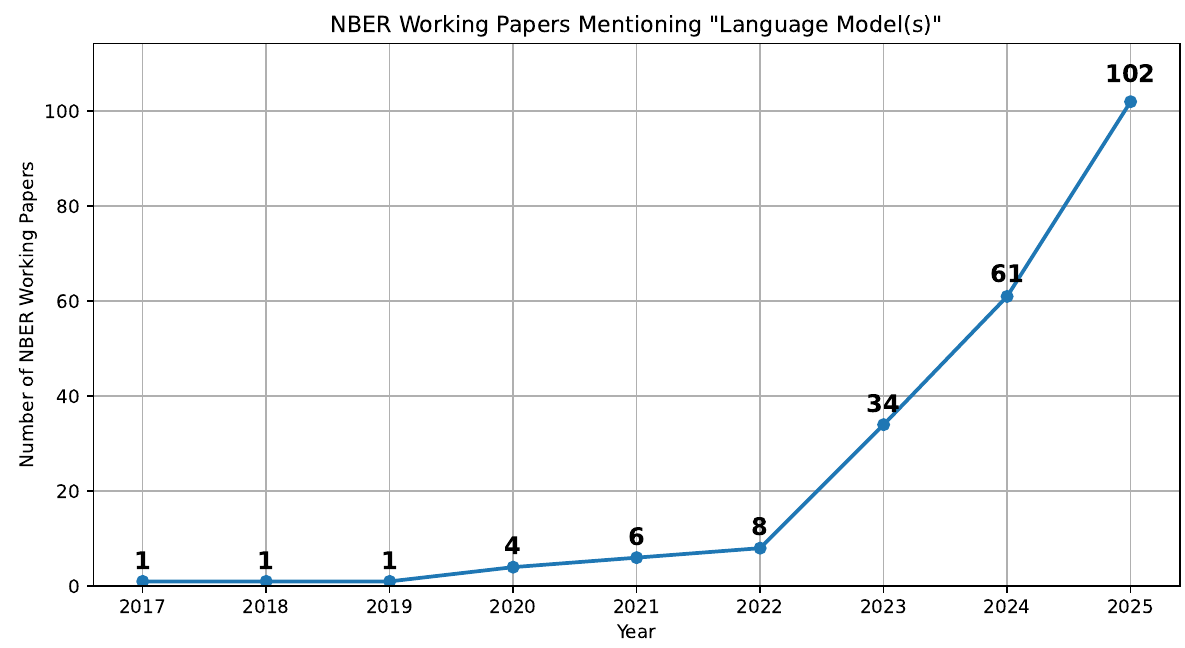
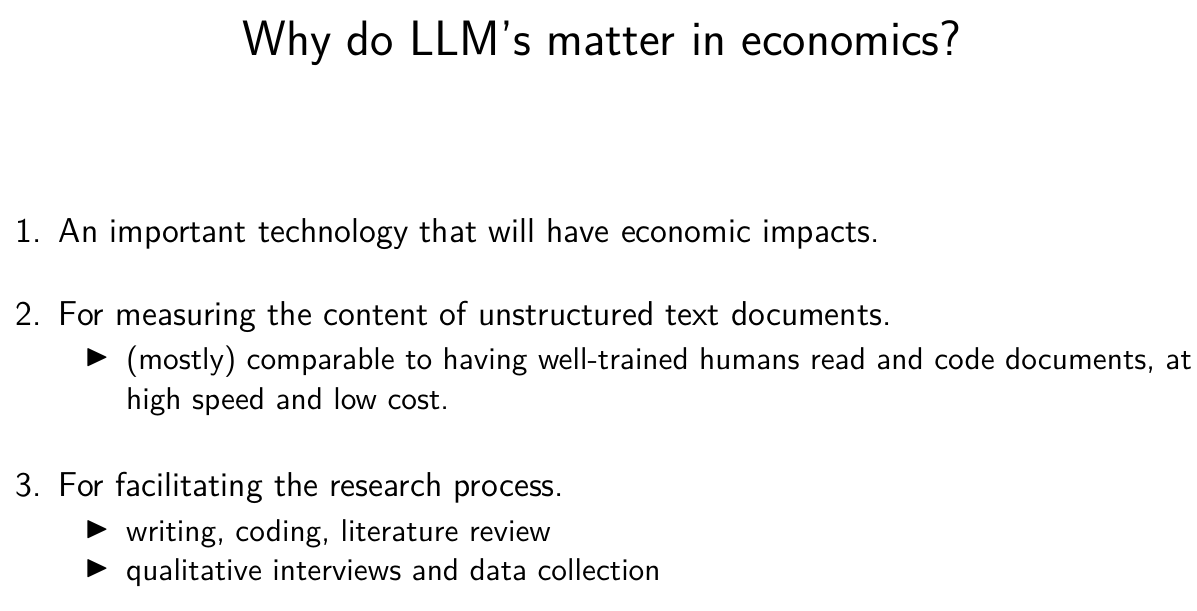
Elliott Ash’s AEA 2026 talk had a nice, practical text-analysis workflow: LLM labels a subset → human validation → train a classifier (RoBERTa/etc.) → apply to the full corpus (+ iterate on edge cases).
Blown away by @leah_boustan’s research on upward mobility of immigrants at today's lecture! #ASSA2026 Check out this cool paper by her and her coauthors: https://t.co/SrzneXdfJK
#ASSA2026 AEA Distinguished Lecture, 4:45pm Saturday: Leah Boustan, Yale University speaking on "Where are the Streets of Gold? Immigrant assimilation in the US and Europe" @ Marriott Philadelphia Downtown - Grand Ballroom G&H on the Fifth Floor