The prototype of the sketch on the left is a Chinese merchant from the Ming dynasty named Xingpu (兴浦), also known as 'Yppong' or 'Inpo', whose original name was Li Jin (李锦). His date of birth is unknown. He was a native of Haicheng County in Fujian (Now Zhangzhou, Fujian Province) and spent many years conducting trade in Patani (located on the eastern coast of what is now the southernmost part of Thailand)
In May 1600, Li Jin arrived in Vlissingen in the Netherlands aboard one of two merchant ships (they are called 'Langebark' and 'Zon' respectively) of the Middelburg Company, managed by Gerard le Roy. He subsequently traveled throughout the Netherlands for eight months, during which time he was baptized and converted to Protestantism. At the end of 1600, Li Jin returned to Middelburg, where he became friends with the local lawyer Van Nicolaas de Vrise. In De Vrise’s <Alba Amicorum> (friendship album) (Fig 1), De Vrise leave a portrait of Li Jin and invited him to leave an inscription as a memento. Li Jin wrote in Chinese:大明之焚客,興浦。大明山客,興浦,來萬陳下港东,西離卅,來何離卅,歸去万陳,去大明山,西離卅,一千六百年又乙亲燕畫理,日無里六,舍字為記
In January 1601, Li Jin departed by ship for Java, arriving in Patani in May 1602, where he remained. During this period, he married a Christian woman, and the couple had one son
In 1604, the Dutch had just established the Dutch East India Company. The commander of the company’s first fleet, Wibland Van Warwijck (known as “韦麻郎” during the Ming Dynasty), stated that anyone who could help the Dutch successfully establish trade relations with the Ming court would receive a generous reward. Li Jin offered Warwijck numerous strategies,however, these strategies achieved little success.After the Dutch occupied the Penghu Islands, Li Jin once disguised himself and returned to Haicheng County to gather intelligence, but he was captured by Ming forces. Due to his familiarity with Dutch affairs, Fujian officials were compelled to employ him as an envoy in negotiations aimed at persuading the Dutch to withdraw from Penghu. Under the firm stance of the Ming general Shen Youyong(沈有容), the Dutch ultimately withdrew, and Li Jin left with them
In 1606, during the Dutch siege of the Portuguese in Malacca, Li Jin provided supplies to the Dutch. As the importance of the port of Patani gradually declined, Li Jin wrote to the Dutch East India Company expressing his intention to change his occupation
In 1612, he moved with his family to Ambon Island (in Now Indonesia’s Maluku Islands). In 1614, Li Jin died on the Ambon Island, leaving an estate worth approximately 6,000 rials, his wife later remarried a local British merchant named Hurst Jackson.
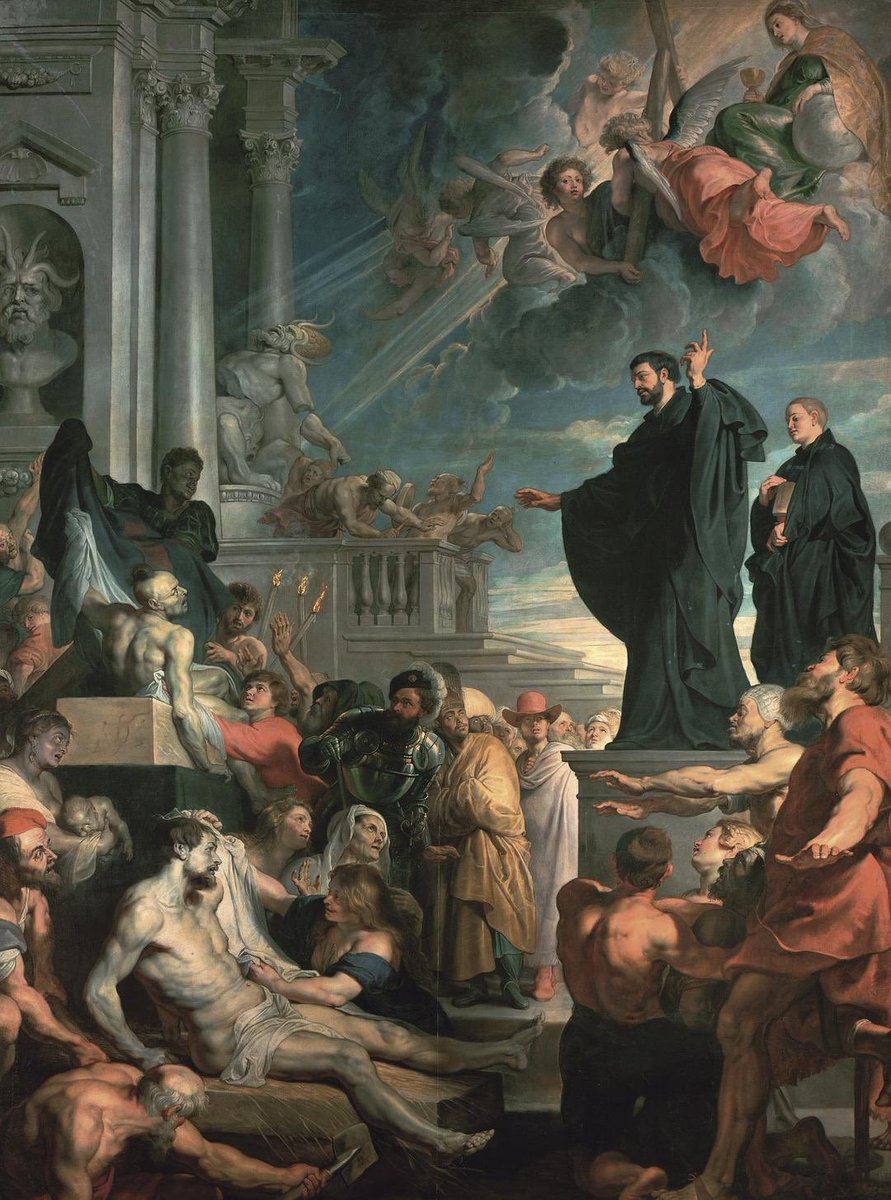
In 1617, the Flemish artist Peter Paul Rubens encountered Li Jin’s portrait in Nicolaas de Vrise’s <Alba Amicorum>. Using it as source material, Rubens created two sketches (Figs2,3) as well as the depiction of an East Asian figure wearing a yellow robe and green trousers in <The Miracles of St. Francis Xavier> (Fig4)
Due to the limitations of the time, early 20th-century scholars speculated that the figure in Rubens’s sketch might be Korean. reasoning was that, during the Imjin War, Koreans were captured and taken to slave markets in places such as Nagasaki, Japan, and then sold to Portuguese traders.
Among these Korean slaves brought to Europe, one relatively well-known individual was Antonio·Corea, who was sold to Italy. Based on this background, some scholars conjectured that the figure in Rubens’s sketch might in fact have been Antonio·Corea. As a result, the sketch has long been mistakenly referred to as “Man in Korean Costume”
In 2016, scholars Thijs Weststeijn and Lennert Gesterkamp co-authored a paper titled “A New Identity for Rubens’s ‘Korean Man’: Portrait of the Chinese Merchant Yppong,” which not only provided a detailed account of Yppong (Li Jin)’s life but also presented evidence supporting the claim that this sketch depicts him