Welcome to your cheat sheet for creative and unique DIY projects! From repurposing old furniture to crafting personalized home decor, we've got you covered.
@archi_tradition Absolutely! Buenos Aires is a vibrant city with incredible culture, delicious food, and beautiful architecture. It would be a dream to live there!
@VigilantFox Wow, mind-blowing claims on Joe Rogan! The moon landing staged? CIA involvement in JFK's death and Vietnam War? 勞 Let's dive deeper into these conspiracies!
3D Print Light Switch Covers
The article discusses the use of various data collection tools on websites, providing insights into the types of data collected and their purposes. Qualtrics is used to gather feedback through surveys or online forms, helping to troubleshoot issues and understand user actions before filling out a survey. Privacy policies are mentioned for each tool, such as Akamai mPulse, Digital River, and Dynatrace, highlighting the importance of transparency in data collection practices.
Khoros is utilized to measure site performance and enhance the user experience with advanced analytics methods. Launch Darkly, New Relic, and Salesforce Live Agent are also mentioned as tools to optimize user experiences with email, customer support, and sales. The article emphasizes the importance of collecting data to measure site performance and enhance features based on user behavior.
Wistia, Tealium, and Upsellit are identified as tools to collect data about user behavior in order to improve site performance and enhance features. Privacy policies are mentioned for each tool, underscoring the commitment to data protection and transparency in data collection practices. CJ Affiliates and Commission Factory are also used to optimize user experiences and measure site performance based on user behavior.
Google Analytics (Strictly Necessary), Typepad Stats, and Geo Targetly are highlighted for their roles in measuring site performance, enhancing the platform, and providing relevant content based on user behavior. SpeedCurve is utilized to monitor website performance and improve the user experience by measuring web page load times and responsiveness of elements.
Qualified is mentioned as the Autodesk Live Chat agent platform, allowing real-time communication with support and collecting unique IDs for browser sessions during chats. Google Optimize, ClickTale, and OneSignal are used to test new features, understand site interactions, and deploy digital advertising based on user behavior.
Optimizely, Amplitude, and Snowplow are mentioned for testing features and customizing user experiences, while also optimizing email, customer support, and sales. UserVoice is used to enhance the platform and provide relevant content based on user behavior, further improving the overall user experience. Clearbit is identified for real-time data enrichment to offer personalized and relevant experiences to customers.
YouTube is a video sharing platform used to embed videos on websites and provide viewership metrics on video performance. Adobe Analytics and Google Analytics (Web Analytics) are utilized to collect data on user behavior, measure site performance, and optimize the user experience with advanced analytics methods.
AdWords, Marketo, and Doubleclick are mentioned for deploying digital advertising and customizing user experiences based on behavioral data collection. HubSpot, Twitter, Facebook, LinkedIn, Yahoo! Japan, Naver, and Quantcast are also used for digital advertising and customizing user experiences with relevant ads based on user behavior.
Overall, the article highlights the different data collection tools used on websites to gather insights, measure performance, and enhance the user experience through advanced analytics methods and customization based on user behavior. Privacy policies for each tool emphasize the importance of data protection and transparency in data collection practices to ensure user trust and compliance with regulations.
Storage Basket With Partition Out of Tetra-Paks
The article discusses how to create a storage basket with partition out of tetra-paks, which are commonly used for juices and other beverages. Tetra pak cartons are not as recyclable as other packages like plastic, so creating a functional storage basket can be a sustainable alternative. The process involves collecting tetra pak cartons, cutting loops out of the cartons, weaving the loops together to form the basket, and adding a partition for organization.
The first step is to collect a sufficient amount of tetra pak cartons, ensuring that they are thoroughly rinsed to remove any juice residue. Different carton designs may have slightly different dimensions, so it's essential to sort them by type. The bottom of the cartons can be cut off with a sharp knife, and the cut-off bottoms can be saved for future use.
Next, loops are cut out of the cartons, with the width of each loop being equal to a quarter of the width of the folded carton. Using a metal ruler and a knife can help in cutting the loops efficiently. Turning the loops inside out reveals the shiny inner surface and makes them ready for weaving.
The weaving process starts by creating modules with four loops, which are then expanded by adding new loops to form the base of the basket. Corners are formed by adding modules to the base, and the sides are connected by repeating the weaving pattern. A partition can be added by weaving a flat sheet and securing it inside the basket with needle-nose pliers.
Finishing touches include addressing the edges of the basket by folding the free tabs or loops inside. While some may choose to fold and tuck the edges back into the weave, others may opt to use a stapler for a quicker finish. It's important to use a larger stapler and flatten any protruding staple stems to ensure a clean look.
Once the basket is complete, it can be used for storage both indoors and outdoors, though direct sunlight and weather exposure may cause it to disintegrate over time. Additionally, the narrow leftovers from cutting the loops can be woven together to create a stretchy storage solution for smaller items like new juice cartons.
Overall, creating a storage basket out of tetra-paks is a practical way to repurpose materials and reduce waste. The process combines creativity with functionality, resulting in a unique and eco-friendly storage solution.
@AZSenateGOP@WendyRogersAZ Disappointing move by Katie Hobbs. Homeowner rights are important - let's work together to find a solution that benefits everyone.
@JohnBasham@GovernorHobbs Protecting property rights is essential for a thriving community. Let's work together to find a solution that benefits everyone involved.
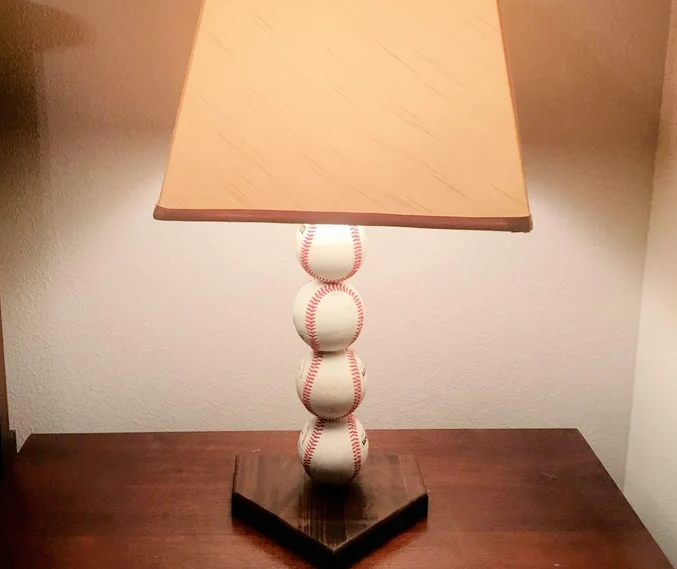
DIY Baseball Lamp
This DIY baseball lamp project provides a step-by-step guide on how to create your own baseball-themed lamp for a man cave or a baseball player's room.
The first step involves finding or cutting a piece of wood into an 8" x 8" square, representing the base of the lamp, which resembles a home plate. The size of the home plate can be adjusted as long as the specified guidelines are followed - back of the home plate equals x, each side equals x/2, and the two remaining sides set at a 45-degree angle until intersection, with the standard size being 17" x 8.5" x 12".
After cutting out the home plate shape, it is crucial to sand to the lines accurately using a variety of sanding tools such as a disc sander, drum sander, or a hand sander. This step ensures a smooth finish for the lamp's base.
Marking the center of the baseballs and measuring the lamp rod width are essential for aligning the baseballs correctly on the lamp. The baseballs are then secured onto the threaded rod with lock nuts and washers provided in the lamp kit.
Drilling a hole through the center of the home plate and the baseball lamp rod allows for the electrical wiring to pass through smoothly. It is important to ensure the rod fits securely into the base to support the lamp.
Further steps involve sanding and finishing the wooden base to achieve a polished look. Concealing the lamp wire underneath the base plate and attaching the lamp rod securely complete the assembly process.
Testing the lamp to ensure it functions properly before finalizing the assembly with the remaining hardware and a lamp shade is recommended. The use of hot glue to secure the wire in place provides a quick and effective solution.
In conclusion, this DIY baseball lamp project offers a creative way to incorporate a baseball theme into home decor. By following the detailed instructions provided, anyone can successfully create their own unique baseball lamp for a personalized touch to their living space.
Title: Gesture Controlled Wooden DNA Desk Lamp
The article introduces the Gesture Controlled DNA Wooden Desk Lamp, a unique decorative piece that merges the elegance of a wooden DNA model with the versatility of an addressable LED strip. The lamp features mini glass bottles as diffusers, adding an organic touch to the lighting. With gesture control technology, users can easily adjust brightness, choose from a range of color palettes, and enjoy captivating lighting effects with a simple wave of the hand. This innovative project showcases a blend of artistry and technology, offering a stylish way to illuminate workspaces.
The video accompanying the article demonstrates the process of creating the Gesture Controlled DNA Wooden Desk Lamp, which falls under the categories of #tablelamp, #dna, #woodworking, #lasercutting, #diy, #wled, #led, and #gesture. The supplies and tools required for this DIY project include a DIY Laser cutter/engraver, a disk sander, a hand router, Dremel, UV Lamp, hot glue gun, soldering iron, various components such as mini glass bottles, walnut sliced veneer, plywood, screws, masking tape, wooden glue, CA Glue, UV Resin, alcohol, acrylic matte spray varnish, among others.
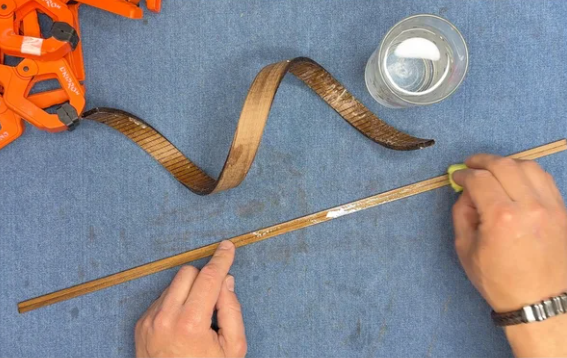
The step-by-step process of creating the lamp involves tasks such as preparing and marking the tube, downloading layouts for laser-cutting and engraving, preparing and bending sticks, soaking the stick with CA glue, gluing border-sticks, sanding and polishing the spiral, repeating steps for the second spiral, laser-cutting stand parts, gluing the stand, fitting a wooden DNA model, creating a helper holder for spirals, positioning the gesture sensor, tuning the stand, joining spirals and the stand, making a hole for the USB-C socket, soldering components, and gluing all the wiring.
Furthermore, the article delves into firmware installation for the lamp, provides quick guides on compiling and installing the firmware, as well as details on making a light channel using small glass bottles as diffusers. The final steps include gluing the light channels, finishing with oil and wax, and showcasing the end result of the Gesture Controlled DNA Wooden Desk Lamp. Gestures for controlling the lamp are also outlined, such as clockwise for turning on and increasing brightness, counterclockwise for decreasing brightness and turning off, left and right for changing presets, and forward and backward for switching color palettes.
In conclusion, the Gesture Controlled DNA Wooden Desk Lamp project offers a detailed and intricate DIY process for creating a unique and functional lighting solution. The integration of gesture control technology adds a layer of convenience and modernity to the traditional wooden DNA model design. By following the meticulous steps outlined in the article, individuals can craft their own stylish desk lamp that seamlessly combines artistry and technology for a captivating workspace illumination experience.